Showing posts with label Budget Wars. Show all posts

Thursday, March 23, 2023

The 2024 Defense Budget: A Mixed Bag for the Navy

It is with nations as with people; they will show you what they value by what they spend their money on.

Details always matter in a budget, but with inflationary pressures unseen in decades, a significant land war in Europe, and an accelerated naval challenge by the People’s Republic of China, the actual buying power of a budget and where you spend it matters more than usual.

Few are better positioned to explain the bold faced concerns with the 2024 Defense Budget  to navalists than our friend Bryan McGrath, returning again for a guest post that will bring you up to speed.

Over to you Bryan.


Last week, the Biden Administration delivered its 2024 Defense Budget to Capitol Hill, and it contained a mixed bag for the Navy. On one hand, all major Navy accounts were increased over the 2023 budget, and there were notable investments in readiness and weapons procurement. On the other hand, no major account’s increase kept pace with inflation, a problematic fact and the source of most defense hawks’ calls for increasing defense spending above the rate of inflation. In a time of growing great power competition and a massive naval buildup by China, the Navy is at best, treading water.

No account within the Navy budget is watched as closely as the shipbuilding account, often referred to by the abbreviation “SCN” for “Shipbuilding and Conversion (Navy).” The 2024 budget provides $29.5B to procure 9 battle force ships (1 ballistic missile submarine, 2 attack submarines, 2 destroyers, 2 frigates, 1 replenishment ship, and 1 submarine tender). The devil is in the details however, as while the $29.5B figure is 3% higher than the 2023 total, 12 ships were procured in the 2023 budget, including 3 destroyers and an LPD 17 Flight II amphibious ship. Additionally, in an age of Chinese naval expansion and a growing emphasis on American Seapower, the projected spend on new construction ships is $100M (constant dollars) less in the fifth and final year (FY28) of this budget than it is in the first (2024). It is difficult to understand how less money in FY28 will buy five more ships than in 2024, when one of the FY28 ships is an aircraft carrier and one is a ballistic missile submarine. Congressional budget hearings are likely to probe this question.

Returning to the LPD 17 Flight II mentioned in the previous paragraph, the 2024 budget submission eliminates future production of this vessel, something that is reported to have caused tension between the Navy and the Marine Corps (see here and here). Apparently, OSD directed at least a “pause” in LPD 17 production while the Navy and Marine Corps conduct amphibious shipping requirement studies. This does not sit well with Marine Corps Commandant General David Berger who recently said that “We cannot decommission a critical element without having a replacement in our hand”. Because the budget also calls for decommissioning three WHIDBEY ISLAND Class LSD’s, force levels will dip below the USMC’s requirement for thirty-one amphibs beginning in 2024. This 31-ship requirement also happens to be a matter of public law. A related issue flowing from a significant drop in the number of amphibious ships is a concomitant drop in demand for the Marine Corps “Ship to Shore Connector” (SSC), a surface effect ship that is being purchased to replace the Navy’s aging “Landing Craft Air Cushion” (LCAC). Five were acquired in 2023, with none in 2024 and two a year thereafter. It is difficult not to see a cause-and-effect relationship between the (then) new Commandant’s 2019 statements about legacy platforms and his willingness to trade force structure for innovation—and the 2024 budget’s realization of these positions.

Navy officials often cite the need to stabilize the shipbuilding profile to provide predictability and certainty to the shipbuilding industrial base, especially its workforce. There is within this budget, increased unpredictability, especially with respect to the ships and craft of the amphibious force. Added to the LPD 17 and SS uncertainty injected in this budget, the Landing Ship Medium (LSM, formerly the Light Amphibious Warship (LAW)) appears in 2025, suggesting that it is filling the gap left by truncating the LPD 17 Flight II line. As these ships are likely to be a fraction of the size of an LPD 17, they are not a useful substitute, either operationally or within the industrial base.

Additionally, the late budget submission did not include (for the second year in a row) the required 30 year shipbuilding plan, a document that among other things, signals to that shipbuilding industrial base the Navy’s future path. These signals are required to spur the kind of internal investment necessary to increase production capacity above what has been for decades, an industry tuned to meet bare minimums for peacetime production. In a controversial move in the 2023 shipbuilding plan, the Navy laid out three different shipbuilding plans, putting forward a menu of options that it could pursue if resources were made available.


Secretary of the Navy Carlos Del Toro recently indicated that the 2024 plan will continue the practice of multiple alternative futures, saying “If you look at the numbers very carefully, you’ll see that in the first 10 years of that plan, the numbers don’t change. And that is important, because the industry does need a steady signal of what our intentions actually are…take a look at the numbers in those first 10 (year) tables and you’ll see a tremendous amount of stability and flexibility, even compared to last year.” Del Toro appears to suggest that unlike the 2023 plan (in which the second five-year tranche of ships differs), each of the three forthcoming options will put forward the same plan for the first ten years. This would be a helpful start toward providing stability, but it is far less of an impact than year-to-year consistency, which recent plans have lacked. Additionally, while submitting three plans provides a vehicle for surfacing repressed Navy desires, it undercuts the suggestion that the plans are tied in any meaningful way to strategy.

A look back at the FY2011 shipbuilding plan is insightful, if only as a means for displaying the predictive value of 30-year plans. If the Obama Administration’s plan had been followed, there would be 320 battle force ships in the Navy inventory in FY 2024. The Biden budget submitted last week supports only 293 battle force ships. In the meantime, numerous 30-Year Plans have been submitted in which year to year goals and force mixes have changed, sometimes significantly.

A final question that the 2024 budget submission raises is how OSD and the Navy responded to the change to the Navy’s Title 10 mission brought about by the 2023 National Defense Authorization Act, a change that OSD was dead-set against. The most obvious sign of lukewarm implementation is the aforementioned truncation of the LPD 17 Flight II, a ship of significant flexibility and capability throughout the continuum of conflict. As the previous Title 10 mission was devoted to operations incident to combat at sea, OSD pressure on the Navy and Marine Corps led to a short-sighted (and strategically dubious) focus on capabilities more valuable AFTER the shooting starts than before, and the LPD 17 was seen as vulnerable. Putting aside the fact that part of that vulnerability resides in the Navy’s failure to make use of available deck space for offensive power, the new mission and its emphasis on peacetime operations that protect and sustain both security and prosperity created an even greater need for these ships.

Finally, not only was the mission of the Navy changed by the 2023 NDAA, but a Congressional Commission on the Future of the Navy was directed. This commission has not yet been named or begin its activities, but it seems clear that as it moves forward, it should take the enhanced Title 10 mission statement as its central framing notion and provide insight into appropriate fleet designs based on the funding levels specified by the enabling legislation.


Bryan McGrath is the Managing Director of The FerryBridge Group LLC. His opinions are his and do not represent those of his clients.

Tuesday, March 14, 2023

The Three Wounds of our Amphibious Navy


To see where we are and where we need to go, it is always helpful to remind ourselves how we got here.

First let's look where we are; the Navy telling Congress to bugger-off;

Via Caitlin Kenny at DefenseOne;

The Navy is proposing to drop its amphibious fleet below 31 ships, despite an agreement with the Marine Corps and a potential violation of last year’s defense policy law. 

Sent to Congress on Monday, the Navy’s proposed $255.8 billion 2024 budget aims to retire eight warships before the end of their intended service life, including three Whidbey Island-class dock landing ships, or LSDs, that it proposed to scrap last year but which were saved by the 2023 National Defense Authorization Act

There are a lot of people out there so far this week doing great work reading the entrails of the latest budget, so I won't try to replicate their fine work here

This did not happen by accident. This is not happening as a result only of a lack of funds. This did not happen because a black cat walked in front of the CNO.

No. This is the predictable result of three things Big Navy has control of, but by acts of commission and omission, consistently made the wrong decision.


Wound One: Material Condition:

(We) did a ship-by-ship review, to understand the material state of each of the ships. What we found on the LSDs is that they are challenged in terms of readiness.

As we have covered here for the better part of two decades, as have others, the Navy decided to take savings from maintenance, hide once UNCLAS INSURV behind a classified wall, and - like someone avoiding the dentist or a regular physical - more than willing make things easy by doing nothing now, knowing full well that it will only be worse later on. Unlike tooth pain or colon cancer though, the person making things easy now is not the same as the person who will take the pain later. Kind of like a programmatic/leadership "Narcissistic Personality Disorder with Sociopathic Tendencies." 

Leadership let their fleet rot, and then pretends as if it was something that happened to the Navy, not allowed by the Navy.


Wound Two: The Tiffany Amphib:

“What we are making sure that we are doing as we move forward with our budget plans, is making sure that we have the right capabilities at the right price aligned to not only meeting military requirements, but working with industry,” Raven said. “And for LPD, we're taking a look at the acquisition strategy moving forward, again, to make sure that we would have the right capabilities at the right price and working with industry partners to put together that plan moving forward.”

From the start of the LPD-17 program, our ongoing criticism was that this was way to expensive on a per-hull basis for the mission of a LPD. From the titanium firemain on, the entire design had no respect for budget challenges to buy the numbers needed so in a future conflict, we were not one or two ships sunk from being mission ineffective, but here we are. 

It took a lot of seabags full of money and Sailor sweat to fix the ship, but her cost remains a sea-anchor if you wanted more ships in 2024. If you need 10-ships, but price each unit such that you can only buy 7 ships - you own that 3 ship delta.


Would Three: Institutional Parochialism: 

Berger on Monday reiterated the reasoning behind the 31-ship requirement for amphibs.

“Anything less incurs risk to national defense by limiting the options for our combatant commanders,” he said in a statement to Defense One. “Per strategic guidance, the Marine Corps must be able to provide the nation with crisis response capabilities and build partnerships with allies and partners in support of integrated deterrence—difficult to achieve without the requisite number of amphibious warships.”

...

Buying amphibious ships tends to be the last priority for the Navy after spending shipbuilding funds on aircraft carriers, submarines, and destroyers, Hudson Institute Senior Fellow Bryan Clark said March 9 during Defense One’s State of the Navy event.

“Whatever gets left over is what can go towards the amphibious ships and the support ships. And when you do all the numbers for that, you always end up with you know maybe not quite enough for the amphibious ships, because if you're building one LHA every four or five years that you can incrementally fund, that's a chunk of money that's on the scale of you know, $500 million a year. And then you've got maybe $500 million or a billion dollars leftover for one more amphibious ship, which isn't quite an LPD,” Clark said.

From promotion rates to "prestige" - the Gator Navy has always been like that really good offensive lineman. They do their job and no one ever hears about them. Though they are paid less and don't get endorsements, without them no quarterback would be able to shine - no team achieve victory - and yet, the bias remains.

How exactly are we supposed to take and hold territory across the vast Pacific littoral? Who will do that, with what, and in how many places?

There are a lot of emoting going on about problems now that are directly the predicable results of decisions we've made.

As we review our budget, perhaps we also need to review our institutional system of incentives and disincentives that drive such decisions; the rewards and punishments that result in the selection of the leaders who make them.

Tuesday, January 10, 2023

The Surface Force's Lost Generation


Over at Defense News, Megan Eckstein has your must read to start your week. I hope she does not mind, but I'm going to pull a lot from her article. Read it in full, but there is so much here that validates what we have spent the last two decades on the Front Porch and on Midrats discussing, we need to spend some time to take a deep dive.

Back in 2009 we warned everyone that the Navy's decision to classify INSURV was nothing more than a smokescreen to hide the results of bad decisions on maintaining the readiness of our Navy from the taxpayers and allowed senior leadership to play other games as opposed to their core responsibilities. To say that almost two decades after the Cold War all of a sudden INSURV was classified was just, in a word, insulting.

In 2009, the U.S. Navy faced a readiness crisis.

The cruiser Chosin and destroyer Stout were both deemed unfit for combat operations by the service’s Board of Inspection and Survey, which at the time checked ships’ material conditions every five years.

And they weren’t the only ones. From 2005 through 2009, nearly 14% of surface ships failed their inspections, up dramatically from 6.2% from 2000 to 2004 and 3.5% from 1995 to 1999.

The crisis came after the Navy discontinued several of its Cold War-era organizations focused on maintenance and training in an effort to save money during a time without a significant threat to U.S. security.

No, the "without a significant threat" line is simply BS, an excuse, and for many who knew better ... a lie. We all saw what the People's Republic of China was building. FFS, contemporarily we were a few years in to "The Long Game" series here and we were just riding the wave smarter people set in motion.

"Without?" No, that dog just won't hunt.

This excuse was designed only to cover people who were focused on little more than building personal clout in their present job, while shifting Navy problems in to someone else's PCS cycle to solve. Sure, there was myopia by an ill-informed or just wrong cohort, but for most it was simply, as we say in horse country, "shooting up the horse."

There were some who tried at the time to fix it inside the system, but ultimately came up short. 

There were good guys, a lot of them - they just didn't get to 50.1%; 

Adm. John Harvey, who led U.S. Fleet Forces Command at the time, helped charter a fleet review panel to determine how the Navy ended up in this position.

... 

In 2010, the fleet review panel’s report, dubbed the Balisle Report after lead author retired Vice Adm. Phil Balisle, shocked the surface fleet with its data on the poor state of ship readiness and crew training. It painted a dire picture of a surface navy that needed to be fixed; otherwise, there was a risk someone could get hurt or killed.

Let's freeze that for a moment. The summer of 2010. That is 12 and a half years ago. Here is what we wrote about this in June and July of 2010. What is that, between three and four WorldWars length of time?

The review, released in 2010, was condemnatory. “The panel is in full agreement that surface force material readiness is in decline. [T]he message is clear: the trend is in the wrong direction.”

Chief among the review’s recommendations was a call for the return of readiness squadrons, which oversaw surface ship maintenance and basic training. The review found that when these squadrons were eliminated in 1995, so too was the fleet’s focus on and accountability for making deployable ships and crews.

So many of the problems we have today can be traced back to the post-Cold War arrogance of the 1990s,  Perry's Last Supper, TQL, the triumph of the accountants, layered with the Transformationalist snake oil of the following decade.  

In 2010, Harvey pushed to reinstall the readiness squadrons, but he couldn’t rally enough support from the Navy’s manning, engineering and budgeting leaders, among others. The recommendation was never implemented.

But in summer 2017, two separate collisions by Navy ships in the Western Pacific killed 17 sailors. The service once again had to dig out of a ship readiness hole, and a key leader again called for the return of the readiness squadrons. Again, the idea went nowhere.

The lives of 17 Sailors and two WorldWars after 2010 later. "Nowhere" has one hell of a butcher's bill.

“The Balisle Report gave us this tremendous look at a history, really since 2000 or so, of these various decisions that were made in various different parts of the Navy,” Harvey told Defense News. “The collective impact was very, very negative in terms of our ability to keep our ships properly manned, trained and equipped.”

...

“Bringing back the readiness squadrons,” Harvey said, “if you talked to Adm. Balisle, it was his No. 1 recommendation to do. And I agreed with that.”

Still, Harvey added, the urgency to make this major change was “overcome by other events at that time.”

"Other events..." indeed; as we documented at the time linked to above.

The U.S. Navy has not made significant progress toward growing its fleet size above 300 ships. The FY23 National Defense Authorization Act allows the service to shed 12 of the 24 ships it proposed retiring. Even with a slower retirement rate and marginally higher shipbuilding and construction funding from Congress, it will prove difficult for the Navy to grow the fleet toward 355 ships. That was the last publicly stated force structure objective, back in 2016; since then, the Navy has not officially stated a revised target. (Source: Doug Berenson/Oliver Wyman)

It is a hard sell to beg for more ships when from a material condition to a maintenance support perspective we seem to have trouble taking care of what the taxpayers have already bought us by borrowing money in the name of children yet unborn.

Kitchener said there are two key differences this time around: an advanced adversary in China that’s forcing the Navy to think about its near-term readiness to fight; and data analytics and modeling that prove the surface groups will be worth the investment.

I'm sorry, but bullsh1t.

The threat from the PRC was as well known in 2016 as it is now. I will add to this that no one has confidence on the "analytics and modeling" coming from the Navy. 

The Age of Transformationalism, gutting of maintenance, and the vaporware that was "optimal manning" have blown all credibility in the Navy's "muh metrics" claims. Kitchener's numbers may very well be perfect, but no one has any reason to believe any of them from Main St. to Congress. Sorry, but institutionally we blew that credibility over the last two decades and it will take a long time to get it back.

We would make much better headway by simply saying, "For most of this century we blew it. We were wrong. We are trying to do better." 

Some, like Harvey, gave the Navy a window to save itself a dozen+ years ago and we didn't take advantage of it.

We have years of work to do ... but Step-1 here is to admit our mistakes. Until we do that, everyone can very reasonably assume we will do it again.

Data is central to Kitchener’s new effort. He told Defense News in an interview that various efforts have identified the ways to improve ship maintenance: building up a larger inventory of select spare parts, adding capacity in key shops and departments that are potential chokepoints, increasing training and growing expertise in certain technical areas, and more.

Ahh...the "Just in Time - -TQL" hangover. What takes one year to destroy, takes five years to rebuild. All that Kitchener is saying is not new. It is, just like readiness squadrons, returning to the last baseline that worked.

Are we in the process of a "baseline reset?" That would be a good thing.

Take Destroyer Squadron 9, for example, located in Everett, Washington. Its ships are scattered geographically: one located in Everett, five in San Diego and two in Pearl Harbor, Hawaii.

I'll let you do a distance and time zone review of that for yourself. Norfolk-Mayport was hard enough.

There are reasons this exists, but none of them are satisfactory when an overall net cost is considered.

Kitchener said he’s awaiting the final recommendations of his working group this summer, but expects each fleet concentration area to have a single surface group responsible for maintaining and training all surface ships, including cruisers, destroyers, littoral combat ships and amphibious warships, based in those cities. These home ports include San Diego; Norfolk, Virginia; Mayport, Florida; Everett; Pearl Harbor; Yokosuka, Japan; Manama, Bahrain; and Rota, Spain.

I am trying to hard not to just snark old-school...but really - we have reached the point that giving commanders a chance to "walk the pier" without getting on an aircraft is something "new."

Instead of gratuitous snark, have a meme.

I mean, this is how it should be ... and seems to be heading back in the correct direction. It should be applauded. 

Each surface group would devote itself entirely to readiness. ... in the case of a maintenance casualty, the surface group back home would work to find the quickest solution, allowing the destroyer or amphibious squadron staff to continue focusing on operations. 

“This is oversight and responsibility and accountability throughout the entire” readiness cycle, Kitchener said. “The idea is, this exists in the fleet concentration area, it’s got a cadre of people that are constantly on our ships assessing, understanding what the problems are; we’re pulling the trend analysis here at the headquarters, giving them focus areas. It’s a very active, not just some sort of bureaucratic, organization.”

For those who were JOSs in the 90s, I guess a bureaucratic system focused on maintenance excellence is new and radical, but it has a track record. This is simply good stuff. We tried everything else and failed, why not try what worked?

Also, can we also make progress in the "Syllabels Reduction Act of 2023?" Can we simply go back to calling things "bases" as opposed to "Fleet Concentration Areas?" 

2 syllables and one word > 8 syllabels and three words.

As there is a lot of ruin in a nation, there was a lot in institutional capital previous generations built up prior to the 1990s that could be drawn on to pay for bad decisions, but that account is pretty much drawn down to almost nothing. 

Talk to anyone on The Hill ... it's gone.

The Navy has observed improvements in maintenance performance, but is also facing new setbacks as labor and supply chain challenges across the manufacturing sector continue to take a toll on the ship repair industry.

Rear Adm. Bill Greene, the fleet maintenance officer for U.S. Fleet Forces Command, said in the fall that only 36% of surface ships are expected to complete maintenance availabilities on time in fiscal 2022, down from 44% in fiscal 2021.

... 

 This duality is also reflected in the most recent Board of Inspection and Survey report, which noted surface ships are seeing higher overall readiness scores than the six-year average, but have more functional areas deemed “degraded” than the six-year average, using a scoring method of satisfactory, degraded or unsatisfactory.

Time for a reminder ... we need to make INSURV publicly available again. Less accountability gave us less readiness, and as a result our nation and its Navy is less secure.

What vexes the Navy, Kitchener said, is variance in maintenance performance: ... Kitchener outlined a three-step process to address this. The first step was already done under Performance to Plan ... P2P has highlighted the need to prioritize people or materials for a certain ship availability, and then coordinate activities across multiple shops at a shipyard to get a specific repair done on time.

The second step is allowing surface groups to devote their full attention to implementing the actions identified through P2P in hopes of achieving better on-time maintenance rates.

The third step, on which Kitchener said he’d offer more details soon, is creating a surface response plan that prioritizes certain ships’ readiness over others.

If a contingency arose and a combatant commander needed three destroyers, the three ships at the top of the list would be called upon to deploy on short notice. Those ships higher up on the list would be expected to stay in a peak-readiness state, and the maintenance and supply communities would act accordingly. Ships lower on the list and less likely to be called upon for unexpected tasking may be in a lower readiness condition if the fleet is short on personnel or materials, for example.

For those outside the Minotaur maze that is the US Navy's decision making, you are allowed to ask, "Why didn't we do this already?"

I know. I know.

So, what will this look like?

Kitchener said the future SURFGRU Southeast, currently named Naval Surface Squadron 14, is the “most robust” organization and has served as a model for the working group, which determined how many supply specialists, logistics personnel, diesel engine (versus gas turbine) experts, and so on, were needed to keep ships properly ready.

Kitchener said the Mayport group has 105 billets for a squadron that tends to about 10 destroyers — compared to just 10 personnel tending to nine destroyers and cruisers in Everett. The exact number of billets in each group would depend on the number of ships at a particular port, but Kitchener said the groups would more closely resemble the Mayport squadron than the Everett unit.

Mayport ... the best Sea & Anchor Detail in the Navy. 

The Navy was skipping training and maintenance to achieve unsustainable levels of at-sea presence, and it was down about 12,000 sailors thanks to the individual augmentee program that sent personnel to support joint operations in Iraq and Afghanistan. Sequestration cuts to the federal budget in 2012 further diminished readiness, Harvey explained.

No one said, "No." No one defended our Sailors or our Navy. We let the COCOMs abuse the running room they made for themselves as a result of Goldwater-Nichols and the whole accretions encumbered COCOM structure and Cult of the Joint that came with it. 

Yes, I am beating that horse and will continue to beat it until we get something fit for the 21st Century. 

No senior leader was willing to put their "career" - whatever that is after you have 4-stars - on the line to defend their Navy. We needed "Admiral No" and instead got "Admiral Hinge."

It wasn't something that happened to our Navy. No, it was something we allowed to happen to our Navy. Heck, during some of the worst of it, the Chairman of the Joint Chiefs of Staff was a USN 4-star.

“It was going to take more billets, more people. … And there just was not a clean, widespread agreement among everybody who had to agree that this was the right way to go,” Harvey said. “In the greater scheme of things and what was going on, it just never rose to the level where it had a critical mass of leadership who all said: ‘Yes.’ ”

No, plenty of billets were found for other "priorities and distractions" - they were just more important than manning, training, maintaining, and equipping a fleet to fight and win. As I've offered for years, give me the top-cover and the manning documents ashore, and I'll find your billets. Just let me recode and reassign as needed. If I need more, I'll look at afloat and DC staff. They're there - you just have to be ready to upset a different group of people who don't add warfighting value anyway.

In the end, this is the cost of distraction and ill-focus;

Retired Vice Adm. Rich Brown, who investigated one of the two fatal ship collisions in 2017 and then took command of Naval Surface Forces in 2018, resurrected the push to bring back readiness squadrons. He said that, by 2017, virtually all Balisle’s recommendations were implemented — with the readiness squadrons being the major exception.

Brown told Defense News a robust readiness squadron likely would have prevented the fatal collisions involving the destroyers Fitzgerald and John S. McCain.

In summary, yep.

The existing structure asks destroyer squadrons to oversee the maintenance and certification of ships and serve as the sea combat commander for a carrier strike group. If the squadron needs a ship to fulfill a warfighting requirement, it creates a conflict of interest that can put maintenance and training needs at risk.

Brown said this construct “failed, and we recognized that it was failing, and so that’s why the Balisle Report said, and later I said, we’ve got to do this. And we just didn’t do it.”

He called the 1980s readiness squadrons “a proven model” that restored the Navy from having a hollow fleet in the 1970s to having a robust surface force by the 1980s.

There it is again; baseline reset.

A future “high-end fight requires so much dedicated concentration and focus that we need these additional commands. They’re going to come at a cost — it’s going to come at a huge manpower cost, and the Navy’s got to buy that manpower because it’s the right thing to do for our carrier strike groups,” Brown said.

Yes, buy manpower ... but also repurpose existing bloat ashore. Yes, recoding BA/NMP is a pain - but it can be done. Yes, rice bowls and rent seekers will be upset. All it needs to be is a senior leadership priority. And at the end of the day, shouldn't the ability to fight and win at sea be number 1?

We cannot change the past, but we must acknowledge, name, and recognize past errors so that they won't be repeated. 

There is some good stuff going on as outlined in Megan's reporting, and we should see more in this direction, but no more happy talk. No more multi-syllabic bullsh1t bingo lingo. No more petty distractions.

There are a lot of smart, good people in important positions who want to do great things. They just need the right higher direction and guidance to execute.

Tuesday, January 03, 2023

Kaplan's Elegant Decline at 15


Back in the November 2007 issue of The Atlantic, Robert D. Kaplan published an essay that still comes to mind on a regular basis a decade and a half after its publication; America's Elegant Decline. I first mentioned it ten months after its publication while I was in Afghanistan, and then only briefly. 

At 15, I think it is time to see how it holds up.

15 years is a long time - but it also passes quickly. 15 years from now would be January of 2038. You know all that talk about "2040" in the last year, well you're one POM cycle away ... and while some things we think about the future to come will be roughly correct, some will be quite off. That is normal and should be expected. With that benchmark in place, Elegant Decline holds up pretty well.

Before we dive in, let's remember the time and place of 2007. Obama was still the junior Senator from Illinois. The surge in Iraq was almost at its peak and at the time success was iffy. Though we knew at CENTCOM in mid-Summer of 2007 that NATO culminated in Afghanistan and the USA would have to step in soon as we could, in general Afghanistan - the good war - was seen as in good hands with NATO.

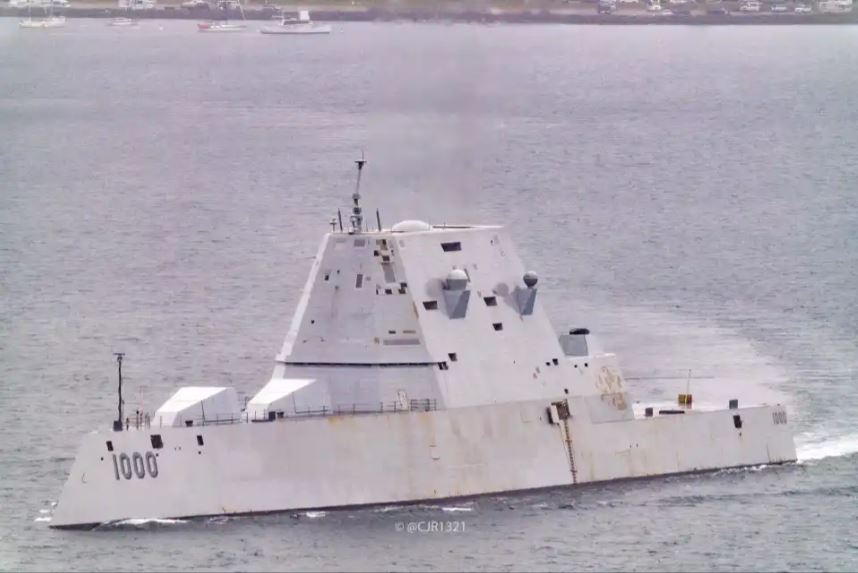
Though the cheap seats were warning otherwise, the Navy let everyone know of the glories of Transformation embodied by LCS, DDG-1000 and CG(X) were going to bring if everyone would just shut up and color ... a period that would end 18-months after Elegant Decline with the truncating to 3-ships of the Zumwalt class ... and you know the rest as we rolled in to the Age of Salamander to prepare everyone for The Terrible 20s.

So, in to that moment Kaplan dedicates the first third of his article reminding everyone of some truths are were as correct in 2007 as they are in 2023;

Beware pendulum swings. Before 9/11, not enough U.S. generals believed that the future of war was unconventional and tied to global anarchy. ... Now the Pentagon is consumed by a focus on urban warfare and counterinsurgency; ... But have we pushed it too far? We may finally master the art of counterinsurgency just in time for it to recede in importance.

...Though counterinsurgency will remain a core part of our military doctrine, the Pentagon does not have the luxury of planning for one military future; it must plan for several.

"Regular wars" between major states could be as frequent in the 21st century as they were in the 20th. ... these future wars will not require any "manifestation of insanity by political leaders," nor even an "aberration from normal statecraft, " but may come about merely because of what Thucydides recognized as "fear, honour, and interest."

..

The current catchphrase is boots on the ground; in the future it could be hulls in the water. 

...

A "peaceful, gain-loving nation" like the United States "is not far-sighted, and far-sightedness is needed for adequate military preparation, especially in these days," warned Navy Captain Alfred Thayer Mahan in 1890..

This is when he transitions to what he, rightfully, sees as a primary indicator of America's decline - its Navy - something that dominates the other 2/3 of the article.

...too few strategists at the time were thinking seriously about sea power. Today we are similarly obsessed with dirty land wars, and our 300-ship Navy is roughly half the size it was in the mid-1980s.

A great navy is like oxygen: You notice it only when it is gone. But the strength of a nation's sea presence, more than any other indicator, has throughout history often been the best barometer of that nation's power and prospects.

I just wanted to take a note to nod at the hard work led by Rep. Mike Gallagher (R-WI) in the changes to Section 8062(a) of USC Title 10, 15-years after Elegant Decline, to put this in to law. 

Our friend Bryan McGrath has a superb summary of the changes and their importance here.

Back to Elegant Decline - where Kaplan does a great job outlining more nuggets of unalloyed truths;

Our sea power allows us to lose a limited war...Army units can't forward-deploy anywhere in significant numbers without a national debate. Not so the Navy. ... Great navies help preserve international stability. 

...

In an age where 90 percent of global commerce travels by sea, and 95 percent of our imports and exports from outside North American do the same (even as that trade volume is set to double by 2020), and when 75 percent of the world's population is clustered within 200 miles of the sea, the relative decline of our Navy is a big, dangerous fact to which our elites appear blind.

Well, it didn't double, but it did go up by 30%.


A lot of you will remember this well;

...in a 1954 article in Proceedings ... a young Harvard academic named Samuel P. Huntington told the Navy not to feel sorry for itself:

The resources which a service is able to obtain in a democratic society are a function of the public support of that service. The service has the responsibility to develop this necessary support, and it can only do this if it posses a strategic concept which clearly formulates its relationship to the national security. 

Emphasis added by me.

Good googly moogly yes. Has our "service" been doing this sales job well? No, no it has not. Why? They have tied themselves to the mast of the archaic, accretion covered Cold War era Goldwater-Nichols and the Cult of the Joint that comes with it. That is why. They have convinced themselves that they have to accept this state of affairs in silence when they don't - it is senior leadership's choice to interpret it as such. Our Navy and the nation it serves suffers as a result.

...by 1997, post Cold War budget cuts had reduced the Navy to 365 ships. (In the Quadrennial Defense Review of that year, the Pentagon established a 'red line' of 300 ships, below which the Navy would not go.)

LOLOLOLOLOL.

Of course the 300-ship Navy could still, in the words of Robert O. Work, ...

BOB!

 ..."pound the snot" out of primitive challengers like Iraq, Iran, and North Korea,

Don't worry, they didn't forget about China completely;

Robert Work told me that he believes the eventual incorporation of Taiwan into China will have the effect that the Battle of Wounded Knee had on the United States: it will psychologically close an era of national consolidation for the Chinese, thereby dramatically redirecting their military energies outward, beyond their coastal waters. Tellingly, whereas the U. S. Navy pays homage to Mahan by naming buildings after him, the Chinese avidly read him; the Chinese are the Mahanians now.

The next bit is something we called at the time wrong-headed and unhelpful and Kaplan is suspicious of at the time as well; then CNO Admiral Mike Mullen, USN (Ret.); 

He (Mike Mullen) went on: "I'm after that proverbial 1,000-ship Navy - a fleet in being, if you will, comprised of all freedom-loving nations, standing watch over the seas, standing watch over each other." Subtract the platitudes, and it's clear that Admiral Mullen is squaring a number of circles to contend with the difficult reality he's up against. 

I continue to hold that this throw away line that became a talking point that was then made flesh was one of the greatest strategic errors this century so far. It gave top cover to those who were looking for reasons not to build the Navy our nation needed. The evils of the Age of Transformationalism only made it worse ... another of Mullen's follies;

This is what the optimists saw right before the rot was unavoidable anymore;

The new DDG-1000 Zumwalt-class destroyer, envisioned in one form or another for 12 years and beset with delays could end up costing $3 billion a ship - if any get built. The new Gerald R. Ford-class aircraft carriers could cost a whopping $8 billion each - not including $6 billion of research-and-development costs.

History can be cruel to such a geologic pace; this slowness is a recipe for vulnerability and nasty strategic surprise. We have a capital-intensive Navy consisting of vessels that cost tens of billions of dollars, and that must therefore each deploy for decades if they are to return the investment. Yet all future peer competitor like China need do to greatly devalue our fleet is to improve its ballistic-missile technology to the point where we're forced to move our carriers, say, 100 miles east of their present positions off the Asian mainland, to keep them out of missile range.

We should be so lucky. Time has found Kagan an optimist here.

...the new Ford-class carriers will be built with laser guns to kill incoming missiles, anti-torpedo torpedoes to deal with supercavitation technology, and electric catapults for launching UAV's in case fight jets, with their human pilots, give way to enhanced remote-controlled Predators that  can be refueled in air.

Well, in 2022 lasers are still the weapon of tomorrow like they always seem to be, anti-torpedoes are a strong maybe to no, and unmanned systems are still a few generations away if ever from there ... so ... technology and future risk can suffer from excessive optimism bias ... as always. Watch 2001: A Space Odyssey for a hint in that regard. 

Meanwhile, as costs drive us towards that 150-ship Navy...

Not yet...we're doing better than that so far. Kaplan was a bit too much of a pessimist on this point. At my darkest in pondering The Terrible 20s I warned of 240 back in 2010.

According to Navy Lieutenant Commander Claude Berube, who teaches at the U.S. Naval Academy, in an emergency we might even issue letters of marque, the way we did during the Revolutionary War, giving privateers the legal authority to act in our defense. Allowing privateers to help with, say, the drug-interdiction effort in the Caribbean would enable uniformed sailors to concentrate on the Pacific and Indian oceans.

Claude!

Today, the United States devotes 4.38 percent of its annual gross domestic product to defense. Before the Iraq War, it was 3.5 percent.

In 2022 it was back to ~3.5%.

Admiral Morgan, the deputy chief of naval operations for information, plans, and strategy, told me that to maintain our naval primacy, we may need to devote close to 5 percent of GDP (assuming a growing economy) to defense. Yet it's unclear whether the American public will abide that.

Spoiler alert; they didn't.

So, there we go; the Elegant Decline at 15. 

Much spot on, some a bit too optimistic, some too pessimistic. On balance though, it aged fairly well in a decade and a half.

It should keep us all humble and it would do everyone well to understand that, on balance, 2023 is not all that different than 2007 ... and 2037 will most likely not be all that different than 2023.

Plan accordingly.


Thursday, December 15, 2022

Meeting the Demand Signal

One thing we touched on during last Sunday's Midrats was the growing unease that the Russo-Ukrainian War would not end before the stockpiles of preferred weapons and the ammunition they use runs out.

There has been discussions about both sides of the war burning through their stockpiles at unsustainable rates while the war seems to be expanding. The Russians are having issues even with their assumed relatively deep bunkers - but much of that is bottlenecked by an early 20th Century logistics train on a 21st Century battlefield. Their problems keeping their army equipped is not the more interesting story.

The Ukrainians would have run out of weapons and ammunition months ago if the former Warsaw Pact nations in NATO didn't empty what inventory they had left of Soviet Era weaponry and the rest of NATO led by the USA didn't wander the world trying to soak up as much available inventory money could buy. That and the rapid adoption of NATO compatible equipment by the Ukrainians is helping, but that has revealed other problems - who says the West has enough to give?

We've discussed the West's almost criminally neglected stockpiles - unready for anything but the most limited or short war - for the better part of two decades.

The Russo-Ukrainian War has once again brought it in to stark relief.

If you find the business and industrial part of the national security arena interesting, which you should, then you'll enjoy Marcus Weisgerber's latest over at DefenseOne. Read the whole thing, but this is the part part I found the most interesting as it points to this particular hobby horse of mine;

The U.S. has sent 13 years worth of Stinger production and five years worth of Javelin production to Ukraine, Hayes said during a panel discussion at the Reagan National Defense Forum here.

Seeing the demand for Stingers, Raytheon is “going to take a little bit of a gamble” because it seems NATO and other U.S. allies want to buy the easy-to-use weapons in the coming years as well. 

“We want to be prepared to meet the demand that's out there,” Hayes said in the interview. “I wish I could snap my fingers and then all of a sudden miraculously, throw a building up and train 500 people [to build them], but it just takes time.”

Kendall, who was the Pentagon’s top weapons buyer during the Obama administration, said that the Defense Department’s stockpiles are not a “significant risk” yet, but it could be down the road. 

“I think we need to give more attention to the potential for longer conflicts, and what the consequences [are] of that and how we prepare for that,” Kendall said. “So that's a combination of stockage and manufacturing capacity that needs to be factored into our planning, more than may have been in the past.”

One possible way the U.S. could accelerate the resupplying of NATO allies is by standing up factories in Europe, to produce weapons closer to the front lines. 

Oh, really? Europe? Really.

For you loyal Midrats listeners, that last bit would have you ... well ... 

German ammunition manufacturers recently warned about the waiting period for orders of cotton linters from China — a crucial component for propelling charges for small guns and artillery — has tripled to up to nine months. 

German ammunition makers flagged this information at a recent defense symposium near Munich. The German government hosted a roundtable discussion with ammunition manufacturers on November 28; however, no specific outcomes were made public.

Industry sources said that all European ammunition producers depend on China for cotton linters, even though it is a commodity produced and traded globally. 

Wolfgang Hellmich, the defense affairs speaker for the in-power Social Democratic Party (SPD) in parliament, told Asia Nikkei that the significant supply shortages of China-sourced materials for military equipment are particularly problematic for ammunition and specific steels.

This is a problem throughout the West. The Russo-Ukrainian War is sending a clear warning to everyone - you need to ramp up production, capacity, and have a more reliable - if not efficient - supply chain. 

This is hard, because unlike sexy things displacing water and making shadows on ramps, ammunition and expendables are hidden away in bunkers out of sight ... and if your peacetime military and diplomats do their job, will never be used. However, when you need them, the need is existential.

Study hard. Lobby harder. Spend wiser. Spend more.

Tuesday, November 08, 2022

LaPlant Goes Salamander

For the last two decades here we have reminded people that - as much as one can on this net - they need to look hard at their magazine inventory and bounce that off REALISTIC (not official) expected wartime expenditures. Congress is mostly kept in the dark on this, and worse - people in uniform pimp vignettes and wargames that almost seem designed to minimize requirements.

Our concerns have been hand-waved for years, often by the people you would usually rely on to push warfighting concerns to the front.

The cold hard fact is we simply cannot sustain a large conflict for very long - especially with our best, most accurate and long-legged standoff weapons.

One of the best immediate byproducts of the Russo-Ukrainian War is that more people are starting to see how even the "Arsenal of Democracy" has not properly prepared for war. 

We have let production lines go cold without replacement, let inventories barely able to sustain peacetime requirements, and have consolidated and windowed industry to the point it can't flex even if it wanted to.

In to the conversation comes Undersecretary of Defense for Acquisition and Sustainment Bill LaPlante.

It looks like the Legislative Branch wants to pick up this ball and run with it ... but it needs to be sustained. There is a lot of work to do.

Read this twice;

For Pentagon acquisitions, LaPlante said, the crisis in Ukraine ought to inject a new focus on whether a weapon is easily mass produced and functions as well as whether troops can be trained on it quickly ― and whether it’s applicable in the Pacific.

Those factors should be part of conversations about the viability of developmental projects that rely on emerging technologies or nontraditional avenues like the Defense Innovation Unit and other transaction authorities.

“If somebody gives you a really cool, liquored-up story about a DIU or OTA, ask him when it’s going to production; ask him how many numbers; ask him what the [unit cost] is going to be; ask him about work against China,” La Plante said. “Ask them all those questions because that’s what matters.”

“The tech bros aren’t helping us too much in Ukraine; they want to,” he added. “Ukraine is not holding their own against Russia with quantum [computing], they’re not they’re not holding their own with [artificial intelligence]. They’re not ― whatever your favorite gadget is. It’s hardcore production of really serious weaponry.”

Did you catch that? He wants the "good" now because the much promised "perfect" will never show up, and if it does, it won't be of much use.

We need serious money buying serious weapons that can be used at war NOW. Not 2035. Not 2040.

Now.

Better late than never ... but good people have known this for a long time, they just didn't have the wind at their back. Now they do.

Get to work. Make it happen.

Tuesday, September 06, 2022

Build More Carriers and Send Some to CENTCOM

At a time when nations at the front line facing a rising People's Republic of China such as Japan and India (and the PRC herself) are expanding their aircraft carrier fleets as fasts as budgets and politicians will allow, in the United States the carrier debate continues in to another decade.

It is natural; aircraft carriers are very expensive - and they bring a lot of capability with that cost. They are vulnerable because they are a high-priority target specifically because of the threat they pose to any opponent. Both sides have a point, but the question is who has the better point given our place in time.

In another chapter in the carrier debate, we're honored to have Bryan McGrath returning here with a response to a recent article in the U.S. Naval Institute's Proceedings by Lieutenant Commander Stephen Walsh, U.S. Navy at the link below.

Bryan, over to you.


There is little in the opinion-writing world more attractive to editors and readers than the thoughts of someone questioning closely held tenets of what would appear to be the affinity group of the author. So, when an aircraft carrier aviator pens a piece questioning the value of aircraft carriers in a major piece of U.S. geo-strategy, one is forced to take notice. That several members of the tight fraternity of un-listened-to and marginalized navalists to which I claim affinity cited the work with praise and hosana also caught my attention. Having now read and digested the work, I am considerably less impressed by the substance of the argument, and I set out here to address its shortcomings. 

First though, I wish to congratulate LCDR Walsh on his effort. He is a fine writer and thinker, but most importantly, he has taken the time to submit his views to scrutiny. The world is full of opinions, but there are precious few (especially among naval officers) who are willing to address and/or stoke controversy publicly in such a lucid and well-documented fashion. That I will spend the remainder of my time here criticizing his argument should be taken as a sign of respect. Were his argument not worth addressing, I would not be writing this on a national holiday. 


Walsh’s Argument

Readers are urged to digest Walsh’s argument in full. I will only summarize it here to frame my own thoughts, and I apologize for the shorthand approach. Here goes: aircraft carriers are valuable elements of the Navy’s contribution to Joint warfighting, and as there are a finite number of them, their application to U.S. grand and defense strategic objectives must be carefully considered. This consideration extends to both the effectiveness of that application, and the consequences to force readiness that flow therefrom. In applying carrier air power to the strategic objectives of CENTCOM commanders, Walsh believes that carriers have been misallocated, as other elements of the Joint Force have been more effectively employed. Walsh asserts that the misapplication of carrier air power to a theater of secondary strategic importance (behind Indo-PACOM and EUCOM in that order, presumably) has wasted carrier readiness that should either be held in reserve or applied more liberally in the other theaters (this much is not as clear). This is not an outlier’s view. It tracks closely with the warp and weft of the Trump National Defense Strategy which shifted emphasis to the Indo-Pacific at the explicit expense of CENTCOM (and EUCOM). 


McGrath’s Argument

Whether one points to the Trump NDS or the current administration and its Interim National Security Strategy and National Defense Strategy, it is hard to conclude that the current bi-partisan fashion animating national security thinking is not “managing decline” (or re-arranging deck-chairs). No one in authority puts it this way, but it is the elephant in the room. At some point after the fall of the Soviet Union, maintaining our position as the world’s dominant power and leader of the free world lost currency. Now that this position is actively challenged, our efforts seem more geared toward efficient allocation of declining resources than in addressing the challenge head-on. Decline strategists would have one believe that what they are doing is making tough choices, which after all, is the zenith of strategy-making. The problem with this approach is that they have already made (or recognized the existence of) the decision NOT to be globally powerful. Their approach and logic is internally consistent and whole all the way from “B to Z”. The problem is that I am unaware of the consensus in American defense and national security thinking that codified the step from “A to B”—that we were (as a nation) comfortable with relative decline and that our approach henceforth would be to draw out that decline for as long as possible. 

My argument is this: I am unafraid to draw Cold War parallels to the current strategic environment. We either tool up and build out for it, or we accept decline and the consequences of living in a world where we are not the dominant power. Where Walsh would have us believe that promiscuous employment of aircraft carriers to CENTCOM is leaving us ill-prepared for higher priority conflict elsewhere, I would argue that we do not have the number of aircraft carriers (or a properly sized Navy) we need to meet our legitimate security requirements. They are of course—different arguments. But if you buy into Walsh’s argument, you never get to mine. 


Does the Carrier Deter?

Deterrence of any variety is difficult to prove without exquisite intelligence, as the problem of “proving the negative” confronts any claim made without it. Additionally, the fact that Iran appeared “undeterred”, carrying out aggressive global and regional terror attacks (in addition to direct military action) while aircraft carriers were present in theater, adds to the nagging question of carrier effectiveness as a deterrent. 

Yet there are important questions to consider before concluding the ineffectiveness of the carrier as a deterrent. The very existence of the ground-breaking “Abraham Accords” points to the growing wariness of Iran in the Arab world and the discomfort felt there in U.S. overtures during the Obama Administration (re-started in the Biden Administration) toward Iran. The presence of a carrier may or may not have stopped Iranian adventurism, but was the carrier part of a regional approach to deterring a larger war between Iran and the Sunni-Arab world? I do not know the answer to this, but I suspect CENTCOM Commanders believe that it was. And the suggestion that CENTCOM Commanders might “pull punches” to preserve carrier readiness for use in another theater strikes me as misunderstanding what those officers are paid to do. We pay the Secretary of Defense to make punch pulling decisions.

Walsh points at this, as senior civilians in both parties responded positively to CENTCOM requests for aircraft carriers. Walsh would have those civilians be less open to these requests, relying on other parts of the Joint arsenal for deterrence and saving carrier readiness for other conflicts. But for whatever reason, those civilians and those CENTCOM Commanders believed that the theater needed BOTH carrier air power and land-based air.  What if what was really happening was not shoddy and reflexive staff work by the combatant commander and his staff, validated by the Joint Staff and the Secretary of Defense, but the dirty business of everyday American national security? What if the CENTCOM Commander really was making a good case for these forces? What if—at the end of the day—the intelligence from both within DoD and the rest of the intelligence community indicated that overmatch was having an impact on Iranian behavior? Criticism of combatant commanders for insatiable appetites is the new national pastime. But I fear far more, a world of passive combatant commanders than I do the fear of sub-optimal carrier employment. 

Troublingly, I read little in Walsh’s treatment of carrier employment in CENTCOM of the role of crisis response from forward deployed forces. While the work he and his co-workers were doing was somewhat mundane, that he and they were there ready to respond is not to be undervalued. 

And then there is the whole business of counting bombs dropped in theater as a measure of effectiveness or utility. While this might be frustrating to the aviators participating in missions found less exciting than others, of all the metrics to apply to the effectiveness of a deterrent, this seems the least relevant. Carrier Air Wings throughout Indo-PACOM and EUCOM routinely return to homeport without having fired a shot in anger. Are we to assume their readiness was similarly wasted?

                        CENTCOM AOR


The Priority Theater Issue

Walsh begins his piece thusly: “The Department of Defense (DoD) has allocated aircraft carriers to U.S. Central Command (CentCom) for Iranian deterrence at the expense of strategic competition with China and Russia repeatedly over the past decade. DoD is locked in a cycle that regularly deprives Indo-Pacific Command (IndoPaCom) and European Command of the carriers necessary for strategic competition.” Forgive me if I impugn motives unfairly, but until late March of this year, most discussions of this sort were solely focused on Indo-PACOM, with both EUCOM and CENTCOM relegated to lesser positions. Then came a war and now EUCOM has the attention of naval force structure analysts. My point here is that the U.S. has enduring interests in all three AOR’s, and those interests drive the need for dominant naval power in each. Setting up this shell-game of priority theaters has a veneer of strategic thought, but the real-world gets a vote, and commitment of forces to lesser theaters is not always a sign of weakness in decision-makers. Sometimes it is the least bad decision. 


The Stationary Carrier

In his second paragraph, Walsh writes “Iran can and must be deterred from aggression—but without continually holding an aircraft carrier in a stationary and strategically disadvantageous position.” I do not mean to be a noodge, but with routine operations in the North Arabian Sea, the Gulf of Oman, the Gulf of Aden, AND the Arabian Sea, aircraft carriers in more obvious deterrence postures vis-à-vis Iran cover a lot of ground. In fact, to buttress the claim that “It is equally difficult to argue that a carrier is necessary for CentCom’s maritime security”, Walsh points to the 1988 “Operation Praying Mantis” in which the USS ENTERPRISE (CVN 65) “…remained outside the Strait of Hormuz, and her aircraft required assistance from an Air Force KC-10 to reach their targets.”  

Clearly the ENTERPRISE was in this case, not a stationary carrier. More importantly though, how ENTERPRISE was employed is illustrative of how we would prudently employ the CVN in conflict. To wit, carrier operations ought not be conceived as singular charges of the maritime light brigade deep within the contested zone at the beginning of a battle (especially in confined waters), followed by the establishment of long-duration frontline sanctuaries for carrier operations. Rather, they should be conceived as sequential hit and run operations that gradually degrade an adversary’s ability to fight effectively in the contested zone’s outer reaches, which in turn creates the conditions that allow the process to be repeated closer to the adversary’s shores. Put another way, attempting to operate an aircraft carrier in the North Arabian Gulf in wartime is a far different undertaking than doing so in restive peace. 


Walsh Sees a Demand Problem; McGrath Sees a Supply Problem

Again - Walsh is appropriately reacting to a set of facts that he is presented with. We have a finite number of carriers, and he believes they are being misused, which exacerbates their readiness challenges and renders the U.S. less well-prepared for higher priority uses. His prescription is to use them less. My prescription is to have more of them.  I will concede that his view is the dominant one, the most likely to be followed, the most logical one given the political environment in which we live. But because it accepts decline, it raises a very uncomfortable question: if we are accepting decline and are in essence trying to run out the clock, is not every penny we spend in this pursuit wasted if the result is essentially pre-determined? Put another way, why not just accept decline, re-orient a goodly portion of the defense budget to other uses, and accept the resulting world order as the new status quo?


The Problem of Time

Where Walsh’s good sense and my howling at the moon are most opposed is in the question of time. For instance, if what Walsh is trying to say is that FOR NOW, we need to cut back on what he believes are wasteful applications of carrier air power to store up readiness for a “Davidson Window-like” conflict with China, his argument has some attraction (although it could hardly be differentiated from a decline management approach undertaken across the same period). My argument is that we must undertake a massive naval building program over the course of a generation beginning immediately, the tangible fruits of which are unlikely to manifest for several years. In the meantime, the force we have must be employed as consistently as possible to extend and deepen American security and prosperity, and we must fund the training, parts, and maintenance necessary to achieve that readiness. Announcing such a building program and then allocating the necessary resources will send a clear message of seriousness that has not yet been achieved.  


Conclusion

We are engaged in a multi-generational security struggle and unlike when last we faced such a challenge, we are attempting to manage it rather than rise to it. LCDR Walsh has offered that because our interests in the CENTCOM AOR are not nearly as important as those in Indo-PACOM and EUCOM, and because in his view, those interests are not advanced by what carriers do when they are in the CENTCOM AOR, we ought not send them there anymore, or at least not as often. I am struck by the degree to which his advice has already been taken, its strategic flaws notwithstanding. 

More importantly though, I am troubled by the resignation that I read in his essay. The sense of “because it is this way it will always be this way” is strong in it, and its acceptance of current circumstances places constraints on thinking about what is possible. At the very least, we could properly resource readiness across the fleet to address the deficits created by the capacity/need mismatch. More holistically though, we must consider a dramatic increase in spending on our Navy across the board, so that both current readiness and future capacity can be achieved. 


Bryan McGrath is the Managing Director of The FerryBridge Group LLC. His views and opinions are his own.


Monday, August 29, 2022

The Eeyore Leadership Model for Our Navy

To paraphrase Papa Salamander's favorite saying, "No one owes you a Navy."

It has been eight decades since there was such a great gulf between the Navy our republic needs to meet a growing threat and the Navy its leadership was planning to have.

As we discussed a month ago, the institutions everyone is relying on to make the future fleet have failed their moment in time. 

Another reminder broke above the ambient noise last week, and it wasn't an easy read for navalists looking for firm leadership who - at least in words - give the impression that they have not given up the fight for what we know we need should conflict come in the next decade west of Wake.

Good thing I listened to AEI's scholars Hal Brands and Michael Beckley on The Remnant Podcast to discuss their recent book Danger Zone: The Coming Conflict with China. Folks smarter than me get it ... but it was a little discouraging that they sounded as frustrated - or more - than I am to what looks like a disaster we are sleepwalking in to. 

It isn't that the SECNAV and CNO don't know what time it is - they get better briefings than I do - they just seem to have thrown in the towel and are not up for the fight.

The SECNAV sounds, well, like he wishes he took a different job. Looking at his All Hands Message last week, well ... this isn't quite, "Join me in the battle to get our Navy the resources it needs." battle cry to inspire navalists;

....enhance our strategic partnerships, across the Joint Force, industry, academia, and nations around the globe. Those partnerships are critical in everything that we do. There’s no doubt in my mind about it. 

I don’t know that we’ll be able to ever match one for one, the number of ships that China is producing. But what I do know is that we can build a very large ‘Navy’ made up of all the ships of all our allies and partners around the globe working together collectively as one, in support of our mutual interests.

So, the Navy needs adopt a passive posture to continue to bend the knee to the Army's Cult of the Joint, publicly traded companies who have payrolls to meet, the grievance studies department at Oberlin College, and act-2 of Mike Mullen's wildly successful "1,000 Ship Navy™?"

Really?

Well, if that didn't make you proud and want to recommend to young men and women to join the Navy, this should do it;

...we must all speak up, speak out, and take action to eliminate sexual assault, sexual harassment, and racism from every part of our force. 

Disrespectful remarks, jokes, and actions contribute to an environment that increases the risk of assault, it weakens our force, and puts our Nation at risk.

Well, that message was almost designed to depress, so let's see what surge of energy the CNO provided to everyone as we get ready ponder the 1-year anniversary of our greatest national dishonor since the fall of Saigon;

“We have an industrial capacity that’s limited. In other words, we can only get so many ships off the production line a year. My goal would be to optimize those production lines for destroyers, for frigates, for amphibious ships, for the light amphibious ships, for supply ships,” Gilday said at a Heritage Foundation event.

“We need to give a signal to industry that we need to get to three destroyers a year, instead of 1.5, that we need to maintain two submarines a year. And so part of this is on us to give them a clear set of – a clear aim point so they can plan a work force and infrastructure that’s going to be able to meet the demand. But again, no industry is going to make those kinds of investments unless we give them a higher degree of confidence.”

Asked by USNI News after the event if the reason the Navy isn’t ready to send that signal to industry is because of funding, Gilday said, “it depends on the class of ships. Sometimes it’s affordability. Sometimes it’s industrial capacity.”

There is no reason why we should continue to play lip service to an obsolete system created at the creaking end of the Cold War 40-years ago and intellectually vapid Cult of the Joint that goes with it.

We don't have creative friction, we have complacent concurrence. 

We need someone, anyone really, to help build a pulse that will drive Congress towards a modern version of the Naval Expansion Act, 14 June 1940.

The CNO is close...very close...but like the SECNAV this is passive - diluted of vigor, and drive. 

We either have a moment of greatest threat from China or we do not. 

If we do, we need to act as such. If not, then by all means, maintain course and speed.

Post script: As I found out this AM as this post was in draft, our friend Jerry Hendrix is seeing the same need outlined a few lines above. Give it a read.

Wednesday, August 17, 2022

The US Navy's Disarmed Hostility


So, how is your week going?

The Navy wants to shed 39 ships in Fiscal Year 2023, with the first ship set to depart on Halloween.

The list, which includes five guided-missile cruisers 

Armed neutrality is a good thing - it keeps an enemy at bay.

Being hostile while you are actively disarming yourself? That is begging for a whoop'n.

Inaction. Inattention. Slavish devotion to process. Entitlement. Distracted leadership.

That is how we got here – a destination we slid to this century on a carpet of happy-talk, half-truths, and aspirational time-buying.

First, let’s start with a statement that I could have made myself. Via David Sharp at AP;

Adm. Mike Gilday, chief of naval operations, defended the proposal that emphasizes long-range weapons and modern warships, while shedding other ships ill equipped to face current threats.

“We need a ready, capable, lethal force more than we need a bigger force that’s less ready, less lethal, and less capable,” he said Monday at the Navy League's Sea-Air-Space symposium in Maryland.

I would always want three effective warships as opposed to five worn out, worm-ridden with unpublished CASREPS, partially manned and maintained Command at Sea billets … but it didn’t have to be this way; this was a choice.

Anyway, this is just another way to say, "Divest to Invest" which is a kinder-gentler version of "Do More With Less" etc that we've all seen before.

We should have five warships - and need eight - but we don’t – and we are barely through the first 5th of The Terrible 20s. We did not get here by accident or by the action of external forces - but by decisions the Navy made.

No one is allowed to be surprised.

We are a dozen years past the announcement of “The Terrible 20s.” So the structural challenges of this decade were known a few PCS cycles before they began to manifest themselves in spades. 

Generations of leadership have been happy to let their Sailors be worked down to the bone in undermanned, rusty, poorly maintained ships on extended deployments with ships only partially mission capable. Little effort was made to promote either a replacement for Goldwater-Nichols, or push back against the Ottoman-effective “Joint” requirements. Less effort was made to bring the critical importance of sea power has in enabling the standard of living and place in the world of the American people enjoy to the ears of the American people.

We lost an entire generation of naval developments with programs like CG(X) that failed to launch, programs like DDG-1000 that failed to transition, and programs like LCS who exist only to mock our claim to be the world’s premier naval power. In some areas, we aren’t even that anymore. 

No. As we covered last month, the Navalist institutions have failed their moment and we are drifting rudderless into a minefield while those with the charter to provide and maintain a navy remain at their cocktail parties reminding each other how wonderful and influential they are in a potlatchesque onomastic orgy of feather-nesting – the future be damned.

We have wallowed in failure so long, we have forgotten how we got there.

How about a little Front Porch unintended call-out?

Some detractors proclaimed littoral combat ships to be the Navy’s “Little Crappy Ship,” but that’s not fair, said defense analyst Loren Thompson.

“It’s not a little crappy ship. It does what it was supposed to do. What it was supposed to do isn’t enough for the kind of threats that we face today,” said Thompson, from the Lexington Institute.

In the Navy’s defense, threats shifted swiftly from the Cold War to the war on terror to the current Great Power Competition in which Russia and China are asserting themselves, he said.

If you have to bring out Loren to defend you, you've lost the LCS argument. I mean, really people. As was even mentioned early on in the AP article, LCS was designed for a post-Cold War threat. This reads as satire, but it is serious as people think it is informed, objective opinion quoted in the article.

It isn't.

If we can't speak truth, we sail in a sea of lies and feast on a layer of error on top of error.

Enough of that rant, I am probably losing you ... let us behold the spawn of The Terrible 20s.

There are three stories here, all different, and all damning to the leadership of our Navy the last quarter century … but mostly the leadership of the first decade of this century. They begat the child the present leadership is having to raise – and still tell us what a great baby-daddy they are.

First let’s look at the list from NAVADMIN 181/22.


The three stories are the neglected unsexy but important, the worn out, and the snake-bit. 

1. The Unsexy but Important: The USNS ships range from 8 (Glenn) to 50 (Gordon/Gilliland) years old with an average of 36.2 years. Most should have been replaced years ago, but ... well ... you know. As a side note, if anyone knows the background on the T-ESD going away so young, let us know in the comments. I can't find anything.

2. Worn out: The SSN were both ~36-yrs old, the CG averaged 35 years old, and the LSD 33 years old. The way we use our fleet units, if after 30-yrs you can't replace them 1-for-1 then that is your fault. The PC's are 28 years old on average ... way beyond what those wee ships should be. Is the CNO right about these? Sure ... but don't say, "... less ready, less lethal, and less capable." - just be honest and say, "...worn out, unrepairable, and too dangerous to ask Sailors to go to war in." Be clear and direct. Be at least as blunt as we were defending the writings of Kendi.

3. Snake-bit: the Little Crappy Ship is little, crappy, and should probably be called a hulk. Average age here is 4.7 years, the youngest just 2 years. No one has been held to account. No one. If you are new to the LCS debacle or think the Front Porch is taking too much credit, well...here is almost 2-decades of commentary on LCS. We were right from the start. Something useful is being made with the Independence Class with more money and fewer expectations, but what an opportunity cost this misadventure has consumed.

In what has been a bad decade for the US Navy’s relationship with Congress – and an exceptionally bad year when our senior leadership expended what was left of institutional good will defending racial essentialism – it appears that the powers that be insist it wants to pick a fight with the organization that feeds them. That is just picking a fight. I'm all about picking fights, but this isn't the right one.

U.S. Rep. Elaine Luria, D-Virginia, was more blunt, tweeting that it “sucks” to be decommissioning so many ships, especially newer ones.

“The Navy owes a public apology to American taxpayers for wasting tens of billions of dollars on ships they now say serve no purpose,” she said.

Rep. Lauria (D-VA), the surface-nuke that she is – knows what time it is – and can mock the lame and weak as only a surface nuke can.

So, add this to your folder of affirmative failures of vision and verve. 

U.S. Rep. Rob Wittman, R-Virginia, suggested the ship cuts were “grossly irresponsible” when the U.S. Navy has dipped from 318 ships to 297, while the Chinese fleet has grown from 210 to 360 ships over the past two decades.

Milley said it's important to focus on the Navy's capabilities rather than the size of its fleet.

“I would bias towards capability rather than just sheer numbers,” he said.

Milley doesn't know the difference between a MK-41 and a SeaRAM. 

What happened to "distributed lethality?" Nothing to the concept, it just seems that our leadership lacks the ability to have a sustained baseline strategy that lasts longer than a FITREP cycle and instead invents new buzzwords to chase around like a catnip addled kitty after a laser pointer. That and it is shamed by the empty piers LCS, DDG-1000, and CG(X) begat our already cursed decade of decline.

The 2020s were going to be hard whatever we did, but by our collective action, we have made it worse. The US Navy has earned a long, painful, and distinguished period of oversight from Congress that will hopefully result in a wholesale rebuild of our shipbuilding people, process, and procedures. 

If not, well ... the US Navy and the nation it serves had a good century in the sun. A hoot while it lasted. 

What follows will not be a hoot.