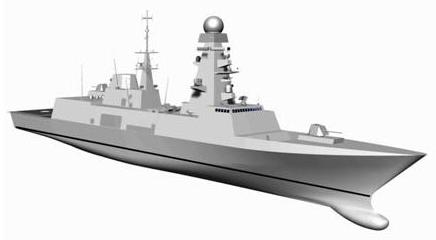
Showing posts sorted by date for query FREMM. Sort by relevance Show all posts

Monday, January 23, 2023

Can we Learn Something From the Air Force?


The Navy's tale of woe in trying to force the acquisition system to actually produce something besides process is almost too painful to recall, especially on the surface side of the house.

We have the walking wounded of LCS, the squib DDG-1000, the gilded promise Ford CVN, and the never-was-has-been CG(X). We have hope that we can't screw up the existing Franco-Italian FREMM in the upcoming modified to American requirements Constellation Class FFG, but we shall see if our optimism is well placed.

As we all wait with bated breath and gritted teeth on what may be with DDG(X), we should look around to see if there is a benchmark recently that did work. 

On the surface side of the house, LPD-17 won't quite make the cut as it was only made to work with a lot of additional money and Sailor sweat, though we can call it adequate, if a bit expensive and clunky in initial execution.

We can look over at the aviation side of the house, but that is quite spotty. F-35 is meeting our lowered expectations, but it is a Joint hobbled kludge. If you ignore the pile of pants that is maintenance, the sub side of the house seems to be doing quite well, but they're a special case in a variety of ways. The Super Hornet program was a great success, but that was only because NAVAIR tricked everyone in to thinking that it was just an update to the Hornet...which it was absolutely not. 

Hmmmm, a successful acquisition system from the 1990s that was a success by ... bypassing the acquisition system. Did anyone learn a lesson there?

Well, it appears the USAF did in the B-21. Via Stephen Losey at DefenseNews;

Following a dramatic unveiling of the B-21 bomber in California on Dec. 2, 2022, former Air Force leaders are holding a muted celebration. By moving from contract award to public rollout in seven years, they said in interviews with Defense News that they proved their acquisition strategy — despite McCain’s criticism — worked.

Better yet, they said, their unexpected approach might provide best practices for other major programs and serve as an antidote to the beleaguered development of the F-35 Joint Strike Fighter in the 1990s and 2000s.

Their secret? They learned how to limit bureaucracy.

“There were fewer checkers checking the checkers,” James said. “Don’t ever underestimate the ability of the Pentagon bureaucracy and these many, many reviews to slow the doggone thing down.”

Most notably, officials point to the unusual move to put the Rapid Capabilities Office in charge of the B-21′s development. That office had a narrowly focused team of skilled, experienced engineers and program managers, a board of directors to hash out key decisions and reviews, and an ability to cut through red tape, James said.

In other words, when you really want something done, you go around the system that is there to help you.

Kind of telling, isn't it?

...the Air Force’s decision to have the Rapid Capabilities Office take charge of developing the B-21 was a critical step in its acquisition process.

The Air Force created the Rapid Capabilities Office in 2003 to quickly develop, acquire and field some of the service’s highest-priority programs — many of which were classified, such as the X-37B Orbital Test Vehicle. The RCO is intended to take advantage of innovative approaches, “without the rigidity of traditional acquisition,” the Air Force said in an online fact sheet about the office.

The B-21 was a much larger program than the RCO typically managed, Wilson noted, but it worked. The office’s team on the B-21 was unusually slim compared to other programs, and it included some of the Air Force’s most experienced engineers and program managers. Most importantly, she said, they were trusted to use their judgment and go fast, without micromanagement.

“It was run very differently from other programs,” Wilson said. “You get high performers in the [RCO] program office, and you don’t crush their will to live with huge bureaucracies. … I think it’s a good example of how to do major programs better.”

Another data point in our long-standing call to uproot the not fit for purpose, accretion hobbled, rent seeking, and self-satisfied acquisitions system that best seems to serve itself. 

It is a human creation - not the revealed truth from some diety. Other systems have better served our nation. It is time to upgrade this one. 

If the end result does not have at least 50% few GS/SES, then we have failed.

Thursday, May 12, 2022

LCS Just Cracks Me Up


The best thing about LCS is that when you feel the need to take a break from the war in Ukraine, it delivers you news at just the right time.

Since its commissioning in 2018, the littoral combat ship Omaha has developed cracks in its hull and superstructure that limit the speed it can travel and the sea states it can operate in.
Four years old. Of course, cracks on warships are not new - we saw some issues with OHP, TICO and others ... but this is different.

Before we dig more, let's pause a bit and talk to each other as adults. As was amply demonstrated again yesterday on The Hill in front of Congress, our Navy has a loose association with the truth.

I'm sorry, that is simply a fact - and it is deeper than LCS or our various shipbuilding problems.

There are nicer ways to describe it than "lies" - and "loose association with the truth" is one way. You can call it "happy-talk" or "multi-iterative positivity filtering" if you want to get technical - but really it is just an institutional dysfunction with honesty.

It starts with things as basic as our FITREP/EVAL system. You can throw in our awards system on top of it as well. Even our selection boards with their "we don't need photographs to choose the right people but when we got rid of them we had trouble selecting the right people" that sound almost like a lie until you realize that, yes, we are supposed to be part of this lie so its not a lie - it is loyalty to a lie. Etc. 

In the LCS program's birth at the turn of the century to today, we have seen a path of self-deception that started with hope, then turned to personal loyalty, then careerism to keep what was clearly a sub-optimal program going. As they started to displace water and doubt crept in to those who held out hope that - glory be - no way our Navy leadership could really execute such serial malpractice, a pall of despair began to loiter around the LCS piers. 

So good people in hard jobs did their best to make the best of previous generations' failures...but at every step there was a need for this reason or that for even the best of people to keep a clear distance from unalloyed candor to themselves, their command, their Navy, and their nation's elected representatives. 

Was it just pride? Loyalty to people and not institutions ... or simply our culture? 

Well, those soft-science excuses and habits rarely survive the hard sciences of engineering and metallurgy. Those don't respond to spin or POM cycles. 

The last couple of years we simply had to surrender to reality and began to decommission non-operational LCS well before their expected life. We've relegated the odd-digit FREEDOM Class to secondary or no duty...but...even ole' Sal held out hope that the INDEPENDENCE Class would find of some utility.

The original sin of two decades ago - those compromises and waving away of technology risk - has caught up to even them;
Half of the Navy’s littoral combat ship fleet is suffering from structural defects that have led to hull cracks on several vessels, limiting the speed and sea states in which some ships can operate, according to internal records obtained by Navy Times and confirmed by sea service officials.
...
documents obtained by Navy Times warn that cracks can grow if the ships transits faster than 15 knots in seas with maximum wave heights of about eight feet.
...
Such cracks have since been discovered on six of those LCS variants, according to Baribeau, nearly half of the 13-ship Independence class fleet.
There you go. The core requirement was 40+ knots ... yet in 2022 we find what many of us warned about almost two decades ago.

What do you see here?
Asked whether the six ships suffering from hull cracks are operating with those cracks, Baribeau again responded that “all Independence variant ships have been inspected and are able to meet their operational requirements.”

The four-to-eight foot wave range of sea state 4 is “fairly common,” according to Martin, who reviewed the records for Navy Times.

“Being unable to go at speed in sea state 4 is a pretty significant limitation,” he said. “Fifteen knots is a transit speed, a very normal transit speed, less than half of LCS’s supposed maximum speed.”
Again, we see the customer - the Navy - talking as if they work FOR industry and not as a customer OF industry. They know the truth, but can't speak it?

Why? Well my sweet summer child - that is the culture.

As we can't avoid the Russo-Ukrainian War's lessons, what is one of the primary ones we have seen?

It is clear that the Russian military had an uncomfortable relationship with the truth. They lied up their chain of command about their readiness. They lied about their training. They lied about their material condition.

How did that work out for them?

That can be papered over in peace - but you can't paper over such things at war.

BZ to Geoff for keeping this in the news. We need to raise the profile of every LCS failure so it can be an example to future program managers.

Well, that is the theory at least. Let's see how FFG-62 works out. The French and Italians did a good job with their FREMM. They've teed the ball up for us - will we hit it?

Tuesday, March 22, 2022

A Friend's Frigate Benchmark

Want to take a break from the Second Russo-Ukrainian War? 

Good, so do I.

As we (well at least I) impatiently wait for the USS Constellation (FFG 62) and her sisters to start displacing water, it is interesting to see the design decisions other nations have made to meet their frigate requirements. 

As our new FFG will be the USN version of the French and Italian FREMM, it is natural to compare it to other European designs, but what about our friends in the Pacific? 

What are the South Koreans building? Let's take a quick side-by-side look at their Daegu-class frigate presently under serial production.

Of course, different nations have different requirements, and you can see it in the fact that the US Navy,  as a global navy, needs a larger frigate to get the range and endurance requirement we need to get to the fight and stay there. ROKN's concerns are a lot closer to home, and their design reflects this reality.

Constellation is expected to displace twice as much as the ROKN frigate...but does she bring twice the punch?

Well, you all know how stupid I think a 57mm is on a ship this size, but if you look everywhere else, you are getting a lot of fight for the size. I'm not too happy with the lack of TLAM. A ship this size should have this capability. We may want it to only do escort and ASW missions, but when war comes, warships over 7,000 tons won't have the luxury to pick out missions they want. I hope some of those MK-41 have ASROC in them and the NSM retain their surface-attack capability.

Anyways,  that is my quick look. The ROKN ship does not have the legs a USN ship needs, but for her size, she's a nice bit of kit.

h/t PointLuck.

Monday, August 24, 2020

Russian Shipbuilding "Suitcases Without Handles" - Sounds Familiar

For reference, Project 20280 is the Steregushchiy Class Corvettes. From a distance and looking at her lines and weapons capability, she seems at sexy, teethy beast ... and she is. 

As we have been our own worst enemy in surface ships this century, it is easy to despair as we see what other people are building ... but we should take some comfort in this; they are having troubles too. 

Take some time to dig through the google translation of an article from a topwar.ru on the challenge the Russians have had with where they were and want to be with their near shore surface fleet. 

Old Cold Warriors like myself still twitch at the thought of Russian/Soviet submarines prowling the northern latitudes ... but that threat is but a shadow of itself. What we can forget is that from the Russian point of view ... the threat from Western submarines never left. 

Walk a bit in the Russians' moccasins;
2016 was a landmark year in the Navy's approach to anti-submarine defense. This year, the last diesel corvettes 20380 and the lead corvettes 20386 were laid down. Since then, no other BMZ ANTI-WATER SHIP has been laid down in Russia. Four years later, in Russia, three (!) Corvette vital for the fleet remained in the construction, except for 20386, namely "Strict" project 20380, "Agile" project 20385 at the "Severnaya Verf" and "Sharp" project 20380 at the ASZ. And that's it! And this is in a country whose potential adversary's power is based on nuclear submarines of outstanding combat qualities. It's just unthinkable. 6 units of 20380 were delivered to the fleet, two more corvettes of project 20380 are being prepared for mooring (“Zealous” at “Severnaya Verf” and “Aldar Tsydenzhapov” in the Pacific Ocean). At the same time, the money for shipbuilding was quite allocated. "Monument of project 20386" has already spent huge amounts of money on itself, and, perhaps, "will ask for more." At the same time, the time of the ship's readiness is unknown and cannot be predicted, but the budgets for it have been mastered. A series of "suitcases without handles" is under construction - patrol ships of Project 22160. They are under construction with very limited combat capabilities of MRK. In general, these three undertakings were very expensive for the country: they could completely upgrade the surface fleet at BMZ with multipurpose ships. These expenses cannot be called rational. But the fleet developed without any intelligible strategy, and what happened was happening. The anti-submarine defense was weak before our eyes, but there was a feeling that this did not bother anyone.
"Suitcases without handles." I couldn't help but laugh at this problem we share with our Russians in trying to successfully run shipbuilding programs in the 21st Century ... and I can feel their frustration. We built Little Crappy Ships that seem to go few places and when they get there can do so little ... about as helpful as "suitcases without handles." Yes, I shall use that nice Russian phrase. 

I also can feel this sense of relief that - like our upcoming FREMM-based FFG(X), there may be relief on the way;
Corvette project 20380 in any of its options is not at all ideal. He has a lot of shortcomings. But today we have a choice between "nothing" and 20380. In such conditions, the renewal of the 20380 series is absolutely correct and uncontested. However, the question of what the corvette should actually be for the forces of the near sea zone, what weapons and capabilities it should have, has not lost its importance. And in the near future, an analysis of the possibilities of building such ships in the form in which they are needed will be done. In the meantime, let us congratulate the Navy on returning to the right path. Let's hope that this victory of common sense will be far from the only one.
Anyway, give the whole thing a read and give a nod to our Russian friends. At least we don't have their problems.

H/t SJS.

Thursday, June 04, 2020

FFG(X) - Clear Sailing

Perhaps, at last, it is time to get back to maritime topics.

As this is one of the few bits of good news I can find out there ... more evidence that my FREMM was the correct choice for FFG(X).
No protests have been filed over the Navy’s decision to award Fincantieri a detail design and construction contract for the FFG(X) program, clearing the way for work to begin, the Navy confirmed to USNI News.

Under contracting rules, bidders have a certain amount of time to protest the decision to the Government Accountability Office if they feel the contracting office made the wrong decision in evaluating bids against the stated requirements. That protest window ended Monday, Naval Sea Systems Command (NAVSEA) spokesman Alan Baribeau told USNI News, and none of the three losing bidders protested the decision.

“The GAO protest period for the FFG(X) contract award has passed and the Navy has not received notice of protest. The Navy is moving forward with execution of the contract, and has completed the Post-Award Conference. Detail design of the FFG(X) is commencing,” he said.
More hulls in the water, faster, please.

Wednesday, May 06, 2020

The SALAMANDER Class Frigate, Approved

Our friend Jerry Hendrix put out a nice overview of the selection of the FREMM for FFG(X).

I have a few thoughts over at USNIBlog.

Come on by and give it a ponder.

Thursday, April 30, 2020

FREMM Wins FFG(X)

As reported by Chris below, it looks like Fincantieri Marinette Marine won the first 10 FFG(X).

Yes, once again - the Navy chose the Salamander Option. Wise move.


Tuesday, April 07, 2020

Frigates, Now More Than Ever

There are some arguments that are so sound they become timeless.

In the lexicon of USN "Gods of the Copybook Headings" there is a, "We Need Frigates."

The call remains constant because the reasoning is sound and survives the test of time.

The standing requirement for the US Navy to have a ready percentage of its fleet in "smaller" multi-mission warships, AKA frigates and corvettes really can no longer be credibly argued against. LCS does not count, because they simply don't count for much. 

We have been on this message here for over a decade and a half. We have not been alone - another person engaged in our long-term insurgency to do what we can to get our Navy to do what it needs to do is Jerry Hendrix.


Detecting some quiet, he has set back up his drums to remind everyone the what and why.

Read the whole thing over at NRO, but here's the meaty bits;
So why are high-end ships being used so consistently to do low-end missions, of which counter-drug operations in the Caribbean and Pacific are yet another example? The answer is that the Navy doesn’t have the low-end ships to match with those missions.

“Low-end” refers traditionally to frigates and corvettes that are smaller than destroyers or cruisers, have smaller crews, lower sensor-system and weapons complexity, and lower costs so that navies can purchase them in larger numbers to perform day-to-day presence, escort, surveillance, and interdiction missions. British admiral Horatio Nelson referred to frigates as the “eyes” of the fleet, and historically corvettes were designed to be small enough to operate in an enemy’s close-to-shore littoral regions. By this standard the U.S. Navy’s littoral-combat ships would normally be considered corvettes. Although the Navy has purchased 30 of them, these ships have not been as effective as the Navy had hoped, with nearly all of them presenting difficulties with their combat systems. To fulfill the counter-drug mission described by the president and his team, what the Navy and the Southern Command really need is frigates, and fortunately, they should be coming soon.
...
To meet persistent requests and requirements, the Navy keeps about 110 ships deployed at any given moment — out of a total of only 296 ships. Normally a ship should spend about six months in maintenance and then six months in training before deploying for six months; it then returns home to spend another six months in a ready-surge status before beginning the cycle again. The Navy’s current 110-to-296 ratio means that compromises have been made throughout the cycle — truncated training or maintenance, or extended deployments, or ships unready for crisis surges. As the Navy charts its course to 355 ships, new frigates will offer a solution to the problem. For now, however, it must assign the high-end, and highly expensive, destroyers to perform counter-drug patrols off the shores of Central and South America, as well as to put additional pressures on Maduro.
For our FFG(X), I continue to ask that you light a candle for FREMM, and hopefully we'll see.

If you want to see what a challenger is building, check out the latest Russian offering.

Nice.

Tuesday, February 11, 2020

LCS: As We Always Have Known Her

As we stumble in to the Terrible 20s, with each passing quarter, the damage becomes clearer and clearer from the star-crossed poster child of the Age of Transformationalism, LCS.

The opportunity cost in reputations, institutional political capital, money, and combat capability is still not fully understood - we just know it is more than it appears.

Especially in the last five years, some smart, focused, well meaning professionals have invested their time, seabags full of cash, and barges full of Sailor sweat to attempt to salvage something of use from this exquisite Tiffany White Elephant.

By the end of this FY, we will have some good data on what their hard work yielded following deployments of the INDEPENDENCE Class to WESTPAC and FREEDOM Class to the Caribbean.

There are a lot of secondary indications that the operational side of the Navy has finally freed itself from having to defend the concept of LCS, and will just focus on doing what it can with what the Potomac Flotilla bought for them.

To underline this fact was the overdue announcement that the juice just wasn't worth the squeeze for the first four ships;
The Navy also plans to send several "less-capable" platforms into early retirement. That includes the first four littoral combat ships, which the Navy turned into non-deploying test ships in 2016, according to a Navy official familiar with the plan.
The first four ships are just too sub-optimal and different from follow on units to justify spending money and Sailors on.

Nice to see, and a smart move as the money starts to tighten.

While we are on the topic, over a decade ago I offered up "PLAN SALAMANDER" as the last-minute reprieve from making the mistake of going in to full production of LCS. It was, in essence, to license build a couple of dozen multi-mission Eurofrigates until we could come up with a US design. Of course, it took a decade or so until Big Navy came to the same conclusion, roughly, and we got FFG(X).

Over at twitter, a reader asked for an update, and there really isn't one - but there is this reminder in the last 24-hrs by the irreplaceable David Larter;
The Navy is expected to buy its first next-generation frigate this year, so here’s what the next few years are going to look like in FFG(X)-land, according to budget documents released Monday.

The Navy plans to award the frigate design and construction award to one of the competitors in July, the documents say.
July is close. We'll know soon.

Here is my take again on the four options, in order of preference.

Fincantieri’s FREMM design
: A proven, scaleable, multi-mission frigate that the French and Italians have enjoyed much success with. Lowest risk and most capable (though I'm still pissed we're putting a 57mm on a design that can take a 5" main gun).


Huntington Ingalls Industries Upgunned NSC: This has moved up my list because it is a relatively low risk design and has a good price point. Yes, there are many limitations, but this will answer the call for the next decade.

GD/BIW/Navantia’s F-100 variant: this pocket BURKE used to be my #2, but reading the tea leaves about numbers and cost desires from OSD and The Hill, I think this may be a bit too much for what we want from FFG(X). Great design though. Like FREMM, proven and multi-mission.

Austal USA’s INDEPENDENCE-class LCS based FFG: No. Are you kidding me? Are you serious? Just no. We've had enough of this vanity project and every time this stained class of ship pulls in to a foreign port our nation loses reputation. If this wins, everyone in OPNAV needs to be simply fired and replaced. Buddha knows we have enough people who can do the job better.

Tuesday, February 04, 2020

Is Lucy, tee'n up the Ball for Charlie Brown Again?

Beware of the Good Idea Fairy riding in to save you on the back of a unicorn.

How many times will we have to go through this cycle? 

Have we learned anything? I hope so. 

We have a new Fleet Structure Assessment on the way that is going to try to describe how we get to 355 by 2030.

This is great ... this is welcome ... but this is worrisome as I am hearing things that are giving me an eye twitch.

I think Meghan is trying to trigger me, but here we go;
“We haven’t done a really comprehensive force structure assessment in a couple of years; 2016 was the last one. So we started on a new path for that last fall, and what we’re finding in that force structure assessment is that the number of ships we need are going to be more than 355. And when you add in some of the unmanned vessels and things like that that we’re going through experimental phases on, it’s probably going to be significantly more than [355],” he said.

“There are certain ship classes that don’t even exist right now that we’re looking at that will be added into that mix, but the broad message is, it’s going to be a bigger fleet, it’s going to be a more distributed fleet, it’s going to be a more agile fleet. And we need to figure out what that path is and also understand our topline limitations, because no one wants a 355-plus fleet that’s hollow, that we can’t maintain. So we’re looking at balancing all those things.”
Wait ... we need to define "new" here. "New to the USN" or "new" as in PPT thick? I'm sorry, I'm not sure how we get anything in numbers by 2030 that can come from a fresh design;
Marine Corps and Navy officials at various conferences have suggested that the services are narrowing in on the Offshore Support Vessel as a model for what they want. Having several OSVs instead of one dock landing ship (LSD), for example, might be able to carry the same number of Marines but distribute them across the littorals instead of concentrating them on one hull – which defensively makes them harder to target and offensively allows them to be more agile under the Distributed Maritime Operations and Expeditionary Advance Base Operations concepts.
This has promise. There are some solid designs already out there.

If you are looking for numbers fast that have limitations, but are built here and have bite, we can look at the Ambassador MK III, I guess.

We are a a decade-and-a-half away from my call for PLAN SALAMANDER to license build an already building ship until we can get our act together for a domestically designed platform - but that is the only way to get there.

Tons of FREMM? I assume we will find out sooner more than later what magical class of ships this is going to be, but it can't be a clean sheet design. It can't be fully of "cutting edge" technology that as of the second month of 2020 is only PPT thick....can it?

No, really - it can't be. We've seen this movie before.

Like April 2012?

...where do we find ourselves with LCS. They are coming to the Fleet - in mass. More show up every few months. No mission modules. No actual proof of concept. Still slathered with technology risk and some things we do know; only 4-months deployable in an 8-11 month new normal .......... all disjointed and still not getting me closer to where I want to be - I want to be proven wrong, but so far I am only being proved right with each passing fiscal quarter. Each fiscal quarter I also see those who careers, reputations and ego are wrapped up in LCS act like the below when they have to explain away hard facts - and rely on hope.

We are a few years past the point of stopping all the damage LCS will cause in opportunity cost ... but not too late to mitigate its full impact. We won't be able to stop at 24, but not too late for 36. If we get all 55, it will be too late. We will have paid Bentley prices for a Yugo.
Heck ... Jan 2010 when we were looking at the NNFM and Reforming the Confederate Navy?
- Build DDGs at a limited rate, sufficient to keep one shipbuilder’s line open, and to keep technology current, but with the intent of reducing the Aegis force to 30 warships within 25 years. The steady state force of 30 ships costs $60B, so the SCN per year for a 30-year combat life is $2.0B.
- Introduce several affordable frigate designs of 2,500 to 3,000 tons and about 25 knots, with the goal of creating a force of 90 ships at a unit cost of $400M. Essential features are at least eight upgraded TASMs (tactical Antiship Missiles), strong close-in defense, and a modern ASW suite. The ships will emphasize sea strikes and ASW. Each must carry a helicopter or pair of UAVs.
- Design and build simple corvettes carrying about 50 land-attack missiles—upgraded TLAMs as it were. They are not fast, but 25 knots is desirable. They operate in silence, with any radiating platform being in the air or scores of miles away. Because of their simplicity and American shipbuilder design experience with stealth properties, the first design will probably be very much like the final one.

Merely for completeness we include here a component of 20 auxiliaries. The numbers and costs are unchanged from the 313-ship Navy plan.
Good googly moogly we have lost a decade spinning our wheels.

I will keep an open mind here - but there are firm constraints and restraints to get to 355 by 2030 ... with new platforms.

Words mean things ... and I will hold further critique in abeyance until I see how we are defining "new." 

Tuesday, July 09, 2019

FREMM Bulks Up

If it means they have to paint the FREMM pink and call the first in class the USS BARACK OBAMA (FFG 62), then so be it.

No shock for the Front Porch here that I've been TEAM FREMM from the start. It is, really, the best choice.

Do what needs to be done. I've already accepted the sub-optimal 57mm main gun in the hope that there will be a Flight II that will put a proper 5" up front - but one step at a time.

Let's do this sooner more than later.
To meet the U.S. Navy’s famously high survivability standards, the FREMM frigate design has had to hit the gym and pack on hundreds of thousands of pounds of muscle in pursuit of wining the Navy’s FFG(X) competition.

U.S. Navy ships are built like linebackers: able to take hit upon hit and stay in the game. But that comes at the cost of extra steel. And in the case of Italian shipbuilder Fincantieri’s FREMM, it meant adding hundreds of tons of steel,
...
“[The extra steel is] going into scantling, ballistic and frag protection, the way the spaces are laid out: We’re as compliant as a DDG. That’s a lot of steel. The compartmentation, the toughness of the ship, the U.S. requirements that are different from the European ships — we moved around some of that extra space; it gets classified very quickly.”

What hasn’t been compromised has been the modularity of the ship that creates routes for major equipment to be brought in and out of the hull so that replacing, for example, major engine or computer components doesn’t require cutting a hole in the ship, Hunt said.

The berthing compartments are also the same: four- to six-person staterooms with private showers for each room.
The last part there? That should seal the deal for everyone.

Thursday, January 31, 2019

So, the French are Lapping us in Frigates, Again?

Have you heard about the upcoming Frégate de Taille Intermédiaire [FTI – Intermediate Frigate] for the French Navy?

Well, you have now - and I have a feeling it will fill you with a sense of rage if you have any blood left in you.

We should be building this. We should have a diverse and balanced fleet.


As we suffer with the LCS pier queens, the French already have their superb version of the FREMM with the Italians ... but they are not happy with that. Not that it is bad - just the opposite - it is excellent. It is just that they understand how to design and build a balanced fleet.

Perhaps notsomuch efficient ... but effective? I'm not a fan of the tumblehome bow, but I'll allow a class to experiment with. 


Given the small amount of money they have to spend - they at least seem to be thinking right.

Ohhhh yes;
The FTI medium-size frigate will feature modular design with increased self-defence and long-range capabilities.

Overall length and midship beams of the ship are 122m and 17.7m respectively. With a displacement of approximately 4,200t, the frigate will carry up to 150 personnel, including 110 crew and 15 for helicopter detachment.

The ship will incorporate digital technologies for data processing and detection of evolving threats. Its wheelhouse will be positioned in the middle section.

A hangar and flight deck located at the stern will of the frigate will allow for the operation of a single unmanned rotorcraft system and / or NH-90 medium class military helicopter equipped with FLASH-based dipping sonar and MU90 lightweight anti-submarine torpedoes.

The medium-size frigate will additionally carry rigid hulled inflatable boats for patrolling and transportation.
For reference, the LCS FREEDOM Class is 115m long. Unlike our Little Crappy Ship, the FTI is a multi-mission warship;
The FTI will be armed with a variety of anti-aircraft and anti-submarine armament to attack aircraft and submarines and their crew.

An Oto Melara 76mm or 127mm naval gun will be mounted in a gun turret located in the bow deck to fight against enemy aircraft, submarines, missiles and ground-based threats.

Defence against littoral and coastal land threats will be provided by eight Exocet MM40 Block 3 all-weather weapon systems, installed amidships.

The frigate will also be fitted with two eight-cell A-50 type Sylver vertical launch systems for Aster 15 surface-to-air missiles in the bow, two 20mm remotely-operated weapons at the rear, 2×2 deck-mounted torpedo tubes for MU90, and an anti-ship missile decoy launching system.
Shall we do a side-by-side? Why yes, we shall. I'll throw in the FREMM multi-mission Italian version in there for scale;


Read up on the links above and ponder - for a global naval power - who is really building the right fleet?


Thursday, May 31, 2018

Three Days of the FREMM

Regulars here know I've been on Team-FREMM for years and have been as happy as a bee to see it on our Top-5 list for FFG-(X) replacement.

Our friend David Larter at DefenseNews give you a great overview of the contender. Read the whole thing, but here are the juicy bits;
The Fincantieri-built warship is a contender for the U.S. Navy’s next-generation frigate, the FFG(X), and the Alpino is on this side of the Atlantic giving the service a look at what the hull can do.

The Alpino is one of 10 FREMM destined to make up a significant portion of the Italian Navy’s surface fleet – four ASW versions like Alpino and six general purpose FREMM that replaces the variable-depth sonar array with a rigid-hull inflatable boat.

Defense News spent three days on board Alpino. Here is everything you need to know about FREMM.

Crucial Details

Length: 167 meters (547 feet, just 20 feet shorter than a Ticonderoga-class cruiser)

Width: 16 meters (52 feet)

Displacement: 6,500 tons

Top speed: 27 knots

Range: 6,000 nautical miles. During normal operations – not zipping around at 25 knots – you can get about two percent fuel consumption per day.

Propulsion: A combined diesel and gas system system of four diesel generators providing power to two electric motors that turn the twin shafts for up to 15 knots. Above 15 knots there is a single LM2500 gas turbine forward of the combining gear. You need two generators to run the screws or just the LM2500. All the main components can be switched out without cutting a hole in the ship.

The ship also has an Auxiliary Propulsion Unit that can spin 360-degress, has a top speed of seven kts, and can be used to do some nifty maneuvers. Getting underway from Norfolk, the Alpino pulled away from the pier without tugs, which is a breeze with the APU.

Power capacity: Four 2,1-megawatt diesel generators

Crew size: 167, but it can hold accommodate up to 200.

Warfighting

Missions: Primary mission is anti-submarine warfare. Capable of point-defense anti-air warfare, electronic warfare, anti-surface warfare and special operation insertion.

Design: The ship is largely enclosed with plenty of angles to reduce the radar cross-section.

Armaments: Two Oto-Breda 76mm Guns; 16-cell vertical launch; two three-tube torpedo launchers positioned both port and starboard; two Oto-Breda 25mm machine guns; two NH-90 helicopters.

Sensors: Primary sensors are the THALES variable-depth sonar, known as the CAPTAS-4, a towed array sonar and a hull-mounted sonar. The VDS deploys from a pneumatically controlled door and ramp system that in the general purpose FREMM is used for a 13-meter RHIB for special operations forces.

The ship is also equipped with an air search radar, surface search radar, an electronic warfare system, and commercial radars. The helo is strapped with FLIR, a surface-search radar, a dipping sonar, and Link 11.

Payloads: MU90 Torpedoes; Aster surface-to-air missiles; Teseo surface-to-surface missile; Milas anti-ship missile and anti-submarine missile, and Marte missile on the helo.
Of note, you can also upgun, converting the forward 76mm to a 5" mount.

The following are below the fold, but one could argue the most important things the ship brings;
The damage control system is highly sophisticated.

The ship is equipped with an incredible camera system that exists almost everywhere except the living spaces and spaces like central control that are constantly manned. If fire or flooding is detected in any space, a live video feed will automatically pull up on the screen of the damage control system monitors.

Fire boundaries on the main deck can be set automatically from central control with the flip of a switch, which releases the magnetized door stops, and the damage control officer can see when anyone breaks fire boundaries (he will let you know).

The primary fire system is highly pressurized water sprinkler system that sprays atomized demineralized water that decouples the fire from its fuel source. About a gallon of water is sufficient to handle most spaces, including main-space fires and the demineralized water protects electronics.
As bridge watchkeeping is in the news;
The bridge is state-of-the-art but in a way that makes your job easier, not in the way that saves people by lumping too many functions in one watchstander.
...
The visuals on the bridge are fantastic, with 180-degrees plus visible without stepping outside on the bridge wings.
Living conditions? Of course;
The crew lives in staterooms, the largest of which are two six-person staterooms for (of course) the Marines and air detachment. Most are four-person staterooms. One-person staterooms are for the embarked admiral, the captain, the executive officer, and the department heads. The rest of the officers are in two and four-person staterooms. The beds are the same throughout the ship. In the two-person staterooms the racks the fold out from the wall, with the bottom rack folding out into a couch. In the four-person staterooms the racks are fixed. Each stateroom has an identical private bathroom, officer and enlisted.
Nothing is perfect - but it is workable;
There are a couple of things on this version of the FREMM that would make the U.S. Navy uncomfortable in terms of design.

FREMM has only a single LM2500 and the redundancy-obsessed NAVSEA would likely want two. The AEGIS version of the FREMM being pitched by Finacantieri has two independent propulsion systems, one for each shaft, instead of two motors and one LM2500.
Here is the best thing about the FREMM; it is underway. The kinks are worked out. It does not have the original sins of either LCS class. It's not a mini-Burke. 

A side issue, but a real one, is that we are asking our allies to adopt the F-35. We should return the favor and let them know that, yes, we are mature enough to buy someone else's design if it is this good.

Time to cut steel.

Thursday, May 11, 2017

3 FREMM vs 5 LCS/FFG

Over on twitter, I asked a rhetorical question,
In war, would you want 3 FREMM, or 5 LCS/FF(G)?
Well, reader Thomas Shugart (@tshugart3) took time to answer to my question via a simulation of 3 FREMM (IT GP ver) vs 5 LCS/FF (SPY-1F, 16 NSM, SLQ-32).

Otomat range & Aster SAMs seem to win. 2 FREMM survive.

There you go.

Tuesday, November 01, 2016

Medium Sized Surface Warship: The French Solution

As a benchmark, the FREEDOM Class LCS displaces 3,500 metric tons.

As our next FF is going to simply be a modification of the LCS, it would be instructive to see what someone else with a blank slate and open mind would come up with to address the same fleet need.
The heavily armed frigates can be deployed in a wide range of missions such as anti-surface warfare, anti-submarine warfare, anti-aircraft warfare, patrol, maritime security, control of exclusive economic zone (EEZ), asymmetric warfare, and special forces activities.
In the French case, what can you get if you just bump the displacement up by 20% to 4,200 metric tons, half the displacement of a Flight II Arleigh Burke DDG?
...as delivery of the first frigate is set for 2023. With a tonnage of 4,200 tonnes, the FTI will be implemented by a crew of 125 staff. For 2030, these 5 new first-line frigates will complement the French Navy's order of battle of the 8 multimission frigates (FREMM) and the 2 Horizon-type air defence frigates.
Here is the sexy part;
The FTI will be armed with a variety of anti-aircraft and anti-submarine armament to attack aircraft and submarines and their crew.

An Oto Melara 76mm or 127mm naval gun will be mounted in a gun turret located in the bow deck to fight against enemy aircraft, submarines, missiles and ground-based threats.

Defence against littoral and coastal land threats will be provided by eight Exocet MM40 Block 3 all-weather weapon systems, installed amidships.

The frigate will also be fitted with two eight-cell A-50 type Sylver vertical launch systems for Aster 15 surface-to-air missiles in the bow, two 20mm remotely-operated weapons at the rear, 2x2 deck-mounted torpedo tubes for MU90, and an anti-ship missile decoy launching system.
...
Propulsion for the multi-mission frigate will be provided by a 32MW combined diesel and diesel (CODAD) propulsion system.

The mid-size frigate will have a maximum speed of 27kts and a range of 5,000nm at a speed of 15kt.
I don't see a lot of technology risk in this class. Looks like all the systems are evolutionary developments of proven designs. Price?
...a budget of €3.8 billion ($4.2 billion) has been set to build five of the ships for the French Navy.
It will be interesting to see two things; 1) Cost control. 2) How they could drop the price with economies of scale with exports. Imagine the cost if they were going to build 42 to 54 or so ...
The FTI has a modular design, and is thus capable of being scaled up or down to meet the different requirements of foreign navies.
As you may have guessed by the picture, there is one thing I am a bit skeptical about;
..features an unusual “inverted bow” intended to improve seakeeping in high sea states.
It is not as radical as DDG-1000, but we'll see how she does in the Bay of Biscay on a rough winter day.

On balance, looks like a well thought out program with few sketchy compromises that should serve France well. 

Good luck!


Thursday, September 29, 2016

On LCS: the Right Idea Waiting for the Right Leader

If you missed Jerry Hendrix's article at National Review on the 27th, read it all.

For the long time members of the Front Porch, there will be lots of nodding heads.

Here is all you need to see (and Nic, no need to re-post all the pics);
The Navy had planned to move toward a more robust, “upgunned” frigate in the future. The senators recommend that the Navy take this step as quickly as possible. In doing so, however, I believe that the Navy should not tie itself to the current platforms under production. Their designs have proven to be far too fragile for active sea service under rough conditions. Rather the Navy should look to other relatively cheap and reliable frigate designs, perhaps even foreign designs — such as the Italian and French Fremm class, or perhaps the Dutch Absalon class — for rapid introduction in U.S. shipyards. Given the proven stability of these designs and our nation’s desire that our allies and partners purchase some of our more expensive platforms, such as the Joint Strike Fighter, perhaps it would be a wise to show reciprocity and purchase foreign designs for construction in U.S. yards.
Exactly. It would show a lot of respect that we would do what we ask others to do as well. Oh, and look at NANSEN.

As those who have read Jerry's work we've linked to here in the past, and when we've had him on Midrats, you know he is a big fleet numbers guy - and he ties this in as well;
What is critical is that we continue to refine our littoral combat ships right up to the moment that we are ready to cut the new frigates into production. We simply cannot afford, with a Navy hovering at 272 ships, to cease production of these ships for even a year. Despite our addiction to high-end capabilities, we have discovered in our moment of “accepted risk” that quantity has a quality all its own and that we need to continue investing in a larger, more effective Navy. As for the problems the current ships face, we must depend, with apologies to them, on the technical ingenuity of the Navy’s chiefs and petty officers to figure out how to make these ships more reliable in both the short and the long term. This is not the first time in the history of the Navy that they will have faced such challenges, but, regrettably, never have they faced so many at one time.
He is spot on.

All we need is for the right people to buy on to this idea so we can move forward.

Tuesday, August 26, 2014

Naval Guns - Now More Than Ever

Whose up for some good gun talk? I thought so ...

I could spend a whole week just commenting section by section on this 2013 post from the blog UK Armed Forces Commentary.

So much of this is just plain common sense that seems to be lost in much of the commentary about naval gunnery, naval surface fire support, or whatever we are calling it now days.

Let's just mention some of my favorites, and I'll let you dig out the rest.

First, a well designed and proven 5" (127mm) round should be the minimum - air, surface - just an all around multipurpose mount - if you want to keep swarms at bay ... I love that pic to the right;
... firing trials of the 127/64 of the FREMM frigate Carlo Bergamini. The first image shows the excellent capability of engagement at very short range, which can seriously ruin the day for suicide boats and similar threats.
Let's ponder that gun for a moment;
On the FREMM frigates of the Italian navy, the AAHS is installed over two decks (deck 2 and deck 3) and can hold 350 rounds in addition to the 56 held in the feeding drums.
The 127/64 gun system is thus able to fire 30 and up to 35 rounds per minute. The Naval Fire Control System calculates the ballistic trajectories, programs the fuzes and, when the GPS-guided VULCANO rounds is used, sets up the GPS data before launch. It can be easily integrated via LAN onto any kind of Combat System, in a Plug and Play fashion. Thanks to the NFCS, the 127/64 is also very effective in anti-air role.

The VULCANO, differently from LRLAP, ERGM and SGP is not a rocket-propelled munition, but an under-calibre, rocket-shaped dart with a diameter of 90 mm. VULCANO employs a discarding sabot to be fired out of the barrel at extremely high speed while avoiding two of the main complexities of full-calibre rocket-propelled rounds: increased barrel wear and tear, and difficult deployment of the folding fins used for guidance. These problems, along with huge cost escalation, were the factors which killed the ERGM.

VULCANO is a steerable sub-munition with tail fins and canards. The submunition is the same in both the naval 127mm variant and in the land 155mm variant. The difference comes down to the sole sabot and launch charge assembly: the naval shell is an all-up round compatible with any NATO 5’’ gun, while the army variant is modified to employ land-specific modular launch charges.
The VULCANO family comprises the BER (Ballistic Extended Range) variant, which is not guided and only has fixed winglets: it uses aerodynamics and ballistic trajectory to extend its reach to 70 km, and it is useful for a long range bombardment in which pin-point accuracy is not needed.
OK, URR ... gird your loins and be prepared to swoon ...
The most interesting VULCANO variants are, however, the Guided Long Range (GLR) ones. These include:

- GPS / Inertial Navigation System
- GPS / INS / Semi Active Laser
- GPS / INS / Infra-red Imaging
...
The addition of a SAL seeker to the GPS and inertial navigation guidance makes this variant of the round extremely accurate. With external laser designation of the target, it can engage with high accuracy even moving targets.

The GPS/INS ammunition is mostly suited to use against fixed targets, whenever high accuracy is needed to reduce the risk of collateral damage. The Circular Error Probable for this round variant is inferior to 20 meters. This is possible thanks to the steerable canards and fins which guide the ammunition on the target with a near-vertical descent, which maximizes both accuracy and lethality.
The addition of a SAL seeker makes the VULCANO capable to engage small, fixed, moving and relocatable targets (including vehicles and small boats) with extreme accuracy, with a CEP reduced to a handful of meters. The Semi Active Laser seeker guides the shell on a target illuminated by an external laser marker, which could be “painted” on the objective by a UAV or by observers on the ground.

The IIR seeker is instead meant primarily for anti-ship role. ... The anti-ship VULCANO is meant to be fired over the area where an enemy ship is known to be sailing, and engage the target on its own.
Take a look at what our Italian friends have done to our little buddy, the 76mm Oto Melara ... now with extra Super Rapido;
With a rate of fire of up to 120 rounds per minute, the 76/62 can put a thick wall of iron and fire in the face of any threat aiming for the warship, but it is with the DAVIDE model (STRALES for the export market) that the CIWS capability of the 76mm gun was really achieved.

STRALES is a guidance kit, installed within the gun turret and comprising a radio frequency beam antenna which is normally hidden under a sliding panel in the gun shield, to the side of the barrel. The covering panel slides upwards to reveal the radio frequency antenna when it is time to employ the DART (Driven Ammunition Reduced Time of flight), a guided, sabot-discarding high speed round meant to shot down airplanes and missiles as well as take off FIACs and suicide boats. The DART is an hyper velocity munition capable to cover a 5 km distance in less than five seconds, with enough energy to perform up to 40 manoeuvers and course corrections.
I know this is all, ahem, "old think" ... but, well, get your SWO on!
The most impressive feature, however, is the possibility to employ both STRALES and VULCANO, from the same gun mount, giving the small 76/62 a formidable mission flexibility. ... Thanks to the Multi Feeding system, it is possible to modernize a SUPER RAPIDO or COMPATTO mount, with minimum impact on weights, so that it can simultaneously employ standard ammunition, guided DART rounds when it is necessary to shot down incoming threats, and the whole variety of VULCANO rounds for shore bombardment and anti-ship attacks.
I think that Deputy Secretary of Defense Bob Work should call his office. Here is something involving LCS that gets the Salamander seal of approval;
The evolution of the 76/62 has caught the interest of the US Navy, which during 2012 conducted an extensive design review of the Littoral Combat Ships which noted that the Bofors MK110 light gun is not as effective as would be desirable. One of the most interesting options on the table is the possible future fitting of the 76/62, replacing the MK110. ... It would be very easy to fit the 76/62 on the Lockheed Martin/Marinette Marine monohull LCS, the FREEDOM sub-class. A bit more complex, but not impossible, would be the retrofit of the trimaran LCS of the INDEPENDENCE sub-class, built by General Dynamics/Austal. With the larger caliber, the longer range, and the availability of the multi feeding system, with DART and VULCANO ammunition, the 76/62 would represent a dramatic improvement in firepower for the LCS.
Why couldn't we replace the 57mm with the 76/22 instead of the 30mm on DDG-1000? Because "exquisite" engineering, I presume. Sigh.

As for LCS, I'm not sure what the weight penalty would be, but with the NLOS area empty, there may be some options to ponder.

They have an nice write up about the DDG-1000 AGS 155mm ... with a few jewels that I haven't see in our press releases. Ponder this a bit;
... the more complex and time consuming loading process reduces the rate of fire of the AGS to just 10 rounds per minute, which means that a DDG1000 Zumwalt, with two AGS mounts, can fire around 20 rounds in a minute, against as many as 25 VULCANO rounds fired from a single 127/64 gun.

The LRLAP is also less accurate: the rocket booster is not the best friend of high accuracy, and the CEP is expected to routinely sit somewhere between 20 and 50 meters. The addition of a Semi Active Laser seeker to the LRLAP is reportedly being considered for the future to address this problem and expand the engagement capability, but this is all yet to come.
Of course, the combination AGS/Zumwalt makes for an impressive “bomber”: the 14.000 tons warship carries more ammunition (600 rounds in 2 magazines) than any likely 127/64-equipped vessel, and each shell is much larger, heavier and carries a lot more explosive. The massive gun is capable to fire them over greater distances, as well. However, the AGS is an extremely complex, massive and expensive solution which might never appear on platforms other than the Zumwalt, despite BAE’s effort in marketing an AGS-Lite.
Yes, exquisite.

There is also a depressing discussion of the ERGM and the US MK-45 Mod 4 and all that lost opportunity. Why are we getting our butts handed to us by the Italians of all people?

Really. 

Enough grumbling ... read the whole thing. There are some very exciting things going on in the naval gun arena. Not the PPT thick, theory, or "expected IOC by 2025" stuff ... but the very much "now" that can be used today.

Thursday, May 14, 2009

Ummm, because LCS isn't a Frigate?


I take the consultancy contract if they need another brain on this no-brainer.
The Saudi Navy is said to be still favoring the FREMM-class frigate and the Littoral Combat Ship (LCS) for its frigate programme. The following 403-word report included in Tactical Weekly of May 8, 2009, focuses on the subject and tells why the Saudi Navy still favors the FREMM-class frigate. It also tells whether it still prefer the LCS-1 built by Lockheed Martin to the LCS-2 built by General Dynamics. Besides, the report tells what about the other offers.
I don't care how much you bow to the King - the Saudi navy would be fools to go with the Little Crappy Ship over this.
Type: Frigate
Displacement: 6,000 tonnes
Length: 142 m
Beam: 20 m
Draught: 5 m
Propulsion: GE/Avio LM 2500 G4 gas turbine 34 MW + 2 EPM (4 D/Gen 2.1 MW)
Speed: Over 27 knots (50 km/h)
Range: 6,000 nautical miles (11,000 km)
Complement: 108 (accommodation available for 145)
Sensors and processing systems: Herakles (Fr) or Empar (It) radar

Armament:

MU 90 torpedoes
MM-40 Exocet block 3 (France version), Teseo\Otomat Mk-2/A (Italian version)
MBDA Aster SAAM
Otobreda 76 mm SR gun
Further armament depending of variante
Aircraft carried: 1 (Fr), 2 (It)NH90 helicopter, capability for EH101 (It)
Sigh. That is just the common gear (all versions have a multi-mission capability). If you see a need for more umph in a specific warfare area, you can add additional ASW, AAW or Land Attack missiles to suit your nation's specific need.

Sure, they cost about a billion dollars a piece - but that is because they are only building a little under 20 for FRA, ITA, GRC, and MOR. With appropriate economy of scale that we see for LCS - it would cost about the same as LCS in the end when you throw in a mission module or two in for measure. But FREMM, unlike LCS, is multi-mission with a basic loadout - and has twice the displacement. It also has a decent crew for actually conducting combat operations and maintaining a ship.

...but I guess it isn't "revolutionary" enough to build a solid usable warship - so we don't want anything close to a FREMM at under a $1 billion, right?

Harumph.