Showing posts with label Artillery. Show all posts

Thursday, April 21, 2022

America: the Arsenal of Democracy Again


We cannot do anything about the continental powerhouses in NATO who can also make a big difference helping the Ukrainians defend their soil. Specifically Germany and France, who mostly insist on token assistance or sitting on the sidelines relatively speaking as Russia gets ready for a mid-20th Century like summer offensive east of the Carpathians, but we can do what we can do.

Though our industrial capacity is not ready to support a long, global conflict - we do have quite a deep warehouse of items that are slightly used, but good for a few more years.

As we have already come off the sidelines in the Russo-Ukrainian War when it comes to supplying lethal aid, we might as well not hold back at this point

President Joe Biden on Thursday announced an additional $800 million in military aid to help Ukraine fight back against the Russian invasion, and he warned that Congress will need to approve additional assistance.

The new military package includes much needed heavy artillery, 144,000 rounds of ammunition, and drones for Ukrainian forces in the escalating battle for the Donbas region of eastern Ukraine. It builds on roughly $2.6 billion in military assistance that Biden had previously approved.

He also announced that all Russian-affiliated ships would be barred from U.S. ports.

Biden said that $13.6 billion approved last month by Congress for military and humanitarian assistance was “almost exhausted.”

“Next week, I’m going to have to be sending to Congress a supplemental budget request to keep weapons and ammunition deployed without interruption,” Biden said. Congress has signaled it is receptive to further requests and has been expecting there would be a need for further help for the Ukrainians.

Today's announcement has set down a clear marker to the rest of the nations who call themselves "The West."

We should all note who is standing where.

The new tranche of military assistance is expected to include 72 155mm howitzers, 144,000 artillery rounds, 72 vehicles used to tow to the howitzers onto the battlefield, and over 121 Phoenix Ghost tactical drones, as well as field equipment and spare parts.

The 72 howitzers are in addition to the 18 announced last week the U.S. was transferring to Ukraine.

A senior U.S. defense official said training of Ukrainian personnel on American 155mm howitzers has begun in a European country outside Ukraine.

Other nations are slowly coming off the sidelines too. The longer the Ukrainians hold out - and the more we continue to support them - the more of our traditional allies will help too.

Earlier this week, Canadian Prime Minister Justin Trudeau said his country will send heavy artillery to Ukraine. Dutch Prime Minister Mark Rutte told Ukrainian President Volodymyr Zelenskyy that the Netherlands will send more heavy weapons, including armored vehicles.

What 155mm towed artillery are we sending their way? Don't know. We presently use the M777, but we have a few hundred M198 they replaced in storage. Either will be fine, but we'll see.

Everyone should really go to the map room here, preferably grabbing one that shows terrain features. Southeastern Ukraine is wide open country. 


As the ground firms up, it is ideal for armor and artillery. This is well targeted aid for the fight to come;

This commitment, together with the 18 155mm howitzers announced on April 13, provides enough artillery systems to equip five battalions. The United States has now committed more than $4 billion in security assistance to Ukraine since the beginning of the Biden Administration, including approximately $3.4 billion since the beginning of Russia’s unprovoked invasion on February 24.

Our allies have a lot of towed 155mm in storage. We've supplied enough 155mm for five battalions, I am sure the rest of NATO can pony up for another five. I also know that there are A LOT of 155mm rounds in bunkers all over the continent from Spain to Germany; from Italy to Norway. If they won't spare the tubes, then they can at least clean out the back of the magazine. 

Summer is almost here. It takes awhile to transport, train, and man battalions of artillery. Faster my friends; faster. We are already in it, might as well help the Ukrainians win it.

Now, if someone would kindly jump in to comments and let us know what the hell a "Phoenix Ghost" is ... that would be great.

Tuesday, February 19, 2019

GWOT Fatigue Isn't Just an American Thing

While we are looking at things from an European POV so far this week, let's take a look at the Long War from a French front-line leader's perspective.

We've all felt his frustration. We, as in the West, are exceptionally casualty shy. We are willing to trade time for fewer deaths on our side. 

We will use our comparative advantage in air power and indirect fire as much as possible before putting infantry on the ground.

This "low investment/slow reward" strategy is not without its dangers though. We can lose patience, and the enemy can gain good PR by looking to be able to hold out longer than they otherwise would.

Let's head over to RFI. It is in French, so you will pardon this rough translation;
The commander of the French gunners supporting the Kurdish forces against the Islamic State (IS) group in Syria claims that the victory could have been achieved faster and with less destruction if the Westerners had hired troops on the ground.

Colonel François-Régis Legrier, who has been in charge since October of the French artillery detachment (Task Force Wagram) in Iraq, makes this scathing statement in an article in the Journal National Defense (RDN) which makes the teeth cringe Staff of the armies.

The last major battle against ISIS, fought from September to December in the Hajine pocket in eastern Syria, " was won, but at a very slow pace , at an exorbitant cost and at the cost of many destructions, " says the officer.

IS jihadists now only hold a square kilometer plot in Deir Ezzor province (east) near the Iraqi border. And US President Donald Trump assured Friday that announcements would intervene " within 24 hours " on the end of the " caliphate " self-proclaimed.

" Of course, Westerners, by refusing to engage troops on the ground, have limited the risks and in particular that of having to explain to the public, " notes Colonel Legrier. " But this refusal questions: why maintain an army that one does not dare to engage? "Continues the officer, who uses an unprecedented freedom of speech for a military officer in operation.

According to him, 1,000 seasoned fighters would have been enough to " settle in a few weeks the fate of Hajine's pocket and (to) spare the population several months of war ". It took " almost five months and an accumulation of destruction to defeat 2,000 fighters with no air support, electronic warfare, special forces, or satellites, " he said.
If Col. Legrier's AOR sounds familiar to Front Porch regulars, it is because he leads the French unit that we talked about, in part, with Col. Seth Folsom, USMC eight months ago.

If you missed it the first time, give it a listen now.


Tuesday, November 05, 2013

So, you want to make a name for yourself, eh?

I think Henry has set the bar a bit high.
Shrapnel, a British lieutenant, was serving in the Royal Artillery when he perfected his shell in the mid-1780s. A shrapnel shell, unlike a conventional high-explosive artillery round, is designed as an anti-personnel weapon. The projectile is packed with fragments — often sharp metal, lead balls or nails — and detonates in midair, spraying enemy troops in the vicinity with what the British quickly christened “shrapnel.”

In developing his shell, Shrapnel married two existing weapons technologies, the canister shot and the delayed-action fuse. ... Shrapnel’s refinement carried the shell intact to the enemy’s lines, where it detonated above the heads of the troops with much more devastating effect.

The British army, not quick to embrace innovation, did not adopt Shrapnel’s invention until 1803. It saw early action against the Dutch in Suriname but really came into its own after the Duke of Wellington demonstrated its effectiveness against Napoleon’s army at several engagements, including the Battle of Waterloo.

Henry Shrapnel, by then a captain, was rewarded with a promotion to major and soon thereafter to lieutenant colonel. In 1814, the British government awarded him a lifetime annual stipend of 1,200 pounds (about $128,000 in today’s money). Later, as inspector of artillery, Shrapnel also worked on improvements in howitzers and mortars. He ended his military career a major general.

The shrapnel shell was quickly adopted by the armies of all Europe’s great powers. Armorers across the continent tinkered with the design, mainly looking for ways to improve range, but Shrapnel’s original principle remained the basic blueprint through the end of World War I. By then, shrapnel shells could be hurled 6,000 yards and were being used in a variety of situations, including close infantry support.
...
As for the word itself, shrapnel has long been used generically to refer to any shell fragment.
There you go.

Monday, January 28, 2008

What the Canadian Army can teach the USN


Simple; the fundamental facts of warfare don't go away just because they don't fit your cute little theories.
Canada's Defence Department is planning to buy a lot of big guns, ...

The army is interested in acquiring as many as 34 new 155-200-millimetre towed howitzers to add to its existing stock of 12 M-777 guns, most of which are in Afghanistan.The program to re-equip gunners with state-of-the-art artillery began in 2005 under the former Liberal government when the army warned its stock of old 105-millimetre howitzers wasn't up to the demands of Afghanistan.

Under an urgent government-to-government procurement, the Defence Department bought six M-777 guns from the U.S. Marine Corps and later purchased six more from the British manufacturer, BAE Systems Inc.
In addition to going "oops, we need arty.." they also stopped sniffing the transformational glue about tanks when, yikes, combat got in the way.
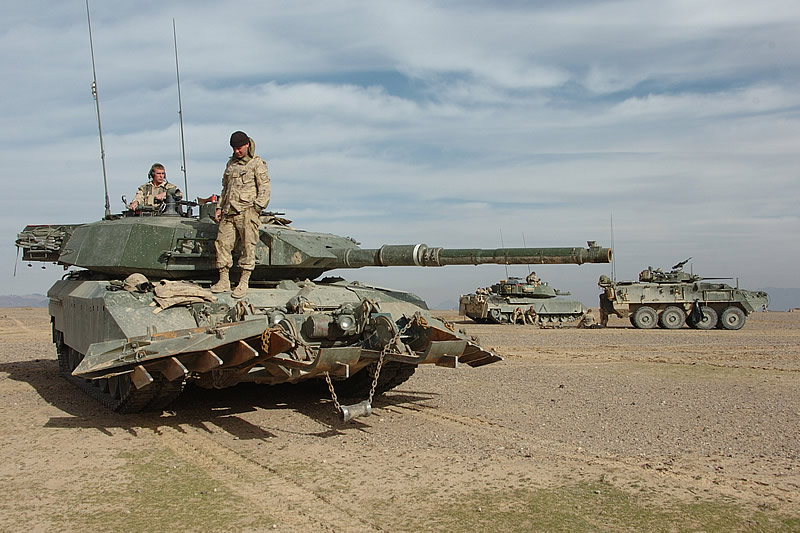
The Canadian Army is acquiring 100 Leopard II tanks, to be delivered from Dutch and Dutch army surplus. The purchase is a change of direction for the army and in particular for Chief of Defence Staff Gen. Rick Hillier, who only a few years ago described the Leopard tanks as "millstone around the neck" of the Canadian forces. The Canadians realized the importance of main battle tanks in recent months, as tanks were rushed in to Afghanistan to support the Canadian contingent stationed at Kandahar. As the new tanks are inducted by the Army, the Leopard 1C2 tanks currently deployed in Afghanistan are expected to be retired from service.
...
Yet, the intensity of recent conflicts, in Afghanistan, Iraq and Lebanon reestablished the validity of the tank as a highly protected, powerful and effective operational asset, which, at certain high threat scenarios, cannot be matched by more lightly armored wheeled vehicles. When employed in the proper manner, heavily protected tanks can survive most types of anti-armor and anti-material improvised explosive devices (IEDs), including shaped charge IEDs and landmines. They also offer unique capabilities of cross country mobility and counter-obstacle capability that cannot be matched by lighter armored vehicles. The Leopard 2 tanks will provide better protection against IEDs and landmines, compared to the currently deployed Leopard 1C2.
ASW. Coastal Mine Warfare. NSFS. Rinse, repeat.

PEO Ships; call you office.

Wednesday, May 09, 2007

Noooo!!! Not my MONARC!!!

Well, they tried.
The difficulty with placing 155mm howitzer-class guns on ships is the level of recoil, which can play havoc with a smaller ship's stability. The Germans have experimented with KMW/HDW's 'MONARC,' which uses a self-sufficient PzH-2000 mobile howitzer turret mounted on a 6,160 ton F124 Sachsen Class frigate. While an intricate elastic mounting system handled the recoil, adapting all of the PzH-2000's systems for the corrosive naval environment proved more difficult than expected and MONARC appears to have been removed from plans for the new F125 Class frigates.
Love the concept though. How much to "navalize?" Can't you just squirt some WD-40 on it? (funny story behind that WD-40 comment I will keep to myself)

Sniffle.


Let's at least watch the birth again, shall we?


Friday, February 16, 2007

Fullbore Friday

As usual, John over at Argghhh!!! always has some great Gun Pr0n. This entry from last week had me digging around my travel files for something that just breaks my heart.

Fullbore Friday is about a lot of things, in my mind at least; but mostly it is about examples from history about ordinary Sailors doing extraordinary things – and extraordinary Sailors changing history. Examples that every professional should examine for what they can tell us today.

History is so critical to the future. It isn’t a formula or a crystal ball – but it does show us patterns and gives up a sense of the rhythm and well-worn paths that always show up in the ventures of men.

When we neglect history, especially the artifacts – irreplaceable artifacts – of our past – it breaks my heart. Not only for the stories they carry with them, but the testimony they give to the reasons of their birth and the efforts of the people who built and used them. Standing in their presence gives us a greater understanding of their place and context – well beyond simple 2D pictures or words.

As anyone who has had the displeasure of traveling or going on TAD with me – I am the Adult-ADD poster child. If you give me a day, I will travel 4 hours one way to go to a town for 1 hour to see something and travel 4 hours back. I will leave the beaten path to hike up a mountain to find a plaque commemorating some obscure event I read about as a kid. I will walk into that basement bar because it looks interesting. I don’t care what others think – I am not going to spend a night playing Hearts and drinking Miller Light when there is a train station only a 30 minute walk away and we don’t have to report until 1000 the next AM.

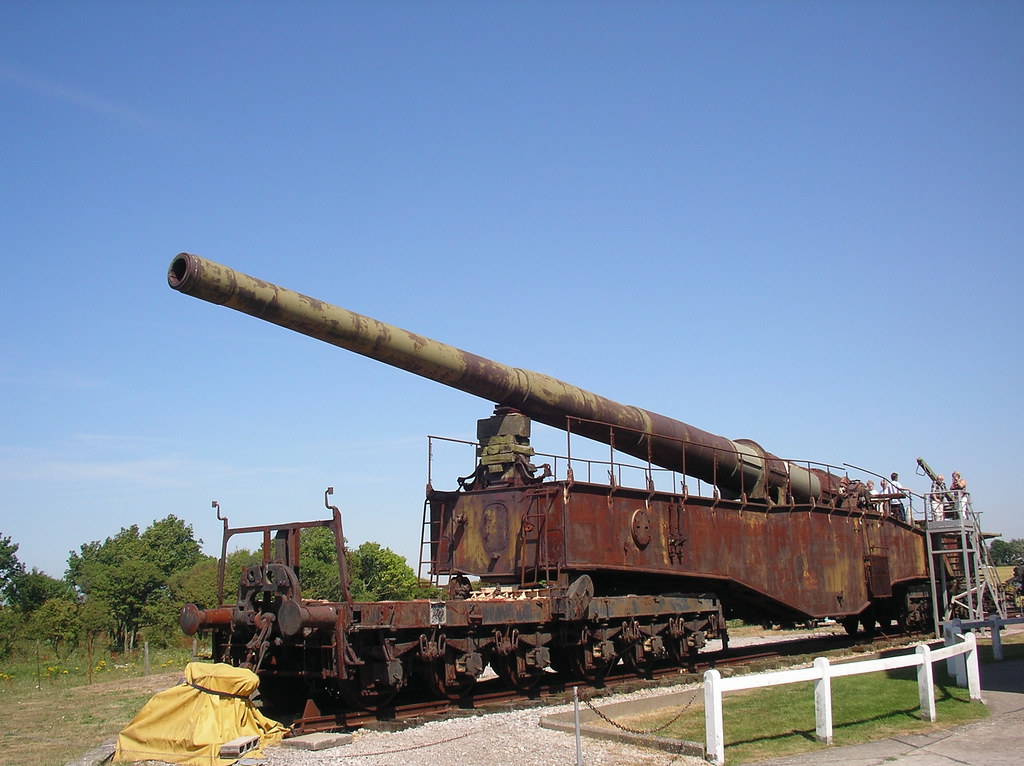
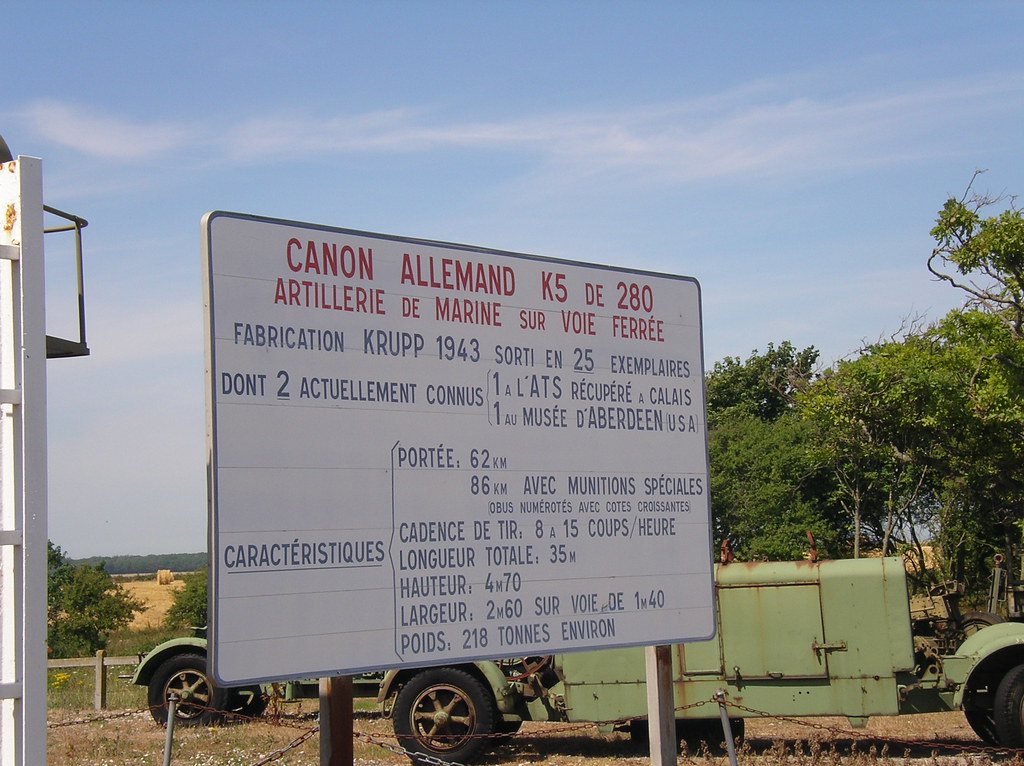
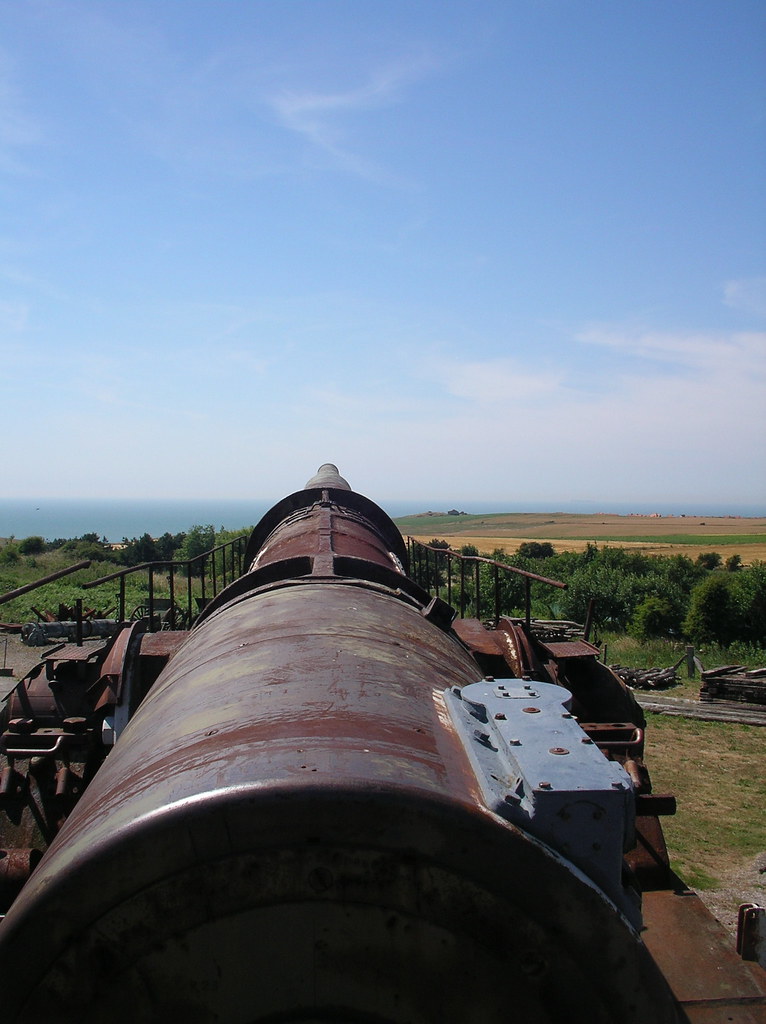
Anyway, on the NE coast of France I found the only Krupp K5 left in Europe,Leopold's brother, at Batterie Todt in France. That is where I wound up one beautiful day.

Here she is.

Read his background here in English or German, or here in French. He needs some love real bad – or soon he will be lost to weather and time.

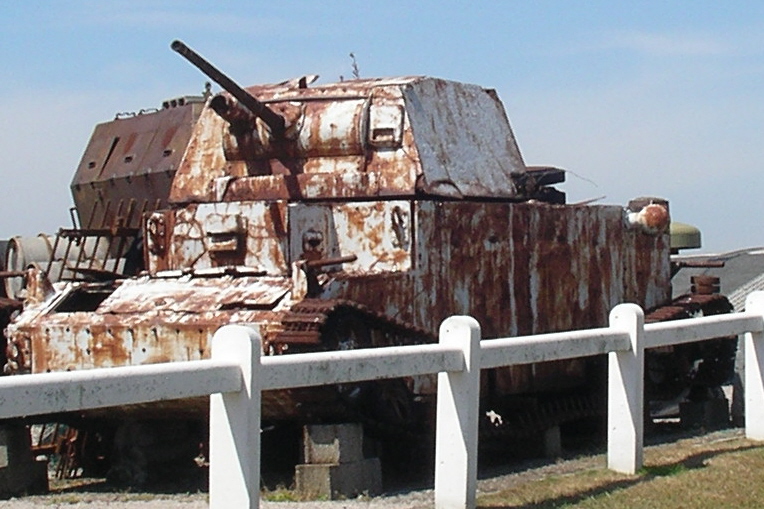
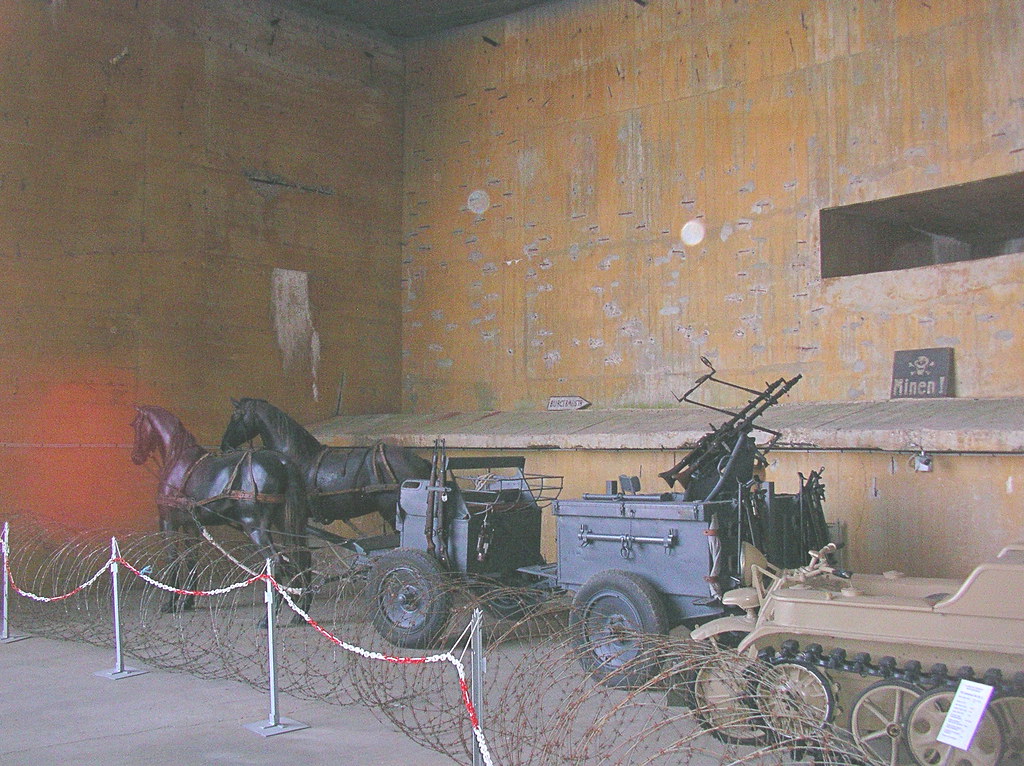
Oh, and while I was there I saw this example on why German AAA was hard to move around quickly – and something I KNOW John wishes he could have.

Often, rail-guns and the Western Wall are forgotten - they shouldn't be. A lot of people died either building, fighting, destroying or being on the receiving end of them.


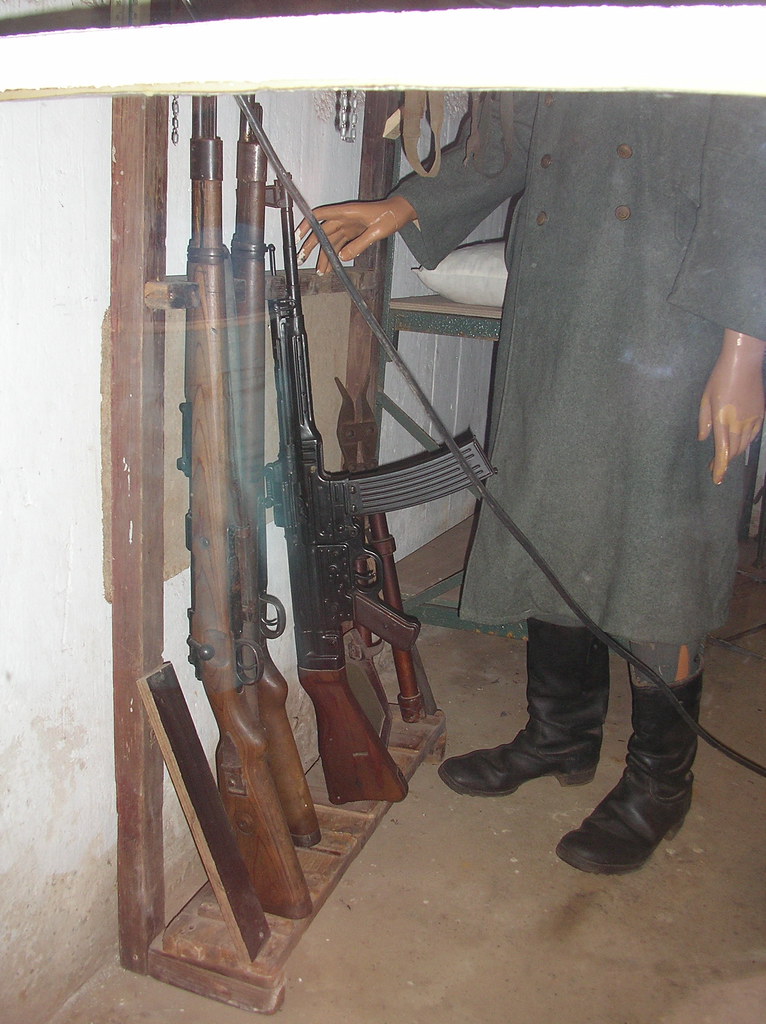
As an extra bonus in honor of John I ask the question (item found at the same location as above):
WHATZIS?

Friday, August 04, 2006

Fullbore Friday

UPDATE: Video and additionary commentary below. When I said "crane-on, crane-off," I didn't realize that was a fact. Look what they crane it off of...

This one is for John. I wonder if you can get Joint Credit for this thing.....

This was a joint demonstration project by Howaldtswerke-Deutsche Werft (HDW), Krauss-Maffei Wegmann and Rheinmetall W&M. Standing for "MOdular Naval ARtillery Concept for Naval Gun Fire," MONARC is a 155 mm/52 (6.1") PzH 2000 howitzer turret that has been mounted on the deck of the German Frigate Hamburg as a feasibility study for naval applications.

The 155 mm/52 (6.1") gun was developed by Rheinmetall Industrie AG and has a chromium-plated barrel. It uses a semi-automatic wedge type breech mechanism with an integrated 32-round standard primer magazine. Gun parameters such as chamber temperature are monitored automatically. The muzzle velocity is determined automatically by means of a radar sensor and is used in the fire control computation. Modular propellant charges are used, with up to six "bags" being used per shot, depending upon the range to the target. These modular charges are said to allow faster handling, cause less wear on the gun and have a lower sensitivity to ignition hazards.

The gun positioning and laying system is produced by Honeywell Maintal and is mounted on the gun cradle. The system automatically determines gun direction, position and elevation above sea level with a built-in Global Positioning System (GPS) receiver.

By the end of 2002, general contractor Krauss-Maffei Wegmann had supplied a total of 185 Pzh 2000s to the German Army.
...
By using a flexible mounting rather than rigidly fixing t he turret to the deck in the conventional manner, the impact of residual acceleration on the structure of the ship during firing is expected to remain at an acceptable level. Since the turret is essentially self-sufficient, all that is required is a 24-volt power connection and a secure link to the operations room and the bridge.
What isn't to like about this? Inexpensive, plug-in, crane on-crane off. Considering the lame guns the Germans carry, they may need this option down the road. Anyway, who doesn't want an Iron Cross on their Main Gun?
Here is the video. Of note; we have yet to see the gun for the DDG-1000, also a 155mm, make a shadow. Funny Germans....they thought.... Now, if you could find a way to put it in the empty Mk-13 launchers in the FF(not-so)G-7s we have left. But, as you will see tomorrow - that may not be a good idea.


Hat tip Byron.