Showing posts sorted by relevance for query VISBY. Sort by date Show all posts

Thursday, March 22, 2007

LCS solution: build the Visby

UPDATE: A good video that lets you look over the Visby is here - and a better overview of how the Swede's view Littoral combat is here.
Sometimes when you find yourself in a huge mess, like we do with LCS, you need to go back to where you started. From back when it was still called a Streetfighter, read
this.
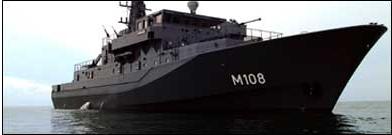
While it’s anyone's guess as to what a Streetfighter might look like, Mahnken says a platform like the Visby, a Swedish Navy corvette, is promising. Delivered by Kockums AB (whose parent is Germany’s Howaldtswerke-Deutsche Werft) in June 2000, the Visby is the first of six 73 m corvettes that incorporate the latest stealth technology. The vessel’s lightweight hull, which is made from carbon fiber reinforced plastic, has large, flat angled surfaces, which results in a very favorable reflection of radar waves. Additionally, air defense systems and other types of sensors are concealed behind specially designed hatches within the hull, further minimizing the vessel's radar signature. A highly adaptable, the Visby Class can fill many roles that would otherwise require the procurement of several mission-specific platforms. It can be outfitted for Anti-Submarine Warfare (ASW), Anti-Surface Warfare (AsuW), mine countermeasures and patrol.

Propulsion for the Visby is supplied by four gas turbines, rated at 16,000 kW total at high speed operation, and two diesel engines, rated at 2,600 kW total, for low speed operation. The engines are connected to two gearboxes that drive a pair of waterjets. Top speed is in excess of 35 knots.
And cost? We are already pushing $400 billion+ without Mission Modules. Remember where we were?
Each LCS hull must cost no more than $220 million, in 2005 dollars. The “objective cost,” the price the Navy wishes for, is $150 million.
Let's take a deep breath. Where did we go wrong? First, the 45+ knot requirement made the cost spike and required a lot of engineering work that costs lots of money and tradeoffs in other areas. 35 knots is more than fine. Then we forgot multi-mission and went modular. We went from a "nice to have but not must have" CEC (Combined Engagement Capability" into the fuzzy "distributed and networked." Then we went from onboard to offboard weapons. It all cascaded from there.


So, that is where we started. Why the Visby now? Well for starters, it is there and available - heck they even have a Visby+ in the works if you want a larger ship.

The cost is right ($180-250 million depending on what source you access).

I sure like the engineering plant.
Vericor Power Systems announced that the first Swedish Navy Visby-class stealth corvette was recently launched powered by four TF50A marine aeroderivative gas turbines in a Combined Diesel Or Gas (CODOG) turbine configuration.

Vericor Power Systems provided the TF50A propulsion packages that are used as the main propulsion system along with two MTU 16V 2000 N90 diesel engines. Honeywell Engines and Systems in Phoenix, Ariz., manufactured the TF50A gas turbines.
The Visby as it may not be quite what we want - but the Visby+ as described may be. That PDF is nice as it gives you a solid overview (with pictures) of the Visby's constuction. Composites are a big part. Personally, I like things any HT can repair, but the pluses may outweight the minuses. For reference and review, I recommend this lecture from U.C. Davis.

Before I forget about it - another thing that we keep overlooking WRT the LCS - let's just be honest here in the family. We need new "Destroyer Tenders" to do this right. I was reminded of that, and other "issues" on this guy's post. Worth a read as well.

Sometimes you can't let the perfect be the enemy of the good. To paraphrase General Patton; a many good ships on station now are better than a few perfect that may or may not be on station in 10 years - or even perfect.

The Visby could use RAM or such, but unlike the Legoland LCS concept, the Visby comes to the fight with everything else she needs.
* Bofors 57 mm/70 SAK Mk3
* 8 × RBS15 Mk2 AShM
* 4 × 400 mm tubes for Type 43/45 torpedoes
* ASW mortars
* mines (as needed)
Review the Visby in more detail here and here, and then tell me if you have a better idea inside the LCS concept (NB: I like Frigates better - but lets stick with the LCS/Corvette concept).

Another thought; imagine if we had bought a production run of 6 Visby. Forward deploy them to, I don't know, Japan. Validate the concept. Know what works - then if you want, build a flight of new construction design if the Visby does not fit the bill. If we did that in ~2000 - right now those ships would be on station in the Northwest Pacific or even the Persian/Arabian Gulf. We used to do things that way.

Heck, we could have gone cheap and built the Skjold. Anyway, we should get moving - some people are already using our PPT paintjobs.

Tuesday, March 10, 2009

NB: they ain't putt'n this on the VISBY


These MIW ships were all built between '84 and '92.
The introduction of the upgradedLandsort-class MCMVs.

The key elements of this new MCMV concept are new combat management systems, search radar and fire control systems, as well as new sonar and new ROVs.

HMS Koster and HMS Vinga have already been handed over to the end customer, FMV (the Swedish Defence Matériel Administration). The next step is when they are commissioned for service with the Swedish Navy.

...

Now HMS Koster will head this newly upgraded series of five vessels, which are designed to meet today’s most stringent requirements. It means that the Swedish Navy has acquired a modern mine countermeasures system with a new generation of subsea ROVs, advanced air defence capability and extended mission capability.
Koster-series provides the Swedish Navy with new vessels at the cutting edge of technology. It is Kockums that has been entrusted with the upgrade of five former
In case you don't know, the VISBY was once a candidate for what became the LCS - that is supposed to do MIW, we'll see.

Wednesday, January 16, 2013

LCS Gets Some Travel'n Shoes

Actually, I kind of like it. In some mission sets where visual matters - I can see where this might buy you some time, and that is good.

It is also experimentation and builds some ship's pride in being unique, and that is good.

LCS-1 is in dire need of a paint job in any event.

Anyway - if you can't have a war horse, which LCS isn't yet; if you can't have a work horse, which LCS will never be; then you probably have a show pony. If you are going to have a show pony - make it look as good as you can. Play the hand you have.

We chatted it a bit yesterday - so here you go.  LCS-1's new paint scheme Earl Scheib will give her before her "deployment" to Singapore.

Salamander approves.


Look at some of her peers' paint jobs ... and though we'll see once it gets put on - but how about the HOUBEI:


.... and the VISBY:


OK. I think we have them beat in aesthetics, but as for those funny things making smoke .... let's not talk about that right now.

Well we won't ... but if you would like to snark along like we did yesterday, I highly recommend Spencer's article from the other day.

Tuesday, April 29, 2008

Procurement Holiday Blowback


I almost titled this "Clinton Era Blowback," but ...

Anyway, interesting bit on A15 of the Washington Post yesterday that reminds us how we got here.
The shrinking pool of U.S. manufacturers was the inevitable result of defense spending reductions after the Cold War. Shortly after Bill Clinton took office, then-Defense Secretary Les Aspin and Deputy Secretary William Perry called together the heads of the major defense contractors and told them that the Pentagon would soon need only half of their companies, perhaps even fewer, and could not afford to pay for unneeded factories and workers. Later dubbed the "Last Supper," the dinner meeting triggered unprecedented consolidation as defense companies such as Lockheed, Northrop, General Dynamics, Raytheon and Boeing gobbled up competitors.

Although the consolidations helped contractors survive the spending cuts, they now threaten to undermine the industry. That's because many in Congress and at the Pentagon want to impose stricter oversight and controls on weapons manufacturing and development while simultaneously demanding more competition -- driving the system to an immature and evolving "globalized" marketplace.
...
Unless we act soon, we may find that the only solutions available will be to nationalize the military industrial base or to "outsource" production of our weapons systems, with excessive portions of that work going overseas.

We are, carelessly and unwittingly, meandering down both paths.
They talk about how to de-consolidate and broaden the base. Well, for shipbuilding the best way to do that is to stop the "high-cost, low production" model we have right now. With $700 million (ship + mission module) Corvettes, $3 billion "Destroyers" and $1 billion LPD - your Tiffany Fleet will not keep the yards busy. Stomping your feet and demanding 313 ships will not make cash magically appear our of the backside of Congress. Waving The Maritime Strategy about while mantra-like changing Transformational Technology, will not make hulls appear pier side.

Want yard work and a good, balanced fleet? Kill DDG-1000 at two hulls and then reclassify them for what they are, CG-74 and CG-75. A ship the size of the Graf Spee ain't a Destroyer. Roll the technology into CG(X).

Kill the LCS/Mission Module concept. License build the VISBY or LCS-I, which ever is best following a "sail off" - and call it a Corvette. Look at one of the successful Euro-Frigate/Destroyers or the F-310 and/or
AFCON Corvette. Then we can figure out with a new perspective on the design for a Destroyer to replace the DDG-51 class. If you can't make up your mind - keep the DDG-51 line going for a few more ships until we get our rectal-cranial inversion corrected.

Build a dedicated MIW ship. Oh, and I want at least a dozen conventional submarines.

Have a better plan? I'd love to hear it. If you think marching forward with LCS and DDG-1000 will get you to 313 ... then you are a funny guy (or girl ...I mean lady ...I mean woman ...whatever - at least I tried to be inclusive).


Hat tip JH.

Monday, March 18, 2013

No Hobgoblins in CNSL's Nogg'n

Via our buddy Chris at DefenseNews, you may want to tighten your 5-point harness a bit. We have gone from here;
It’s a high speed, shallow draft, multi-mission workhorse full of technology that is our future. As we decommission different ships of various classes, LCS will step up and fill multiple roles.
To here;
A recommended re-evaluation of the next flights of LCSs — beyond the 24 ships now delivered, under construction, on order or with contract options — is only part of a classified memo, “Vision for the 2025 Surface Fleet,” submitted late last year by the head of Naval Surface Forces, Vice Adm. Tom Copeman, to Chief of Naval Operations Adm. Jon Greenert. The Navy’s current plans call for building 52 littoral combat ships, so if the service opted to go in a different direction it would essentially cut the LCS program of record in half.
OK, avoiding foolish consistency isn't too bad. Hey ... remember LCS(I) from '06 & '09, and VISBY from '07?
The successor may either be the Freedom-class or Independence-class designs now being built, an up-gunned, multimission variant of the current ships, or a completely different type of ship, according to senior Navy officials familiar with high-level thinking.

The up-gunned, multimission variant would perhaps be similar to the “international” versions that both builders have developed to entice foreign customers.
Something is going on here ... VADM Copeman ... have you been hanging out on the front porch all these years, or is everyone at last going Salamander on us? More people owe me beers.  More;
Also recommended, sources said, is a replacement for today’s dock landing ships limited to capability and capacity actually needed, rather than the expensive San Antonio-class LPD 17 amphibious transport dock ships (LPDs) being built. Shipbuilder Huntington Ingalls already is proposing a scaled-down LPD, dubbed LPD Flight II, that keeps the LPD 17’s big hull but dispenses with many of the 17’s more expensive features and larger superstructure.
Wow. Welcome to 2005.

Well ... I'm not being fair. Just like you can't classify math - you can't take credit for common sense. The following is something we used to complain about since I was and Ensign & Bush 41 was President ... and it is still true.
The fleet also needs a better anti-surface missile with increased range and the ability to destroy an enemy warship, yet not too expensive. Copeman also called for more credible ship-launched anti-submarine weapons.
We are WAY late in having an adult conversation about our ASCM and more importantly, our LWT capabilities.

This paragraph is a bit more sporty;
Copeman, according to several sources familiar with the document, also recommended against building the DDG 51 Flight III destroyers, a modification of the Arleigh Burke class to be fitted with the new Air Missile Defense Radar (AMDR) under development to replace the SPY-1 radars used in Aegis warships. The AMDR, designed with higher power and fidelity to handle the complex ballistic-missile defense mission, will require significantly more electrical power than the current system. And, while the AMDR apparently will fit into the DDG 51 hull, margins for future growth are severely limited.

Instead, sources said Copeman recommends creating a new, large surface combatant fitted with AMDR and designed with the power, weight and space to field “top-end energy weapons” like the electromagnetic rail gun under development by the Navy.

The new ship could also be developed into a replacement for today’s Ticonderoga-class missile cruisers in the air defense mission of protecting deployed aircraft carriers — a mission Copeman says needs to be preserved. All flattops have a “shotgun” cruiser that accompanies them throughout a deployment, but the missile ships are aging and, by 2025, only four will remain in service to protect the fleet’s 11 carriers.
I differ.  FLT-III is a gapfiller ... really a light cruiser. It will word as a "good" as to be frank; we have only begun the budget squeeze - through 2030 we simply do not have enough money for "perfect." 

We cannot re-capitalize our Strategic deterrent even at half-strength and design-build a new large surface combatant at what will be a much smaller budget (unless we ignore, in spades, Jim Lacey). Prior to 2030 we nor any other navy will be fielding in any operationally significant manner a "top-end energy weapon" - much less design-build and deploy in 12-years from now when we are down to 4 TICOs.

No, the CGL that will be the FLT-III will have to do.

Hat tip Travis.

Thursday, November 01, 2007

No more LCS-4

Told you so. Money talks.
Secretary of the Navy Donald C. Winter and Chief of Naval Operations Adm. Gary Roughead announced today that the Department of the Navy is terminating construction of the fourth littoral combat ship (LCS 4) for convenience under the termination clause of the contract because the Navy and General Dynamics could not reach agreement on the terms of a modified contract.

The Navy had not yet authorized construction on LCS 4, following a series of cost overruns on LCS 2. The Navy intended to begin construction of LCS 4 if the Navy and General Dynamics could agree on the terms for a fixed-price incentive agreement. The Navy worked closely with General Dynamics to try to restructure the agreement for LCS 4 to more equitably balance cost and risk, but could not come to terms and conditions that were acceptable to both parties.

The Navy remains committed to the LCS program. “LCS continues to be a critical warfighting requirement for our Navy to maintain dominance in the littorals and strategic choke points around the world,” said Winter. “While this is a difficult decision, we recognize that active oversight and strict cost controls in the early years are necessary to ensuring we can deliver these ships to the fleet over the long term.”

“I am absolutely committed to the Littoral Combat Ship,” said Roughead. “We need this ship. It is very important that our acquisition efforts produce the right littoral combat ship capability to the fleet at the right cost.”
I won't argue with the CNO, but, um , ... heh.

Speaking of a Fleet we cannot afford,
House and Senate negotiators on the fiscal 2008 defense authorization bill are at odds over a provision in the House-passed measure that would require the Navy to make its future fleet of surface combatants nuclear powered.

The Navy is building nuclear aircraft carriers and submarines, but the House language would establish that it is the "policy of the United States" to use nuclear power for all major vessels, including destroyers and cruisers.
For a rare moment, I find myself in agreement with Sen. Webb (D-VA).
Sen. Jim Webb, D-Va., another Armed Services Committee member and a former Navy secretary, said he generally supported using nuclear energy on large vessels, but was opposed to issuing a mandate to the Navy that the service may not be able to carry out.

"In theory I support it," Webb said. "The question is the practicality."
Sen. Collins (R-ME) is right on target as well.
The up-front costs of nuclear-powered vessels are estimated at $600 million to $800 million more per ship than conventionally powered vessels.

"It is considerably more expensive to build a nuclear-powered ship in the first place," said Sen. Susan Collins, R-Maine, a senior member of the Armed Services Committee. "Given that we are already underfunding shipbuilding, I'm concerned that that means we'll be further away from reaching the [Navy's] goal of a 313-ship fleet."
Yep. 200 and change is looking more and more like it. Contract building VISBY or NANSEN not that far out of the box now, is it?

Tuesday, April 09, 2013

T.X. Hammes Goes Salamander on LCS

Hey ... via the latest issue of Proceedings, this should ring a bell on the Front Porch;
The Littoral Combat Ship is overpriced and underperforming, yet the Navy continues to support it. It’s time to abandon the LCS and replace it with a comparable vessel that costs the same, but is far more capable. There are several great candidates in other navies, but one we might consider is the Danish-built Iver Huitfeldt –class frigate.
Welcome aboard for Plan Salamander since ~ 2005, though we have often offered up from the Swedish VISBY, Norwegian NANSEN, Dutch SEVEN PROVINCES, or the other Danish ship ABSALON - anything but the Little Crappy Ship ... but IVER HUITFELT is new for 2012 ... and it sounds like a player.
... a Huitfeldt carries 16 Harpoon missiles, with a range of 124 kilometers, and a warhead of 227 kilograms. It also has two 76-mm guns that reach 16 kilometers. One of the 76-mm guns can be replaced with the U.S. 127-mm gun, which has a range of 24 kilometers. For close-in defense, each ship also has a 35-mm Oerlikon Close-In Weapons System and four 12.7-mm machine guns or two 20-mm cannon.

For air defense, each Huitfeldt has 32 standard SM-2 missiles with a range of 167 kilometers in a Mark 41 VLS launcher. This system is backed up by 24 Evolved Sea Sparrow RIM 162B anti aircraft missiles with a range of 16 kilometers and four Stinger missiles.

For ASW, each Huitfeldt carries two twin-torpedo tubes for the Eurotorp MU 90 active-passive homing torpedoes with a range of 15 kilometers. Like the LCS, the Huitfeldt has a hangar that can house two light helicopters or a mix of helos and drones.

The Huitfeldt can sail 9,000 nautical miles at 15 knots, compared to the LCS’s 3,500 nautical miles at 14 knots. Crew sizes are similar.

In short, today’s Huitfeldt outclasses all three versions of the 2017 LCS in every category. The Danish ships provide vastly superior antiaircraft, long-range strike, and ASUW capability, while also providing equivalent ASW capability and the flexibility inherent in 65 additional billeting spaces.
You should read his summary takedown of LCS's failures, simply exceptional. Nothing we haven't done here, but good to hear from some like Hammes, and to see it done so cleanly.
It’s time to cancel the LCS program and build ships of comparable cost and capability to those of our European allies. If Denmark can figure it out, the U.S. Navy can, too.
Can we have an amen? Oh, one wee snark - Denmark has a population of 5.5 million and they can do this (a little more than Minnesota).  Ponder that.

Oh, and if you didn't catch Hammes when he was a guest on Midrats last December - give it a listen.

Wednesday, January 27, 2021

Is Sweden Going to Lap us Again?


Plucky Sweden, a nation 32 times smaller than the USA, produces some exceptional weapons - mostly on her own.

Looks like they are going to leverage Visby ... and I'm a bit jealous.

I'm seething over at USNIBlog.

Come on by, pull up an Ikea chair, and push some meatballs and herring around the plate with me.

Saturday, March 01, 2008

Boeing prangs it

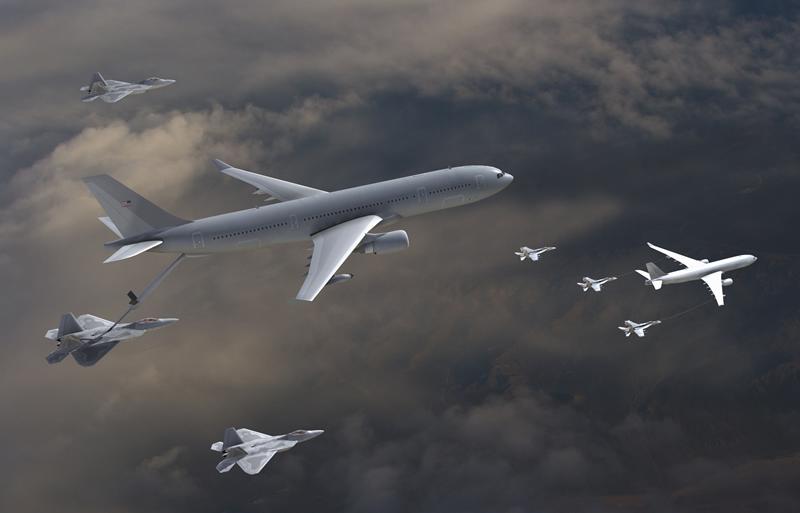
Well, at least GE will make the engines and the good 'ole boys in Al-a-bam-a will build it. The profits mostly go to the EU, but such is a competition.
Northrop Grumman Corp. won a U.S. Air Force program valued at as much as $35 billion to build 179 aerial refueling tankers with partner European Aeronautic Defence & Space Co. in a surprise decision that breaks Boeing Co.'s half-century hold on the business.

Northrop, based in Los Angeles, and its team won an initial contract of $1.5 billion for development and design of four test aircraft and five options valued at $10.6 billion to build 64 aircraft, the Air Force said in a statement today. Boeing was the unanimous pick to win in a Bloomberg News analyst survey this month.

The new aircraft, to be named the KC-45A, will replace Boeing-built KC-135 tankers flown by the Air Force since 1956. If all contract options are fully funded, the tanker program would become the largest Pentagon project since 2001 when Lockheed Martin Corp. was chosen to build the Joint Strike Fighter.

``This was definitely a surprise win,'' said Peter Arment, an analyst with Greenwich, Connecticut-based American Technology Research, who has a ``sell'' rating on Boeing stock. ``Northrop had a plane with more capability for cargo and fuel capacity and those capabilities made it very compelling. The Air Force decided that was the direction they wanted to go in.''
...
The two bidders took different approaches to the contest, with Northrop and EADS offering a larger plane to carry more fuel, cargo or passengers, and Boeing offering an aircraft closer in size to the current fleet.

Northrop's 192-foot-long KC-30 carries 250,000 pounds of fuel, 24 percent more than the 202,000 pounds that Boeing's 159- foot KC-767 can haul. The current tanker is 136 feet long and carries 200,000 pounds of fuel.
Can we now build the Visby, Nansen, or something?

Tuesday, November 17, 2009

LCS - truth trumps PPT

There was once a time when the core group of LCS critics were a small, lonely, bunch. Picked on by many - called nasty names - dismissed as not being transformational enough in our thinking.

Always derided as not understanding that historical norms, institutional knowledge, and a traditional understanding of a warship at sea no longer applied to today's 21st Century Navy. Didn't we see? We are even creating new naming protocals for our ships! Entire classes will begin their hull numbers with "21!" Better yet, "1,000!"

It wasn't so much the cost - it wasn't so much the etheral transformatinalist's language - it wasn't the wave-of-the-hand dismissal of damage control reality that bothered everyone at the core; no. What was most worrying was the focus on manning to a minimum in full knowledge that watchkeeping and ship's maintenance could not be radically reduced - as humans are human - they have to sleep, eat, and take care of those things mammals need to do.

Sailors have always been "hybrid." When a ship is engaged in combat operations - it has never been overmanned. Damage control, extended combat watchkeeping, and fighting hurt always required a properly manned and trained ship. These things the LCS critics took as self-evident. The "Optimal Manning" cult of the Green Eye Shade though did not. Hope is not a plan, but for some it sure was a manning concept.

Like we often warned - after a few PCS cycles, shadows appeared pier-side, deployments were planned, ships needed to be manned, and missions needed to be done - that changes would have to be made.

Behold.
The Navy’s first littoral combat ship, Freedom, will add 20 sailors to its crew when it makes its trial deployment next year, making for a total complement of about 95 people, as opposed to the crew of 75 the ship was originally designed to carry.
...Freedom’s 20 extra sailors would sleep in two 12-rack berthing modules, about the size of shipping containers, which will ride in the ship’s multiuse mission spaces. While the 75 core crew members will stay in the ship’s integral berthing spaces — which include double-tall racks, rooms of no more than eight sailors, and a head and shower to each berthing area — the VBSS sailors’ lodging will be more like those of sailors on a destroyer, he said.

“The racks are exactly the same — there’s a vent fan, a night light above it, there’s the same strap to hold you in. They’re that creamy beige color with the little step,” Good said.
Did you catch that? My first thought - how much extra space will there be in the multiuse mission spaces for mission modules?
In addition to the extra sailors, Freedom’s “tailored” surface warfare package will include two 33-foot rigid-hull inflatable boats for its VBSS sailors; its two Mk 46 30mm guns mounted on the multiuse boxes atop the superstructure; an armed MH-60S Seahawk; and “quite a collection of boarding team equipment,” Good said, including flak jackets, small-arms weapons, grappling hooks, and specialized gear for at-sea boardings.

Freedom will not take a Fire Scout unmanned helicopter or any of the maritime robots it’s designed to carry, nor will it carry the Non-Line-of-Sight missiles designed to be part of its surface mission package. That weapon, being developed with the Army, is still being tested.
Friends - in this case - "tailored" means incomplete.

So, what do we have here? From the sounds of it - there is no way you could fit a complete Surface Warfare Package in an LCS, as - moment arm concerns aside - I don't think you could fit the additional people and equipment to support NLOS, Firescout etc. I will give you partial credit though - assume a one for one swap for Seahawk and Firescout - just to make it simple as we go forward on this post. But still .... is this what we mean when we talk "Surface Warfare Mission Module?"

We should probably call this something else - as what they are putting onboard isn't going to be doing much Surface Warfare. Call this the Maritime Law Enforcement package .... which is a Coast Guard Mission ... which makes LCS ..... wait for it .... a very fast, very expensive Patrol Gun Boat with extra space.

Thank you - pay the bartender, I will pick up my beer on the way out.

Let's get back to the manning issue though.
Cmdr. Don Gabrielson, Freedom’s Blue Crew commissioning commander, who has since moved on to a position on the Joint Staff, anticipated criticism of the Freedom’s taking extra people. It might be seen as an early concession that the ship can’t operate in the real world with the small crew for which it was designed, but that’s not so, he said.

“People are going to say, ‘Hey, this is more people than they said they’d need. They’re lying to us!’ ” he said. But just as an LCS will take aboard custom equipment to hunt submarines or mines, so too does it need custom gear — in this case, sailors — for a visit, board, search and seizure team, he said.

“VBSS is a manpower-intensive evolution. I did one deployment to the [northern Persian Gulf] and boarded 400 ships in three months. Sometimes, when you board those ships, you keep them, lock them down for five months at a time, and you need sailors aboard all the time when they’re in that condition.”
An LCS can’t spare any of its 75 sailors — 40 multitasking core crew members and 35 sailors from a mission-module and an aviation detachment — so it needs the extra hands.
Shipmate - what I am missing? You have a partial, excuse me, "tailored" mission package, but you still have to bring and extra 20 personnel? I thought you said 35 were for the mission-module? So, let me do my NROTC BA math here; 35+20=55 to support just a partial, excuse me, "tailored" mission package?

Funny - I didn't see that vignette on a PPT anywhere. Oh, weren't we warned by the Antitransformationalists about the fact that operating at sea is by it very nature a "manpower-intensive evolution?" Weren't they told to sit down and shut up? Oh yea - thought so.
“One of the things we’re looking at is crew workload. We’re monitoring it, and it was deemed prudent that we should bring on a separate team for that [maritime security operations] boarding team capability,” said Capt. Mike Good, the program manager for LCS’s mission modules.
You bet it is. Thing is - there is no reason this needed to be said in 2009. "We" knew this over a half decade ago, but no one wanted to hear it.

Now that we have handled the manpower issue in macro - let's look at it in micro.
“The racks are exactly the same — there’s a vent fan, a night light above it, there’s the same strap to hold you in. They’re that creamy beige color with the little step,” Good said.

However, the berthing containers will not include showers or heads for the extra ship riders. For the trial deployment, sailors will use the core crew’s heads and showers, and Naval Sea Systems Command will look into developing a new stand-alone restroom container for future use with, but not part of, the extra-sailor berthing modules.

“As you might imagine, it’s a better strategy to separate them,” Good said.

Gabrielson said the VBSS team using the crew’s heads and showers “was a nonissue.”

“It’s not something where people are gonna go, ‘This is bad,’ ” he said — but it could be tricky given the geography of the ship.

Many of the ship’s heads and showers are inside the eight-person berthing spaces, meaning VBSS team members will have to enter crew members’ berthing rooms to use their facilities. Chiefs and officers also share heads and showers.
Nasty spin. Why do we teach our leaders to spin? In this day and age, you are not fooling anyone - you just degrade your credibility.

Don't call an issue a "non-issue." Don't say that is isn't something a Sailor is going to complain about as bad - when you know very well that the poor SOB's in the live nearest bearthing area with a head and shower to the two 12 man shipping containers are going to find a bad experience dealing with a parade of their fellow Sailors bust'n a55 in their head all night long as they try to sleep. It is one thing to share a head with 8 men eating poorly - it is altogether another thing to double that number or more.

How about we just acknowledge the challenge, say we will mitigate it and move on? Don't pi55 on Phil Ewing's head and tell him it's raining. That is just insulting.

So, there you go. So far, LCS is moving along just like we told you it would. Shame - this was avoidable. All we had to do was go with the VISBY option or even better - Patrol Frigate along the lines of the better European designs.

Sigh. And the people responsible are still not held to account.

Friday, April 25, 2008

NYT on LCS


Better late than never, but hey; welcome to the party NYT - on page 1 nonetheless!
Moments before the launching on Sept. 23, 2006, Adm. Mike Mullen, the chief of naval operations, told the festive crowd of shipbuilders, politicians and Navy brass assembled at the Marinette Marine shipyard, “Just a little more than three years ago, she was just an idea; now Freedom stands before us.”

Not quite. The ship — the first of a new class of versatile, high-speed combat vessels designed to operate in coastal waters — was indeed bobbing in the river, just four months after the promised launching date. But it was far from finished. In fact, the ship floats there still, work continuing day and night.
...
The bill for the ship, being built by Lockheed Martin, has soared to $531 million, more than double the original, and by some calculations could be $100 million more.
Regular readers know the rest of the story, but let's pull out the juicy bits.
In a narrow sense, the troubled birth of the coastal ships was rooted in the Navy’s misbegotten faith in a feat of maritime alchemy: building a hardened warship by adapting the design of a high-speed commercial ferry.
Actually, if you accept compromise - it can be done. The WWII Flower Class of Corvettes are a case in point.
Behind the numbers in the Accountability Office study, experts say, is a dynamic of mutually re-enforcing deficiencies: ever-changing Pentagon design requirements; unrealistic cost estimates and production schedules abetted by companies eager to win contracts, and a fondness for commercial technologies that often, as with the ferry concept, prove unsuitable for specialized military projects.

At the same time, a policy of letting contractors take the lead in managing weapons programs has coincided with an acute shortage of government engineers trained to oversee these increasingly complex enterprises.
...
In their haste to get the ships into the water, the Navy and contractors redesigned and built them at the same time — akin to building an office tower while reworking the blueprints. To meet its deadline, Lockheed abandoned the normal sequence of shipbuilding steps: instead of largely finishing sections and then assembling the ship, much of the work was left to be done after the ship was welded together. That slowed construction and vastly drove up costs.

“It’s not good to be building as you’re designing,” said Vice Adm. Paul E. Sullivan, commander of the Navy branch that supervises shipbuilding.
That isn't a new knowledge. Arrogance and ignorance of history and design best practices is what is going on here. At the beginning, those who asked the hard questions were told to sit down and shut up by those who now point the finger at others.
Despite the problems, the Navy secretary, Donald C. Winter, and other top Navy officials say they remain committed to building 55 of the ships, once a steady, fixed-price production run can be assured. Even at about $500 million apiece, Navy officials add, the coastal ships would be a bargain compared with most Navy combat vessels.
With what mission modules?
“The littoral combat ship is an imaginative answer to emerging military requirements, but it has the most fouled-up acquisition strategy I have ever seen in a major military program,” said Loren Thompson, a military analyst at the Lexington Institute, a policy research center.
What emerging military requirements? SHOCK! A ship looking for a mission?!?
“We needed to figure out how to asymmetric the asymmetric guys,” recalled Adm. Vern Clark, who championed the ships as chief of naval operations from 2000 to 2005.
So, there we have it. That is what is so laughable to almost be - no, is - a farce. You cannot be "asymmetrical" with the uber-symmetrical concept of,
To Navy planners, a ship designed for coastal combat could neutralize hostile submarines, surface warships, mines and terrorist speedboats, clearing the way for other combat ships to operate in offshore waters and support combat ashore.
That is a set of missions the USN has been working on for well over a century - take out speedboats (nee Motor Torpedo Boats) and submarines and you can go back centuries. Pathetic.
The Navy also wanted ships that could travel fast, better than 40 knots. And they needed to be easily outfitted with different weapons and surveillance systems. A removable package of mine-sweeping equipment, for instance, could be replaced with a package of special-operations gear used by a Seal (sic) team.
Changing out Mission Modules and "hybrid sailors" is and will never be "easy." Also, the enemy will not wait for your non multi-mission platform to change out its mission modules. Taffy-3 can tell you that you only have minutes to go from ASW to ASUW - as can the British force off the Falklands can tell you that a ship in the Littorals needs to go from NSFS, to ASW, to AAW in a few minutes as well - if not at the same time....but we have covered that insanity in the whole LCS concept before - let's keep plowing through the NYT piece.
Each ship would carry an uncommonly small crew, about 40 sailors.
INSURV bait.
But as Lockheed and the Navy were completing contract negotiations in 2004, the rules changed drastically. Commercial ferry standards, the Navy determined, would not do.

The underlying principle behind the decision, Admiral Sullivan said, was that the new ships had to be able to “hang tough in a storm and take some battle damage and still survive long enough” for the crew to be rescued.
Again, this is news? Who is the "we" and have "they" been fired?
Adm. Gary Roughead, the current chief of naval operations, said: “We had thought that the commercial variant would not be that far away from what we needed. I’ll tell you, that was underestimated.”
Here is a nice place to ask, "Where is the SWO VADM Tom Connolly when you need him?"
Rear Adm. Charles S. Hamilton II, one of the Navy officers with lead responsibility for the project, said he had given Navy officials several opportunities to slow down the project.

“The clear signal from all quarters was, ‘Hamilton, I want that ship in the water, and I want it out there now,’ ” he recalled in an interview.

Admiral Hamilton left the Navy last year. He now works at Booz Allen Hamilton, the consulting firm.
Who were they RADM Hamilton? Names please. Oh, right - that might impact your new gig. Cue my 5-year moratorium for retiring Flag Officers please ....
Yet if the project was troubled, the Navy’s oversight at Marinette was less than robust. Because of staffing reductions, the Navy office responsible for supervising shipbuilding initially dispatched no one full time to Wisconsin. Even after a team arrived, it failed to appreciate the severity of problems.

“We had very junior people on site,” Admiral Sullivan said.
And who decided to send such a junior team to such a major problem? I would love to bounce the seniority of this team off the senior paygrades in the Diversity Directorate and the CNOs gender and diversity advisors. Priorities and all ...

There is some slack to cut - but maybe not as this wasn't mentioned in all the Happy Talk that started this fiasco.
“It will be great, the next time around,” said Mr. North, the program manager. “Lead ships are truly hard.”
True, but this is also true.
Mr. Winter, the Navy secretary, complained that the Navy bureaucracy had failed to alert him to rising costs. The Pentagon, he said, was bedazzled by the idea of saving money and time with commercial technologies.

“It got oversold,” he said. “The concept was just abused.”

He lamented the Pentagon’s eroding expertise in systems engineering — managing complex new projects to ensure that goals are achievable and affordable — and faulted the notion that industry could best manage ambitious development projects.

“Quite frankly, industry is not good at doing this,” he said.
Names. Again, if you want accountability - you need names. We can't tar & feather - but we can name names.
“If we do not figure out how to establish credibility in our shipbuilding programs and plans, and restore confidence in our ability to deliver on our commitments, we cannot expect Congress or the nation to provide us with the resources we so urgently need.”
Yep, but we knew that going in. No one had the moral courage though to get out in front of this problem. Good people who brought up the fact that if you get in close, any Gomer with a 12.7mm and symmetrically take care of your paradigm were told to sit down and shut up.

Some people, yet to be held to account, decided that it was best inside their short PCS cycle to let their relief take care of it - someone else will clean it up, right? We have jobs as consultants to get quickly, right? Well, that time is now.

LCS - the gift that keeps on giving. We haven't even gotten to the mission module issues. LCS-I or Visby and then lets move on....shall we?

Monday, January 11, 2010

Reforming the Confederate Navy


What characterized the Confederate Navy? Though many things - she was scrappy, inventive, and had some outstanding leaders - in line with many things in the Confederacy though, she suffered a fatal flaw that doomed her. In her case, the Confederate Navy placed her bet on a few grand ships to make the "transformational" break.

When we think of the Confederate Navy, we think of the CSS VIRGINIA, CSS HUNLEY, and at least I think of the CSS SHENANDOAH. Wonderful platforms, but in the end did little but absorb people and resources.

The Confederate Navy adapted where she could, but when faced with having to build a fleet from scratch - she threw her lot in with transformationalism. VIRGINIA and HUNLEY were wonderful ground breaking designs and concepts - built against tremendous odds - but in the end they were like the nation they served - beautiful losers destroyed by their own fatal conceits.

What was their conceit? They thought that a few high technological breakthroughs thrown into a few hulls and applied with a bit of tactical verve could triumph over the many primarily pushing sound fundamentals.

I think alternative history is a goofy subject when real history is so much more interesting, but if Sherman never made it through the Atlanta defensive lines and the Democrats won the '64 election - someone would have had the opportunity to look at the wartime record of the Confederate Navy and set about building a better, more balanced fleet based upon what worked.

Funny the things that will tangentially come into one's mind. When I got through looking over the
PPT and PDF from the exceptionally poorly titled The New Navy Fighting Machine, what came to mind was the conceptual challenge of a post-war Confederate Navy.

Goofy, no? Well, work with me a bit; tell me if you see it.
NPS Professor and retired CAPT Wayne P. Hughes, Jr. and his crew deserve congrats for a very good and thought provoking work - one that if not related, then at least that folds in well with the conversation CDR Henry J. Hendrix, Jr. brought forward in Buy Ford not Ferrari.

You could spend a few thousand words discussing in detail their work - which we don't have time for right now - but let me take some time to point out the good, bad and others.


The good;
First of all, the PDF shows a great focus on China, and the China challenge influences a lot of their ideas. That intellectual honesty and clear headed view of the future makes the discussion in and from the document of much greater use than the 2/3 of our
latest Maritime Strategy that I find so useless. As that touchstone, the China challenge is an important reference when looking at what they offer.
... we anticipate formidable Chinese sea-denial capabilities that will threaten to reduce American influence in East Asia.
Already taking place. I have called it the Porcupine Strategy. They don't have to be the biggest or most dangerous - they just need to make it look too painful to mess with.
Submarines in greater numbers are central to the maritime strategy, but within a constrained budget the larger force cannot be exclusively nuclear powered. We find that diesel submarines with air-independent propulsion not only allow twice as many submarines, but they also nicely complement the SSNs in the critical scenario.
That is for the USA - and I don't think you can buy and maintain twice as many SS as SSN - but perhaps close to 3 to 2. Still a sound concept. If an early 20th Century designed Type VII, then a 21st Century SS can handle a little transit time.
Perhaps most important of all, we emphasize maritime power as the foundation of present American influence and international prosperity. Sea power’s value is well appreciated by our friends around the world, but is taken too much for granted by the American public. The United States is a maritime nation and the United States Navy is its great manifestation.
That last sentence should be put on a bumper sticker and some JOPA DC DET types should put it on cars in all the nice parking spots at the Pentagon.
Concurrent with broad agreement on the new fighting machine’s characteristics, it is necessary to calculate whether its personnel costs will be more or less than the cost of manning, training, and supporting the 313-ship Navy. Our impression is that:
- In numbers, manning 650 mostly smaller ships will be about the same.
- In terms of individual, shipboard team and fleet tactical training, the cost will be somewhat less.
- The cost to support recruiting, assignment, and education will be determined by the outcome of the manning and training calculations.
Here and there we highlight the easier training to competencies for the smaller and more focused warships of the new fighting machine. But, in a different way, the training must be just as sophisticated. Examples are (1) the need to prepare junior commanding officers of patrol craft in the art of theater security and nation building; and (2) the return to professionalism in warships devoted to mine warfare, antisubmarine warfare, and countering swarms of small missile boats—as compared to the well-developed capability to deliver accurate strikes ashore. There is time to change the training as the new fleet is produced, but only if both the different tactics and new training are developed simultaneously with the new operational emphasis.
Manpower. That is the key - sell with sound work manpower considerations.
American nation needs a fleet that is more distributed for flexible presence, adjustable intensities, short and long durations, survival against surprise attack, and which is capable of fighting in tight corners and taking affordable losses. The new fighting machine incorporates many simpler and more single-purposed vessels so that the Fleet can respond more quickly in an unforeseeable direction to a particularly severe threat or rewarding opportunity—what has been called “a Black Swan.” We are arguing against a Navy with warships so hard-wired that an unforeseen surprise will be fatal, because our present fleet is an organization of long lived big warships, some programmed to last 40 years in order to amortize their construction costs.
We are not as hard-wired as we used to be. I think we are already moving in this direction - though we can do better.
Preserving the industrial base for an abrupt expansion is a DoD (Department of Defense) obligation. The industrial base does not appear explicitly in designing the new fighting machine, but an awareness of the need for competition and greater cost controls is implicit everywhere.
Of course, anyone who uses my favorite example of doing it right will always get a gold-star-happy-face. Seriously - this is a story that every officer should know by heart.
Here is an illustration of design experimentation with a happy ending. It is the story of the Treaty Cruisers built under terms of the 1921 Washington Naval Disarmament Treaty. During the 1920s and 1930s, heavy cruiser standard displacement of 10,000 tons was the limiting design factor instead of construction costs. Four classes were designed and built under the treaty, in 1925, 1927, 1929, and 1931-34, each successive class being obviously superior to the previous one. How much superior was a hotly debated question answered in World War II. The first two, supposedly much inferior, ships of the Pensacola class saw as much action as any cruisers, were repaired after battle damage, and survived the war. Looking at the 15 supposedly much improved later cruisers built under treaty limitations, seven—almost half—were sunk. Our impression is that the effectiveness of USS Pensacola and Salt Lake City was about 90% that of the culminating seven-ship USS Astoria class, three of which were destroyed in the Battle of Savo Island in about 15 minutes. Equally important, when the treaty terms were lifted in 1936, we were ready with the design for 17 more heavy cruisers of the magnificent USS Baltimore and Oregon City classes. All were ordered by July 1940 and commissioned before the end of the war. None were sunk.
The following suggestion/compromise about LCS needs to be acted on before we have a few dozen "test beds." As a face-saving move, it iss a good compromise as a chance to move forward with alternatives .... but there isn't much time left to act.
...LCS must not be regarded as a design failure, but as a technological, tactical, and training test bed. The fact that it is suited well neither as a blue water or green water combatant can be useful. On one hand, it can help to design a better armed, less costly blue water frigate. On the other, LCS shows what not to do to develop affordable green water designs to perform inshore patrol missions, clear mines, defeat small missile boats, and screen against coastal submarines.
In a discussion of Green Water, they discuss "Coastal Combatants" ... can we just be clear and call them Corvettes though?
The coastal combatant is not a patrol vessel for theater security operations. It is a small fighting vessel intended to “clear out the clutter” of enemy or neutral vessels in littoral waters. The afloat clutter may be swarms of enemy small craft, fast attack craft carrying surface-to-surface missiles such as the Chinese 220-ton Houbei class, and fishing boats and coastal traders that might serve as reconnaissance posts in a targeting system. Coastal combatants are heavily armed, but small enough to accept affordable losses. They should operate in tactical formations of two, four, eight, or twelve vessels. They carry no surveillance aircraft, so depend on CVLs or shore-based reconnaissance.
Well described, and there are designs already out there (Visby) that fit the bill (BZ to them from bringing up the losing but superior option for LCS). However, as an institution, everyone should stop references the b@st@rd stepchild of Bu11sh1t B1ngo that is Streetfighter and Sealance et al. That buzzword PPT spawn are part of the reason we are where we are in 2010. Use proper naval terms that sound like they are coming form a professional and less like some video game designer. It insults an officer's intelligence and drops everyone's IQ by half a standard deviation every time it goes in the ear.

After the bait and swich snake oil salesmanship of the last decade + that got us where we are today, I am not the only one who is immediately suspicious every time someone starts using too-clever-by-half, cheesy marketing words for what are simply new designs to meet established naval warship niches that have a pedigree which dates back over a century. We should stop trying to be cute - and focus on being professional. Most of the NNFM is good professional work - but the unsightly smear of snake oil degrades its brand a bit ... just a bit.

Off rant and back to the document.

The CVN/CVL discussion is worth almost a specific post in itself. Read the details - but I find this pull quote the best in outlining the argument. Especially if ASBM technology works out in the next decade to the right side of spectrum where we think in will be - having your air assets on more platforms is a progressive risk mitigation strategy that needs much more support.
A calculation of the smaller, but roughly comparable, life-cycle cost of what we argue to be a suitable mix of six CVNs and ten CVLs. The mix carries 620 aircraft, or 12% fewer. We believe the smaller number of aircraft is more than made up for by its flexibility: the CVNs’ powerful short-term punch in a major contingency, complemented by the CVLs’ advantage of greater distributability.

The Navy has service life remaining in many existing CVNs, but a CVL needs to be debated, designed, and built at once to test its compatibility with the F-35B, to develop an early warning aircraft capability, and to explore mixes of aircraft for green water operations, including UAVs. Absent such a CVL, we believe that on affordability grounds alone, the total number of aircraft carriers will shrink to eight within the next two decades and, absent the development of a CVL, with no redress possible.
Like the CVN/CVL discussion, the SSN/SSK discussion is worth a post all its own. The work is VERY Salamanderesque - so you can assume, rightly, that I pretty much agree with 95% of it. They had me at the start when they use a story I tell every time people tell me that that they tell me, "We have plenty of ASW weapons."
The Falklands War of 1982 is a cautionary tale of two submarine fleets having major effects on the enemy in a maritime war. Early in the war, the United Kingdom’s HMS Conqueror, an SSN, sank the aged Argentine cruiser General Belgrano. Seemingly as a result, the Argentine Navy withdrew into port and took itself out of the war, thus isolating the Falklands from substantial reinforcement or resupply. On the other side, one old Argentine submarine harassed the British task force out of all proportion to its nominal combat value. Literally hundreds of ASW torpedoes were fired by the screening destroyers on contacts that proved to be false. Submarines as sea denial systems can influence enemy operations disproportionate to their numbers and cost.
If we go to war - it will be criminal what has happened to our ASW capabilities. It will make the unarmored HUMVEE look like a success. I will leave it at that.

Here is the Salamderesque nature of it squared - sure to upset the
usual suspects, which makes it all the more fun.
A total of 80 submarines, with special emphasis on China.

- Of these, there will be 40 SSNs at $2.5B each (if the price can be reduced, the number can rise) and 40 AIP submarines at $500M-$700M each (we show $700M in Table 2 and make the same comment as to the latter’s price and numbers).
- A set of 100 submarines would be better than 80 to defeat China, but in the absence of detailed operating plans and analysis, 80 seems sufficient and an acceptable risk, especially based on our premise that we must have allies in the unlikely case of a war with China.
Admiral Dönitz nods his head in agreement,
Some submarines should be equipped and trained for minelaying.
Serious, dedicated training - not spitting a few out and running.

On the amphibious side of the house, they outline well the Tiffany Green Eyeshade amphibious problem.
In history, opposed landings involved scores of ships and we expected to lose ships and assault craft as well as troops. Today, the large-capacity, efficient amphibious assault ships—LHAs, LHDs, LPDs, etc., are few in number compared to the LSTs, APAs, and AKAs that were the backbone of the opposed assaults in World War II and Korea. Now, the loss of even one amphibious ship would probably terminate the operation in failure.
The solution - well - call it a "prepare and ponder" strategy. Leesea, call your office.
For $1.0B of annual SCN, a fleet composed of between 100 and 150 ships can be maintained for amphibious lift, delivery and sustainment. Many sealift ships will be large, high-capacity RoRos, container ships, and tankers, constructed or purchased at an average cost of about $500M. Others will be small, simple “HSVs,” to quickly move ground forces to a scene of action demanding swift response. Some will be amphibious ships of 15,000 to 25,000 tons for unopposed delivery across a beach or at an undeveloped landing site. In Table 2, we show a sealift fleet of 125 ships, including propositioning ships. This capability will suffice for any likely conflict involving ground combat overseas. The current numbers are between 80 and 90 reasonably modern, large-capacity vessels, plus 31 large ships for amphibious lift. If a large regional war ensues, the U.S. merchant fleet can be requisitioned, but it is relatively small, so leasing from neutrals around the world might be necessary, as was done for Desert Shield.

We espouse a ten-year holiday in which no high-cost amphibious ships are built. Much of the existing amphibious assault force can serve for many more years in the unlikely case of the need to conduct an opposed Marine assault (e.g., in Lebanon or Syria). The amphibious ships will also serve effectively as interim Global Fleet Station ships.
Almost a punt on their part. I think this part of their plan in not as mature as the others and needs more work. I like the direction they are going in - but it isn't fully baked.

The bad;
Although our green water fleet of about 240 vessels is more attuned to the needs of the nation than anything else we have seen,..
Snerk. Of course you silly geese - it is your proposal. You almost have the confidence of a blogger ......
For example, the green water component also includes an additional 400 affordable and easy-to-operate inshore patrol craft to help build up the capabilities of some countries without navies or coast guards.
Still trying to grasp that concept, and "affordable" needs a lot of defined truth in 2010 as we have destroyed that meaning in Congress and with the taxpayer over the last decade. Also, that is a LOT of LT and LCDR Commands .. might be a good way to break the present officer career path diktat --- and get more sea and Command time -- but to make that happen would require a complete manpower restructure. Also a chance to break a lot of paradigms WRT how we man our Navy ... but that needs a lot more fleshing out and in the end, I think 400 is way too large - at least at the start.
We do not believe the present U.S. Navy organization will achieve a green water force, and so our most important recommendation is to create a new command with the authority to foster professionalism in coastal operations similar to that by which the Navy developed naval aviation in the 1920s and 1930s.
Ungh. No. Only if you kill two U.S. Navy organizations will Emperor Salamander permit you to create a new one. Too much Staff Bloat as it is.
Large, multipurpose warships are not, as is frequently argued, more flexible and adaptable than smaller, more focused warships. We repeatedly found cases in which “single purpose” warships are superior in effectiveness and for swift modernization. As an example, the green water component includes 12 gunfire support ships because we believe embedding guns in DDGs, CGs, or other missile-firing surface ships will not result in effective naval gunfire support.
Ehhhh, maybe. Hedging you bets with a High-Low is a better path, methinks.
The smaller, more distributable ships can free the inevitably fewer high-end warships for more demanding operations.
Correct. Piracy is a perfect example, as we have often discussed - but if you only have a few high-end ships, they aren't going to do much for a global Navy - remember, you can't be at sea forever.
Training and career development of Navy officer and enlisted personnel will be enhanced with more single-minded ships. For example, after 1990, ASW (Antisubmarine Warfare) skills atrophied in the surface navy because of its emphasis on offensive and defensive missile warfare. ASW proficiency will be hard to restore in missile ships. By contrast, the Israeli Navy’s training allowed them to quickly adopt new tactics for its highly focused Sa’ar boats, which defeated Egyptian and Syrian missile boats in the first significant missile war in 1973, despite their Gabriel missiles being seriously outranged by the enemy’s Soviet-built SS-N-2s.
Good point, in parts - but "single-minded" is neither the cure or for Israel the reason.

Neither good nor bad:
A broader area of disagreement I have with the authors is a focus on single purpose ships. As described, especially the Gun Support Ship - I think it is worth looking at, especially if you can give it a basic AAW capability which isn't too hard with the ESSM as described. Then it is a little more multi-purpose that makes me feel better, as when possible - you need multi-mission capability as the enemy decides how he is going to attack you, be ready. My bias is towards multi-mission, but as you get smaller, you have less of that luxury .... though even the WWII face DE's had quite the multi-mission capability .... as did PT boats .... so the "it's too small" argument may need work.

Strange and sad thing though is a desire to remove the gun from CG and DDG. Again, they seem to want to pull away from a multi-mission capability. Uni-mission ships simply do not have a good history.

Remember the quote by LT Copeland? As was amply shown during the Falkland Islands War and 5-inch Friday - a multipurpose gun is needed on every warship that can carry it - the larger the better. A multipurpose gun is the Leatherman of naval warfare - all sorts of uses in one package. I would caution being too binary when it comes to NGFS (nee NSFS)- but following is on balance good - quite good.
These are single-purpose ships carrying two of the best guns available for naval gunfire support (NGFS), such as an advanced gun system (AGS), with 2,000 rounds, precise navigation, countermine underwater search, and evolved sea sparrow missiles (ESSM) combined with softkill defense at short range. The Gunfire Support Ship need have only a small surface search radar (because it will operate in company), no stealth properties (because it will reveal its position in action), and no sonar or ASW (antisubmarine warfare) ordnance (as a cost-saving measure). Hull size will be determined by the minimum space and sturdiness required for two guns and their ammunition, which in turn will determine what form of UAV for reconnaissance it may carry.

Littoral warfare operations ashore can be greatly enhanced by the low cost, high volume, and overall efficiency of naval weaponry over aerial bombing or land attack missiles. When in range, the ships are also superior to land-based artillery, which has a large support tail.

Guns in CGs and DDGs are ill-matched because their land attack missiles reach deep inland but must be fired safely from their maritime sanctuary, which is now sometimes 100 miles or more offshore. Missiles are expensive and so best suited for select, fixed, high-value targets to complement the Gunfire Support ships that produce rapid, high-volume fire in support of the battlefield. ... NGFS is an important responsibility of the Navy and if and when any new technology has been demonstrated, swift introduction is unlikely without a force component dedicated to the mission, the value of which was amply demonstrated in the European and Pacific theaters of World War II, in Korea at the Pusan perimeter, Inchon, and Hungnam, and repeatedly during the long Vietnam War.
The Blue Water discussion is interesting - but has some problems.
An ominous trend (although the data sample is small) is that the success percentages of the attackers have gotten better since 1975. Since it seems predictable that the offense will continue to regain the advantage over a defender’s surface-to-air missiles, it is a mistake to rely heavily on expensive DDGs and CGs with Aegis and SAMs. We do not want to eliminate these capable ships and we think new ones should be added periodically as technology advances. If the ships were more easily and quickly updated to neutralize the natural advantage that is possible with ASCMs and TBMs (Theater Ballistic Missiles), we would be more optimistic about their future value. In the meantime, we propose to let attrition at end of life reduce the number of DDGs to a steady state force of 30.
Sure ---- but no one has ever tried to attack an Aegis ship with a ASCM. The HMS SHEFFIELD and USS STARK that they reference earlier are not Aegis ships. I understand the need to decrease funding of large ships to buy more smaller - but I think they might be going too heavy on the small side than the Blue Water side. Just my opinion. I share their concerns with ASCM and ASBM - but better AAW is the answer, not fewer AAW platforms with legacy systems.

On the lower side of the Blue Water force though, they get it exactly right.
To maintain total surface combatant numbers for offensive action and screening at around 140, we conjecture a new blue water frigate similar to those in the other navies of the world. They emphasize sea control but are capable of escorting large and small carriers, amphibious lift, and delivery and sustainment shipping. They carry at least eight long-range surface-to-surface missiles, a helicopter or UAVs, have a capable ASW suite, and strong, short-range hard and soft kill defenses.
There are many international frigates and corvettes that serve as examples for developing an affordable design, which should be evolutionary, but cost, at most, $400M in series production. These include Turkey’s new MILGEM class corvette, Singapore’s Formidable class frigate, Indonesia’s Sigma class corvette, India’s Project 28 frigate, and the Russian Steregushchiy class frigate.
Airtight. Their concept for dedicated land attack Corvettes - different than the Gun Corvettes, also has some merit for discussion - and I like this "influence squadron."
A compact task group with a land-attack mission might consist of four missile corvettes carrying 200 improved Tomahawk land attack missiles (TLAMs), plus a CVL, a DDG, and two new frigates.
They end up with a proposal. Could I live with this?
- Build DDGs at a limited rate, sufficient to keep one shipbuilder’s line open, and to keep technology current, but with the intent of reducing the Aegis force to 30 warships within 25 years. The steady state force of 30 ships costs $60B, so the SCN per year for a 30-year combat life is $2.0B.
- Introduce several affordable frigate designs of 2,500 to 3,000 tons and about 25 knots, with the goal of creating a force of 90 ships at a unit cost of $400M. Essential features are at least eight upgraded TASMs (tactical Antiship Missiles), strong close-in defense, and a modern ASW suite. The ships will emphasize sea strikes and ASW. Each must carry a helicopter or pair of UAVs.
- Design and build simple corvettes carrying about 50 land-attack missiles—upgraded TLAMs as it were. They are not fast, but 25 knots is desirable. They operate in silence, with any radiating platform being in the air or scores of miles away. Because of their simplicity and American shipbuilder design experience with stealth properties, the first design will probably be very much like the final one.

Merely for completeness we include here a component of 20 auxiliaries. The numbers and costs are unchanged from the 313-ship Navy plan.
Absolutely. This is much better than the mix we have right now.

Why is there so much here I agree with? Well, on balance I think it is because they tried their best to root their program in an understanding of history and a realistic expectation of what technology can gain you in the foreseeable future.
NOT A TRANSFORMATIONAL FLEET

Doubtless the structure herein is jarring to those content with the Navy’s current emphasis on power projection and faith in a continuing sanctuary at sea. Nevertheless, insofar as possible, the new fighting machine comprises only well-developed and tested capabilities responding to current circumstances in the spirit of Bradley Fiske’s goal of unity between policy, strategy, and warship characteristics. We often illustrated the fighting machine’s ship characteristics with existing foreign warships, especially borrowing their ideas for coastal operations. We also drew from nascent domestic attempts to create a more distributed force.

Nowhere does the new fighting machine depend upon technological innovations such as the sensors, SAMs, and command-control for advances in BMD; directed energy weapons, rail guns, robots, dirigibles with surveillance radars, and exotic hull forms.
Radical? No; a refreshingly sound and professional work. You can discuss the ideas in this work as adults because there is a minimal amount of "fairy dust" in here - told with simple and direct language; things often missing in such documents produced over the last 15 years.

Finally, back to the Confederate Navy. What would a Confederate Navy look like if they looked at what did and did not work for them in the war while maintaining their curious intellect? Perhaps in a modern sense, such a POV could produce a scaled down version of this.
- CVLs for both blue and green water operational flexibility.
- Land-attack missile ships, each carrying 50 missiles and numbering about 20 inexpensive vessels that can be deployed in pairs or task forces tailored to the risks and demands.
- A new class of AIP diesel submarines to complement the more expensive SSNs for an increasingly important role in sea denial.
- At least 12 dedicated naval gunfire support corvettes that can quickly and affordably go where the ground action demands, be put at risk according to circumstances on the ground, and more readily embrace new NGFS technology when it is tested and ready to install.
High-speed mine clearance vessels that can be on station quickly to clear the way for the operation.
- A large number of smaller, less expensive frigates to complement a smaller number of DDGs and boost surface combatant numbers at less SCN cost.
- At least nine single-purpose strategic defense BMD-DDGs for deterrence.
In many ways, though the name gives me heartburn - but that is just me. the NNFM document and PPT that go with need to be looked at as the very serious and usefull thought pieces that they are. In my view, they are a much more useful document than the last Maritime Strategy when it comes to looking forward to why we need a Fleet and what we can do with it.

Galrahn's discussion at his place on the work is well worth your time, so give him a visit too.