Showing posts with label NSFS. Show all posts

Friday, March 17, 2023

Fullbore Friday

While researching yesterday's post I came across a 2011 post of mine that, in a way, read like an OG FbF ... and figured, let's bring the story of HMS Liverpool (D92) a little more than a year before her decommissioning to the Front Porch so we can see the proper use of a main gun.

Often here we have comments about how, "nAvAl GunZ uR oBSolEt3" ... well, of course they are not.

Let's head off the coast of Libya ... and do so with a 2011 mindset;


Commander Colin Williams said: ‘It was a good old fashioned ding-dong. The enemy fire was coming in pretty close. It was fairly close-range stuff but we’ve trained for this and we were ready to win the fight.

Repeat after me: "There is no more important weapon on a warship than its main gun battery."

Translate that in to Latin and we'll put it in to Autotune for 'ya and make it a Gregorian Chant. Heck, we'll put it on t-shirts and sell them.

The Portsmouth-based destroyer was just six miles off the coast of Gaddafi-held territory when she came under a barrage of rockets and heavy calibre machine gunfire yesterday.

But the Libyan forces were no match for her 4.5in gun, which silenced the attack within half an hour with no casualties or damage to the ship.
...
Cdr Williams said: ‘We had a couple of contacts moving down the coast. The other two ships went in to investigate and we sent up our helicopter in support.

‘Then they started getting fired on by the vessels and from the shore and it all got a bit hairy from there.’

As her helicopter dodged gunfire, Liverpool fired an opening salvo and manoeuvred into position to take on the shore battalion.

The captain said: ‘It took us about 20 or 30 minutes to bring it to an end.
...
He revealed he was actually asleep when the attack began at 2am yesterday.

He said: ‘I was woken as we prepared and it was very humbling to see my ship’s company working so calmly and quietly.

Exactly.

Though the shore-duty theorists with their transformationalist fetish continue to ignore facts that interfere with their religion - history & reality - their worst enemy - 
continue to tell us what you need to get right in your warships.

This time it is Libya - and again - it is the Royal Navy (what is left of her) that tells us what we need to know.

Other things to go with our chant:
1. As Seaman Murphy gundecks PMS and his brother at the factory has quality control issues - it is best a-la SPRUANCE & TICO to have two main batteries.
2. Larger isn't better, it is essential. Beancounters, men insecure with their manhood, and the non-battleminded like small caliber weapons. Those who need to kill or be killed know that if a 3" will do - a 5" is needed. If a 5" will fit, an 
8" should be there instead. If you think I am nuts, just ask a Marine. If you think he is nuts - tell him to his face, please.

You will close the shore - you will be shot at - you will need to shoot back. Make sure those who have a comfortable commute and a comfortable home build you the ships you need - not the ones they think are neat.

Friday, August 20, 2021

Fullbore Friday

Captain Lindsey S. McCarty, USN giving a hot wash-up to the crew after USS Newport News (CA-148) and USS Lynde McCormick (DDG-8) engage shore batteries in North Vietnam 19 December 1967.


Interesting this if you go to the YouTube page, comments from crew members and their families in the years since 2013 since I first posted it.

Friday, August 28, 2020

Fullbore Friday

I've been thinking about the Falkland Islands War a bit this week and thought I've bring back a 4-yr old FbF for the new readers ... or for the regulars who would enjoy reading about a great operation that has about everything you'd want; special forces and naval gunfire. 

A great story via our friends at ThinkDefence about an exceptional side-show to The Falkland Island war.
Pebble Island lies to the north of West Falkland and in 1982, its 25 inhabitants were mainly involved with tending 25,000 sheep. Its small airstrip was subject to a daring raid by the SAS.

It did have an airstrip, though, or more accurately, four, three of grass, and the other on the beach. On the 24th of April, Naval Air Station Calderon (as it was called) was established there.
...
HMS Hermes was detached along with HMS Glamorgan and HMS Broadsword. The SAS and personnel from 148 (Meiktila) Commando Forward Observation Battery made for a raiding force totalling 45 and were loaded aboard four 846 NAS Sea Kings for the flight into the assembly point at Phillips Cove.

HMS Glamorgan fired on the western edge of the runway to provide a diversion and draw in Argentine forces. Shortly after, the main attack commenced;
Then our own mortar opened up, lighting the whole place up like it was a bright daylight. The mortar man was having a lot of trouble. Every time he fired the bloody thing, the whack kicking the base plate further into the ground. There was virtually no enemy fire on us, so the boys got stuck into the planes. They split into seven two-man teams. It was a bloody big trip and they had a lot of ground to cover. It’s not as if the planes were all parked in a neat row. They were all over the strip. And all the time the boys were running against the clock. Five planes were destroyed using the explosive charges that they had with them. The Pucara was the tallest of the aircraft. As they approached each plane, one bloke would give the other a leg up on to the wing. Once up, he then leaned down and hauled the other one up to join him. The Skyvan was not a problem. The Mentors were very small, and with one great leap, the guys got themselves on the wings. (Ramsey, SAS: The Soldier’s Story)
Aircraft had cables ripped out and fuel tanks punctured with small arms fire and grenades. It was all over by 03:35 and the SAS teams withdrew to their waiting helicopters, the job well done.

Six Pucara, four T-34C and one Skyvan were damaged or destroyed.
That, my friends, is a nice, efficient OP.

Monday, April 20, 2020

What Would it Take to Navalize This?

The incredible lost opportunity to get a good gun cruiser back in the mix by the Transformationalists making a dog's breakfast our of the ZUMWALT Class is still rage inducing.

Like with so much of that arrogant cabal's products, it was lost in a stew of technology risk and compounded best case scenarios.

It didn't have to be that way. 

There are proven systems that just need to be modified and evolved. If we wanted a larger naval gun, we could always dust off and evolve the MK-71 ... or do what navies have done for centuries - navalize good army kit.

How to do that in a modern sense? Just for entertainment, ponder what the Germans are doing ashore with the same caliber Zumwalt was going to bring to the fleet; 155mm/6.1".
Rheinmetall plans to develop and manufacture a new 155 mm gun with a significantly larger chamber and longer, 60-calibre barrel, the company said in a 27 November press release.
...
...a gun able to fire existing rounds compliant with the NATO standards set out in the Joint Ballistics Memorandum of Understanding (JBMoU) as well as new ammunition families. The new ammunition types will be optimised to withstand the stresses occurring in the new gun as well as being able to be fired from legacy JBMoU-compliant guns. The German procurement authorities have specified a maximum effective range of 75 km, according to Rheinmetall, which said it would use 83 km as the baseline as the course correction fuze necessary to achieve precision at these ranges reduces range by 10%.
The Germans aren't going to build a ship large enough to carry this gun - and one could argue they don't have the requirement, but we can and do.

The Germans buy a lot of American kit. Wouldn't it be nice and return the favor?

Wednesday, January 09, 2019

So, let's talk about 5" General Purpose Gun

You know you love it.

You know you want more of them.

You know you want more things to shoot out of them.

So do I.

Come on by USNIBlog for the latest goodie.

Wednesday, June 13, 2018

Off Yemen, the Future Speaks

Ignore the PPT.

Blow off the Beltway prophet.

Bind your mind instead to what is happening now.

This week, look to Yemen's main rebel held port.

I'm discussing over at USNIBlog.

Come on by and give it a read.

Friday, February 16, 2018

Fullbore Friday

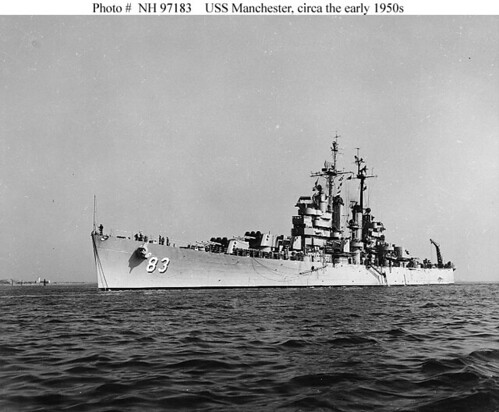
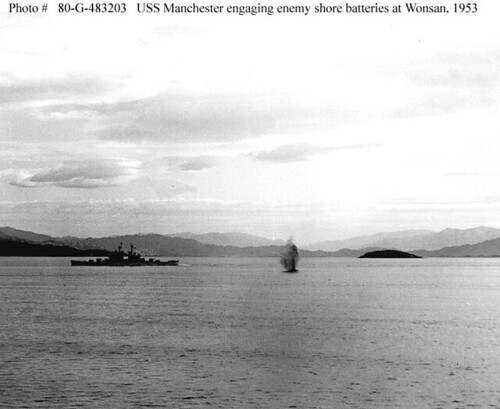
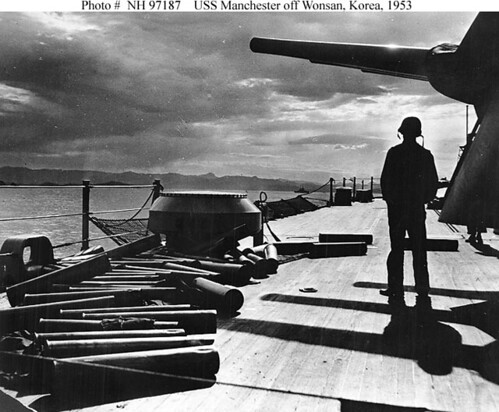
Sometimes you have to bring up a ship that did just solid, warship duty. For example, I give you the USS MANCHESTER (CL-83).

That is all for FbF today - but I leave you with something to ponder.

As we discuss what is or is not littoral warfare - check out
this picture. All the stealth in the world won't help you here --- and a lack of damage control will kill Sailors wholesale. That is why the selling of LCS is almost a crime.


First posted JAN2010

Wednesday, July 05, 2017

When You Can't Wait for the NSFS Fairy Dust

Working with the Italians and other NATO allies, we can get more out of our existing 5" guns - and if we bring back the OHP, our 76-mm too.

I'm discussing over at USNIBlog.

Come by to visit.

Friday, February 19, 2016

Fullbore Friday


Via Sid's suggestion and tin-can.org, the fuzzy-face Navy at its best.
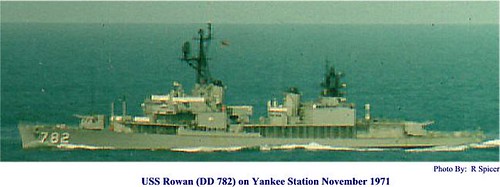
Rowan was a Gearing class destroyer commissioned too late in World War II to see any combat. That changed just a few years later when she was bloodied for the first time during the "Forgotten War" when she took a medium caliber shell hit in her starboard quarter, damaging the after steering compartment and causing a number of casualties. She had been providing counter-battery fire against North Korean shore batteries when she was hit. And counter-battery would prove to be her specialty in another twenty year.
...
27 August 1972 ... the skipper came on the 1MC again confirming that Rowan was, indeed, going to raid Haiphong harbor in a matter of hours along with Newport News, USS Providence (CLG 6) and USS Robison (DDG 12).
...
We went into battle well prepared. Rowan was amongst the sharpest shooters in the Navy having had more gunnery practice under combat conditions with the same crew during the few months leading up to this night than few ships have in a lifetime. Moreover, Rowan had just had her guns relined in Yokosuka and the 80 plus rounds of 5" HE that we could put into a precise area in under a minute was devastating. The Shrikes were a plus; but, the plethora of fire control radars in and around Haiphong overwhelmed the four missiles that we had at the ready. In the final analysis, it was the experience and solidarity of her crew that gave Rowan her edge.

Initially it seemed like another LINEBACKER II raid. I felt the ship heal and slow as we turned onto our twenty knot firing run. I heard the guns in action and the Shrikes firing at varying intervals. While the action seemed heavier than normal, it wasn't any more than what I had been expecting. After the firing run I felt Rowan again heal in a tight turn. The blowers in the fireroom just aft increase in pitch and the wave noise from the ship's passage increase as we worked up to the thirty plus knots for our getaway. The command over the 1MC to "Now set condition YOKE" was the next thing we expected to hear. It came in due course and I had just taken off my phones and was opening the scuttle in the hatch above preparing for the "Secure from GQ" command when the captain's voice came over the 1MC. "This is the Captain speaking. It's not over yet! We've two high-speed surface contacts closing fast! Reset condition ZEBRA. Re-man all General Quarters stations."
Then three things happened virtually at once: The whine from the fireroom increased to a crescendo, the height of which I had never before heard as Rowan worked up to over thirty-five knots; she started to heal one way and then reverse her rudder and heal hard over in the opposite direction; and the guns were firing at a frantic rate.
...
ET2 Richard Spicer kept a contemporary log of his time in Rowan . An excerpt from his log of that night stirred many memories for all that have read it. "27 Aug 72 2230 Hrs. I was at my GQ station in the crypto room in radio central, when we went to general quarters at the start of the operation. It was a good place to be to hear what was going on, as we had tac-air and Navy-red frequencies up on remotes and listening in on the battle group! That was one night I had my life vest on good and secure!" From the log, "Arrived at Haiphong harbor with the USS Newport News, USS Providence, and USS Robison. At 2230 GQ is sounded, 2310 all ships came to firing course. At 2325 all ships are ordered to go "hot" and commenced firing at coastal gun sites, NVA barracks and other targets. ECM in CIC now sees three cross slot gun site radars radiating, and we now are receiving counter battery! All ships are continuing firing at their targets, still receiving counter battery. Oh shit they are hitting real close now! Providenceand Robison turn out to sea as they have fired their rounds at targets, leaving the Newport News and us in the harbor. The Newport News and we keep firing, when ECM gets a bearing on a cross slot radar site and we launch our first Shrike anti-radar missile at it. This is from our new "SOB" system (Shrike on board). [Seven] min. later another cross slot radar is radiating at us and the second Shrike bird is launched. We are still receiving counter battery and lots of it! Newport News is still providing cover for us, with her 8-inch guns. We see another cross slot radar come up and fire our last two shrikes at it, this time hitting the site! With our entire Shrike missiles fired the Newport News and we turn out to sea at 26knts. As fast as we can. We are still taking heavy counter battery, and sonar reports closest hits at 20 yards off the port bow. We are hauling ass out to sea when radar sees Skunk-A at 17,000 yards closing at 48knts. We request to go hot on Skunk-A and turn 180 degrees to go back and provide cover for Newport News and shoot at Skunk-A. We are shooting at Skunk-A, now at 9,000 yards and closing [on the] stbd. beam. Newport News and we continue shooting at Skunk-Alfa when CIC radar sees Skunk-Bravo closing in on us. But we have tac-air cover and they take Skunk-Bravo. The Newport News and we connect on Skunk-Alfa, a torpedo boat with Russian [Stix] missiles on it, and sink it while tac-air sinks Skunk-Bravo!
...
Dana Perkins who was a SM3 at the time was manning his GQ station on the exposed signal bridge. Perkins relates, "I remember the night of the Haiphong Harbor pretty well. I don't think they passed the word of our objective until shortly before General Quarters, as I'm sure the mission was of utmost importance and secret. Also I think that they didn't want us to have much time to think about what was about to unfold. As a signalman I was on the highest point on the ship and had a clear view of all the action. Myself and three other signalmen were manning the Redeye shoulder fired missiles, loaded, armed and ready to squeeze the trigger in the event the time should come. When we started to see the lit shoreline and the lighted buoys of the harbor, make no mistake about it, the tension was high. All of a sudden the whole shoreline lit up with counter battery, spewing bright fireballs as each round was fired at us. The North Vietnamese weren't using flashless powder like we had. At one time I remember counting about 22 shore batteries rapid firing at the squadron. The shells were dropping all around us like seagull shit, leaving thunderous columns of white spray as they splashed into the ocean. Some of the shells were proximity and burst in the air. I remember one shell passed over the Rowanand burst in the air, causing the shrapnel to hit the side of the ship. I think it put some heavy-duty dents on the starboard side of the ship along the upper outer passageway. Luckily no one was hit! The whole time the ships in the squadron were firing on their intended targets with gunmounts and Shrike missiles. It was like the most intense 4th of July display I'd ever seen. The Newport News was off our port side at about 270 relative position, rapid firing her 8-inch guns and launching missiles as fast as they could get them off the deck. All of a sudden the word came over the sound powered phone that we had 2 torpedo boats, (Russian Osha class I believe) about 80 feet long coming out to attack. The guys in the magazine were jamming whatever shells they could get their hands on into the hoist. The first round that we hit one of those boats with was actually a practice starburst round and it tore right through it. The second round did explode. I think an A-6 Intruder came in and finished it off with an air to surface missile. The Newport News I believe sank the other boat. All I could think about the whole time was how un-watertight some of those hatches on the old Rowan were. Luckily we got past them and then the word came in that there were some inbound bogeys [MiGs] headed our way. I white knuckled the pistol grip of that Redeye missile and prepared for whatever was about to happen. At about 30 miles inbound we pushed the power button and the gyro on the missile head whined as it spooled up. Adrenaline was in overdrive by now. Then at about 20 miles out, we got word that they turned away and were outbound. I guess they knew the deck was stacked against them! As we turned away (at probably flank speed I might add), the shore batteries were trying their damnedest to get in a few last shots at us. We were out of sight of land and an occasional round was still reaching us and splashing into the ocean. The whole event probably didn't take 15 minutes but seemed like an eternity with all the action going on. The next day I remember as a chill passed through me, they told us that we weren't that far from the mines that were dropped at the harbor entrance. Thanks for that comforting bit of info." Note: The air support, whether it was an A-6 Intruder or an A-7 Corsair II, came from an attack squadron flying from USS Coral Sea (CV 43).


That's how it was to the best of our fading memories. A veteran destroyer with a veteran crew fighting the U.S. Navy's last night surface gun battle. Perhaps, also, it was the last of a long tradition of destroyers placing themselves between a heavier ship and harms way.

This was originally posted on 19 Feb 2010.

Friday, February 13, 2015

VADM Rowden; not a fan of Mission Command it seems

Out of the box, my initial instinct to to nod my head in agreement. After all, who wouldn't want to have a required live fire exercise every day? But ... there is always a but ... there came to the front of mind my favorite word in the English language, "Why?"

Every day underway? Are we selecting personality types and have a culture at sea such that it requires such detail from a Vice Admiral in order to have your warships ready for action - not to mention the metric sponge feeding in para 3

What happened or has been happening that caused such a message to go out? Is it a bit high-and-right, or is something going on in the fleet that requires such an action?

I'm the first one who likes the idea of working the weapons system as much as possible - as that is the only way to know they will work when you need it - but is this how we have to do it?

A final note, the last copy I received of the message has two para 11's. Not sure why besides perhaps a Salamanderesque level of self-editing, but I won't correct it.
1. ALL COMNAVSURFOR SHIPS WILL ENSURE THE HIGHEST LEVEL OF COMBAT READINESS. YOUR MAIN BATTERY, ALL CREW SERVED WEAPONS, SHIP/AREA DEFENSE SYSTEMS, AND ATFP WATCH STANDER QUALIFICATIONS AND PROFICIENCY WILL BE CAPABLE OF ENGAGING THE ENEMY AND DEFENDING YOURSELF AS WELL AS THE HIGH VALUE UNIT AT ALL TIMES. THE NAVY PROVIDES SUBSTANTIAL NCEA TO ENSURE WEAPON SYSTEM OPERABILITY, CREW PROFICIENCY, AND COMMAND AND CONTROL PROWESS IN ACCORDANCE WITH REFERENCES A THRU G. SO SHOOT, ASK FOR MORE, AND CONTINUE TO SHOOT IAW REFERENCES A THRU D IN ORDER TO MEET VALID TRAINING REQUIREMENTS. YOU, YOUR CREWS, AND ALL YOUR WEAPON SYSTEMS MUST BE READY TO FIGHT!
2. ALL SURFOR SHIPS ARE REQUIRED TO CONDUCT LIVE FIRE EXERCISES DAILY WHILE UNDERWAY UNLESS FOR SAFETY, OPERATIONAL, OR ENVIRONMENTAL REASONS YOU ARE NOT ABLE TO FIRE. SHORT OF THE REASONS LISTED ABOVE, I WILL ASSUME IF YOU ARE NOT SHOOTING EVERY DAY WHILE UNDERWAY IT IS BECAUSE YOUR WEAPON SYSTEMS ARE BROKEN OR THERE ARE SPECIAL CIRCUMSTANCES ON WHICH YOU HAVE PRE-BRIEFED YOUR ISIC AND IN TURN YOUR ISIC HAS BRIEFED MY CHIEF OF STAFF AND FORCE GUNNER.
3. IF FOR ANY REASON YOU CANNOT CONDUCT LIVE FIRE EVENTS ON ANY UNDERWAY DAY, A REPORT VIA E-MAIL IS DUE TO YOUR ISIC BY THE END OF THE DAY ON WHICH YOU DID NOT SHOOT. ISICS WILL CONSOLIDATE REPORTS AND SEND MY CHIEF OF STAFF ([redacted](AT)NAVY.MIL) AND FORCE GUNNER ([redacted](AT)NAVY.MIL) A BRIEF SUMMARY OF WHY THE SHOOT DID NOT OCCUR THAT DAY. IF YOUR OPERATIONAL COMMANDER LIMITS LIVE FIRE EVENTS, WE WILL COORDINATE SEPARATELY AND ACCORDINGLY IN ORDER TO SUPPORT HIS/HER INTENTIONS. A SUMMARY OF ROUNDS FIRED BY WEAPON TYPE WILL BE INCLUDED IN YOUR WEEKLY REPORT.
4. PER CIWS PACFIRE MIP 7112 MRC R-2M, FOR EACH PACFIRE EVENT YOU ARE REQUIRED TO SHOOT AT BOTH HIGH AND LOW BURST (ONCE EACH). THE PARAMETER IS FOR THE PAC BIAS (CODE 68 AND 69) TO BE 0 +/- 1 FOLLOWING EACH RATE OF FIRE. IF YOU ARE NOT WITHIN THOSE PARAMETERS, YOU ARE TO RE-SHOOT AT THAT RATE OF FIRE, NOT TO EXCEED
3 TIMES AT ONE RATE OF FIRE. PREVIOUS PACFIRE OFFSET VALUES ARE REQUIRED TO BE ENTERED PRIOR TO START, AND WILL RESULT IN PAC BIAS BEING WITHIN 0 +/- 1.
5. PER REFERENCES E, F AND G, CNSF WILL SUPPORT 300 ROUNDS PER MONTH PER MOUNT IN AIR MODE. AN ADDITIONAL 100 ROUNDS PER MONTH PER MOUNT FOR SHIPS WITH SURFACE CAPABLE (BLK 1B) GUNS TO FIRE IN SURFACE MODE. 1500 ROUNDS PER MOUNT PER YEAR FOR CE-12 AND AW-21, WHICH WILL ALLOW FOR THE PROPER EXECUTION OF THE PACFIRE REQUIREMENTS EXPLAINED ABOVE. YOU MUST REQUEST THIS NCEA AUGMENT 45 DAYS IN ADVANCE.
6. SHIPS THAT ARE EQUIPPED WITH TOWED ARRAY SONARS WILL HAVE THE ARRAY RIGGED FOR TOW AT EVERY AVAILABLE OPPORTUNITY. YOUR SONAR SUITE WILL BE MANNED AND TRACKING SURFACE AND SUBSURFACE CONTACTS BOTH PASSIVELY AND ACTIVELY WHEN THE TACTICAL AND ENVIRONMENTAL SITUATIONS ALLOW. NIXIE WILL BE STREAMED WHEN REQUIRED AND ALL SETTINGS WILL BE IAW THE TACTICS, TECHNIQUES AND PROCEDURES PROMULGATED WITHIN NTTP 3-21.33.
7. AS SPECIFIED ABOVE, THE COMMITMENT TO CONDUCTING LIVE FIRE EXERCISES ADDRESSED HEREIN IS APPLICABLE TO YOUR MAIN BATTERY, ALL CREW SERVED WEAPONS, AND ALL SHIP/AREA DEFENSE SYSTEMS. AS SUCH, IN ADDITION TO ALL MAIN BATTERY AND CREW SERVED WEAPONS AMMUNITION AND ORDNANCE, I EXPECT INCORPORATION OF THE FOLLOWING MUNITIONS INTO YOUR LIVE FIRE AND NCEA AUGMENT PLANNING: MK 214 SEDUCTION, AND MK
46 REXTORP.
8. RANGE CLEARANCE AND OVERALL WEAPONS SAFETY IS PARAMOUNT AS YOU TUNE YOUR WARFIGHTING SKILLS.
9. NCEA AUGMENTATION AND REQUISITIONING GUIDANCE. REFERENCES E, F, AND G GOVERN NCEA MANAGEMENT. NCEA AUGMENT REQUESTS MUST BE SUBMITTED NO LATER THAN 45 DAYS PRIOR. ENSURE YOUR WEAPONS OFFICER, GUNNERY OFFICER, LEADING GM, AND AMMO ACCOUNTANT HAVE READ AND UNDERSTAND THE NCEA PROMULGATION MSGS AND ARE IN COMPLIANCE.
10. THIS ORDER IS DESIGNED TO ENHANCE THE ACCURACY, PRECISION, SAFETY, EFFICIENCY AND CONFIDENCE WITH WHICH YOU PLACE ALL TYPES OF ORDNANCE ON TARGET. YOUR ABILITY TO MASTER THE MATERIAL, TACTICAL, AND WATCH TEAM PROFICIENCY REQUIREMENTS ASSOCIATED WITH CONDITION ONE WEAPONS SYSTEMS OPERATION IS FULLY IN LINE WITH OUR WARFIGHTING FIRST PHILOSOPHY. THE TACTICAL PROFICIENCY DEVELOPED THROUGH REPEATED LIVE FIRE EXERCISES FAR OUTWEIGHS ANY POTENTIAL MATERIAL CHALLENGES ASSOCIATED WITH INCREASED USE OF YOUR MAIN BATTERY, CREW-SERVED WEAPONS, AND SHIP/AREA DEFENSE WEAPONS.
11. COMMODORES AND COMMANDING OFFICERS ARE WELCOME TO CONTACT MY STAFF AT ANY TIME REGARDING THIS, OR ANY OTHER ISSUE.
11. WARFIGHTING WILL REMAIN OUR #1 PRIORITY.
12. VICE ADMIRAL ROWDEN SENDS.//
If you are wondering what Mission Command is doctrinally, click here.

UPDATE: For those who are interested in Mission Command; from the US Army Combined Arms Center:

Wednesday, October 22, 2014

How about a precision fires pick-me-up?

I don't know about you, but after writing tomorrow's post, I need one.

Building off a side-topic from last Sunday's Midrats ... how about a little of Raytheon's 84 precision-guided Excalibur-Ib all up rounds fired in 2013 during qualification flight tests at Yuma Proving Ground, Ariz?


Tuesday, August 26, 2014

Naval Guns - Now More Than Ever

Whose up for some good gun talk? I thought so ...

I could spend a whole week just commenting section by section on this 2013 post from the blog UK Armed Forces Commentary.

So much of this is just plain common sense that seems to be lost in much of the commentary about naval gunnery, naval surface fire support, or whatever we are calling it now days.

Let's just mention some of my favorites, and I'll let you dig out the rest.

First, a well designed and proven 5" (127mm) round should be the minimum - air, surface - just an all around multipurpose mount - if you want to keep swarms at bay ... I love that pic to the right;
... firing trials of the 127/64 of the FREMM frigate Carlo Bergamini. The first image shows the excellent capability of engagement at very short range, which can seriously ruin the day for suicide boats and similar threats.
Let's ponder that gun for a moment;
On the FREMM frigates of the Italian navy, the AAHS is installed over two decks (deck 2 and deck 3) and can hold 350 rounds in addition to the 56 held in the feeding drums.
The 127/64 gun system is thus able to fire 30 and up to 35 rounds per minute. The Naval Fire Control System calculates the ballistic trajectories, programs the fuzes and, when the GPS-guided VULCANO rounds is used, sets up the GPS data before launch. It can be easily integrated via LAN onto any kind of Combat System, in a Plug and Play fashion. Thanks to the NFCS, the 127/64 is also very effective in anti-air role.

The VULCANO, differently from LRLAP, ERGM and SGP is not a rocket-propelled munition, but an under-calibre, rocket-shaped dart with a diameter of 90 mm. VULCANO employs a discarding sabot to be fired out of the barrel at extremely high speed while avoiding two of the main complexities of full-calibre rocket-propelled rounds: increased barrel wear and tear, and difficult deployment of the folding fins used for guidance. These problems, along with huge cost escalation, were the factors which killed the ERGM.

VULCANO is a steerable sub-munition with tail fins and canards. The submunition is the same in both the naval 127mm variant and in the land 155mm variant. The difference comes down to the sole sabot and launch charge assembly: the naval shell is an all-up round compatible with any NATO 5’’ gun, while the army variant is modified to employ land-specific modular launch charges.
The VULCANO family comprises the BER (Ballistic Extended Range) variant, which is not guided and only has fixed winglets: it uses aerodynamics and ballistic trajectory to extend its reach to 70 km, and it is useful for a long range bombardment in which pin-point accuracy is not needed.
OK, URR ... gird your loins and be prepared to swoon ...
The most interesting VULCANO variants are, however, the Guided Long Range (GLR) ones. These include:

- GPS / Inertial Navigation System
- GPS / INS / Semi Active Laser
- GPS / INS / Infra-red Imaging
...
The addition of a SAL seeker to the GPS and inertial navigation guidance makes this variant of the round extremely accurate. With external laser designation of the target, it can engage with high accuracy even moving targets.

The GPS/INS ammunition is mostly suited to use against fixed targets, whenever high accuracy is needed to reduce the risk of collateral damage. The Circular Error Probable for this round variant is inferior to 20 meters. This is possible thanks to the steerable canards and fins which guide the ammunition on the target with a near-vertical descent, which maximizes both accuracy and lethality.
The addition of a SAL seeker makes the VULCANO capable to engage small, fixed, moving and relocatable targets (including vehicles and small boats) with extreme accuracy, with a CEP reduced to a handful of meters. The Semi Active Laser seeker guides the shell on a target illuminated by an external laser marker, which could be “painted” on the objective by a UAV or by observers on the ground.

The IIR seeker is instead meant primarily for anti-ship role. ... The anti-ship VULCANO is meant to be fired over the area where an enemy ship is known to be sailing, and engage the target on its own.
Take a look at what our Italian friends have done to our little buddy, the 76mm Oto Melara ... now with extra Super Rapido;
With a rate of fire of up to 120 rounds per minute, the 76/62 can put a thick wall of iron and fire in the face of any threat aiming for the warship, but it is with the DAVIDE model (STRALES for the export market) that the CIWS capability of the 76mm gun was really achieved.

STRALES is a guidance kit, installed within the gun turret and comprising a radio frequency beam antenna which is normally hidden under a sliding panel in the gun shield, to the side of the barrel. The covering panel slides upwards to reveal the radio frequency antenna when it is time to employ the DART (Driven Ammunition Reduced Time of flight), a guided, sabot-discarding high speed round meant to shot down airplanes and missiles as well as take off FIACs and suicide boats. The DART is an hyper velocity munition capable to cover a 5 km distance in less than five seconds, with enough energy to perform up to 40 manoeuvers and course corrections.
I know this is all, ahem, "old think" ... but, well, get your SWO on!
The most impressive feature, however, is the possibility to employ both STRALES and VULCANO, from the same gun mount, giving the small 76/62 a formidable mission flexibility. ... Thanks to the Multi Feeding system, it is possible to modernize a SUPER RAPIDO or COMPATTO mount, with minimum impact on weights, so that it can simultaneously employ standard ammunition, guided DART rounds when it is necessary to shot down incoming threats, and the whole variety of VULCANO rounds for shore bombardment and anti-ship attacks.
I think that Deputy Secretary of Defense Bob Work should call his office. Here is something involving LCS that gets the Salamander seal of approval;
The evolution of the 76/62 has caught the interest of the US Navy, which during 2012 conducted an extensive design review of the Littoral Combat Ships which noted that the Bofors MK110 light gun is not as effective as would be desirable. One of the most interesting options on the table is the possible future fitting of the 76/62, replacing the MK110. ... It would be very easy to fit the 76/62 on the Lockheed Martin/Marinette Marine monohull LCS, the FREEDOM sub-class. A bit more complex, but not impossible, would be the retrofit of the trimaran LCS of the INDEPENDENCE sub-class, built by General Dynamics/Austal. With the larger caliber, the longer range, and the availability of the multi feeding system, with DART and VULCANO ammunition, the 76/62 would represent a dramatic improvement in firepower for the LCS.
Why couldn't we replace the 57mm with the 76/22 instead of the 30mm on DDG-1000? Because "exquisite" engineering, I presume. Sigh.

As for LCS, I'm not sure what the weight penalty would be, but with the NLOS area empty, there may be some options to ponder.

They have an nice write up about the DDG-1000 AGS 155mm ... with a few jewels that I haven't see in our press releases. Ponder this a bit;
... the more complex and time consuming loading process reduces the rate of fire of the AGS to just 10 rounds per minute, which means that a DDG1000 Zumwalt, with two AGS mounts, can fire around 20 rounds in a minute, against as many as 25 VULCANO rounds fired from a single 127/64 gun.

The LRLAP is also less accurate: the rocket booster is not the best friend of high accuracy, and the CEP is expected to routinely sit somewhere between 20 and 50 meters. The addition of a Semi Active Laser seeker to the LRLAP is reportedly being considered for the future to address this problem and expand the engagement capability, but this is all yet to come.
Of course, the combination AGS/Zumwalt makes for an impressive “bomber”: the 14.000 tons warship carries more ammunition (600 rounds in 2 magazines) than any likely 127/64-equipped vessel, and each shell is much larger, heavier and carries a lot more explosive. The massive gun is capable to fire them over greater distances, as well. However, the AGS is an extremely complex, massive and expensive solution which might never appear on platforms other than the Zumwalt, despite BAE’s effort in marketing an AGS-Lite.
Yes, exquisite.

There is also a depressing discussion of the ERGM and the US MK-45 Mod 4 and all that lost opportunity. Why are we getting our butts handed to us by the Italians of all people?

Really. 

Enough grumbling ... read the whole thing. There are some very exciting things going on in the naval gun arena. Not the PPT thick, theory, or "expected IOC by 2025" stuff ... but the very much "now" that can be used today.

Thursday, August 07, 2014

The Big Ship Down Guns

Moment arms. Centers of gravity. Achy-shakey-breaky 57mm mount ... yes I understand.

However, what do we know from history? We know that once the shooting starts, all your ships are undergunned in number, range, and redundancy. 

We add as much as we can after the losses of a few units - or as the Royal Navy did in San Carlos Water - if you don't have time to head back to the yard you line the decks with every weapon including infantry rifles to throw lead at the enemy and apologize later for not coming to the fight with what you needed.

So, we have the Pocket Battleship sized and poorly classified DDG-1000 Class before its first deployment already ... well ... making an adjustment. Via our buddy Sam at USNINews;
The Navy has replaced two 57mm guns planned on the Zumwalt-class guided missile destroyer designed to fight off swarm boat attacks with a smaller pair of 30mm guns, Naval Sea Systems Command (NAVSEA) told USNI News on Monday.

The trio of Zumwalt-class ships were originally designed to field the BAE Systems MK 110 close-in gun system (CIGS) — a gun used on both classes of Littoral Combat Ships (LCS) — to provide the ship’s company options to fight off so-called swarm boat attacks of the ship as part of a 2005 critical design review (CDR).
...
Following a 2012 review the Navy, “concluded that the MK46 was more effective than the MK110 CIGS,” according to NAVSEA.
“In addition to the increased capability, the change from MK110 to Mk 46 resulted in reduction in weight and significant cost avoidance, while still meeting requirements… that will provide a robust rapid fire capability and increased lethality against hostile surface targets approaching the ship.”
What are we trading in our secondary gun armament?
The 57mm Mk 110 fires a 220 rounds/min at range of about nine nautical miles
...
The 30mm Mk 46 has range 2.17 nautical miles and fires at a rate of 200 rounds/minute,
Yes; smaller round, lower cycle rate, shorter range.

And again - for a ship the size of a Pocket Battleship - it will only have two (2). Good things guns are never CASREP'd, jam, or .... sigh. Another exquisite plan from the age of transformation fails to transition from PPT.

The things we plan to send out Sailors to engage in war at sea with. Amazing.

Tuesday, August 05, 2014

IDF demonstrates the power and utility of precision NSFS .... from the sea

From this weekend - again a great demonstration of what modern war requires; long dwell, precision, man in the loop strike in urban terrain.

We have many things to learn and model from Israel. Of all our ships, the LCS should be able to do this, but alas ... too busy spinning mistakes than benchmarking success.

Bravo Zulu.

Friday, December 20, 2013

Fullbore Friday

19 December 1967. You just got through closing the shore in daylight and punched it out with shore batteries. Your CO comes on the 1MC.

Wish you were there? Well ... at least we have a recording from the CO of the USS NEWPORT NEWS (CA-148) Captain Lindsay C. McCarty, USN that day.

Fullbore as it should be. Solid, matter of fact leadership at war. Nice.


Big thanks to JE & MS for the audio.

Wednesday, September 11, 2013

1st Sea Lord Goes Salamander

In the latest edition of DefenseNews, Andrew Chuter interviews Admiral Sir George Zambellas, RN.

He doesn't actually say, "LCS" - but as we know that LCS is actually just a Corvette; I think we know where he stands.
"At some point, you cannot offset quality for increased scale because if you do, you lose military authority for the utility force you have got. In other words, you are not credible. That is why I have no time for the concept of a police force at sea through corvettes,"

"If you are going to operate a relatively small frigate force, you need to achieve genuine operability across different tasks. lll The danger of the argument of those who say, ' Oh let's have more smaller, less-capable ships is, you immediately constrain your operational and terefore political flexibility. The irony is that the smaller your force, the more you need to invest in high-end, capable ships if you are to remain a serious player in defense,"
Oh, my stars and garters; I'm getting faint.

One final note. There is the #1 RN Admiral and he has four medals and a couple of other thingys. Unlike our 4-stars, he doesn't have a badge for everything and a salad bar going over his shoulder like a North Korean GOFO.

Something else I like about the Brits. Your end of tour award is your next set of orders.

Someone get URR's smelling salts. On a discussion of the lessons from Libya, after ISTAR he says,
The second example has to do with fires from the sea - missiles and guns. Modern precision munitions coming the Navy's way will have a degree of accuracy inland which means you must know exactly what is going on at the other end. ... We need to do better with naval fires ...
Can we get him to help with our strategic re-boot?

Raised in Rhodesia, helo pilot who commanded three surface ships. What's not to like.

Wednesday, October 03, 2012

Of Things Lost and Forgotten

As long term members of the front porch know, one of the things that helped break this blog out from the ambient noise 7-8 years ago was our initial push to bring back Riverine forces based on the extreme need in Iraq. 

Sadly, the great diversity of platforms that we used to tremendous effect in Vietnam were thrown away in the late '90s, but we finally did the right thing and did some good with what we put together. We could have done better, but we did OK. 

That memory folded in when I was pondering the picture earlier this month (no, this is not a bring back the BB post; I'm not one of "them" for goodness sake) - but I was thinking again how the busy peace has made us forget what is really needed. 


From the Falklands, Al Faw, and Gaza; we are reminded now and then the power of the general purpose gun ashore. All those capabilities proved over the last century are needed now, but is has atrophied so much, it is almost criminal. Both in capability and execution. Recall the target set during the Libyan operation? Much of those were well within reach of even the 5" & 100mm on most of the ships off shore - but only a few of our allies, most notably the French, even thought of using them. Modern technology makes it better, but we forget even in the analog age - precision gunfire support in urban operations was not only possible, but was expected. It is a capability that simply exists in no other place. 

You know our status now ... but I want to take you back to the attack on the siege of Hue City and the assault on the citadel; something that could not have been done without the 5", 6", and 8" NSFS - not to mention other support via the Riverine forces. 

From Thomas Petri's Lightning From The Sky Thunder From The Sea;
... 15 February ... USS Manley (DD-940) ... Between 0842 and 0946, 42 rounds of five inch/54 ammunition was fired against the wall, rupturing in in three places ... On 17 February, USS Providence (CLG-6) ... delivered 136 rounds of six inch/46 ammunition against the citadel wall ... USS Lynde McCormick (DDG-8) ... on 12 February ... expended 1,077 rounds, ... supressing NVA mortar fire and disrupting one assault on 1st Cav. ... On 21 February ... in preparation for the attack ... the eight-inch guns of cruiser USS Canbarra (CAG-2) with devastating effect. ... On 23 February ... five-inch/54 batteries of USS Hull (DD-945) (were directed on) escaping NVA/VC troops trying to escape ... with 50 confirmed KIA. ... on 27 February ... utili(zing) five-in spin stabilized rockets of USS Carronade (IFS-1) to engage a reported NVA battalion west of Hue, causing 53 secondary explosions and unknown causalities ... In support of Operation Jeb Stuart I, US Navy gunline ships ... fired over 13,000 round of various caliber causing 397 NVA/VC casualties (not including 300-plus KIA USS Canberra shared with artillery units
You get the idea - read more at about page 185 or so.  
Or you can buy the book. We failed the Army and USMC in Iraq by not having what was needed ... and the way things are going, we will fail when the call comes again. Too little, and perhaps too late. 

Again, 5" is nice, 155mm (nee 6.1") is better ... 8" is best of what is realistic in 2012. The MK-71 is standing by. Sigh.

Thursday, September 29, 2011

Stretching the 3-inch


Of course - most want 8-inches instead, with a few Marines dreaming of the joys of a 16-inch - but if you only have 3 or 5 inches to work with - you've got to make it count.

Wait ... that doesn't read right. Oh, nevermind ... see below.
Oto Melara unveiled yesterday a family of extended range and guided 76mm projectiles it is developing for the popular 76/62 naval gun system. The new Vulcano 76 round transforms this classic naval weapon into a multi-mission weapon system, capable of handling surface targets at sea and on land. The weapon addresses new operational requirements evolving from modern littoral warfare missions; as reflected in the Second lebanon War (2006) and the Libyan campaign in 2011. In addition to engaging surface targets, the system can handle air-defense as well as fulfil classic naval gunnery support (NGS).
...
As a guided projectile, the fin-stabilized Vulcano 76 will offer autonomous GPS/INS guidance, practically doubling the range of current 76/62 systems. When engaging fixed land based targets or surface targets at sea, the new projectile enables even small vessels to engage targets with high precision, from ranges exceeding 40 km, at a high rate of fire. The new capability will enable small littoral combat ships, frigates or gunboats to dominate a wide coastal area from a stand-off distance, out of the range of contemporary medium range anti-ship coastal defense missiles, rockets or artillery. Vulcano 76 will use a common guided or unguided projectiles, fitted with a new multi-modal RF microwave fuse offering altimetric (airburst), proximity (against aerial, naval and surface targets) or delayed impact (penetrating) and self-destruct modes. Employing the optimal fusing method enables the five kilogram pre-fragmented warhead made of tungsten-steel compound to provide twice the lethality of existing rounds at 80% of the weight. ... The time of flight reaching targets at 40 km is about 120 seconds.
Yea .... but not our Littoral Combat Ship - it uses the unsupported 57mm.

Something beats nothing. The French, as we saw, made good work in Libya with their 100mm and the Brits with their 4.5" ... so ... the gun continues to prove its utility. Improvements to proven systems; what a radical concept.

Hey ... what about our ERGM. Ummmm, errrr .... oh, yea.

Thursday, August 04, 2011

Actual Littoral Combat


This great picture comes to us via the good people at gCaptain;
29 July 2011 (Royal Navy) HMS Sutherland practised Naval Gunnery Support (NGS) drills by firing High Explosive (HE) and Star Shell rounds from her 4.5-inch gun. These drills were carried out only 2 days after HMS Sutherland was involved in fire missions off the coast of Libya.
The British remember well the value of a medium-caliber naval gun from the Falklands and is why all their ships since who could carry one have one.

Ignore the PPT, San Carlos Water demonstrated the core of littoral combat - close, nasty, and needful. Since arrows flew from the sides of galleys on, soldiers and Marines ashore need a ship to pull up close and offer what no other platform can; time critical close support. The larger the gun the better. The more guns the better. Look at the target set from Libya and so much that was done by aircraft could have been done cheaper and for less cost from a ship - but as lawfare prefers lasers and GPS, only a few have been so "serviced."

The mal-named LCS brings a 57mm and a "missile to be named later" to the fight. Oh, and make no mistake - she will be asked to close the shore and provide support as every ship that can will be - as they always have. Running away or making a big wake does not help your countrymen ashore who need their Navy to support them. In the littorals, you don't pick your war - your war picks you. If you are too exquisitely designed, you need more support at the operational level on aggregate than you provide.

A little bit of a stretch to one again kick poor widdle LCS? No. Here we have actual littoral combat in a 21st Century brush war - excuse me "kinetic military action" - where even if she winds up working as advertised, LCS once again is measured and found wanting.

Hat tip Lee.