
From the Salamander archives - I'll give you a hint on the location; a real St. Pauli Girl looks NOTHING like her.


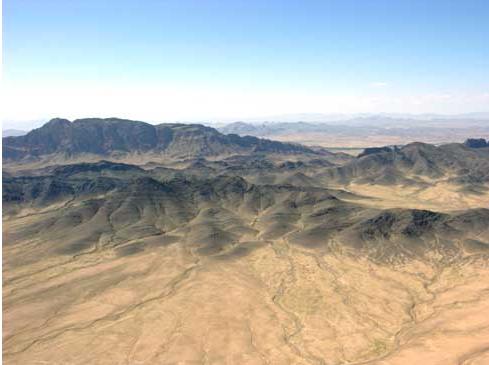
 too!
China has won a $3.5 billion contract to develop Afghanistan’s Aynak copper field, the largest foreign direct investment project in the history of Afghanistan.
The size of the bid -- almost double the expected amount -- surprised other potential foreign investors.
By some estimates, the 28-square-kilometer copper field in Logar Province could contain up to $88 billion worth of ore. But there is no power plant in the area that can generate enough electricity for the mining and extraction operations. And Afghanistan has never had the kind of railroad needed to haul away the tons of copper that could be extracted.
That is why a large part of the Chinese bid includes the cost of building a 400-megawatt, coal-fired power plant and a freight railroad passing from western China through Tajikistan and Afghanistan to Pakistan.
Indeed, the cost of building so much infrastructure in a volatile security environment like Afghanistan is prohibitive for many private firms. But Niklas Norling, an expert on China and Central Asia at the Stockholm-based Institute for Security and Development, says the price tag is tolerable for a Chinese state firm because the project contributes to Beijing’s plans for the development of western China and its regional trade links.
"You have to see this in the context of China’s great western development program, which has led to major investment into the western provinces [of China] and, of course, also crossborder connections to Central Asia, South Asia, and Iran," Norling says. "In order to develop the west [of China], they need energy resources, and they need other resource materials. So far, Afghanistan has remained virtually untouched by Beijing’s concerns, in contrast to China’s involvement in Central Asia, Pakistan, and Iran.

An additional 10,000 troops are needed to quell a Taliban and al-Qaida insurgency in southern Afghanistan, but European NATO partners appear unwilling to deploy more soldiers, Australia's defense minister said Thursday.Sad, the Alliance was given a chance, but was measured and found wanting in the end.
``At least 10,000 would give us the critical mass necessary to do what we need to do on the military front,'' Joel Fitzgibbon told The Associated Press at his office in the Australian capital Canberra.
About 65,000 international troops are stationed in Afghanistan, including 51,000 from the 40-nation NATO-led International Security Assistance Force. The United States has about 33,000 troops in the country.
``Having spoken to a number of European countries over the course of the last four months, I don't see a lot of hope that anyone else is about to put their hand up anytime soon. That's a worry because if (the extra troops) don't come, progress will continue to be all too slow,'' he said.
He declined to name the European countries he was referring to.If need be though, there will be one flag left flying in the end.
Fitzgibbon said Australia was already carrying its fair share of the burden with 1,000 troops in Afghanistan, the 10th-largest national contribution and the largest outside NATO.
He said Defense Secretary Robert Gates, whom he met at an international security conference in Singapore last weekend, agreed on the need to substantially increase troop numbers in Afghanistan.They know it, and we know it - and NATO has stepped on its own ... baguette.
``He's certainly given me the impression that the United States remains absolutely committed to the project and he's certainly given me the impression that there's likely to be continuity on that issue across the administration regardless of who wins in November,'' Fitzgibbon said, referring to the upcoming presidential elections.
The head of Australia's defense force told a Senate inquiry Wednesday the military campaign in Afghanistan ``will last at least 10 years.''
Fitzgibbon said Thursday that military operations could take less time with adequate resources, although reconstruction of the country will take longer.
Ask American troops in Afghanistan what ISAF means, and you are opening the door to a running joke: "I Saw Americans Fight," and "I Suck at Fighting," and "I Sunbathe at FOBs" (a reference to the heavily fortified and largely safe forward operating bases) are among the more popular punch lines. In fact, ISAF is the acronym for the NATO-led International Security Assistance Force, which is made up of soldiers from the United States, the United Kingdom, Canada, the Netherlands, Germany, and 35 other nations.


