Tuesday, February 02, 2021

Killing Small Ships, Again


I love our Navy, as I know almost everyone here does. As such, I try as hard as I can to be optimistic - not by experience - but by hope.

We were granted by previous generations an advantage at sea not seen since the Royal Navy after the final fall of Napoleon. All today's leaders had to do was not screw it up.

Since the victory in the Cold War - it was a victory - we seemed to have lost our way. Just look at the series of new major surface combatant failures of the last quarter century. 

Officially and unofficially, we've tried to admit our mistakes - we've even had "blue ribbon" commissions and reports outlining them and calling for corrections. It is one thing to admit your mistakes, it is another to take actions not to repeat them.

Can we agree on a few things?

1. As we covered in the first year of this blog back in 2004/5, we made a huge mistake by getting rid of our riverine forces in the 1990s. The capability shortfall clear as day as our ground forces clawed their way up the Tigris and Euphrates rivers with almost not waterside help. We also clawed back the Cyclone PCs from the USCG as we rediscovered the utility of smaller ships - not just riverine.

2. We know we have a problem with leadership at sea. We have people showing up at CDR Command not having an opportunity to learn with at LT or LCDR command ... or even a pure XO tour before taking command. The lack of opportunity to command at the LT and LCDR level is part of that problem.

3. LCS is, for a ship the size of a WWII destroyer, an underperformer. The issues and challenges are well known here.

I could list more, but I'll let you fight out the details in comments.

We are set to repeat our errors it appears;  

At the Surface Navy Association 2021 (SNA 2021) Virtual Symposium, Naval News asked RADM Paul Schlise, USN, Director, Surface Warfare (N96), whether the U.S. Navy intends to replace the aging Patrol Coastal boats. The direct answer is, “No.”

...

Sixteen PCs were originally planned for and two were canceled, resulting in a total of fourteen boats.  The lead ship, PC-1 USS Cyclone, was transferred to the Philippine Navy in March 2004.  The oldest active-duty U.S. Navy Patrol Coastal boat, PC-3 USS Hurricane, commissioned in 1993, is 28 years old and is still in service today.  The newest Cyclone-class PC, PC-14 USS Tornado, commissioned in 2000, and also in service, is now 21 years old.  With an estimated service life of 30 years, the thirteen Patrol Coastal boats are nearing the end of their intended service life. 

...

RADM Paul Schlise said that the roles of the PCs will be replaced by the Littoral Combat Ships (LCS) and the smaller U.S. Coast Guard boats.  Schlise described the Coast Guard boats as platforms that work in both peace and wartime and having great capabilities that can make up for the retirement of the Patrol Coastals. 

This is a pitiful answer. This is the wrong decision. What more can one say?

We do not learn.

There is a lot more in Peter Ong's story. Give it a full read.

Monday, February 01, 2021

The War on (Military) History: Half a Century In


Over the weekend I saw a few people commenting on Max Hastings's latest over at Bloomberg, American Universities Declare War on Military History. I couldn't help but laugh at times the shock - SHOCK - some showed when reading it. My take is, "Where have you been?"

Yet in centers of learning across North America, the study of the past in general, and of wars in particular, is in spectacular eclipse. History now accounts for a smaller share of undergraduate degrees than at any time since 1950. Whereas in 1970, 6% of American male and 5% of female students were history majors, the respective percentages are now less than 2% and less than 1%, respectively.

Fredrik Logevall, a distinguished Harvard historian and author of seminal works on Vietnam, along with a new biography of  John F. Kennedy, remarked to me on the strangeness of this, given that the U.S. is overwhelmingly the most powerful, biggest-spending military nation on earth. “How this came to be and what it has meant for America and the world is surely of surpassing historical importance,” he said. “Yet it’s not at the forefront of research among academic historians in this country.”    
The war on the study of history – and especially military history – has been with us for as long as I have been alive. As with many things in American culture, the fault lies mostly with those complaining about it – and it can trace its pivot point to 1968.
The revulsion from war history may derive not so much from students’ unwillingness to explore the violent past, but from academics’ reluctance to teach, or even allow their universities to host, such courses. Some dub the subject “warnography,” and the aversion can extend to the study of international relations. Less than half of all history departments now employ a diplomatic historian, against 85% in 1975. As for war, as elderly scholars retire from posts in which they have studied it, many are not replaced: the roles are redefined.   

An eminent historian recently told me of a young man majoring in science at Harvard who wanted to take humanities on history, including the U.S. Civil War. He was offered only one course — which addressed the history of humans and their pets.
This is part of a larger story – one from academia that covers more than military history. The American left after 1968 accelerated their march through our institutions of higher learning, pulling like minded people behind them and letting time and unity of purpose do the rest.

The goal was and is to chance the nation they loathe as founded in to something they can control.

Have you seen the agenda from the last American Historical Association annual meeting? Heck, look up the last few years yourself. Show me anything even remotely in line with center-right to right ideological thinking. Next do center-left to left.

Cowed, those right of center became more and more isolated. Not only did they not support up and coming scholars for ideological reasons like those on the left, as they watched everything from the classics to military history get gutted, they refused to fight. The ideological left played by new rules and were allowed to. Like a Cuckoo hatchling, the first pushed out their competition. 

My introduction to this “new problem” was in the mid-1980s. As part of our required NROTC curriculum, we had a course in naval history. Naturally, I loved every second of it and had a great professor. Towards the end of the semester, I cornered him as I was looking to change majors. I asked him about the path to be like him – a PhD in history.

After asking me a few questions as to my interests and goals, he stopped me short; “Don’t do it. Don’t major in history and do not invest time in getting a PhD in it – especially if you plan on not making the Navy a career. Military history is not in demand, most universities are hostile, departments are shrinking, and what you want to study is not what you will be given the chance to research if you stay in the USA. Apply yourself elsewhere. Don’t make the mistake I did.”

Yes, that conversation stuck with me. As a LT, I started down that path again when another professor I talked to – one who even had tenure – again advised me against it.
Paul Kennedy of Yale, author of one of the best-selling history books of all time, “The Rise and Fall of The Great Powers,” is among many historians who deplore what is, or rather is not, going on. He observed to me that while some public universities, such as Ohio State and Kansas State, have strong program in the history of war, “It’s in the elite universities that the subject has gone.”

“Can you imagine Chicago, or Berkeley, or Princeton having War Studies departments?” he asked. “Military history is the most noxious of the ‘dead white male’ subjects, and there’s also a great falling away in the teaching of diplomatic, colonial and European political history.”
This is where it is less of an academic discussion and more of an existential one. Ignorance of history or the mal-education in history at our highest institutions of learning is a critical vulnerability. 

Where do we draw many of our government leaders? That’s right – the top universities. Ignorance of history always results in repeating mistakes of others, with tragic results. Mal-understanding of other nations relations to neighbors, why borders exist, how they’ve changed …. literal libraries full of keys to every challenge we are facing, and yet we allow the teaching of history to devolve in to some farcical discussion of what pronouns to use?
It is extraordinary that so many major U.S. universities renounce, for instance, study of the Indochina experience, which might assist a new generation not to do it again. Marine General Walt Boomer, a distinguished Vietnam vet, said to me five years ago, when I was researching that war: “It bothers me that we didn’t learn a lot. If we had, we wouldn’t have invaded Iraq.”

Biddle has written: “The U.S. military does not send itself to war. Choices about war and peace are made by civilians — civilians who, increasingly, have no historical or analytical frameworks to guide them. They know little or nothing about the requirements of the Just War tradition … the logistical, geographical and physical demands of modern military operations.”

Former British Prime Minister David Cameron is not a stupid man. But he might have made less of a mess of U.K. foreign policy had he accepted the advice of some people who understood both war and the Muslim world better than his ill-informed Downing Street clique. 
Post-modernism. Critical theory. Aggressive bullying and cowardice. This is what we have in our university history departments. Did you follow the AHA link earlier?
Kennedy notes that war studies are highly popular with students, alumni and donors, “but the sticking point is with the faculty — where perhaps only a small group are openly hostile, but a larger group don’t think the area is important enough.”    

Harvard offers few history courses that principally address the great wars of modern times. Many faculties are prioritizing such subjects as culture, race and ethnicity

...

Tami Davis Biddle, a professor at the U.S. Army War College, has written, “Unfortunately, many in the academic community assume that military history is simply about powerful men — mainly white men —fighting each other and/or oppressing vulnerable groups.” 

You may have noticed in many recent books that are either the byproduct of someone’s PhD studies or afterwards, that there is a section or two shoe-horned in that has to address race, gender or other socio-political themes that otherwise don’t seem to be in line with the story. I’ve reached out to authors asking them “why.” On two occasions, and this was shared on a condition of anonymity, they stated “had” to cover this as those who had power over the granting of their PhD or the publication of their book advised them, ahem, to address these issues. They were embarrassed, but they had no choice.
A few years ago, a history department in the Canadian Maritime provinces was offered a fully funded chair in naval history — and rejected it. Paul Kennedy told me recently that he is amazed by the lack of interest in naval affairs at U.S. universities, “since we are by far the greatest naval power in the world, and the global naval scene is heating up enormously.”

Many, indeed most, academic institutions across the continent are infected with an intellectual virus that causes them to reject study of subjects that seem to some faculty members distasteful. This represents a betrayal of the principles of curiosity, rigor and courage that must underpin all worthwhile scholarship.

 In Britain, by comparison, history continues to thrive. About the same number of students embark on first degrees in the subject as take law. Post-graduate studies are especially popular. Some 30 institutions offer War Studies programs. On the European continent, those at Stockholm and Leiden Universities are particularly respected. The problem — we might even call it the repugnance — appears an explicitly North American phenomenon. 

North America’s great universities should be ashamed of their pusillanimity. War is no more likely to quit our planet than are pandemics. The academics who spurn its study are playing ostriches. Their heads look no more elegant, buried in the sand.

What can be done about history as an area of study in North America? If you can’t beat your opponent’s methods, then copy them. If they won't play fair - why should we? If they don't like it - then perhaps they will come to the table to compromise. Maybe not - but the practice of surrender by the center-right needs to come to an end. 

People right of center – and intellectually honest people left of center (this really shouldn’t be a right/left divide) need to push back. 

Push back against post-modernism and critical theory. Push back on cancel culture. Get on board of regents/advisors/directors at your university. Be willing to be called names. Support fair minded individuals and isolate bad actors. Do not be bullied. Stand by truth in the face of ideology. 

I would hope that even well-meaning center-left to left academics would support this action. It might help them better understand the nation in which they live to be exposed to different views. It would be a joke if it were not so sad to see many of them react in stunned horror when they hear ideas everyone outside their bubble discuss on a regular basis. The real world is intellectually diverse; when 90% of your fellow academics vote one way and are in alignment with all the wokeish issues you can think of, you may be the problem – not the unwashed masses you rarely interact with.

Friday, January 29, 2021

Competing in the Competition Phase

The last year, as most of the nation was focused on a highly contentious election and a global pandemic, the US Navy, Marine Corps and Coast Guard put on a the table multitude of documentation in to the conversation outlining our best minds' official view of where the Naval Services need to go; Tri-Service Maritime Strategy, CNO NAVPLAN, National Security Strategy, National Defense Strategy, Expeditionary Advance Base Operations, and more from recent years. How can one try to weave them together?

Back for another run at CDRSalamander, regular guest Bryan McGrath offers the below for your consideration.

Over to you Bryan!


The Navy had a sudden burst of intellectual energy in the last few weeks, joining with the Marine Corps and Coast Guard in releasing a "Tri-Service Maritime Strategy "and then issuing a “CNO NAVPLAN” to provide additional implementation guidance thereto. This essay will not attempt a comprehensive review of these documents. Suffice it to say that both documents provide useful insight into selected elements of strategic and operational thinking within the Naval Service (a term introduced in the Tri-Service Maritime Strategy as a proper noun, hence the capitalization). The timing of their release was unfortunate, both from the perspective of an audience busy with holiday merry-making and from the fact that a new presidential administration would shortly be entering office. To some extent, there is never a perfect time to release these kinds of documents, but the choice here was particularly problematic. That said, there are important implications to explore, and one of them is the basis of this essay. 

In these documents, the Naval Service has elevated the importance of what is referred to as the “Continuum of Competition”, a continuum comprised of a long-term competition phase, a crisis phase, and a conflict phase. The prominence of and emphasis on the competition phase is an important feature of this thinking, with implications for the three maritime services. For example, one of the impossible-to-miss implications of this strategy is the centrality placed on U.S. Coast Guard activities in the Western Pacific, and the force structure and logistics impacts that necessarily follow. 

Where the strategic thinking goes astray—not fatally, but importantly—is in the failure to recognize the importance of the fleet architecture and force posture appropriate to the day-to-day competition as the basis for all that follows in crisis and conflict. Put another way, the National Security Strategy and National Defense Strategy both emphasize conventional deterrence by denial, an approach that for the Navy at least, suggests greater capability, capacity, lethality, and distribution during the day-to-day competition. Yet, the enabling concept for this approach (Distributed Maritime Operations or DMO) is fixed in the strategy as a creature of the “conflict” phase. The Navy is not alone in misplacing its most important conventional deterrence concept, as the Marine Corps’ “Expeditionary Advance Base Operations” concept is also treated essentially as a war plan enabler, rather than a deterrent. This is not just a category error; it is an intellectual flaw with significant implications for fleet architecture and force structure, a flaw that could impact both the Intelligence, Surveillance, Reconnaissance, and Targeting (ISRT) posture, and the logistics force.

Part of the problem in discussing DMO is the fact that there is no unclassified version of the concept available, and so there is confusion as to what it is and is not. The Marines have released an unclassified EABO narrative, which is referred to often in leadership communications. For the purposes of this essay, DMO will be (simplistically, improperly, incompletely) considered the extension of the Surface Warfare community’s 2014/5 “Distributed Lethality” concept into what the Navy refers now to as “multi-domain” operations. 

At the heart of Distributed Lethality was the recognition that it was an approach to conventional deterrence. By increasing the offensive and defensive combat punch of surface ships and effectively networking them, greater lethality would be available during the long, day-to-day competition phase. This was believed to have two main impacts on adversary thinking. First, it raised the effort required to achieve even modest objectives in an adversary’s near abroad (denial). Second, it diluted the adversary’s available ISR effort by creating more numerous operational problems for them to monitor, in addition to spreading their available weapons stocks across a greater number of targets. The virtue of “distribution” was in “spreading the zone” and making the business of everyday life in the Western Pacific more difficult on China. Once the shooting starts, virtues of distribution decline, as opportunities for mutual support are more difficult under geographically dispersed conditions. 

In an essay in Proceedings, VADM Tom Rowden—then Commander of Naval Surface Forces—made the requirement for increased ISRT central to enabling surface operations and Distributed Lethality. It is axiomatic that U.S. Navy ship commanding officers sail within the First Island Chain with the strong suspicion that their location is known and that they are targeted. For a conventional deterrence posture to be effective, the same certainty needs to be imposed on PLAN CO’s in that battlespace, which means a considerably more robust U.S. ISRT posture in peacetime—the “competition” phase. 

When considering how to field such a posture, fleet architects can turn to manned and unmanned ISRT aircraft launched and recovered from Navy ships, aircraft carriers, and from land bases, in addition to satellite and undersea sensors. Here’s where things get interesting. If the Navy looks at DMO as a concept for the “conflict” phase, it will necessarily default to more “survivable” ISRT options—to include stealthy aircraft and satellites—as ISRT sensors would be natural targets for destruction by enemy forces. The expense of such a force—owing largely to the technology required to pull it off—would be considerable. If DMO were placed firmly in the competitive phase, less “survivable” (and therefore, less expensive) options would suggest themselves. 

Additionally, a conventional deterrence posture in the competitive phase in which the U.S. fields a considerable number of “risk-worthy” ISRT platforms is a posture in which adversary destruction of ISRT platforms serves as a strategic tripwire signaling wider aggressive intent. This does not mean that the U.S. Navy needs no stealthy/survivable ISRT platforms. It does. But it also needs the ability to create and maintain a targeting picture 24/7 inside the First Island Chain optimized to the available weapons inventory riding mostly in surface ships, one that creates in the minds of PLAN CO’s the same certainty that they are tracked and targeted in peacetime as exists in our CO’s minds.  

Interestingly, the same (or similar) conditions apply to the Navy’s effort to recapitalize its logistics force. If the Navy sizes and shapes its logistics force to the requirements of DMO in the conflict phase, it will likely undershoot the requirement, as forces are likely to be MORE distributed in the competition phase (though more numerous in the conflict phase), presenting a different (and potentially tougher) logistics problem than the one faced where there is some consolidation of naval forces for mutual support. 

The bottom line is that if the Navy continues to look at DMO as a “conflict phase” concept of operations, it will likely undersupply the key enablers of its conventional deterrence force it needs to effectively compete in the competition phase. What the Navy does in the day-to-day competition is of great value to how it will and can operate in the crisis and conflict phases. Set the conditions you desire in the competition phase, do not wait until crisis and conflict to constrain the adversary’s behavior and options. 


Bryan McGrath is the Managing Director of The FerryBridge Group LLC, a national security consultancy specializing in seapower, maritime concepts of operation, and fleet architecture. The views expressed here are his, and do not represent any client input, including the U.S. Navy. 


Crossposted on substack.

Wednesday, January 27, 2021

Is Sweden Going to Lap us Again?


Plucky Sweden, a nation 32 times smaller than the USA, produces some exceptional weapons - mostly on her own.

Looks like they are going to leverage Visby ... and I'm a bit jealous.

I'm seething over at USNIBlog.

Come on by, pull up an Ikea chair, and push some meatballs and herring around the plate with me.

Tuesday, January 26, 2021

Musk vs. The US Navy

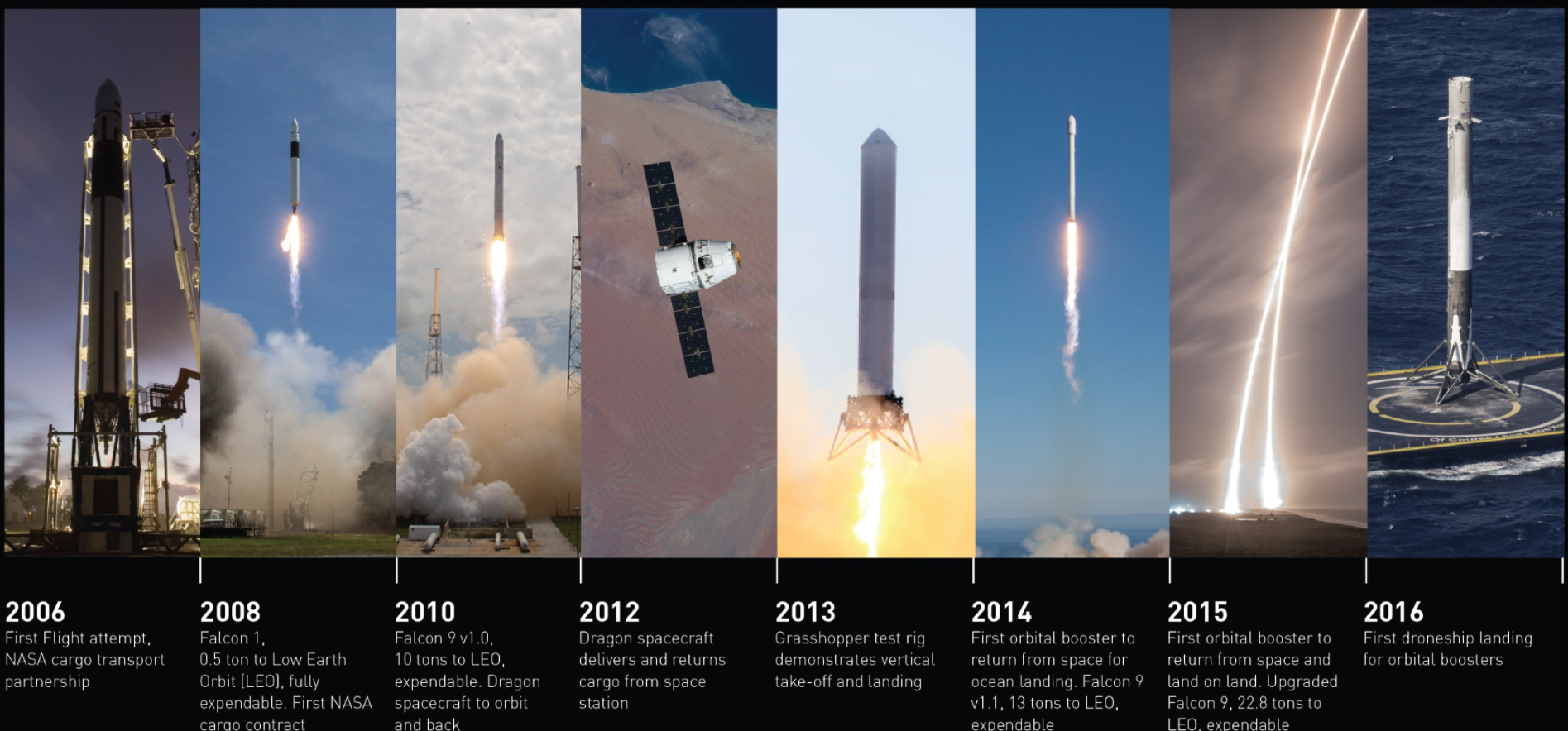
Have you watched the “build a little, test a little, learn a lot” progress of SpaceX over the last few years?  Like what Tesla has been able to do? Been impressed? Wondered why the USN hasn’t been able to bring a successful new warship online in two decades?

Well … via Blake Stilwell at military.com we have a few rules from Elon Musk in a 2018 email that … well … I’ll let you read them;

...here are a few productivity recommendations:

 – Excessive meetings are the blight of big companies and almost always get worse over time. Please get (sic) of all large meetings, unless you’re certain they are providing value to the whole audience, in which case keep them very short.

 – Also get rid of frequent meetings, unless you are dealing with an extremely urgent matter. Meeting frequency should drop rapidly once the urgent matter is resolved.

 – Walk out of a meeting or drop off a call as soon as it is obvious you aren’t adding value. It is not rude to leave, it is rude to make someone stay and waste their time.

 – Don’t use acronyms or nonsense words for objects, software or processes at Tesla. In general, anything that requires an explanation inhibits communication. We don’t want people to have to memorize a glossary just to function at Tesla.

 – Communication should travel via the shortest path necessary to get the job done, not through the “chain of command”. Any manager who attempts to enforce chain of command communication will soon find themselves working elsewhere. 

– A major source of issues is poor communication between depts. The way to solve this is allow free flow of information between all levels. If, in order to get something done between depts, an individual contributor has to talk to their manager, who talks to a director, who talks to a VP, who talks to another VP, who talks to a director, who talks to a manager, who talks to someone doing the actual work, then super dumb things will happen. It must be ok for people to talk directly and just make the right thing happen.

– In general, always pick common sense as your guide. If following a “company rule” is obviously ridiculous in a particular situation, such that it would make for a great Dilbert cartoon, then the rule should change.

Huh.

Monday, January 25, 2021

Know Capabilities, Not Names

Just as on the naval side of things, the Communist Chinese may call something a destroyer that is clearly a cruiser, the Europeans call something a frigate that is clearly a destroyer, and the Americans call a Littoral Combat Ship what is really a national disgrace, etc ... there are even more challenges figuring out capabilities on the land side.

A classic example, "How many divisions do they have?"

You might get a simple answer, but that may not be the answer you need in order to really understand what you are looking at.

Via IISS

When asked if, in 2025, a British war-fighting division will be capable of ‘overmatching the forces of a peer opponent such as Russia’, Minister for Defence Procurement Jeremy Quin replied ‘absolutely’. This assessment runs counter to the MoD’s own evidence. This is illustrated by the graphic below, which compares the anti-armour and artillery capabilities of the 3rd Division − as required by the 2015 SDSR − with an IISS assessment of the capabilities found in the Russian Army’s 4th tank division and the ‘reduced division’ that now represents the limited capability that the British Army could mobilise in 2025. It is highly likely that a Russian tank division would overmatch this much weaker British formation.


Details ... always ask for the details.

Crossposted to substack.


Sunday, January 24, 2021

Facing the 3rd Decade of the 21st Century, with James Holmes - on Midrats


New year, new decade, and a new President. Where should be be looking to have the right view on changes to strategy and maritime power? 

What existing trends are getting stronger, weakening - and what new things are starting to show up on the scope? 

Our guest for the full hour this Sunday from 5-6pm Eastern to cover the full natsec waterfront as we find it will be returning guest James R. Holmes, PhD. 

James holds the J. C. Wylie Chair of Maritime Strategy at the Naval War College and served on the faculty of the University of Georgia School of Public and International Affairs. A former U.S. Navy surface-warfare officer, he was the last gunnery officer in history to fire a battleship’s big guns in anger, during the first Gulf War in 1991. He earned the Naval War College Foundation Award in 1994, signifying the top graduate in his class. His books include Red Star over the Pacific, an Atlantic Monthly Best Book of 2010 and a fixture on the Navy Professional Reading List. General James Mattis deems him “troublesome.” 

If you use iTunes, you can add Midrats to your podcast list simply by clicking the iTunes button at the main showpage - or you can just click here