Showing posts sorted by relevance for query "be lucky" 240. Sort by date Show all posts

Wednesday, October 23, 2013

The Terrible 20s in a Picture

It is time to remind everyone about that light heading our way a bit down the tracks. Pretending it isn't there won't help anyone.

It is time again - and as usual the CBO helps best.


The most important line there is the average funding 1984 to 2013.  Look at it back and forth a few times.

Now, does anyone here REALLY think that given the huge debt load we have taken on in the last five years - building up more debt than then entire other years of the republic, that for the next 30 years we will consistently have that much of a higher average shipbuilding budget. Really?

We must capitalize our SSBN force. To do that, we have to either find a bunch of purple dollars in the colon of a Beltway unicorn, or we will have to squeeze the other programs.

As much as I don't care for LCS and would love for its death to be the answer, it wouldn't be; you could nuke the program and still only get 20% there.  SSN have been already squeezed, so what do you do? For planning purposes, what does the future look like if we kill LCS, cut the SSBN buy 20%? How much more do we have to cut? Our big stick are the CVN, so like the SSNs that are the premier sea denial platform in the Indo-Pacific; we can't touch that.  Our Amphibs are cut about as much as you can already.  What? Cut the large surface combatants by 50% during the Terrible 20s too?

Maybe - but you have to make a call somewhere. What would be helpful at this point is to pull out your essential Vince Lombardi.
“As a team last year we were horrible at the fundamentals of the game of football. Nobody here knows how to block and nobody knows how to tackle. All I saw last year was grab, grab, grab! “What we’re going to do now is go back to basics and we’re going to learn, drill and practice the fundamentals until we become better at them than anyone else in the game. If you do this with me, I will make you champions.” 
Let me paraphrase; "As a navy last decade and a half we were horrible at the fundamentals of the profession of building a fleet. Nobody here knows how to build a fleet and nobody knows how to respond to changing strategic requirements. All I saw in the last 15-yrs was spin, jargon, food-trough. What we're going to do now is go back to basics and we're going to learn, drill and practice the fundamentals until we become better at building a fleet for tomorrow than anyone else on the planet. If you do this with me, the nation will be secure, our industry strong, and our young men and women will have the best weapon systems possible if their nation sends them in to harm's way."

Something like that.

So, how does this start? First, we need some good Political guidance from the CINC. Then we we work on the best Strategic guidance inside a realistic understanding of our Diplomatic, Information, Military and Economic Constraints and Restraints - and how the Navy and Marine Corps fit in to it.

Thinking that we will receive in excess of 75% to 100% more than the historical average spending on shipbuilding in the face of an almost unprecidented budget crunch that will last decades is - well - in a fashion; professional malpractice and quasi-delusional. 

I'm sorry - but the 2014 plan is DOA. That is pretty much what the CBO report says ... but with nicer words and lots of math and hard facts.

We need to seriously look at how we would carry out what we believe we need to carry out given;
That alternative plan is not a recommendation by CBO but simply an illustration of the possible consequences of continuing funding for shipbuilding at its historical average amount rather than increasing it, as would be required under the Navy’s 2014 plan.

Purchases under that alternative plan would number 193 ships (versus 266 in the Navy’s plan), including 157 combat ships and 36 support ships.
...
Under that alternative plan, the battle force fleet in 2023 would be about the same size as in the Navy’s plan but by 2043 would number 243 ships, as opposed to the 306 ships in the Navy’s plan.
243. That is real close to what number front porch? Yes ... 240. That is a number that we have been using here since well before 2010.

So again - let's use that number; 240. What do we do, and how do we do it? What are the Assumptions? What are the Risks? What must be done, what can be done, what can be done with great risk, and what is simply outside a reasonable expectation?

To not have a "minority report" using a baseline fleet +/- 240 just makes it harder for the next generation to "make it happen."

Another note, look at the SSBN graph on page 10 of the report linked below. 3 1/2 years ago I warned that we would be lucky to stay at 10 SSBN ... well in the graph in 2028 we dip below the aspirational goal of 12 and hit 10 in 2032. Someone finds pixie dust and says we'll be up to 12 by 2042 - but those out years are just silly.

Unless something drastic happens soon, we should plan for 10 to be exactly what I predicted in 2010 - the ceiling. 

Math is hard; economics is harder.


Tuesday, March 29, 2022

We Chose Decline

The People's Republic of China does not have to aggressively take our status as the premier world power. It appears that we are willingly giving it to them, sooner more than later.

As a maritime and aerospace power, especially when it comes to the challenge west of Wake, if you want to understand how serious our nation's national security nomenklatura is toward the clear threat to the place previous generations died by the hundreds of thousands to place us in the last century - just look at what we are spending our money on.

Megan Eckstein over at DefenseNews has the summary for everyone. It isn't pleasant reading, especially for those who have their eyes on the world around us. You don't have to like it, but you do have to accept the simple fact that the leadership the American people have put in charge of their security simply are not interested in funding it.

Until elections move new people in to power - and even that may not produce the needed result - we will simply have to accept that The Terrible 20s that we started talking about a dozen years ago are our future.

The title of Megan's latest is as good of a start as any;

US Navy budget would pay for 9 ships, decommission 24 amid readiness drive

Yes, that is a net loss of 15 ships. Meanwhile the PLAN grows and grows.

Like the intellectually dishonest "Integrated Defense" we covered yesterday, all this is being justified with spin and bad theory.

A couple of examples;

Meredith Berger, who is currently performing the duties of Navy undersecretary, told reporters the plan is strategy-driven and follows the chief of naval operation’s priorities of funding the Columbia-class ballistic missile submarine in full and then prioritizing readiness for today, lethality for tomorrow and capacity for down the road.

The budget proposal, she said, “enables the Department of Defense’s investment in the three pillars of the National Defense Strategy: integrated deterrence, campaigning forward and building upon our enduring advantages to fulfill the strategic priorities that are identified [in] the National Defense Strategy.”

I'm sorry Acting Under, but bullsh1t. No serious person who sees what is happening on the other side of the Pacific believes that. I really am interested in what exactly you will be "campaigning forward" with ... and the rest is, as my European friends like to say, "fried air."

The U.S. Navy is requesting more money in its fiscal 2023 budget proposal compared to the previous fiscal year, but it’s still on a trajectory toward a smaller fleet.

...

The Navy’s request represents a 5% growth in spending compared to the FY22 budget Congress passed, and the Marine Corps’ request would be a 1.8% increase in spending compared to the enacted FY22 budget.

In an inflationary environment - especially accelerating inflation - these % changes and raw number increases are meaningless.

Only units matter. How many of what you can buy. Focus on that first, then the money.

Along those lines, here is where the numbers fall;

Included in the request are two Virginia-class attack submarines, two Arleigh Burke-class destroyers, one Constellation-class frigate, one America-class amphibious assault ship, one San Antonio-class amphibious transport dock, one John Lewis-class fleet oiler, and one Navajo-class towing, salvage and rescue ship.

...

The Navy currently has 298 ships. That would dip to 280 by FY27 under the plan pitched by the Navy.

The service proposes decommissioning 24 ships in FY23: nine Freedom-variant LCSs, five Ticonderoga-class cruisers, four Whidbey Island-class amphibious dock landing ships, two attack submarines, two oilers and two Montford Point-class expeditionary transfer docks.

The loss of LCS is a net gain for the Navy, but building two while decom'n two SSN doesn't grow that needed west of Wake capability ... and we are gutting what is needed to get personnel and gear ashore from the sea - a strange position to take when that is one of the critical requirements to conduct and sustain operations in the Pacific.

Of those 24 vessels, 16 have not yet reached the end of their service lives and would require the Navy secretary to sign a waiver to Congress, including all nine LCSs, one of the five cruisers and the two expeditionary transfer docks.

16/24=8/12=2/3

Two thirds of our ships are being decommissioned before they were even used to their designed longevity. That is damning of both our maintenance and fleet design errors of the last 30-yrs.

Speaking of submarines, let's go back to something we were discussing on the Front Porch a dozen years ago;

Let's look at 2020 again. What else is happening in the 20s? Well, for one, we will have to find money to re-capitalized the SSBN fleet. I offer to you that the 20 JAN HASC SEF Subcommittee meeting has an outstanding money discussion about that challenge. Deputy SECNAV Work has also discussed this challenge in other venues, and I think he has a very firm grasp of the problem, as do most in positions to know.

You have to look at it in the broader context of the budget as well. The hangover in the 20s from this decade's drunken frenzy of spending will couple with another cohort of Baby Boomers retiring and putting stress on the budget in ways we still do not have a firm grasp on.

In 2020 - that ship built in 1990 will be at 30 years. That LCS built in 2009 will only have 9 years or so of service life (LCS is expected to only last 20-25 years) - so by the end of the 2020s, LCS will be dropping like flies.

When you consider that we will be limited this decade to LCS and DDG-51 for our non-amphib surface ship program (don't throw JHSV at me, that is just a truck - full stop - all else is spin and hope) - you have about a perfect story for the 20s of limited shipbuilding funds and a stunted fleet.

No one - at least here - should find this from Megan's article even a little bit surprising;

He also noted that 21% of the shipbuilding budget supports the Columbia program — which doesn’t affect the ship count for FY23 since the Navy is not buying a new ship this year but rather is incrementally paying for the lead ship bought in FY21 and buying parts for the upcoming FY24 ship.

...

The Columbia program will grow to consume 30% of the shipbuilding budget once it moves into one-per-year procurement later this decade. As a result of this pressure, surface ship programs may be scaled down.

A month before the above post from FEB2010, we also had this CDRSalamander post - again from over a dozen years ago;

 We did this to ourselves - and in the budget environment everyone who wanted to has seen for the last half decade, the simple math that the Tiffany Navy forces us to use tells us that there was no way we would reach 313, 300, or even hold fast at 283.

Further evidence continued to mount last spring, when the administration submitted a shipbuilding budget that would only support the construction of eight ships.

In just a few short years, this level of funding will produce a 240-ship fleet, given that a typical Navy warship has an expected life of 30 years.

We will be lucky if we can hold 240 - as we have been discussing here for the last few years.

What is happening on the aviation side of the house?

... it plans to retire 24. It is asking for 96 aircraft, but no F/A-18 Super Hornets and fewer carrier-variant F-35C Joint Strike Fighters than last year. It’s also proposing a decrease of about 10,000 sailors to crew the fleet in the next five years.

...

Of note, the five Advanced Hawkeyes and the 26 TH-73A helicopter trainers in the budget request would be the last in the program before the production lines end.

The three V-22 Ospreys the Navy is buying this fiscal year and the nine the Marines are buying would be the last for that production line as well, with the services listing zero in their request for FY23 and in the four following years.

10,000? Do you know anyone in a sea-going command who thinks they are overmanned?

I repeat my standard once again; if you believe war in coming west of Wake, time is short. Under no circumstances should any production line of aircraft or ships be allowed to go idle until there is an immediate production of that platform's replacement. 

We cannot afford to allow us to lose in the mid-20s the ability to produce E-2 or MV-22 or F/A-18...anything until their replacements are in production. 

We need serious people for this serious time.

We will have to wait.

Monday, January 04, 2010

In DC at 0726 today ....


You should "abandon the concept of darkness."

From
Daniel B. Branch, Jr., National President of The Navy League,
It appears the Obama administration may have abandoned the concept that a 300-plus ship Navy is critical to the security of the United States. If true, this will be the first administration in almost 100 years not to support the concept.

Early signs of this lack of support emerged during the 2008 presidential campaign, when the Navy League asked both candidates — Sen. John McCain, R-Ariz., and then-Sen. Barack Obama, D-Ill. — whether they supported the need to return the fleet to 313 ships, the minimum number the Chief of Naval Operations and the Chairman of the Joint Chiefs of Staff say is needed to meet our national security requirements. The Obama team responded that the “current force structure is adequate to support the Navy’s missions,” referring to a fleet that at the time consisted of 283 ships.
I do not blame President Obama and his team for this - his senior Navy officers gave him this sandwich already made.

This is the logical result of the mismanagement of our shipbuilding program for the entire first decade of the 21st Century. Few in Congress, the press, or the general public believe anymore what uniformed leadership say about what ships will do what, when , and at what cost.

We did this to ourselves - and in the budget environment everyone who wanted to has seen for the last half decade, the simple math that the Tiffany Navy forces us to use tells us that there was no way we would reach 313, 300, or even hold fast at 283.
Further evidence continued to mount last spring, when the administration submitted a shipbuilding budget that would only support the construction of eight ships. In just a few short years, this level of funding will produce a 240-ship fleet, given that a typical Navy warship has an expected life of 30 years.
We will be lucky if we can hold 240 - as we have been discussing here for the last few years.
To maintain a Navy of at least 300 ships, the United States must fund and build at least 11-12 ships per year. Recent estimates from the Congressional Budget Office and the Congressional Research Service indicate it will take from $25 billion to $27 billion per year for the shipbuilding budget to reach and maintain a 313-ship Navy, a minimum number the Navy may even raise. However, the administration submitted a budget of only $14.7 billion for ship construction in fiscal 2010.
And if you think that math is going to get better - you are high.

We would do a lot better if the immediate past CNO Admiral Mullen and the present CNO Admiral Roughead held a very public mea culpa and explained to Congress, the Navy, and more importantly the taxpayer, how we got here. This happened on their watch - they know the problem best.

Enough happy talk.


Hat tip Maggie.

Tuesday, January 03, 2023

Kaplan's Elegant Decline at 15


Back in the November 2007 issue of The Atlantic, Robert D. Kaplan published an essay that still comes to mind on a regular basis a decade and a half after its publication; America's Elegant Decline. I first mentioned it ten months after its publication while I was in Afghanistan, and then only briefly. 

At 15, I think it is time to see how it holds up.

15 years is a long time - but it also passes quickly. 15 years from now would be January of 2038. You know all that talk about "2040" in the last year, well you're one POM cycle away ... and while some things we think about the future to come will be roughly correct, some will be quite off. That is normal and should be expected. With that benchmark in place, Elegant Decline holds up pretty well.

Before we dive in, let's remember the time and place of 2007. Obama was still the junior Senator from Illinois. The surge in Iraq was almost at its peak and at the time success was iffy. Though we knew at CENTCOM in mid-Summer of 2007 that NATO culminated in Afghanistan and the USA would have to step in soon as we could, in general Afghanistan - the good war - was seen as in good hands with NATO.

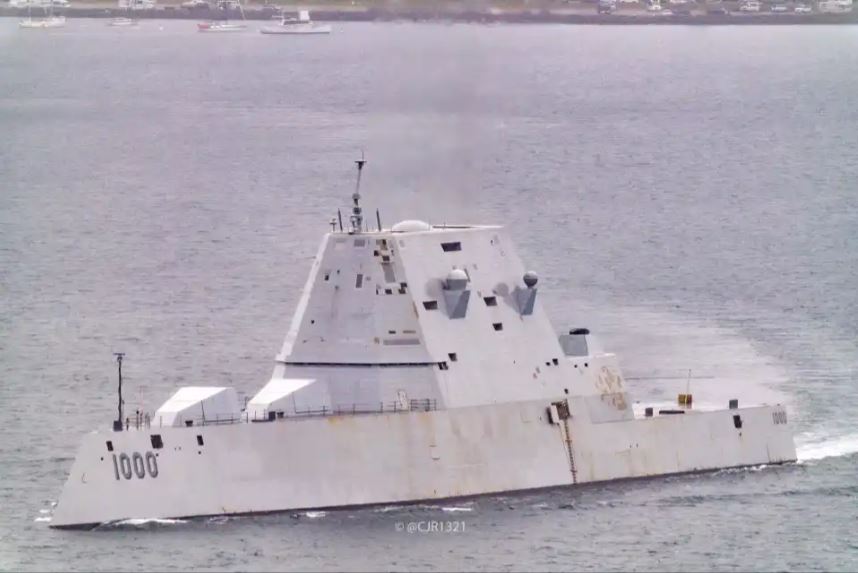
Though the cheap seats were warning otherwise, the Navy let everyone know of the glories of Transformation embodied by LCS, DDG-1000 and CG(X) were going to bring if everyone would just shut up and color ... a period that would end 18-months after Elegant Decline with the truncating to 3-ships of the Zumwalt class ... and you know the rest as we rolled in to the Age of Salamander to prepare everyone for The Terrible 20s.

So, in to that moment Kaplan dedicates the first third of his article reminding everyone of some truths are were as correct in 2007 as they are in 2023;

Beware pendulum swings. Before 9/11, not enough U.S. generals believed that the future of war was unconventional and tied to global anarchy. ... Now the Pentagon is consumed by a focus on urban warfare and counterinsurgency; ... But have we pushed it too far? We may finally master the art of counterinsurgency just in time for it to recede in importance.

...Though counterinsurgency will remain a core part of our military doctrine, the Pentagon does not have the luxury of planning for one military future; it must plan for several.

"Regular wars" between major states could be as frequent in the 21st century as they were in the 20th. ... these future wars will not require any "manifestation of insanity by political leaders," nor even an "aberration from normal statecraft, " but may come about merely because of what Thucydides recognized as "fear, honour, and interest."

..

The current catchphrase is boots on the ground; in the future it could be hulls in the water. 

...

A "peaceful, gain-loving nation" like the United States "is not far-sighted, and far-sightedness is needed for adequate military preparation, especially in these days," warned Navy Captain Alfred Thayer Mahan in 1890..

This is when he transitions to what he, rightfully, sees as a primary indicator of America's decline - its Navy - something that dominates the other 2/3 of the article.

...too few strategists at the time were thinking seriously about sea power. Today we are similarly obsessed with dirty land wars, and our 300-ship Navy is roughly half the size it was in the mid-1980s.

A great navy is like oxygen: You notice it only when it is gone. But the strength of a nation's sea presence, more than any other indicator, has throughout history often been the best barometer of that nation's power and prospects.

I just wanted to take a note to nod at the hard work led by Rep. Mike Gallagher (R-WI) in the changes to Section 8062(a) of USC Title 10, 15-years after Elegant Decline, to put this in to law. 

Our friend Bryan McGrath has a superb summary of the changes and their importance here.

Back to Elegant Decline - where Kaplan does a great job outlining more nuggets of unalloyed truths;

Our sea power allows us to lose a limited war...Army units can't forward-deploy anywhere in significant numbers without a national debate. Not so the Navy. ... Great navies help preserve international stability. 

...

In an age where 90 percent of global commerce travels by sea, and 95 percent of our imports and exports from outside North American do the same (even as that trade volume is set to double by 2020), and when 75 percent of the world's population is clustered within 200 miles of the sea, the relative decline of our Navy is a big, dangerous fact to which our elites appear blind.

Well, it didn't double, but it did go up by 30%.


A lot of you will remember this well;

...in a 1954 article in Proceedings ... a young Harvard academic named Samuel P. Huntington told the Navy not to feel sorry for itself:

The resources which a service is able to obtain in a democratic society are a function of the public support of that service. The service has the responsibility to develop this necessary support, and it can only do this if it posses a strategic concept which clearly formulates its relationship to the national security. 

Emphasis added by me.

Good googly moogly yes. Has our "service" been doing this sales job well? No, no it has not. Why? They have tied themselves to the mast of the archaic, accretion covered Cold War era Goldwater-Nichols and the Cult of the Joint that comes with it. That is why. They have convinced themselves that they have to accept this state of affairs in silence when they don't - it is senior leadership's choice to interpret it as such. Our Navy and the nation it serves suffers as a result.

...by 1997, post Cold War budget cuts had reduced the Navy to 365 ships. (In the Quadrennial Defense Review of that year, the Pentagon established a 'red line' of 300 ships, below which the Navy would not go.)

LOLOLOLOLOL.

Of course the 300-ship Navy could still, in the words of Robert O. Work, ...

BOB!

 ..."pound the snot" out of primitive challengers like Iraq, Iran, and North Korea,

Don't worry, they didn't forget about China completely;

Robert Work told me that he believes the eventual incorporation of Taiwan into China will have the effect that the Battle of Wounded Knee had on the United States: it will psychologically close an era of national consolidation for the Chinese, thereby dramatically redirecting their military energies outward, beyond their coastal waters. Tellingly, whereas the U. S. Navy pays homage to Mahan by naming buildings after him, the Chinese avidly read him; the Chinese are the Mahanians now.

The next bit is something we called at the time wrong-headed and unhelpful and Kaplan is suspicious of at the time as well; then CNO Admiral Mike Mullen, USN (Ret.); 

He (Mike Mullen) went on: "I'm after that proverbial 1,000-ship Navy - a fleet in being, if you will, comprised of all freedom-loving nations, standing watch over the seas, standing watch over each other." Subtract the platitudes, and it's clear that Admiral Mullen is squaring a number of circles to contend with the difficult reality he's up against. 

I continue to hold that this throw away line that became a talking point that was then made flesh was one of the greatest strategic errors this century so far. It gave top cover to those who were looking for reasons not to build the Navy our nation needed. The evils of the Age of Transformationalism only made it worse ... another of Mullen's follies;

This is what the optimists saw right before the rot was unavoidable anymore;

The new DDG-1000 Zumwalt-class destroyer, envisioned in one form or another for 12 years and beset with delays could end up costing $3 billion a ship - if any get built. The new Gerald R. Ford-class aircraft carriers could cost a whopping $8 billion each - not including $6 billion of research-and-development costs.

History can be cruel to such a geologic pace; this slowness is a recipe for vulnerability and nasty strategic surprise. We have a capital-intensive Navy consisting of vessels that cost tens of billions of dollars, and that must therefore each deploy for decades if they are to return the investment. Yet all future peer competitor like China need do to greatly devalue our fleet is to improve its ballistic-missile technology to the point where we're forced to move our carriers, say, 100 miles east of their present positions off the Asian mainland, to keep them out of missile range.

We should be so lucky. Time has found Kagan an optimist here.

...the new Ford-class carriers will be built with laser guns to kill incoming missiles, anti-torpedo torpedoes to deal with supercavitation technology, and electric catapults for launching UAV's in case fight jets, with their human pilots, give way to enhanced remote-controlled Predators that  can be refueled in air.

Well, in 2022 lasers are still the weapon of tomorrow like they always seem to be, anti-torpedoes are a strong maybe to no, and unmanned systems are still a few generations away if ever from there ... so ... technology and future risk can suffer from excessive optimism bias ... as always. Watch 2001: A Space Odyssey for a hint in that regard. 

Meanwhile, as costs drive us towards that 150-ship Navy...

Not yet...we're doing better than that so far. Kaplan was a bit too much of a pessimist on this point. At my darkest in pondering The Terrible 20s I warned of 240 back in 2010.

According to Navy Lieutenant Commander Claude Berube, who teaches at the U.S. Naval Academy, in an emergency we might even issue letters of marque, the way we did during the Revolutionary War, giving privateers the legal authority to act in our defense. Allowing privateers to help with, say, the drug-interdiction effort in the Caribbean would enable uniformed sailors to concentrate on the Pacific and Indian oceans.

Claude!

Today, the United States devotes 4.38 percent of its annual gross domestic product to defense. Before the Iraq War, it was 3.5 percent.

In 2022 it was back to ~3.5%.

Admiral Morgan, the deputy chief of naval operations for information, plans, and strategy, told me that to maintain our naval primacy, we may need to devote close to 5 percent of GDP (assuming a growing economy) to defense. Yet it's unclear whether the American public will abide that.

Spoiler alert; they didn't.

So, there we go; the Elegant Decline at 15. 

Much spot on, some a bit too optimistic, some too pessimistic. On balance though, it aged fairly well in a decade and a half.

It should keep us all humble and it would do everyone well to understand that, on balance, 2023 is not all that different than 2007 ... and 2037 will most likely not be all that different than 2023.

Plan accordingly.