Showing posts with label Strategy. Show all posts

Thursday, March 30, 2023

The Weapons Gap With the PRC the USA Created and Funded: it Goes Boom


If you don’t wake up every morning cursing those responsible for defense and China policy in the 1990s … the gobsmackingly short sighted arrogance of it all – then what use are you, actually?

With a few exceptions, from partially completed CV rusting in Ukraine to teaching the Communist Chinese how to MIRV ICBM warheads, to opening up our best research institutions to spies an assets, the USA was beset internally by unserious people with the attention span of a hamster and the historical perspective of a newborn in serious jobs requiring long-term thinking and decision making.

The harvest of this decade of frivolity continue to ripen, and via Jeremy Bogaisky, at Forbes – get ready to rage – we have just one more example; one that if we actually come to blows with the People’s Republic of China or those who buy their weapons – will result in more dead American men and women – more mutilated wounded. 

People and perspective matter. It appears the PRC has known this for decades;

In 1987, U.S. Navy researchers invented a new explosive with fearsome capabilities. Named China Lake Compound No. 20 after the Southern California base where it was developed, it boasted up to 40% greater penetrating power and propellant range than the U.S. military’s mainstay explosives, which were first produced during World War II.

With the collapse of the Soviet Union, however, the Pentagon’s urgency evaporated. So did the expensive task of perfecting CL-20 and designing weapons to use it.

…and how did they get CL-10? Where was the CIA, the FBI? Oh, that’s right – playing around in domestic politics. 

Meanwhile, the PRC was sending grad students; inserting citizens in the right companies. Doing just plain good old fashioned espionage. 

China, however, saw the potential. The country has invested heavily in developing long-range missiles with the aim of forcing U.S. warships and non-stealthy aircraft like refueling tankers to operate at a distance if Chinese forces invade Taiwan. Some of those weapons are believed to be propelled by a version of CL-20, which China first fielded in 2011 and now produces at scale.

“This is a case where we could potentially be beaten over the head with our own technology,” Bob Kavetsky, head of the Energetic Technology Center, a nonprofit research group that does work for the government, told Forbes.

Kavetsky and other experts in energetics, the niche field of developing things that go boom, have been warning for years that the U.S., long the world leader, has fallen dangerously behind China. The Pentagon last year outlined a plan to spend $16 billion over 15 years to upgrade and expand its aging network of munition plants, but Kavetsky warns that doesn’t include developing the advanced manufacturing capabilities needed to mass produce new explosives like CL-20.

Criminal malpractice. 

No, we are not being led by the best and brightest™ - we are not promoting our best - we do not have the right mix of incentives and disincentives.

…the U.S. depends on China as the single source for about half-dozen chemical ingredients in explosives and propellants, and other countries of concern for another dozen.

Yes, you read that correctly. I am sure Russia is in there too.

Like I said, criminal. You cannot commission new chemical plants overnight.

“We can’t build enough ships and airplanes to carry the number of missiles necessary to reverse the firepower imbalance we have inside the first island chain,” said retired Major General Bill Hix, who served as the Army’s director of strategy after commanding forces in Afghanistan and Iraq, and has consulted for the Energetic Technology Center.

“The only solution is new energetic materials,” he said. That would allow the U.S. to produce smaller missiles with the same power, so more could be carried by warplanes and ships, as well as to enable weapons that can shoot farther and pack more of a punch.

The PRC has over a decade head start building on R&D the USA paid for.

Wittman said he supports the idea of retrofitting existing missiles with CL-20 and creating a high-level office devoted to energetics under the secretary of defense. While decision makers at the Pentagon are aware of the issues, “I don’t think they see a sense of urgency with it,” Wittman said. “We’re going to instill a sense of urgency with them.”

Chinese scientists account for about three-quarters of the published research on energetics and in related fields over the last five years, nearly seven times as much as U.S. researchers, according to analyses from the Hudson Institute and Georgetown University. They’re working on materials that have improved performance over CL-20, Kavetsky said.

I would really like to see where those Chinese scientists got their degrees from, but you pretty much know.

As for the sense of urgency, what have we discussed here through the years about the 2nd and 3rd order effects of our accretion encumbered acquisition process? What does it cause? Just re-read the above.

Want another example of an existential threat to the Cult of Efficiency created? 

Nearly all U.S. explosives are produced at a single Army-owned plant in Holston, Tennessee, that dates back to World War II and is run by U.K.-based defense contractor BAE Systems (2022 revenue: $25.5 billion). The production processes generally are as old, Kavetsky said, with explosives prepared in 400-gallon vats that resemble cake mixers. Many advanced energetic materials can’t be made that way, including CL-20, which he said is synthesized in smaller amounts in chemical reactors.

All one needs is a pickup truck and a mortar team and game over. Single point of failure. As if you designed something to make you combat ineffective at D+1.

It would be possible to make 20,000 pounds of CL-20 a year with current amounts of precursor chemicals, Kavetsky said, but broad use would require 2 million pounds a year, which he believes could take three to five years to scale up to. “If DoD says we want large quantities,” he said, “industry will respond.”

“If DoD says we want large quantities, industry will respond.”

Not if we lose our one plant or run out of the chemicals – which I am sure are just in time delivered – that China is nice enough to export to us.

How long would it take for just then environmental impact statement to be completed?

Hix said he doubts those promising technologies will be ready for prime time this decade, but the U.S. could fairly rapidly boost its firepower with better explosives and propellants.

“A concerted effort on [explosives] is possible,” he said. “But we have to invest in it.”

Oh yes, our “decade of concern” … 

The Terrible 20s just keep giving.

Tuesday, February 14, 2023

We Have a Lot of Things to Relearn


Thinking of the American military's readiness for the next large war, there is rightfully a lot of concern that after a couple of decades of imperial policing wars in Central and Southwest Asia, that not only are we ill-equipped for a major peer conflict ashore, but that we've forgotten much of what is considered fundamental aspects of significant force-on-force combat.

The Russo-Ukrainian War has offered some good reminders, from the utility of armor, artillery, and logistics that clever peace time theorists were wishing away, but on the land side of the equation, what are some other critical capabilities that we have had the luxury of generations to forget about?

Over at the Modern War Institute, they have a reminder of something I think most of us have not given much thought to recently; the operational level fighting retreat.

New from MWI comes a 450 page book in PDF on the very subject; Armies in Retreat: Chaos, Cohesion, and Consequences;

Battlefields are dynamic. In large-scale combat operations, opposing forces seek to gain control of terrain, to outmaneuver one another, and to employ combined arms to gain positional advantage. The objective, much more often than not, is to advance. When one side is successful, that means retreat, withdrawal, or evacuation is likely for the other. Studying those armies who suffer the ignominy of retreat, then, is crucial to understanding war and command.

The word retreat, however, is almost taboo in US Army literature. The new Field Manual (FM) 3-0, Operations only uses the word five times, four of which are describing the near-destruction of the North Korean People’s Army in September 1950. ... Instead of using the word retreat, FM 3-0 uses the term retrograde—and the manual only dedicates one paragraph to retrograde operations.

For the Marine Corps, the apparent reversion to discussing retreat is similar. Marine Corps Doctrine Publication 1, Warfighting, the US Marine Corps’ capstone doctrinal document, uses neither retreat nor retrograde. Instead, it talks about “rapid, flexible, and opportunistic maneuver.” Maneuver warfare, the Marine Corps’ warfighting doctrine, focuses combat power against enemy cohesion, seeking to create “panic and paralysis, an enemy who has lost the will to resist.”

But what happens when your force is the one close to losing the will to resist? How does a commander keep an army together? The United States military has a long history of retreating, from the early days of the American Revolution to the evacuation of Afghanistan in 2021. Some retreats bought time or space. Others allowed commanders to regroup or reposition for follow-on operations. Others reflected strategic defeat.

Armies in Retreat: Chaos, Cohesion, and Consequences seeks to balance the historical and practical narrative, giving readers a better understanding of why, how, and when armies retreat. 

...

Ignoring the concept of retreat by omission or sophistry in doctrine won’t make it go away. Russian forces entering Ukraine a year ago likely did not think a retreat was in their future but a year of combat operations have revealed otherwise. The first Soviet forces into Afghanistan likely did not think they would watch a retreat across the Hairatan Bridge a decade later, nor did most of the many American forces who fought in Afghanistan over nearly two decades envision the exit from the country that took place in August 2021.

So instead of ignoring the lessons of history, we should study them to be better equipped for the future. Armies in Retreat is our effort to facilitate that study. 

Think a bit about the maritime side of the house. What topic would you like to see get this treatment as we organizationally try to focus on the war to come?

As for me, I'd like something on forward maintenance and arming centered on the Western Pacific Campaign of WWII. I also would like a similar focus in combat logistics of the same. Perhaps fighting in the face of significant unit loss like we had in the Guadalcanal Campaign.

That's my Top-3.

BZ to MWI. 

Tuesday, January 03, 2023

Kaplan's Elegant Decline at 15


Back in the November 2007 issue of The Atlantic, Robert D. Kaplan published an essay that still comes to mind on a regular basis a decade and a half after its publication; America's Elegant Decline. I first mentioned it ten months after its publication while I was in Afghanistan, and then only briefly. 

At 15, I think it is time to see how it holds up.

15 years is a long time - but it also passes quickly. 15 years from now would be January of 2038. You know all that talk about "2040" in the last year, well you're one POM cycle away ... and while some things we think about the future to come will be roughly correct, some will be quite off. That is normal and should be expected. With that benchmark in place, Elegant Decline holds up pretty well.

Before we dive in, let's remember the time and place of 2007. Obama was still the junior Senator from Illinois. The surge in Iraq was almost at its peak and at the time success was iffy. Though we knew at CENTCOM in mid-Summer of 2007 that NATO culminated in Afghanistan and the USA would have to step in soon as we could, in general Afghanistan - the good war - was seen as in good hands with NATO.

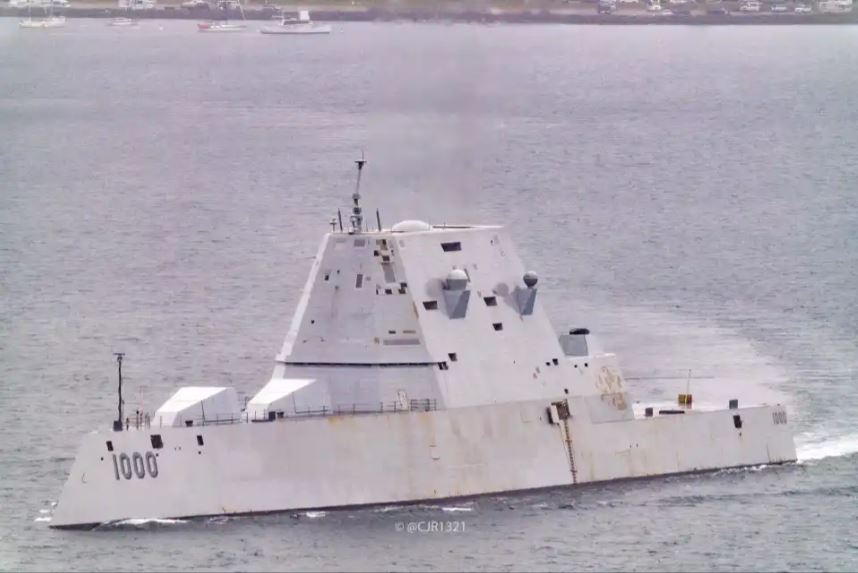
Though the cheap seats were warning otherwise, the Navy let everyone know of the glories of Transformation embodied by LCS, DDG-1000 and CG(X) were going to bring if everyone would just shut up and color ... a period that would end 18-months after Elegant Decline with the truncating to 3-ships of the Zumwalt class ... and you know the rest as we rolled in to the Age of Salamander to prepare everyone for The Terrible 20s.

So, in to that moment Kaplan dedicates the first third of his article reminding everyone of some truths are were as correct in 2007 as they are in 2023;

Beware pendulum swings. Before 9/11, not enough U.S. generals believed that the future of war was unconventional and tied to global anarchy. ... Now the Pentagon is consumed by a focus on urban warfare and counterinsurgency; ... But have we pushed it too far? We may finally master the art of counterinsurgency just in time for it to recede in importance.

...Though counterinsurgency will remain a core part of our military doctrine, the Pentagon does not have the luxury of planning for one military future; it must plan for several.

"Regular wars" between major states could be as frequent in the 21st century as they were in the 20th. ... these future wars will not require any "manifestation of insanity by political leaders," nor even an "aberration from normal statecraft, " but may come about merely because of what Thucydides recognized as "fear, honour, and interest."

..

The current catchphrase is boots on the ground; in the future it could be hulls in the water. 

...

A "peaceful, gain-loving nation" like the United States "is not far-sighted, and far-sightedness is needed for adequate military preparation, especially in these days," warned Navy Captain Alfred Thayer Mahan in 1890..

This is when he transitions to what he, rightfully, sees as a primary indicator of America's decline - its Navy - something that dominates the other 2/3 of the article.

...too few strategists at the time were thinking seriously about sea power. Today we are similarly obsessed with dirty land wars, and our 300-ship Navy is roughly half the size it was in the mid-1980s.

A great navy is like oxygen: You notice it only when it is gone. But the strength of a nation's sea presence, more than any other indicator, has throughout history often been the best barometer of that nation's power and prospects.

I just wanted to take a note to nod at the hard work led by Rep. Mike Gallagher (R-WI) in the changes to Section 8062(a) of USC Title 10, 15-years after Elegant Decline, to put this in to law. 

Our friend Bryan McGrath has a superb summary of the changes and their importance here.

Back to Elegant Decline - where Kaplan does a great job outlining more nuggets of unalloyed truths;

Our sea power allows us to lose a limited war...Army units can't forward-deploy anywhere in significant numbers without a national debate. Not so the Navy. ... Great navies help preserve international stability. 

...

In an age where 90 percent of global commerce travels by sea, and 95 percent of our imports and exports from outside North American do the same (even as that trade volume is set to double by 2020), and when 75 percent of the world's population is clustered within 200 miles of the sea, the relative decline of our Navy is a big, dangerous fact to which our elites appear blind.

Well, it didn't double, but it did go up by 30%.


A lot of you will remember this well;

...in a 1954 article in Proceedings ... a young Harvard academic named Samuel P. Huntington told the Navy not to feel sorry for itself:

The resources which a service is able to obtain in a democratic society are a function of the public support of that service. The service has the responsibility to develop this necessary support, and it can only do this if it posses a strategic concept which clearly formulates its relationship to the national security. 

Emphasis added by me.

Good googly moogly yes. Has our "service" been doing this sales job well? No, no it has not. Why? They have tied themselves to the mast of the archaic, accretion covered Cold War era Goldwater-Nichols and the Cult of the Joint that comes with it. That is why. They have convinced themselves that they have to accept this state of affairs in silence when they don't - it is senior leadership's choice to interpret it as such. Our Navy and the nation it serves suffers as a result.

...by 1997, post Cold War budget cuts had reduced the Navy to 365 ships. (In the Quadrennial Defense Review of that year, the Pentagon established a 'red line' of 300 ships, below which the Navy would not go.)

LOLOLOLOLOL.

Of course the 300-ship Navy could still, in the words of Robert O. Work, ...

BOB!

 ..."pound the snot" out of primitive challengers like Iraq, Iran, and North Korea,

Don't worry, they didn't forget about China completely;

Robert Work told me that he believes the eventual incorporation of Taiwan into China will have the effect that the Battle of Wounded Knee had on the United States: it will psychologically close an era of national consolidation for the Chinese, thereby dramatically redirecting their military energies outward, beyond their coastal waters. Tellingly, whereas the U. S. Navy pays homage to Mahan by naming buildings after him, the Chinese avidly read him; the Chinese are the Mahanians now.

The next bit is something we called at the time wrong-headed and unhelpful and Kaplan is suspicious of at the time as well; then CNO Admiral Mike Mullen, USN (Ret.); 

He (Mike Mullen) went on: "I'm after that proverbial 1,000-ship Navy - a fleet in being, if you will, comprised of all freedom-loving nations, standing watch over the seas, standing watch over each other." Subtract the platitudes, and it's clear that Admiral Mullen is squaring a number of circles to contend with the difficult reality he's up against. 

I continue to hold that this throw away line that became a talking point that was then made flesh was one of the greatest strategic errors this century so far. It gave top cover to those who were looking for reasons not to build the Navy our nation needed. The evils of the Age of Transformationalism only made it worse ... another of Mullen's follies;

This is what the optimists saw right before the rot was unavoidable anymore;

The new DDG-1000 Zumwalt-class destroyer, envisioned in one form or another for 12 years and beset with delays could end up costing $3 billion a ship - if any get built. The new Gerald R. Ford-class aircraft carriers could cost a whopping $8 billion each - not including $6 billion of research-and-development costs.

History can be cruel to such a geologic pace; this slowness is a recipe for vulnerability and nasty strategic surprise. We have a capital-intensive Navy consisting of vessels that cost tens of billions of dollars, and that must therefore each deploy for decades if they are to return the investment. Yet all future peer competitor like China need do to greatly devalue our fleet is to improve its ballistic-missile technology to the point where we're forced to move our carriers, say, 100 miles east of their present positions off the Asian mainland, to keep them out of missile range.

We should be so lucky. Time has found Kagan an optimist here.

...the new Ford-class carriers will be built with laser guns to kill incoming missiles, anti-torpedo torpedoes to deal with supercavitation technology, and electric catapults for launching UAV's in case fight jets, with their human pilots, give way to enhanced remote-controlled Predators that  can be refueled in air.

Well, in 2022 lasers are still the weapon of tomorrow like they always seem to be, anti-torpedoes are a strong maybe to no, and unmanned systems are still a few generations away if ever from there ... so ... technology and future risk can suffer from excessive optimism bias ... as always. Watch 2001: A Space Odyssey for a hint in that regard. 

Meanwhile, as costs drive us towards that 150-ship Navy...

Not yet...we're doing better than that so far. Kaplan was a bit too much of a pessimist on this point. At my darkest in pondering The Terrible 20s I warned of 240 back in 2010.

According to Navy Lieutenant Commander Claude Berube, who teaches at the U.S. Naval Academy, in an emergency we might even issue letters of marque, the way we did during the Revolutionary War, giving privateers the legal authority to act in our defense. Allowing privateers to help with, say, the drug-interdiction effort in the Caribbean would enable uniformed sailors to concentrate on the Pacific and Indian oceans.

Claude!

Today, the United States devotes 4.38 percent of its annual gross domestic product to defense. Before the Iraq War, it was 3.5 percent.

In 2022 it was back to ~3.5%.

Admiral Morgan, the deputy chief of naval operations for information, plans, and strategy, told me that to maintain our naval primacy, we may need to devote close to 5 percent of GDP (assuming a growing economy) to defense. Yet it's unclear whether the American public will abide that.

Spoiler alert; they didn't.

So, there we go; the Elegant Decline at 15. 

Much spot on, some a bit too optimistic, some too pessimistic. On balance though, it aged fairly well in a decade and a half.

It should keep us all humble and it would do everyone well to understand that, on balance, 2023 is not all that different than 2007 ... and 2037 will most likely not be all that different than 2023.

Plan accordingly.


Monday, December 05, 2022

Irregular War's War on Thinking About War


Building a coherent intellectual foundation of an effective military force to be ready to defend the nation and its interests never ends. As a levee against a large and turbulent river must be constantly monitored, maintained, and reinforced – so too must support for reasoned, reality-based, up-to-date, and sound arguments continue against the constant erosion from doe-eyed “war is new” and sharper “this is my hobby horse” idea/concept sellers looking to grow an empire or to reinforce their world view.

For every “New Model Army,” “AirLand Battle” or “War Plan Orange,” there is a “New Look” or “Transformationalism.”  

Let me just put this marker out there: what we call “Irregular Warfare” is about as “Regular Warfare” as can be. There is nothing “new” here. There is nothing “exciting” here … but there is danger in selling it too hard or worse, bureaucratize the entire concept.

Just one example that should be top of mind to everyone. You know the last war that was started based on the concept of “Irregular War” being primary? Someone sold to their political bosses that war would be quick, cheap, and all the hard parts of traditional war could be solved by a few highly trained “irregular” forces?

The Russians in February of 2022, that’s who. The “Special Military Operation” that was supposed to be just a few days, lighting quick, transformational. 2014 but with Kyiv/Kiev instead of Crimea. Instead they have a grinding war regressing to the mean; mass, firepower, logistics, manpower.

As if the Russo-Ukrainian War isn’t happening, over the last year there has been a big push to sell the military cure-all of “Irregular Warfare.” 

As we have outlined here often through the years, from riverine to specialized helicopter squadrons, in peace too many short sighted people want to decommission capabilities in the irregular warfare area that we will need again in the next war - like we always do. I do not care if "thought leaders" find them icky, short of sponsorship, or "too specialized" (whatever that means), they will be needed. You can do a job with a good tool well, or with a bad tool poorly - but the job must be done.

This failure of vision from the uniformed and civilian leaders in the bureaucracy cannot be solved by growing the bureaucracy, can it? The intentional distraction and sub-optimization of our existing war colleges cannot be fixed by creating yet another, should it?

I am sympathetic to a desire to make sure this skillset does not die on the vine – I was there at C5F at 09/11/2001 in the opening months of the Afghan conflict - but we need to be careful about keeping it in the proper context. 

A solid overview of the challenges is in Sean McFate’s latest in The Hill. 

Warning here, it reads like two different articles. It starts off in a direction that triggered the first part of my post - McFate is the author of The New Rules of War: How America Can Win--Against Russia, China, and Other Threats, so this is kind of his bag. He also attacks wargaming - something I would think he would want more of, not less. Anyway, the second part that should stand alone has some solid observations on what/where such a a “Functional Center for Security Studies in Irregular Warfare” should be. It all revolves around Section 1299L of the Mac Thornberry National Defense Authorization Act of 2021.
Congress authorized the creation of a “Functional Center for Security Studies in Irregular Warfare” in Section 1299L of the Mac Thornberry National Defense Authorization Act of 2021. The center should fill critical gaps between thought leaders, irregular warriors, and international partners. Done well, it will vastly improve our irregular warfighting capabilities and understanding.
In some way, I guess this is Congress doing what I've asked it to do - force DOD to do its job - but this is such a blunt tool. It is the law though, so how do you execute it?

Let me get the bad part of his article out of the way first;
Today’s defense community has forgotten that strategic competition is won through irregular warfare — a dangerous mistake. Taiwan wargamers view ultimate “competition” as conventional warfare, and recreate the Battle of Midway in the Taiwan Straits with Ford-class carriers and F-35s. It proves the saying: “Generals always fight the last war, especially if they won it.” The conflict probably would go nuclear in hours or days, and the gamers’ artificially prolonged conventional war phase is fantasy. 
I'm sorry, but no. The last 10-months have clearly showed everyone that "prolonged conventional war" is a reality. It is the normal flow of events when major powers or their alliances reach near parity. "The last war" was/is where "irregular warfare" was the reality. When the next war comes, what haunts my mind is a cleverly briefed "72-hr War" turns in to 72-weeks or 72-months. 

McFate has 180-deg lockoff here.
Policymakers are equally misguided. Of the $780 billion defense budget, the Pentagon is overwhelmingly buying conventional war weapons like fighter jets and navy ships while ignoring irregular war capabilities. The budget for U.S. Special Operations Command, which oversees all American special operators everywhere, is 75 percent the cost of an aircraft carrier, and we’re building three at $13.3 billion a ship, with two more planned. Budgets are moral documents because they do not lie. The Defense Department is preparing for a war with China that looks like World War II with better technology, an improbable scenario.
Again, I'm not buying what he is selling. All evidence points to the greatest military threat in the short to medium term is from the People's Republic of China. If we are lucky, it will be for us at least a maritime and aerospace war. That is what we need to prepare and invest in. That means "fighter jets and navy ships." Their missions will be supported by properly funded "irregular forces" - not the other way around.

Again, "irregular warfare" is subset of "regular warfare." Always has been. Always will be.

Now to Part-2 of the article I like;
...there are four pitfalls the Irregular Warfare Center (or whatever it will be called) must avoid. First, it should not “reinvent the wheel.” There is a relatively small but robust infrastructure within the Defense Department that already delivers elements of the center’s mission. 
Yes. Agreed. Improve that. McFate does outline significant dangers of rent-seeking and poor thinking;
Second, some think the center should be housed at a civilian university, but this would be a mistake. Most universities eschew the study of war as distasteful, and academic literature is notoriously left-wing. It’s why war colleges exist. Last year, the director of Yale University’s Grand Strategy Program resigned in controversy over her public disdain for Henry Kissinger and teaching Black Lives Matter and “Strategies of U.S. Social Change.” When Yale demurred, she caviled it had succumbed to “donor pressure.” Yale’s Faculty Senate and History Department backed her up, stating professors and programs should never be “under outside surveillance.” Not a good omen for the Defense Department. Additionally, exceedingly few professors specialize in irregular warfare strategy, and there are zero programs dedicated to the topic. Housing the center at a place full of rookies makes no sense. The Defense Department’s desire to leverage academic institutions is principled but unwise.
This is correct. However, if he thinks in 2022 that the academic disease has not infected not just our war colleges but also our service academies, he is greatly mistaken. These are not "right wing" institutions, just the opposite. Especially in the last 15-years, in many areas and departments they are fully left-wing - and not very military.
Third, to do its job, the center must constantly interact with warfighters, the interagency, and policymakers, and that means Washington, D.C. You cannot influence from afar. The National Defense University might be the optimal choice because it’s located in D.C. and is the Defense Department’s premiere senior service school. It houses five war colleges, three regional centers, and a research arm. It offers an accredited master’s degree in Security Studies and its students are exclusively senior leaders (15+ years of service) from across the military, interagency and allied nations, and all are moving up in their organizations. This is the exact population the center is tasked to influence.

Sadly, I believe he is correct here. I say "sadly" because as many here can attest, DC is an abnormal carbuncle on our nation. Its social, intellectual, cultural, and informational stew is out of alignment with the nation it serves. The longer military personnel spend in DC, the more of them become "of" DC and not just "in" DC. It is not a healthy place. 

I don't like this reality, but I can accept it.

Fourth, some in the Pentagon overlook the importance of allies and imagine the center as inherently inward gazing. We are delusional if we think we can “go it alone.” Building partnership capacity is a form of integrated deterrence and mutual strength...In some ways, the College of International Security Affairs (CISA) offers a blueprint for the new center. It’s the U.S. military’s “Irregular War College” and resides at the National Defense University and Fort Bragg, home of the U.S. Army Special Operations Forces. 

This may be a better idea. Sure would get fewer people and brains being corrupted by DC, and the deer hunting is better if nothing else. Like the DC option, it would give us an opportunity to retool an existing institution. 

Give me 96-hours and the manning documents for the DC and NC operations, and I might be able to help pay for it out of hide - especially if I had the option of taking some of the paid positions in Newport, Carlisle, and Leavenworth. Some of those academic positions are, how does  one say, "sub-optimally aligned with the mission of the Department of Defense."

I have a list.

Tuesday, November 08, 2022

LaPlant Goes Salamander

For the last two decades here we have reminded people that - as much as one can on this net - they need to look hard at their magazine inventory and bounce that off REALISTIC (not official) expected wartime expenditures. Congress is mostly kept in the dark on this, and worse - people in uniform pimp vignettes and wargames that almost seem designed to minimize requirements.

Our concerns have been hand-waved for years, often by the people you would usually rely on to push warfighting concerns to the front.

The cold hard fact is we simply cannot sustain a large conflict for very long - especially with our best, most accurate and long-legged standoff weapons.

One of the best immediate byproducts of the Russo-Ukrainian War is that more people are starting to see how even the "Arsenal of Democracy" has not properly prepared for war. 

We have let production lines go cold without replacement, let inventories barely able to sustain peacetime requirements, and have consolidated and windowed industry to the point it can't flex even if it wanted to.

In to the conversation comes Undersecretary of Defense for Acquisition and Sustainment Bill LaPlante.

It looks like the Legislative Branch wants to pick up this ball and run with it ... but it needs to be sustained. There is a lot of work to do.

Read this twice;

For Pentagon acquisitions, LaPlante said, the crisis in Ukraine ought to inject a new focus on whether a weapon is easily mass produced and functions as well as whether troops can be trained on it quickly ― and whether it’s applicable in the Pacific.

Those factors should be part of conversations about the viability of developmental projects that rely on emerging technologies or nontraditional avenues like the Defense Innovation Unit and other transaction authorities.

“If somebody gives you a really cool, liquored-up story about a DIU or OTA, ask him when it’s going to production; ask him how many numbers; ask him what the [unit cost] is going to be; ask him about work against China,” La Plante said. “Ask them all those questions because that’s what matters.”

“The tech bros aren’t helping us too much in Ukraine; they want to,” he added. “Ukraine is not holding their own against Russia with quantum [computing], they’re not they’re not holding their own with [artificial intelligence]. They’re not ― whatever your favorite gadget is. It’s hardcore production of really serious weaponry.”

Did you catch that? He wants the "good" now because the much promised "perfect" will never show up, and if it does, it won't be of much use.

We need serious money buying serious weapons that can be used at war NOW. Not 2035. Not 2040.

Now.

Better late than never ... but good people have known this for a long time, they just didn't have the wind at their back. Now they do.

Get to work. Make it happen.

Wednesday, November 02, 2022

The Existential Requirement to Maintain a Broad Defense Industrial Base


With all its inefficiencies, bloat, and error; with all its problematic revolving door issues between government/military and civilian sectors – there is no greater existential requirement for a mature nation than to have its own military-industrial sector.

In peace it is easy to forget that in times of war – times that will always come with our warlike species – the vanities of peace can soon become a bleeding ulcer at war.

While small nations simply cannot sustain the full spectrum of military equipment due to overhead and development costs, medium to large nations have options. You may on occasion have to partner with friendly nations, but what strings come with those partnerships? Regardless of whose insignia is on a certain system, who really controls its use?

At peace when decisions are made in the moment, a greater appreciation of political risk down the road at war is required. A lot of, “what if” type questions need to be asked, and little tolerance should be allowed for the “that will never” or “unlikely given present circumstances” hand-waving away of problematic assumptions that would avoid either investment in significant reserve stockpiles of finished product or raw materials, or in higher per-unit production locally.

A perfect example of this trap can be found in the tracked anti-aircraft gun produced by the Germans, the Gepard (Cheetah), retired over a decade ago but taken out of reserve and handed over to the Ukrainians to great effect. Via Bild;

With its 35mm machine guns, this cheetah alone has already been able to destroy two Russian cruise missiles and a double-digit number of drones, says Max, confirming for the first time that a cheetah can also deal with these targets very well under combat conditions.

"The Shahed drones are very easy to fight when we're within range," says Max. The cheetah's search radar can pick them up well, and the explosive incendiary ammunition then makes short work of the slow drones.

Advantage cheetah: The machine guns can also fight swarms of cheaply produced drones very well. During an operation near Odessa, ten drones were shot down within a short period of time. This countered the tactics of the Iranian kamikaze drones, which are usually sent out in swarms to overwhelm the air defenses.

The ghosts of the peacetime accountants will haunt you at war. Via FT;

Germany wants to send 12,000 Swiss-made 35-milimetre rounds that were bought by Berlin decades ago to restock the 50 Cheetah flak cannons it has pledged to Ukraine.

The Swiss government, as part of the original sales contract with Germany, has a veto over the munitions’ resale or donation. Politicians in the wealthy alpine state believe that sending them to Ukraine would jeopardise its neutrality. Switzerland refused a request from Denmark for the re-export of two dozen Swiss-made “Piranha” armoured personnel carriers to Ukraine in May.

The German government has been struggling to find more shells to send to Kyiv. Brazil, which makes suitable munitions for the Cheetah guns, has also refused to allow their re-export.

…

 “For once, the Swiss government is right,” said Thomas Borer, former Swiss ambassador to Germany and an architect of Switzerland’s current laws on neutrality. “It’s clear that delivering arms of weapons into a conflict would infringe the core principle of what neutrality means for Switzerland. As a friendly neighbour that is aware of our laws and obligations, Germany shouldn’t put Switzerland in this position.”

Lambrecht wrote to her Swiss counterpart Viola Amherd saying the Cheetah munitions were purely defensive. In the letter, she said the weapons were “vital” for the protection of Black Sea grain exports from potential bombardment, according to Ukraine’s military.

Bern has yet to formally respond to Berlin’s renewed request, which has been made in parallel with diplomatic lobbying from Ukrainian officials. The Swiss defence ministry has passed the new German request on to the finance ministry, which handles export licences, a Swiss government spokesperson said, declining to comment further.

A spokesperson for Germany’s defence ministry said: “We are always actively finding ways to support Ukraine through our partners and alliances.” Discussions with Switzerland were part of that process, they added.

Senior German politicians, including members of parties in the governing coalition, have been more forthright, with Germany being Switzerland’s largest arms export market.

As I’ve said often before, were I German I’d be a member of the FDP party. As such, this makes me nod my head a bit smugly; 

“Anyone who does not deliver munition to an attacked state for national defence can no longer be a reliable supplier of ammunition for us either,” Marcus Faber, head of the liberal Free Democratic party’s parliamentary defence group, wrote on Twitter on Sunday. “If Switzerland refuses this to Ukraine . . . then for security reasons, we can no longer get anything from there.”

Like the lessons from the 40-year old Falklands conflict still are of use today – of even more importance to this century are the legion of lessons that are coming out of the Russo-Ukrainian War. Smart people are taking note of the sometimes uncomfortable truths at the tactical, operational, and strategic levels that are emerging clearly with each month – truths that need to be look at with an unblinking eye. Some theories pushed by industry are being found to be garbage – and other proven “old think” as shown as immortal “new think” and the Gods of the Military Copybook Headings are validated once again.

There are also a bountifully supply of lessons in the diplomatic, economic, and informational domains that need attention as well. Military-Industrial policy is one of them.

Add this to the list.

Tuesday, November 01, 2022

A Review of the 2022 National Defense Strategy

In the very serious and expensive game of national defense, words matter. Even more than words, published documents with the President or Cabinet Secretaries' signatures are the source code of what our government will do as a matter of effort and expenditure. They are the "Ref. A." and regardless of their readability or subjective goodness, they require serious understanding and careful reading. 

Readers could not ask for a better mind to look at the most recent National Defense Strategy than our friend and occasional guest poster, Bryan McGrath. 

Refresh your drink of choice and dive in to his overview below. Bryan, over to you. 


Following close on the heels of the Biden Administration’s National Security Strategy (NSS), the Secretary of Defense released last week the 2022 National Defense Strategy (NDS) which is designed to explicate how the Department of Defense will prioritize and align to carry out the tasks assigned it (explicitly and implicitly) by the NSS. Released alongside the NDS were the 2022 Nuclear Posture Review and the 2022 Missile Defense Review, neither of which are addressed in this essay.

The lens through which this assessment is made is that of a navalist and unreconstructed Seapower advocate. Those biases acknowledged up front, the reader must decide whether the quality of analysis is impacted.

The document is well-written, and is a quick read, digestible by most readers who stay abreast of national security and international events. It is—like most of its predecessors—far more like the strategy it replaces than it is different. We tend not to lurch but to probe.

The format of this evaluation is to assess the goods and others of each section in turn. Verbatim quotes are in bolded italics.


LETTER OF PROMULGATION

The purpose of this section of the document is to give the reader insight as to what the Secretary of Defense considers the most important of the most important parts of the strategy. The letter is clear and well-written and avoids diving too deeply into any of the more controversial parts of the NDS.

Goods

The NDS directs the Department to act urgently to sustain and strengthen U.S. deterrence, with the People’s Republic of China (PRC) as the pacing challenge for the Department.

This is superb. This sentence is the entire strategy boiled down to twenty-eight words. Would that it had remained so.

The PRC remains our most consequential strategic competitor for the coming decades. I have reached this conclusion based on the PRC’s increasingly coercive actions to reshape the Indo-Pacific region and the international system to fit its authoritarian preferences, alongside a keen awareness of the PRC’s clearly stated intentions and the rapid modernization and expansion of its military. As President Biden’s National Security Strategy notes, the PRC is “the only country with both the intent to reshape the international order, and, increasingly, the economic, diplomatic, military, and technological power to do so.”

Again, this is superb. This is the problem statement, and as such, it cannot be improved.

Even as we take these steps, we will act with urgency to build enduring advantages for the future Joint Force, undertaking reforms to accelerate force development, getting the technology we need more quickly, and making investments in the extraordinary people of the Department, who remain our most valuable resource.

There is potential for greatness in these words, as what is implied here is the buildup of both offensive and defensive power. We will return to them.


Others

Our central charge is to develop, combine, and coordinate our strengths to maximum effect. This is the core of integrated deterrence, a centerpiece of the 2022 NDS. Integrated deterrence means using every tool at the Department’s disposal, in close collaboration with our counterparts across the U.S. Government and with Allies and partners, to ensure that potential foes understand the folly of aggression. The Department will align policies, investments, and activities to sustain and strengthen deterrence—tailored to specific competitors and challenges and coordinated and synchronized inside and outside the Department.

We will come back to this, the creation of the term “integrated deterrence” to somehow differentiate how the Biden team intends to conduct what previously was known as… “deterrence.” The suggestion that previous administrations—irrespective of party—did not do these things as the jot and tittle of their approach to deterrence is uninformed, ahistorical, and incorrect.

The Department will also campaign day-to-day to gain and sustain military advantages, counter acute forms of our competitors’ coercion, and complicate our competitors’ military preparations.

Again, we will return to this concept of “campaigning” later in the document. But when I read those words above, I find myself nodding and saying “Yep. Deterrence.” 


I.                INTRODUCTION

The introduction restates much of what was in the Secretary’s Letter of Promulgation.

Goods

The strategy identifies four top-level defense priorities that the Department must pursue to strengthen deterrence. First, we will defend the homeland. Second, we will deter strategic attacks against the United States, our Allies, and our partners. Third, we will deter aggression and be prepared to prevail in conflict when necessary. Fourth, to ensure our future military advantage, we will build a resilient Joint Force and defense ecosystem.

Clear, unobjectionable. My only quibble is the annoying adoption of the word “ecosystem”—first by the computer science world and now by all the other cool kids to describe a “system” or a “system of systems.” But that is just me.

We cannot meet these complex and interconnected challenges alone. Mutually-beneficial Alliances and partnerships are our greatest global strategic advantage – and they are a center of gravity for this strategy. We will strengthen major regional security architectures with our Allies and partners based on complementary contributions; combined, collaborative operations and force planning; increased intelligence and information sharing; new operational concepts; and our ability to draw on the Joint Force worldwide.

The strength of our economy (protected and sustained by our Navy) is the most important contributor to our military strength. The second most important contributor is our network of friends and allies (I do not capitalize “ally” or any of its variants—although I do capitalize “Seapower,” so sue me). This is clear and unambiguous here, and throughout this strategy. Time will tell whether posture decisions demonstrate our commitment to these friends and allies.

Others

The Department will advance our priorities through integrated deterrence, campaigning, and actions that build enduring advantages. Integrated deterrence entails working seamlessly across warfighting domains, theaters, the spectrum of conflict, all instruments of U.S. national power, and our network of Alliances and partnerships. Tailored to specific circumstances, it applies a coordinated, multifaceted approach to reducing competitors’ perceptions of the net benefits of aggression relative to restraint. Integrated deterrence is enabled by combat-credible forces prepared to fight and win, as needed, and backstopped by a safe, secure, and effective nuclear deterrent.

Broken record alert—integrated deterrence is deterrence—it is not new; it is not novel. It is—as a term of art—cunningly constructed to indicate a preference for the increased importance of (and resource allocation from) OTHER “instruments of U.S. national power” so that defense resources can be either applied differently or harvested for other domestic policy preferences. The term is a creation of the DoD, and if the NSS or statements by other key figures in the national security apparatus (POTUS, SECSTATE, NSA) is any guide to the degree to which it has been adopted elsewhere in the “whole of government,” one can assume it is not widely respected.

Day after day, the Department will strengthen deterrence and gain advantage against competitors’ most consequential coercive measures by campaigning – the conduct and sequencing of logically linked military initiatives aimed at advancing well-defined, strategy-aligned priorities over time. The United States will operate forces, synchronize broader Departmental efforts, and align Departmental activities with other instruments of national power to counter forms of competitor coercion, complicate competitors’ military preparations, and develop our own warfighting capabilities together with those of our Allies and partners.

The inclusion of “campaigning” alongside “(integrated) deterrence” and “building enduring advantages” is a category error. The second sentence in this paragraph IS deterrence. As a navalist/conspiracy theorist, I have some anxiety about this concept. This is the camel’s nose in the tent for those with an adolescent understanding of naval presence (the “why do you need all those ships over there sailing around without a real mission?”) crowd, who wish to reduce the size of the Navy and have it operated more from a surge posture than from a forward posture.


II.               SECURITY ENVIRONMENT

Goods

This is a very well-written and conceived section that focuses on what the Administration considers important.

Others

Climate Change and other Transboundary Challenges. Beyond state and non-state actors, changes in global climate and other dangerous transboundary threats are already transforming the context in which the Department operates. Increasing temperatures, changing precipitation patterns, rising sea levels, and more frequent extreme weather conditions will affect basing and access while degrading readiness, installations, and capabilities. Climate change is creating new corridors of strategic interaction, particularly in the Arctic region. It will increase demands, including on the Joint Force, for disaster response and defense support of civil authorities, and affect security relationships with some Allies and partners. Insecurity and instability related to climate change may tax governance capacity in some countries while heightening tensions between others, risking new armed conflicts and increasing demands for stabilization activities.

I believe climate change is happening and that man is contributing to it. I believe we are an adaptable species and that we can and will adapt. I find myself often shaking my head when I read DoD officials talking about climate change and the degree to which they attempt to steal a rhetorical base by turning it into a national security threat. Climate change will cause DoD to make investments in bases over time—either creating new ones or buttressing old ones. Over a long time. If—as I am so often reminded—climate change will cause an acceleration and intensifying of all manner of “climate events” (a.k.a “natural disasters”), then there is a serious “say/do” mismatch between their rhetoric and their resourcing. To wit: the Navy’s large amphibious ships are not only important for the projection of land power ashore, but they are among the defense arsenal’s MOST useful platforms to mitigate human suffering in the event of natural disasters. The capacity for cargo carrying, power generation, water-making, and food distribution—not to mention the labor force contained therein, a labor force assembled for far more violent ends—makes these ships invaluable. Yet the Defense Department is trying to kill off the LPD 17 Flight II class at three ships (instead of 10), a resource driven requirement that is not only short-sighted, but unwise.


III.            DEFENSE PRIORITIES

Goods

  • Defending the homeland, paced to the growing multi-domain threat posed by the PRC;
  • Deterring strategic attacks against the United States, Allies, and partners;
  • Deterring aggression, while being prepared to prevail in conflict when necessary –prioritizing the PRC challenge in the Indo-Pacific region, then the Russia challenge in Europe; and,
  • Building a resilient Joint Force and defense ecosystem

This short section is clear and straightforward, except for the previously stated objectionable use of the term “ecosystem.”


IV.            INTEGRATED DETERRENCE

I have already spilled enough electrons in my criticisms of “integrated deterrence,” and so I will not belabor them here. This is—to my knowledge—the first real attempt by OSD to create a “definition” of integrated deterrence. There is an interesting discussion in the section of “How We Will Deter” (not “How We Will Integratedly Deter”) that brings up the standard deterrence theory terms “denial” and “punishment”, and the degree to which THIS administration is unwilling to cast its lot with one over the other (the Trump team having explicitly come down on “denial”).

Others

Meeting the challenge requires a holistic response: integrated deterrence. In the past, the Department’s approach to deterrence has too often been hindered by competing priorities; lack of clarity regarding the specific competitor actions we seek to deter; an emphasis on deterring behaviors in instances where Department authorities and tools are ill-suited; and stovepiping. Integrated deterrence is how we will align the Department’s policies, investments, and activities to sustain and strengthen deterrence – tailored to specific competitors and coordinated to maximum effect inside and outside the Department.

This is a broad swipe at every single administration since the end of WWII, and I am not aware of scholarship that backs up this view of how deterrence has been achieved.

Deterrence by Resilience. Denying the benefits of aggression also requires resilience – the ability to withstand, fight through, and recover quickly from disruption. The Department will improve its ability to operate in the face of multi-domain attacks on a growing surface of vital networks and critical infrastructure, both in the homeland and in collaboration with Allies and partners at risk. Because the cyber and space domains empower the entire Joint Force, we will prioritize building resilience in these areas. Cyber resilience will be enhanced by, for example, modern encryption and a zero-trust architecture. In the space domain, the Department will reduce adversary incentives for early attack by fielding diverse, resilient, and redundant satellite constellations. We will bolster our ability to fight through disruption by improving defensive capabilities and increasing options for reconstitution. We will assist Allies and partners in doing the same.

So, let us review some of the terminological excesses of this strategy. First, it attempts to create a new kind of deterrence, called “integrated deterrence,” which is not in fact, new at all. Or even required. Next, it raises “campaigning” to the level of deterrence, when it is in fact, a means to achieve deterrence—deterrence by denial. The next crime is this new concept of “deterrence by resilience,” which up until a few days ago, I had never heard of. This is because virtually every word in how this term is defined applies to deterrence by denial. It is an unnecessary attempt to add a veneer of intellectual heft to an already well-understood topic.

Finally, a portion of this section is devoted to “Tailored Deterrence Approaches” (not “Tailored Integrated Deterrence Approaches” …I am so confused). It attempts to take highly classified approaches and plans and present them in an unclassified fashion. Doing so is unfortunate, as this section is not useful in an unclassified setting.


V.               CAMPAIGNING

This section is unnecessary and should have been included in the “(Integrated) Deterrence” section.


VI.            ANCHORING OUR STRATEGY IN ALLIES AND PARTNERS AND ADVANCING REGIONAL GOALS

Goods

The clear message here to friends and allies is that “you matter.” Our network of friends and allies is important.

Others

The Department will seek to improve denial capability, including resilience, particularly for those most exposed to military coercion.

If one needed more proof for my contention that “deterrence by resilience” is just “deterrence by denial,” one only needs to consider this sentence.


VII.          FORCE PLANNING

Goods

Our approach to force planning aims to build strength and capability in key operational areas. To maintain information advantage, the Department will improve our ability to integrate, defend, and reconstitute our surveillance and decision systems to achieve warfighting objectives, particularly in the space domain, and despite adversaries’ means of interference or deception. To preserve command, control, and communications in a fast-paced battlefield, we will make our network architectures more resilient against system-level exploitation and disruption so as to ensure effective coordination of distributed forces. To enhance our ability to deny aggression, we will improve the speed and accuracy of detection and targeting. To mitigate adversary anti-access/area denial capability, the Department will develop concepts and capabilities that improve our ability to reliably hold at risk those military forces and assets that are essential to adversary operational success, while managing escalation. For logistics and sustainment, we will reinforce our adaptability to quickly mobilize and deploy forces and to sustain high-intensity joint denial operations despite kinetic and no-kinetic attack and disruption.

This is excellent stuff, and it represents effective thinking at DoD. Would that it were married to a sense of dread at the capacity problems all the services face.

Others

The Joint Force will remain prepared to employ combat-ready forces on short notice to address aggression or crisis, an ability critical to strengthening deterrence. At the same time, the Department will make sure that day-to-day requirements to deploy and operate forces do not erode readiness for future missions, or bias investments towards extant but increasingly less effective capabilities at the expense of building capability and proficiency for advanced threats.

Further to my earlier discussion of conspiracy, this is the Austin/Hicks DoD approach to knee-capping the Navy. One can sense the disdain associated with the words “day-to-day requirements to deploy and operate forces do not erode readiness for future missions, or bias investments towards extant but increasingly less effective capabilities at the expense of building capability and proficiency for advanced threats” as OSD continues to question the operational value of forward based naval forces as instruments of U.S. security and prosperity. This is the stuff of ridiculous “presence for presence’s sake” arguments, and flies in the face of the will of the House of Representatives (at least for now), which passed a 2023 NDAA changing the Title 10 mission of the Navy to include these vital peacetime activities. Predictably, OSD has objected to this change, and is hoping to derail it in upcoming House/Senate NDAA negotiations.


VIII.        BUILDING ENDURING ADVANTAGES

Goods

Transform the Foundation of the Future Force. Building the Joint Force called for by this strategy requires overhauling the Department’s force development, design, and business management practices. Our current system is too slow and too focused on acquiring systems not designed to address the most critical challenges we now face. This orientation leaves little incentive to design open systems that can rapidly incorporate cutting-edge technologies, creating longer-term challenges with obsolescence, interoperability, and cost effectiveness. The Department will instead reward rapid experimentation, acquisition, and fielding.

Any red-blooded American ought to be all for this. Any red-blooded American who understands the system (not “ecosystem”) knows how heavy a lift this will be.

Because Joint Force operations increasingly rely on data-driven technologies and integration of diverse data sources, the Department will implement institutional reforms that integrate our data, software, and artificial intelligence efforts and speed their delivery to the warfighter.

We have an immense amount to learn from how the commercial world handles data, software, and AI. Continuing to try and build these competencies within DoD—rather than aggressively partnering with industry to provide them—is a legacy (and weakness) of the system described above.

The Department will strengthen our defense industrial base to ensure that we produce and sustain the full range of capabilities needed to give U.S., allied, and partners forces a competitive advantage.

Hear, hear!

Others

The Department will act urgently to better support advanced manufacturing processes (e.g., aircraft and ship building, preferred munition production) to increase our ability to reconstitute the Joint Force in a major conflict.

This is the single most dangerous, simplistic, wrong-headed, and non-strategic statement in this entire strategy. The suggestion of “reconstitution “in a “major conflict” is a pipe dream. The complexity of what will need to be reconstituted, along with the lack of reconstitute-able industrial capacity, means we will fight with what we have. The time to build and stockpile is NOW, not when the shooting starts, especially given the prominence of the next decade in how this DoD sees the threat environment. How this sentence survived into the final cut is beyond me.


IX.            RISK MANAGEMENT

Inside baseball and not useful to readers.


X.               CONCLUSION

Nothing objectionable in the document’s conclusion.


My conclusion raises objections. There is a gigantic hole in this strategy, in that it does a wonderful, clear-eyed job of defining the threat and the challenges, but then offers up a flaccid and insubstantial justification of what it intends to do about them. The “divest to invest” mantra we have heard so much about is out of phase with an NDS that appears to cite a near-term threat. Pointing to “integrated deterrence” and “campaigning” as the two of the three primary ways to achieve its ends, it offers a reduced and destabilizing vision of what DoD does when it is not shooting at people to shift resources from critical peacetime security and prosperity activities to, both legitimate war-fighting needs and less legitimate domestic policy preferences. It accelerates and deepens the path we are on—one of being better able to fight a war that we are increasingly less able to deter. We must do both.


Bryan McGrath is the Managing Director of The FerryBridge Group LLC. These views are his own and do not represent those of any client.

Wednesday, October 19, 2022

What Does Sending a Firm Signal to China Look Like?


A lesson as old as the human condition was again proved in February of this year; weakness invites aggression.

From demographers to strategists, a variety of disciplines see the second half of this decade through the first half of the next as a window of exceptional vulnerability for a war with China in the Western Pacific.

We have discussed this emerging threat there for almost two decades and the time is here. Are we ready?

No.

If you agree with this window, then you also must agree with the following: no magic system or capability is going to fight and win this war for us and our allies. There is nothing that isn’t at least IOC today that will be available to the fleet in numbers the first few years of the war (Yes, I said years. This will not be a 3-day or 3-month war when it comes).

We will either lose quickly or claw our way to victory with those weapon systems under production right now. If the war starts later in the window and goes more than three years, then we may see some of those systems still prior to IOC, but not in numbers needed in the early fight.

What can we do?

If we prepare well and ensure the porcupine enough and long quills, the dragon may never bite. If we appear strong and full of resolve, the dragon may never leave its lair. However, if the porcupine’s quills are few and blunt and we are seen as lacking resolve behind a carboard shield – it will be worth the risk for the dragon to head east.

We need something that is actionable. Rep. Mike Gallagher (R-WI) gave a speech yesterday at Heritage that fives us that; three steps in the right direction, told with the correct tone and clarity of speech; an adult talking to adults about adult things.

Refreshing.

We must put American hard power in Xi’s path before it’s too late. While long-term investments to rebuild American military superiority in general—and maritime superiority in particular—are critical, the reality is that we will not be able to build the Navy the nation needs within the next five years. What we can do within the Davidson Window, however, is build an anti-navy. By anti-navy I mean asymmetric forces and weapons designed to target the Chinese Navy, deny control of the seas surrounding Taiwan, and prevent PLA amphibious forces from gaining a lodgment on the island. 

Step 1:

The first step in building this anti-navy does not require us to defy any laws of physics, though technically it is rocket science. Now that we are no longer bound by the INF Treaty, we can surge long range conventional precision fires in three concentric rings across the Pacific: (1) the First Island Chain; (2) the Second Island Chain plus the Central Pacific islands, and (3) the outer edges of the theater including Alaska, Hawaii, and Australia. In the first ring we need shorter range anti-ship and air defense missiles such as the Naval Strike Missile, Long-Range Anti-Ship Missile, and SM-6. 

All three of these lines should be running on three shifts today.

Step 2:

The second step in building an anti-navy is to stockpile munitions before the shooting starts. At current production rates, for example, it will take at least two years to boost Javelin production from 2,100 to 4,000 missiles annually. In many cases Chinese companies are the sole source or a primary supplier for the energetic materials used in our missiles. To fix this the Pentagon should stop buying minimum sustaining rates of critical munitions and start maxing out the capacity of active production lines through multi-year procurement contracts. 

I will add this: no active production line for weapons systems shall be allowed to go cold until their replacement is under construction. For example: yes, we must keep the P-8A line open, even under reduced production. Of course, we could convert that to license build ShinMaywa US-2 ... but let's get back to the Gentleman from Wisconsin. 

Step 3:

The third step is to turn the talk about arming Taiwan to the teeth into reality. This starts with moving Taiwan to the front of the Foreign Military Sales line and clearing the backlog of $14 billion dollars worth of FMS items that have been approved but not delivered. 

The hardest questions sometimes have the most simple answers. Is this perfect? No, but is it good and actionable in an acceptable timeframe? 

Yes.

I would like to leave everyone with this one reminder: when Ukraine found itself in a spot of bother with their larger neighbor to the east, they were able to look to the USA and her allies to help supply her with the weapons she needs to keep fighting. 

Should we find ourselves in a fight with our neighbors across the Pacific, we will not have that luxury. There is no other nation that can give us weapons at scale to keep us in the fight. We will be it.

No one is there to rescue us should we fail to properly prepare in time.

Ponder that.