Proactively “From the Sea”; an agent of change leveraging the littoral best practices for a paradigm breaking six-sigma best business case to synergize a consistent design in the global commons, rightsizing the core values supporting our mission statement via the 5-vector model through cultural diversity.
I've recommended the Norwegian mini-series, Occupied, a few times to those who follow me on twitter, but I wanted to bring it over here for discussion. By reading some of the descriptions, including this one from Netflix, I could see where some in the natsec chatterati might give it a pass, but let me outline why you should give it a watch. As most in the entertainment press are clueless about and have little curiosity to understand military and diplomatic history, practices, or methods - the fact that they miss the forest for the trees in this series is not shocking. Ignore them - listen to the Salamander. The acting and sets are very well done with almost none of the usual fluff and cheese one would find if this was done in the USA. Let's get that out of the way. As it is Norwegian, it has a Scandinavian crispness to it that especially those who lived in Northern Europe for any period of time will recognize and enjoy. The series takes place the near future in Norway. The premise of the series has a few entering arguments that are interesting to watch play out on the screen. The writers are just about pitch perfect in some areas, and certain parts strike Americans in ways an European audience wouldn't understand. Here are a few of the bold-faced items that play out of the screen that I found the most interesting. 1. The Green Party of the Euro-left: regardless of what Slate and others say, this series is not about "climate change." If anything, it is about overreaction to weather and a political party's new religion taking normal events as signs from their gods that enable self-destructive behavior. Green parties and rabid environmentalists are well known to be relatively clueless about how the real world works, international relations, and economics. When you give such people power, they can make incredibly bad policy. Bad policy can have unexpected 2nd and 3rd order effects. That is what starts this story going. It isn't "climate change," it is neo-paganism meets useful idiots. 2. The Perfidy of the EU: any student of European history will tell you that Central Asia and Africa have nothing on the Europeans when it comes to petty tribalism and mercantilistic self-interest. They will sell you the rope to hang them with if they get the right price, and they will sell a friend down the river if it gets them a small advantage. 3. The nature of Russia and her relative power: Russian is not a Western nation. She is not an Asian nation. She is not an Eastern or Central European nation. She is Russia. I haven't figured her out, and neither have you. If you are trying to put her in a box you've made and understand, then you will subject yourself to shocks, as Russia does what Russia always does; confound. If you stop trying to understand any motive but self-interest and opportunity flavored with insecurity and respect for power, you might do a bit better. The way Russia plays out in this series is masterful. 4. America as an enabling habit: for reasons not fleshed out in detail, the USA has left NATO and has generally left Europe to her own devices. Even then, especially ironic for a Scandinavian Green, there is an assumption that the USA will be there, willing to fight to repair European mistakes to the last American. The Greens will bluff and preen, but assume that if they go too far that it will be OK; Uncle Sam will come back and protect them. The subtle and very precise 19th Century American neutrality as played by the American Ambassador is pitch perfect. The actor who plays the Norwegian PM when he finally realized that America really is neutral does a superb, "The scales have fallen from my eyes" expression. Given Trump and Sanders's statements this election cycle, there only need to be a card or two more pulled from the deck to make this a possibility. 5. Nationalism vs. the political class: another pitch-perfect outline is how in spite of what the political class is doing, the people may have their own ideas. Large events are shaped by individual action. Individual action will drive large movements in directions they were not originally going. 6. People are neither purely good nor purely evil: every character, especially those you would think would be written as black-and-white/good-or-bad are well rounded characters. In a very efficient manner, "bad" characters are shown to have good sides or good motivations. Likewise, "good" characters are shown to perhaps not have the most clear or well meaning motivations. Some in the middle, you just don't know. 7. Reliance on other nations for your own security is for fools: the assumptions the Green PM makes about what drives the EU, NATO, and the USA are very well played out on the screen and fun to watch, if not so pathetic. Finally, when watching you have to keep in mind that on the edges of living memory, Norway was an occupied country with a fighting underground and collaborators. Quisling was Norwegian after all. As such, there are some Norwegian specific sub-plots and messages going on that most non-Norwegians may not get, but I don't think that gets in the way. If you are student of history, you may get one or two of them - but just take them as Easter Eggs and don't worry about looking for them. Season 1 is available and Season 2, rumor has it, is in the works. As a side-note; the series is in Norwegian with English subtitles. That's OK, as all the conversations between the Norwegians and Russians/Americans/Europeans are done in English as the universal language. Nice. You also have to understand that Norwegian police and criminal justice procedures are incredibly hands off and lax. In a couple of episodes, Mrs. Salamander gave me "the look" as I kept saying annoying things like, "Oh come on! In American they would have shot that guy immediately! Why are they chasing him and talking to him?" - "What, they released that guy? In that were here, they would have ... oh ... yes dear, I'll be quiet." I don't make recommendations often, but this series gets a solid thumbs up.
Two issues. First; there are some very important and exciting things happening in the arctic, mostly concerning a returning Russia after a long period of American benign neglect. It requires fresh, focused, and a serious attention to the investment of intellectual capital in exploring and understanding of our interests in the area. Second; as with most things in the military, it is important that as an institution it steers away as much as possible from looking to endorse or participate in political movements - especially sketchy ones. Sadly, it appears in at least style if not substance, we may have a failure in both areas at the Naval War College. Let's start with a loaded political movement; "climate change." Without wandering too far in to the pedigree, "climate change" is simply the "we cannot defend 'global warning' anymore" replacement phrase for a long standing leftist fright wig. Besides the politics, there is a logic problem at play. The use of the phrase is silly in the extreme for this one reason; the climate has, is, and always will change. Of course there is climate change. There is also light followed by darkness once a day. Why use it? Simple; to scare people in to granting you power - to enable the transfer of control to others in excess than would be normally done in a reasoned way. So, you can usually get a tell from people or organization's political leanings by who use "climate change" at the front. So, we have ...
Responding to the opening of the Arctic region to increased human activity, the U.S. Naval War College (NWC) is exploring the geopolitical future of the area.
A course at NWC, Arctic Security in an Age of Climate Change, is part of the Arctic area of study elective track and explores the future and how the Navy and other global stakeholders will likely participate as climate change continues to alter the region.
The title of the course itself is an insult to the intelligence of everyone who sits in a seat. Seriously. Every age has been an age of climate change. Talk to those who study areas as diverse as Stradivarius violins and the lost cities of the Taklamakan desert. I guess next year we can have a course, "Tactical Cyber Defense in the age of Gamergate's Misogynistic Gender Tropes." Hey, if I tilt my nogg'n a bit, I could almost write that course outline. Anyway, of all the important things that we need to focus on in the arctic, we really want to hang this banner on it?
According to the roadmap, in 2025 there will be two weeks each year of open water. Open water is defined at less than 10 percent sea ice.
In 2030, there is predicted to be fully six weeks of open water each year. There will also be an additional 10 weeks each year of shoulder season, where 10 to 40 percent sea ice is predicted.
1.) Scientists predicted in 2000 that kids would grow up without snow. It was 14 years ago now when UK climate scientists argued that global warming would make snowfall a “a very rare and exciting event”.
...
2.) It’s been 10 years since scientists predicted the “end of skiing” in Scotland. ... Viner and Watson must have been surprised to see the BBC report that Scottish mountains may be their snowiest since 1945.
3.) The Arctic would be “ice-free” by now. “Some of the models suggest that there is a 75 percent chance that the entire north polar ice cap, during some of the summer months, could be completely ice-free within the next five to seven years,” Gore said in 2008.
...
4.) Environmentalists predicted the end of spring snowfall. In March 2013, the Union of Concerned Scientists predicted that warmer springs would mean declines in snow cover ... But the record levels of snowfall to hit this year may have caught UCS off guard. On Monday, the U.S. east coast was hit with a massive snowstorm that stretched for 1,300 miles and those in the Baltimore-D.C. area were hit with a 141-year record cold of 4 degrees Fahrenheit on Tuesday morning.
“Many places tied or broke record lows all over the Eastern half of the U.S.,” reported CBS Baltimore.
5.) The end of skiing. Ski towns across the country were worried about their prospects when temperatures temporarily rose up into 50s and 60s in early February. Scientists were fanning the flames by predicting that winter towns could see more hardships ahead due to global warming.
...
The town of Loveland, Colorado got more than 300 inches of snow this winter, reports CBS Denver, adding that with “snow continuing to pile up at ski areas many are putting this winter in their top 10.”
Sigh. Regression toward the mean is evidently still not a widely known concept. Hopefully, what we have at Newport is someone was trying to be too clever by half and is trying to curry favor with SECNAV and his band of little green men - at worse, we actually have smart people who have bought in to the politics of the scam that is global warming/climate change fear mongering. In a word - pathetic. As a result, we won't be taking a serious diplomatic, economic and military view of what is happening in the high north.
This guy isn't just a Global Warming Religion kool-aid drinker - I think he mixes the stuff and passes it out as well.
California's farms and vineyards could vanish by the end of the century, and its major cities could be in jeopardy, if Americans do not act to slow the advance of global warming, Secretary of Energy Steven Chu said Tuesday. ... In a worst case, Chu said, up to 90% of the Sierra snowpack could disappear, all but eliminating a natural storage system for water vital to agriculture.
"I don't think the American public has gripped in its gut what could happen," he said. "We're looking at a scenario where there's no more agriculture in California." And, he added, "I don't actually see how they can keep their cities going" either.
A pair of recent studies raise similar warnings. One, published in January in the journal Science, raised the specter of worldwide crop shortages as temperatures rise. Another, penned by UC Berkeley researchers last year, estimated California has about $2.5 trillion in real estate assets -- including agriculture -- endangered by warming.
He is a "Dr" so we should listen to him, right?
Chu is not a climate scientist. He won his Nobel for work trapping atoms with laser light. He taught at Stanford University and directed the Lawrence Berkeley National Laboratory, where he reoriented researchers to pursue "clean energy" technologies to help reduce the use of greenhouse-gas-emitting fossil fuels in the U.S., before Obama tapped him to head the Energy Department.
Another reason to keep your kids out of guv'munt schools.
Chu made clear that he sees public education as a key part of the administration's strategy to fight global warming -- along with billions of dollars for alternative energy research and infrastructure, a national standard for electricity from renewable sources and cap-and-trade legislation to limit greenhouse gas emissions.
He said the threat of warming is keeping policymakers focused on alternatives to fossil fuel, even though gasoline prices have fallen over the last six months from historic highs. But he said public awareness needs to catch up. He compared the situation to a family buying an old house and being told by an inspector that it must pay a hefty sum to rewire it or risk an electrical fire that could burn everything down.
"I'm hoping that the American people will wake up," Chu said, and pay the cost of rewiring.
Right now they are trying to figure out how to pay the electric bill if they lose their job - and their heating bill this ....brrrrr... winter.
Now for the fun part. How oh how did this happen without evil Americans and their SUVs?
Stunned scientists have found the fossilized remains of the world's greatest snake -- a record-busting serpent that was as long as a bus and snacked on crocodiles.
The boa-like behemoth, dubbed Titanoboa, ruled the tropical rainforests of what is now Colombia some 60 million years ago, at a time when the world was far hotter than now, they report in a study .
The size of the snake's vertebrae suggest the beast weighed some 1.135 tonnes, in a range of 730 kilos (1,600 pounds) to 2.03 tonnes.
And it measured 13 metres (42.7 feet) from nose to tail, in a range of 10.64-15 metres (34.6-48.75 feet), they estimate.
"The discovery of Titanoboa challenges our understanding of past climates and environments, as well as the biological limitations on the evolution of giant snakes," said Jason Head, member of the Panama-based research institute and lead author of the study to be published in Nature magazine.
"This shows how much more information about the history of Earth there is to glean from a resource like the reptile fossil record," said the assistant professor of ecology and evolutionary biology at the University of Toronto Mississauga.
From the size of the 1.14-tonne Titanoboa, scientists have estimated the average annual temperature in the tropical jungle it inhabited 60 million years ago at 30-34 degrees Celsius (86-93 degrees Farenheit).
"This temperature estimate is much hotter than modern temperatures in tropical rainforests anywhere in the world," said Carlos Jaramillo, Smithsonian staff scientist and co-organizer of the excavations in Colombia.
"That means that tropical rainforests could exist at temperatures 3-4 degrees Celsius hotter than modern tropical rainforests experience," he added, alluding to scientific theories that would have tropical forests disappear if global warming boosts temperatures by that measure in the future. ... "The snake that tried to eat Jennifer Lopez in the movie 'Anaconda' is not as big as the one we found."
You are probably wondering whether President-elect Obama owes the world an apology for his actions regarding global warming. The answer is, not yet. There is one person, however, who does. You have probably guessed his name: Al Gore.
The facts fall hard and fast after that. No shocker to those who kept their eyes, ears, and mind open the last decade or so - but well put together.
CTMV-FairWindWine load 22 pallets of South Of France Wines onboard Kathleen&May Schooner. Destination : Dublin. Unloading for Gilbey’s and Obriens importators the 25th July. 25, 26, 27th July, wine tasting onboard the ship in the center of Dublin.
Check out photos of her loading and unloading here.
Back to wind power? Sounds like a dream --- but the Economist in me wants to see their business plan and accounting data.
Forget that buzz kill, and forget that you don't know French ----- watch the below video to see their plans for new construction. More on that here.
House #1 A 20 room mansion ( not including 8 bathrooms ) heated by natural gas. Add on a pool ( and a pool house) and a separate guest house, all heated by gas. In one month this residence consumes more energy than the average American household does in a year. The average bill for electricity and natural gas runs over $2400. per month. In natural gas alone, this property consumes more than 20 times the national average for an American home. This house is not situated in a Northern or Midwestern 'snow belt' area. It's in the South.
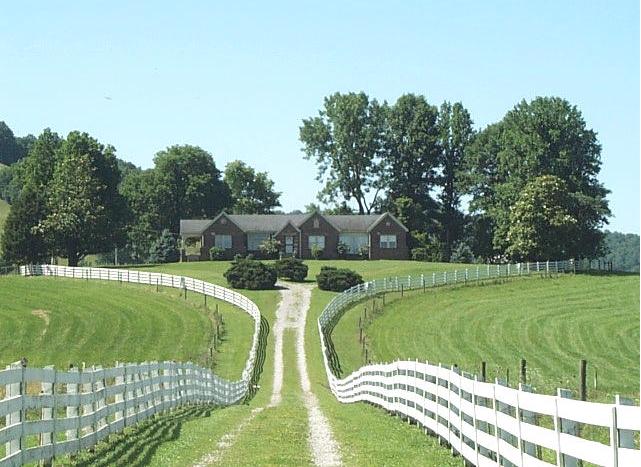
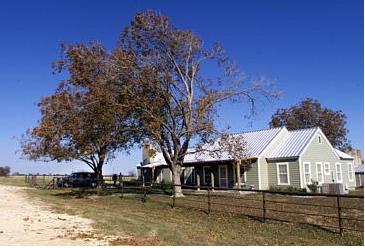
House #2 Designed by an architecture professor at a leading national university. This house incorporates every 'green' feature current home construction can provide. The house is 4,000 square feet ( 4 bedrooms ) and is nestled on a high prairie in the American southwest. A central closet in the house holds geothermal heat-pumps drawing ground water through pipes sunk 300 feet into the ground.
The water (usually 67 degrees F.) heats the house in the winter and cools it in the summer. The system uses no fossil fuels such as oil or natural gas and it consumes one-quarter electricity required for a conventional heating/cooling system. Rainwater from the roof is collected and funneled into a 25,000 gallon underground cistern. Wastewater from showers, sinks and toilets goes into underground purifying tanks and then into the cistern. The collected water then irrigates the land surrounding the house Surrounding flowers and shrubs native to the area enable the property to blend into the surrounding rural landscape.
And the kicker.
HOUSE #1 is outside of Nashville, Tennessee ; it is the abode of the 'environmentalist' Al Gore.
HOUSE #2 is on a ranch near Crawford, Texas; it is the residence of the President of the United States, George W. Bush.
UPDATE: Ungh. They got me. It is a delayed action April Fool's joke. I thought I got through it OK this year. My bust - however with the outlawing of burning wood or new fireplaces in this country - it doesn't sound that out of control. Sigh. Lame excuse.Anyone who has driven down the Maas Valley, the Albert Canal, been to Liege (or Lüttich there natch), or drived in rush hour traffic in Brussels (yes Mike, I know it is not in Wallonia) knows what madness this is.
The government of Belgium's French-speaking region of Wallonia, which has a population of about 4 million, has approved a tax on barbequing, local media reported.
Experts said that between 50 and 100 grams of CO2, a so-called greenhouse gas, is emitted during barbequing. Beginning June 2007, residents of Wallonia will have to pay 20 euros for a grilling session.
Weber is the last company they should worry about.
I guess they might as well tax breathing. Don't tell Al Gore.
If you grew up and/or socialize in a certain "caste," oh, you know the type.
In North Carolina, the owners of a 4,600-square-foot home that cost $1.2 million wanted it to be as "green" as possible, so they spent $120,000 on solar power.
In Colorado, using recycled materials, an architecture professor built a 4,700-square-foot home that uses geothermal heating and cooling and was on the market recently for $930,000.
And in Southern California, a husband-and-wife architect team who say that they "came of age during the '60s and '70s at U.C. Berkeley" also relied on recycled materials--in building a second home six hours from their primary residence.
By now these environmentally conscious "green" houses are a staple of home design magazines, where they are presented as exemplars of both good taste and good intentions. The Colorado house, for instance, has won awards from the state and the Colorado Renewable Energy Society and has appeared in the Washington Post and on Home and Garden TV.
The question, of course, is what on earth are all these people thinking? How "green" can huge and, in many cases, isolated houses be? Wouldn't it be better to risk traumatizing the children by squeezing into a 3,000-square-foot home, especially one close to shopping, schools and work? How many less affluent, less guilt-ridden Americans can afford to build such environmental show houses?
Boomers wallowing in their own vanity. Savory.
These houses aren't just ridiculous; they're monuments to sanctimony. If architecture is frozen music, these places are congealed piety, demonstrating with embarrassing concreteness the glaring hypocrisy of upper-class environmentalism. The sad thing is that, by pouring so much money into ostentatious eco-design, the people who built homes like this have purchased status at the cost of doing some real environmental good. ... If you've taken these sensible steps toward living in a truly greenish house--or better yet, a condo, God forbid--you can use some of the ample money you saved in ways that are more likely to do some good. You could give it to a land conservancy, for instance, which will preserve open space by buying it outright. If you're worried about global warming, organizations such as carbonfund.org will use your money to reduce carbon emissions, however modestly, by subsidizing wind power, methane capture from landfills and other such ventures. Or you could simply house another family; just take the cost difference between the 4,500-square-foot enviro-palace and a comfortable house half its size and give the savings to an outfit like Habitat for Humanity.
Or you can just forget the whole thing and add on to your own place. But if you do, make sure to harvest all the social approbation you can, like the architect in Venice, Calif., who is described as "a staunch proponent of green design" by Alanna Stang and Christopher Hawthorne in an excerpt from their book "The Green House: New Directions in Sustainable Architecture." Squeezed like sardines into a mere 2,500 square feet, the architect and his family expanded their home to 4,400. The sustainably harvested wood, solar panels and parabolic collector to focus the sun's rays must have cost a fortune, but perhaps that's why they call it "green."