
I'm discussing over at USNIBlog. Come visit and ponder.

BREAKING: Turkey's prime minister says 40,029 detentions and 20,355 arrests have been made after last month's failed coup attempt - @Reuters— Conflict News (@Conflicts) August 17, 2016


One of the UK's most notorious radical clerics has been convicted of inviting others to support the so-called Islamic State, it can now be reported.Let's see how long they put him away. We have room in Gitmo.
Police said Anjem Choudary, 49, had stayed "just within the law" for years, but was arrested in 2014 after pledging allegiance to the militant group.
Many people tried for serious terror offences were influenced by his lectures and speeches, police said.
Choudary was convicted alongside confidant Mohammed Mizanur Rahman.
Counter-terrorism chiefs have spent almost 20 years trying to bring Choudary, a father of five, to trial, blaming him, and the proscribed organisations which he helped to run, for radicalising young men and women.

There is no shortage of scenarios well suited to this next generation of combat RPAs. Obviously, their current effectiveness can be improved with all-weather stealth technology, longer endurance, better sensors, larger payloads and connectivity to the global "info-sphere". With these improvements, they can cover targets in other regions where terrorists congregate, such as North Africa, Yemen, Somalia and Southwest Asia. Further, with an optimized vehicle, RPAs can be incorporated into war plans against aggressive nation-state adversaries.Goodness. What a start;
Next-generation RPAs can also be the foundation for enforcing international truces and treaties. They can provide continuous, high-resolution surveillance of important facilities to detect activity that could violate agreements, and immediately strike targets.
Establishing no-fly zones over contested areas is a viable alternative to nation-building. The continuous no-fly zones over Iraq for twelve years after the First Gulf War in 1991 demonstrated their effectiveness as a deterrent to further warfare. No-fly, no-drive zones patrolled with RPAs and manned aircraft can detect and strike any air or ground target, obviate the need for "boots on the ground", and maintain air dominance over the area.
In the same vein, new, optimized RPAs would be the best choice for tracking activity and exerting U.S. influence in hot spots such as the Ukraine, Taiwan Straits, North Korea, Spratley Islands and Central America.
A new fleet does not require new infrastructure. Today's RPAs have capable ground-based flight and mission-control facilities, and robust, jam-resistant data links. Fortunately, programs are already underway to upgrade them such that fielding a new force of RPAs would require little, if any, additional capabilities. And, the global info-sphere of space-borne, networked communications already exists to link RPAs in any region of the world.
There is no shortage of scenarios well suited to this next generation of combat RPAs.Of course, if you carefully design your vignette to remove the enemy's vote, assume your dominance of the electromagnetic spectrum and low-Earth orbit, and you can keep the JAG/LEGAD hogtied and ball-gagged in some fan room with two MA's securing the door. No problem.
Obviously, their current effectiveness can be improved with all-weather stealth technology, longer endurance, better sensors, larger payloads and connectivity to the global "info-sphere".There, in a nutshell, is how we got ACS, A-12, LCS, DDG-1000, FCS etc etc etc - we just assume all challenges away and all good things to happen as a result of just saying so. Additionally, on the back of a cocktail napkin, I think the drone in the above paragraph will need to be something between a G4 and a 737. Good luck hiding that from anyone. It would also help having a vertically challenged contractor in the back room spinning hay in to gold.
With these improvements, they can cover targets in other regions where terrorists congregate, such as North Africa, Yemen, Somalia and Southwest Asia. Further, with an optimized vehicle, RPAs can be incorporated into war plans against aggressive nation-state adversaries.How many years lost to "making do with what legacy systems we have left after we retire others to capture the cost" will that take? What opportunity cost for those hundreds of millions? What of the conflicts we will be in that - as history tells us - this brave new world capability will be useless in? I assume "optimized" means that whatever you have is covered with fairy dust and will even cure the Heartbreak of Psoriasis?
Next-generation RPAs can also be the foundation for enforcing international truces and treaties. They can provide continuous, high-resolution surveillance of important facilities to detect activity that could violate agreements, and immediately strike targets.Will someone check the fan room? I am sure I heard the JAG screaming through the ball gag. Also, we are pretty much already doing that, minus the AI implied "immediately." But, yeah.
Establishing no-fly zones over contested areas is a viable alternative to nation-building. The continuous no-fly zones over Iraq for twelve years after the First Gulf War in 1991 demonstrated their effectiveness as a deterrent to further warfare. No-fly, no-drive zones patrolled with RPAs and manned aircraft can detect and strike any air or ground target, obviate the need for "boots on the ground", and maintain air dominance over the area.Wait, did someone just come out of a coma? I'm sorry, but I don't think the Shia or the Kurds agree all that much and - in the end analysis - that the NFZ in Iraq prevented any conflict. Sure, prevented one unknown possible conflict, but conflict came anyway. Any air or ground target? No need for "boots on the ground?" My Buddha, it is almost as if nothing has happened in the last decade.
In the same vein, new, optimized RPAs would be the best choice for tracking activity and exerting U.S. influence in hot spots such as the Ukraine, Taiwan Straits, North Korea, Spratley Islands and Central America."Best choice" under what terms? Define how you exert U.S. influence via something that no one sees, interacts with, or knows what it is doing? That is ISR, not presence of influence operations. Oh, and if they can see or interact with it - then you won't have that asset any more to do your subliminal influencing - or what ever this means.
A new fleet does not require new infrastructure. Today's RPAs have capable ground-based flight and mission-control facilities, and robust, jam-resistant data links. Fortunately, programs are already underway to upgrade them such that fielding a new force of RPAs would require little, if any, additional capabilities.So, no new hangars? No new facility to support troops and contractors? No new simulators or repair facilities? No new bandwidth requirements?
And, the global info-sphere of space-borne, networked communications already exists to link RPAs in any region of the world."Info-sphere" - is that a new term I need to add to BS-Bingo? Will we see that more? Again, I assume that all the bandwidth we are using right now is fully under military control, robust against jamming, can avoid hacking or ASAT, and can operate against a hostile EW environment against peer and near-peer operators? Scaleable and secure? Redundant with ready spares?

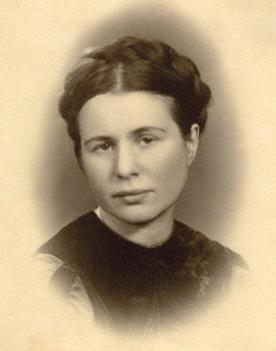
POLAND suffered more than any other European country during the second world war. And there was an extra twist: the history of that suffering was then systematically distorted by the Soviet-imposed Communist rulers, and widely misunderstood abroad. Auschwitz, for example, is still often referred to as a “Polish death camp”—rather than one run by the country's Nazi occupiers, in which huge numbers of Polish citizens perished. And gentile Poles are typically imagined to have rejoiced, collaborated or simply stood by as their Jewish compatriots were exterminated.No regrets needed. Thank you Irena - I hope to see you on the other side.
Poles, said the former Israeli leader Yitzhak Shamir, “imbibe anti-Semitism with their mother's milk.”
Certainly prejudice was prevalent in pre-war Poland; but many Poles defied it. One of the bravest was Irena Sendler. As a doctor's daughter, she had been brought up in a house that was open to anyone in pain or need, Jew or gentile. In the segregated lecture halls at Warsaw University, where she studied Polish literature, she and likeminded friends deliberately sat on the “Jewish” benches. When nationalist thugs beat up a Jewish friend, she defaced her grade card, crossing out the stamp that allowed her to sit on the “Aryan” seats. For that, the university suspended her for three years. All this was good preparation for the defiance she was to show after 1939, when the Germans invaded.
She was, a friend said, “born to selflessness, not called to it”. Certainly she had good genes. A rebellious great-grandfather was deported to Siberia. Her father died of typhus in 1917, after treating patients his colleagues shunned. Many were Jewish. Leaders of the Jewish community offered money to her hard-up mother for young Irena's education. Like many social workers in pre-war Poland, Mrs Sendler belonged to the Socialist party: not for its political ideology, she said, but because it combined compassion with dislike of money-worship. No religion motivated her: she acted z potrzeby serca, “from the need of my heart”.
Under Nazi occupation the Jews of Warsaw were herded into the city ghetto: four square kilometres for around 400,000 souls. Even before the deportations to the Treblinka death camp started, death could be arbitrary and instant. Yet a paradox created a sliver of hope. Squalor and near-starvation (the monthly bread ration was two kilos, or 4.5lb) created ideal conditions for typhus, which would have killed Germans too. So the Nazis allowed Mrs Sendler and her colleagues in and out of the tightly guarded ghetto to distribute medicines and vaccinations.
That bureaucratic loophole allowed her to save more Jews than the far better known Oscar Schindler. It was astonishingly risky. Some children could be smuggled out in lorries, or in trams supposedly returning empty to the depot. More often they went by secret passageways from buildings on the outskirts of the ghetto. To save one Jew, she reckoned, required 12 outsiders working in total secrecy: drivers for the vehicles; priests to issue false baptism certificates; bureaucrats to provide ration cards; and most of all, families or religious orders to care for them. The penalty for helping Jews was instant execution.
Names in glass jars
To make matters even riskier, Mrs Sendler insisted on recording the children's details to help them trace their families later. These were written on pieces of tissue paper bundled on her bedside table; the plan was to hurl them out of the window if the Gestapo called. The Nazis did catch her (thinking she was a small cog, not the linchpin of the rescue scheme) but did not find the files, secreted in a friend's armpit. Under torture she revealed nothing. Thanks to a well-placed bribe, she escaped execution; the children's files were buried in glass jars. Mrs Sendler spent the rest of the war under an assumed name.
The idea of a heroine's treatment appalled her. “I feel guilty to this day that I didn't do more,” she said. Besides, she felt she had been a bad daughter, risking her elderly mother's life with her wartime work, a bad wife to both her husbands, and a neglectful mother. Her daughter once asked to be admitted to the children's home where her mother worked after the war, in order to see more of her.
Mrs Sendler need not have worried. Far from being honoured, she narrowly avoided a death sentence from the Communist authorities. Her crime was that her work had been authorised and financed by the Polish government-in-exile in London; later, she helped soldiers of the Home Army, the wartime resistance. Both outfits were now reviled as imperialist stooges. In 1948 repeated interrogations by the secret police in late pregnancy cost the life of her second child, born prematurely. She was not allowed to travel, and her children could not study full-time at university. “What sins have you got on your conscience, Mama?” her daughter asked her.
It was not until 1983 that the Polish authorities allowed her to travel to Jerusalem, where a tree was planted in her honour at Yad Vashem. Many of the children she had saved sought her out: now elderly themselves, all grateful, but some still yearning for details of their forgotten parents. In 2003 she received Poland's highest honour, the order of the White Eagle. It came a little late.


