Showing posts sorted by relevance for query narvik. Sort by date Show all posts

Friday, December 26, 2008

Fullbore Friday


Time to revisit the first Battle of Narvik. The reason is that I think we need to look at some of the lessons we can glean from the HNoMS Norge and HNoMS Eidsvold. We learned some good things that you must and can do, even with old equipment, from the Norwegians at the Battle of Oslo - but further north at Narvik, the other side of the coin is sadly obvious - to not to try to learn from their mistakes is to ignore their sacrifice.
The destroyers, moving closer to Narvik, were spotted by Norwegian vessels, which promptly reported the sighting and alerted the old coastal defence ships HNoMS Eidsvold and HNoMS Norge. Both Norwegian ships prepared for combat: the guns were loaded and life preservers issued to the crew. Around 04:15am, the Germans spotted Eidsvold, and Eidsvold immediately signalled the leading German destroyer with an aldis lamp. When the Germans failed to respond to the signal, a warning shot was fired across their bow while the Eidsvold flew a two flag signal, ordering the destroyer to halt.

The Germans had orders to occupy Norway peacefully if at all possible, so the German flagship Wilhelm Heidkamp stopped and signalled that it would send an officer to negotiate. From a distance of about 200 metres, a small launch ferried Korvettenkapitän (lieutenant commander) Gerlach over to Eidsvold. Gerlach and a signalman were taken to the bridge to speak to Captain Willoch. At the same time, the gun crews of both the 21 cm guns and the 15 cm guns aboard Eidsvold kept the German destroyer in their sights, at point-blank range.

Gerlach tried to convince Willoch that the Germans had arrived as friends and that Willoch should surrender peacefully. Willoch pointed out that he was bound by duty to resist, but asked for a ten-minute break to consider the matter. He used this time to contact his superiors, including the captain of Norge, further inside the fjord, informing them of his intent to engage the German forces. In the meantime, a second German destroyer crossed behind Eidsvold and took up a position 700 metres from the vessel, ready to fire her torpedoes.

Gerlach tried once again to convince Willoch to surrender, but Willoch refused. As Gerlach left Eidsvold, he fired a red flare, indicating that the Norwegians intended to fight. At this point, Captain Willoch shouted: "På plass ved kanonene. Nå skal vi slåss, gutter!" ("Man the guns. We're going to fight, boys!").[3] Eidsvold turned towards the closest destroyer and accelerated, while the battery commander ordered the port battery (three 15 cm guns) to open fire.

The Germans, afraid that Eidsvold might ram the destroyer, fired two or four torpedoes from Wilhelm Heidkamp at the old ship. Two or three of the torpedoes hit before the port guns could fire, according to Norwegian sources: one under the rear turret, one midship and one in the bow. It is likely that the torpedoes ignited one of the magazines aboard, because Eidsvold was blown in two and sank in seconds around 04:37am, propellers still turning. Only six of the crew were rescued by the Germans, 175 died in the freezing water.

Deeper inside the fjord, the explosions were heard aboard Norge, but nothing could be seen until two German destroyers suddenly appeared out of the darkness and Captain Per Askim of Norge gave orders to open fire at 04:45am. Four rounds were fired from the 21 cm guns (one from the fore gun and three from the aft) as well as seven or eight rounds from the starboard 15 cm guns, against the German destroyer Bernd von Arnim, at a range of about 800 metres. Due to the difficult weather conditions, the guns' optical sights were ineffective: the first salvo fell short of the target and the next ones overshot it.

The German destroyers waited until they were alongside the pier before returning fire. Bernd von Armin opened fire with her 12.7 cm (5 inch) guns as well as with machine guns, but the weather gave the Germans problems as well. The destroyer also fired three salvos of two torpedoes each. The first two salvos missed, but the last struck Norge midships and she sank in less than one minute. 90 of the crew were rescued, but 101 perished in the battle which had lasted less than 20 minutes. The destruction of Norge signaled the end of Norwegian resistance in the port.
What are your ROE? Are you ready to make the call a warfighter is paid to make? You? Do you demand perfect information to defend your nation?

Are your Sailors as trained on their weapons as they need to be? Damage control? Combat readiness? Balls?


To learn and see more, there are good pics of some of the ships from the various Battles of Narvik can be found here, and other of my posts on Narvik here.

Friday, December 05, 2014

Fullbore Friday

Just finished the Norwegian campaign part of William L. Shirer's, The Rise and Fall of the Third Reich: A History of Nazi Germany, and was reminded of one of my favorite FbF. So, an encore this week - and well worth it.


Time to revisit the first Battle of Narvik. The reason is that I think we need to look at some of the lessons we can glean from the HNoMS Norge and HNoMS Eidsvold. We learned some good things that you must and can do, even with old equipment, from the Norwegians at the Battle of Oslo - but further north at Narvik, the other side of the coin is sadly obvious - to not to try to learn from their mistakes is to ignore their sacrifice.
The destroyers, moving closer to Narvik, were spotted by Norwegian vessels, which promptly reported the sighting and alerted the old coastal defence ships HNoMS Eidsvold and HNoMS Norge. Both Norwegian ships prepared for combat: the guns were loaded and life preservers issued to the crew. Around 04:15am, the Germans spotted Eidsvold, and Eidsvold immediately signalled the leading German destroyer with an aldis lamp. When the Germans failed to respond to the signal, a warning shot was fired across their bow while the Eidsvold flew a two flag signal, ordering the destroyer to halt.

The Germans had orders to occupy Norway peacefully if at all possible, so the German flagship Wilhelm Heidkamp stopped and signalled that it would send an officer to negotiate. From a distance of about 200 metres, a small launch ferried Korvettenkapitän (lieutenant commander) Gerlach over to Eidsvold. Gerlach and a signalman were taken to the bridge to speak to Captain Willoch. At the same time, the gun crews of both the 21 cm guns and the 15 cm guns aboard Eidsvold kept the German destroyer in their sights, at point-blank range.

Gerlach tried to convince Willoch that the Germans had arrived as friends and that Willoch should surrender peacefully. Willoch pointed out that he was bound by duty to resist, but asked for a ten-minute break to consider the matter. He used this time to contact his superiors, including the captain of Norge, further inside the fjord, informing them of his intent to engage the German forces. In the meantime, a second German destroyer crossed behind Eidsvold and took up a position 700 metres from the vessel, ready to fire her torpedoes.

Gerlach tried once again to convince Willoch to surrender, but Willoch refused. As Gerlach left Eidsvold, he fired a red flare, indicating that the Norwegians intended to fight. At this point, Captain Willoch shouted: "På plass ved kanonene. Nå skal vi slåss, gutter!" ("Man the guns. We're going to fight, boys!").[3] Eidsvold turned towards the closest destroyer and accelerated, while the battery commander ordered the port battery (three 15 cm guns) to open fire.

The Germans, afraid that Eidsvold might ram the destroyer, fired two or four torpedoes from Wilhelm Heidkamp at the old ship. Two or three of the torpedoes hit before the port guns could fire, according to Norwegian sources: one under the rear turret, one midship and one in the bow. It is likely that the torpedoes ignited one of the magazines aboard, because Eidsvold was blown in two and sank in seconds around 04:37am, propellers still turning. Only six of the crew were rescued by the Germans, 175 died in the freezing water.

Deeper inside the fjord, the explosions were heard aboard Norge, but nothing could be seen until two German destroyers suddenly appeared out of the darkness and Captain Per Askim of Norge gave orders to open fire at 04:45am. Four rounds were fired from the 21 cm guns (one from the fore gun and three from the aft) as well as seven or eight rounds from the starboard 15 cm guns, against the German destroyer Bernd von Arnim, at a range of about 800 metres. Due to the difficult weather conditions, the guns' optical sights were ineffective: the first salvo fell short of the target and the next ones overshot it.

The German destroyers waited until they were alongside the pier before returning fire. Bernd von Armin opened fire with her 12.7 cm (5 inch) guns as well as with machine guns, but the weather gave the Germans problems as well. The destroyer also fired three salvos of two torpedoes each. The first two salvos missed, but the last struck Norge midships and she sank in less than one minute. 90 of the crew were rescued, but 101 perished in the battle which had lasted less than 20 minutes. The destruction of Norge signaled the end of Norwegian resistance in the port.
What are your ROE? Are you ready to make the call a warfighter is paid to make? You? Do you demand perfect information to defend your nation?

Are your Sailors as trained on their weapons as they need to be? Damage control? Combat readiness? Balls?


To learn and see more, there are good pics of some of the ships from the various Battles of Narvik can be found here, and other of my posts on Narvik here.

Friday, February 23, 2007

Fullbore Friday


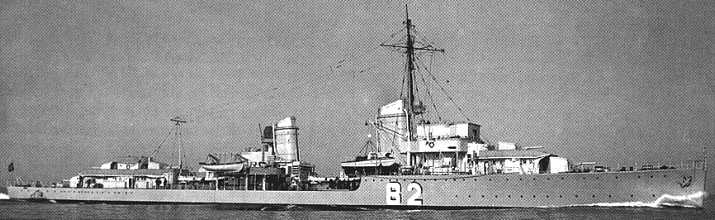
Another visit to the Battle of Narvik. The German Destroyer Erich Giese. How is this for a short but storied record?
04.09.1939: Together with Theodor Riedel and the mine layers Cobra and Roland , the Erich Giese lays the anti submarine mine field "f" MARTHA-HANS in the North Sea. 666 Mines are laid during this operation, 100 from Erich Giese .
05-06.09.1939: Together with Theodor Riedel and the mine layers Cobra and Roland , the Erich Giese lays the mine field "a" MARTHA-IDA in the North Sea. 666 Mines are laid during this operation, 100 from Erich Giese .
06-07.12.1939: Mine laying operation with Bernd von Arnim and Hans Lody against Cromer. During the operation, the German destroyers attack the British destroyers Juno and Jersey , damaging the Jersey with a torpedo fired from Erich Giese .
07.04.1940: Operation Weserübung: Erich Giese joins the destroyers Georg Thiele , Wolfgang Zenker , Anton Schmitt , Bernd von Arnim , Erich Koellner , Diether von Roeder , Hans Lüdemann , Hermann Künne and Wilhlem Heidkamp in the Narvik Attack Group.
13.04.1940: Operation Weserübung: The destroyer is sunk by the British destroyers Cossack and Foxhound west of Narvik.
One of their officers who survived - and fought on - with an incredible record of his own.

Gerhard Schaar; began his naval career in October 1937. He served on the destroyer Erich Giese, which was sunk during the occupation of Norway in April 1940. After some months on shore in Narvik, he served as training officer in the Marineschule Mürwik (Naval Academy) before transferring in February 1942 to the U-boat force.


After two patrols on U-704, in April 1943 he took command of the Type VIIC boat U-957, which was attached to the 11th Flotilla and was in action in the Arctic Sea. Schaar won his Knights Cross for leading the landing operation on the Soviet island Sterligova, where a radio station was destroyed in September 1944. In April 1945 Schaar commissioned the Type XXI U-boat U-2551, which was scuttled one month later.

Friday, April 30, 2010

Fullbore Friday


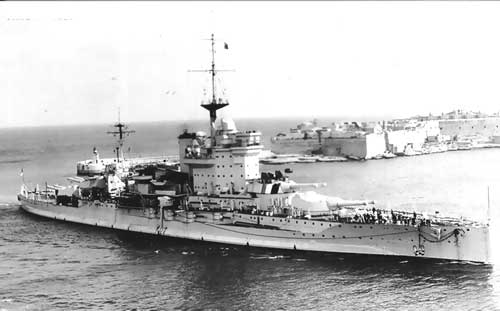
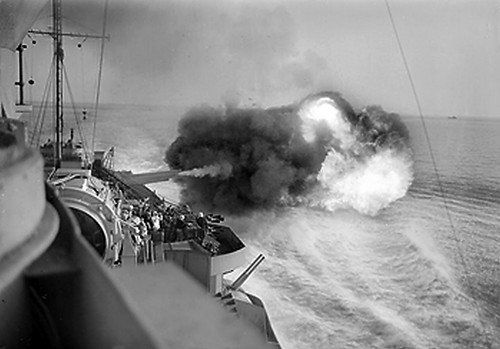
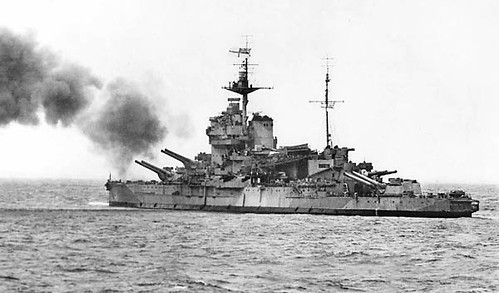
HMS Warspite. What a ship. In WWI at the Battle of Jutland 1916. Fired 259 15in rounds. Received 2 11 inch and 13 12 inch hits and sustained 14 killed and 32 injured. In WWII she went into a knife fight at Narvik ( more hereand here), and at the landings at Salerno, she was hit by a German Glider bomb, she was towed to Gibraltar for temporary repairs and fully repaired at Rosyth in March 1944. In June 1944 she was deployed at Normandy with only three functioning main Turrets.

Here are three photos for you in her prime: pulling into Malta, bombarding a nice liberty port in Cantania, and hitting the beaches at Normandy.


Tough old bird, she even fought being scrapped. Great story. Even as the Labour party picked her apart -- they had to earn every bit of steel.
Return engagement from May 2006.

Friday, May 19, 2006

Fullbore Friday

HMS Warspite. What a ship. In WWI at the Battle of Jutland 1916. Fired 259 15in rounds. Received 2 11 inch and 13 12 inch hits and sustained 14 killed and 32 injured. In WWII she went into a knife fight at Narvik ( more here and here), and at the landings at Salerno, she was hit by a German Glider bomb, she was towed to Gibraltar for temporary repairs and fully repaired at Rosyth in March 1944. In June 1944 she was deployed at Normandy with only three functioning main Turrets.

Here are three photos for you in her prime: pulling into Malta, bombarding a nice liberty port in Cantania, and hitting the beaches at Normandy.


Tough old bird, she even fought being scrapped. Great story. Even as the Labour party picked her apart -- they had to earn every bit of steel.

Friday, April 08, 2005

Keeping an eye on the long game: Part X

Good to see Eagle1 is keeping an eye on "The Long Game" as well.

Everyone go over to your handy handy map of the Taiwan Strait. Depending on where you are coming from and where you want to go, you have about 60-120nm to travel. (Lets face it, besides the Spratly Islands, is there anywhere the Chinese might want to take troops by sea? And the Spratly Islands are a haul.)

To get to where you want, read Taiwan, you have to get men and material there fast, in quantity, and in once piece. The longer you are at sea, the longer you are vulnerable. The PLAN has been working on their amphibious operations at a faster pace as of late.

And what are they doing? Well, making APD (fast troop transports) out of old destroyers and frigates.
China will soon have at least eight APDs.....The 1,800 ton Jianghu’s have a top speed of about 46 kilometers an hour. This enables APDs to move quickly, especially during darkness, to reach their destination. Shorter travel time makes the APDs less vulnerable to attack (and easier to defend, especially if you have to keep fighters overhead.) Taiwan is 300 kilometers from the Chinese coast. Each APD could carry several hundred troops, or a few hundred tons of cargo.
Wait, won't they need Marines to kick the door in?
China took the “armored regiment” of the 164th infantry division and converted it to the Second Marine Brigade. This brigade is organized using the new format, with one company of each infantry battalion having armored vehicles, in this case amphibious light tanks (Type 63A). The infantry companies have amphibious armored personnel carriers. The brigade artillery battalion has self-propelled 122mm howitzers. The First Brigade is larger, and has five combat battalions (two armored, with amphibious tanks, and three infantry.) The armor battalions have two tank and one infantry companies. In addition to the two brigades, there are two marine recon battalions and two frogman platoons (think “SEALs Lite”). These are usually attached to the First Marine Brigade. There may be a skeleton Marine Brigade in Shanghai, to be used to rebuild a Marine Brigade if one of the other two is destroyed in combat. The total size of the Chinese Marine Corps is over 10,000 troops.
That's not much, huh. Wait, don't they already have some amphibious capability?
...there is sufficient lift for 250 infantry and mechanized (tank and mechanized infantry) battalions. That’s about twenty divisions.
There's your occupying force. But you need to strike with fast, modern (well, not so modern - remember Narvik) concepts of speed and surprise? Right?
China appears to be building small amphibious ships in as many as five different shipyards (Lunshan, Huangpu, Jiangnan, Shanghai and Zhonghua). These are ships that could make the run across 300 kilometers of open water, at least in good weather, carrying a tank or two, some trucks, or a company of infantry. Larger amphibious ships, like their new LSD (landing ship dock) are building at a more leisurely pace. In any event, the LSD and LST type ships are also useful for longer range amphibious operations. But the smaller craft have only one target; Taiwan.
They also have a good plan to keep Taiwan busy as they slog across the strait.

In case you think APDs are too slow and to few to get the shock troops there, the Chinese are working on more capable units:
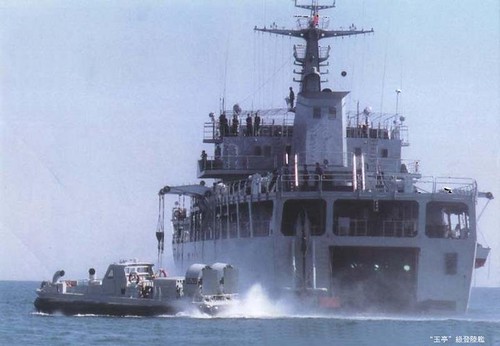
PLA Navy is now building two new types of LSM medium tank and troop landing ships, a total of about 12 since 2002, added to 20 or so ships of the same class. These ships can carry an average of about 10 tanks and 250 troops. The PLA may now be considering building new 15,000 to 20,000 ton LDH class amphibious ships that will use new hovercraft tank and troop conveyers similar to the U.S. LCAC, and large helicopters, allowing assaults from greater distance and against more difficult shore terrain.


That's why we call it "The Long Game." Not now, not in 5 years; but you're getting close.
On March 4th the Chinese government announced that its defense spending would increase by 12.6 percent in 2005. Save for 2003, all of the last 15 years has seen Chinese defense spending grow by double-digit percentages.....In 2004 the Pentagon noted that for 2003, overall Chinese military spending ranged between $50 and $70 billion.[1] If we take the Pentagon’s estimate as a baseline, then for 2004, which saw an "official" Chinese increase of 11.6 percent, spending might have risen from $55.8 to $78.1 billion, Similarly modifying the announced Chinese 2005 budget increase of by 12.6 percent yield actual expenditures between $62.8 and $87.9 billion. Other estimates have long held that Chinese military spending has reached or exceeded $100 billion. By comparison, Japan spends $45 billion on defense, and India about $19 billion.
Get out your Wizz Wheel and lets do some math. Let's say that we need to cover 100nm. If we are doing 30kts, that's 3hr 20min. Yikes, that could be hard to keep your Kung Pao Chicken MRE down. If you can cover half that distance in your hovercraft at 50kts avg, that is 2 hr 40 minutes to the beach. Go in a 150kt helo, and you're there before the bill and fortune cookie.

Remember, the Chinese have a long term view on things. They know with the way the economy is going, they will soon reach critical mass. Taiwan is, they will remind you, in their backyard, not ours. Mmmmm. Wonder what the Japanese think of this?

And what do you say comrade?

Friday, October 02, 2009

Fullbore Friday


Lessons and pondering.

What types of ships need to be escorted? What if you don 't have enough escorts to ensure the preservation of your Capital Ships?

We all know the charge of heroes from Taffy 3 - but what would have happened if there were not enough escorts with the small carriers - even those who never thought they would face anything greater than a PT boat.

Ahhhh - there we go. Always look askance at a leader who tells you not to worry about a threat you know is out there. One that tells you that you do not need to worry about that threat. One that will tell you others or "off board" sensors can cover all those other things.

What if a leader tells you other ships will provide security in one dimension - say AAW or ASUW - which makes sense - but the little LT in the back of your brain tells you, "..but we don't have enough of those to go around; and what about the other threats?"

Forget what you think you know about Carrier warfare in WWII. The North Sea and the North Atlantic are not the Pacific. Different theaters have different requirements - they did then, and they do now.
The 22,500-ton carriers Glorious and Courageous had been converted in the 1920s from being heavy cruisers into an aircraft carrier armed with only 4.7in guns. The light armament was justified by the Admiralty in order to save weight and that such ships should have to rely on their screening ships in order to protect them.
HMS Courageous sent out a warning that this would be a tough war for a carrier - even if you had proper escorts.
...Schuhart in U-29 was still searching for the convoy. While running submerged, he spotted a Swordfish biplane instead. A Swordfish 300 miles out in the open sea could only mean one thing – that an aircraft carrier had to be close by. Keeping a sharp watch, at 1800 hours a puff of smoke was spotted on the horizon. It was the carrier Courageous. Schuhart sent his crew to battle stations and adjusted for an interception course.

But he could not mount an attack. Planes were circling over the carrier and the two remaining destroyer escorts were clearly visible. He later wrote in his log “At that time it looked like a hopeless operation. Because of the aircraft, I could not surface and my underwater speed was less than 8 knots while the carrier could do 26. But we were told during our training to always stay close and that is exactly what I did, following him submerged”.

Schuhart trailed on for another one and a half hours, all the while losing distance with the carrier. Then suddenly at 1930 hours, the carrier turned into the wind to launch aircraft, inadvertently placing the ship in perfect position for a torpedo attack. By 1940 hours, U-29 was in position and Schuhart fired all three forward torpedoes from less than 3,000 yards. Schuhart logged “the vast size of the target upset all normal calculations and in any case, I was looking straight into the sun”.
...
By the next morning of September 18, news of the sinking had been broadcasted worldwide. The sinking of the HMS Courageous was the first U-boat offensive against the Royal Navy, and more importantly, Schuhart’s victory prompted the Admiralty to withdraw all three remaining carriers from the Western Approaches. The first naval engagement turned out to be a resounding victory, as carriers were not to be seen in those waters for another four years.
Ah, you are thinking. This is about ASW .... well ... no. This is about being reactionary.

It is critical that leaders understand the full spectrum of the threat. It does not matter if you are at the Tactical, Operational, or Strategic level - heck, you could even be an Engineering Stud at NAVSEA, natch.

If anyone grew up catching lizards like I did knows a simple but effective trick. If you wiggle you fingers a foot away from one side - you can easily catch him from the other.
By early June 1940, the British position in Norway had become perilous, as was the growing threat to the UK from the success of the German Blitzkrieg that an evacuation of the forces landed in Norway had become a necessity. On 4 June two convoys of troopships were organised and sailed on the 5 June. By the 8 June, all British and Allied troops had been embarked and the two convoys had set sail without being interfered with by the enemy. At this point the carriers HMS Glorious and HMS Ark Royal had been operating north of Andenes Point, Lofoten Islands. Glorious had taken on board some 20 RAF Hurricane and Gladiator fighters, whose pilots had taken the unprecedented step of landing on an aircraft carrier to try and save their valuable aircraft. It also had on board ten fighters and five torpedo bombers of the Fleet Air Arm. Both Ark Royal and Glorious were to have formed part of the escort to one of the convoys but in the early hours of the 8 June, Glorious made a signal to Vice Admiral Aircraft Carriers in Ark Royal asking permission to proceed independently to Scarpa. The request was approved and so Glorious and her two escorting destroyers parted company with Ark Royal at 0253. Meanwhile, the German battle cruisers Scharnhorst and Gneisenau (both of 32,000 tons, nine 11in and twelve 5.9in guns), along with the heavy cruiser Hipper (of 14,000 tons) and four destroyers had sailed from Kiel on 4 June with orders to bombard the British base at Harstadt near Narvik. On the 7 June news reached the German force that the British were attempting to withdraw and the commander of the group, Admiral Wilhelm Marschall decided to attack the southern most of the two convoys. In the morning of the 8 June, the German force encountered four british ships, the oil tanker, Oil Pioneer, the empty troopship Orama, the escort trawler Juniper and the hospital ship Atlantis. Only the hospital ship was spared. This engagement however minor, had cost the Germans time and fuel, and so the Hipper was ordered back to Trondheim to refuel with the destroyer escort while the two battle cruisers carried on the search.

Shortly after 1600 the two groups of ships sighted each other and action stations was sounded on Glorious and attempts were made to get some of her aircraft ready for action. The Scharnhorst and Gneisenau both increased speed to full and both opened fire at 1632 and 1646 respectively. Glorious was hit by Scharnhorst's third salvo at 1638, which penetrated the flight deck and exploded in the upper hanger starting a large fire which disrupted the attempts to get some aircraft airborne. Splinters damaged the boiler casing and smoke entered the air intakes, causing a temporary loss of steam pressure. A second hit was received which killed most of the bridge crew. The escorting destroyers laid smoke to screen Glorious, which was quite effective, forcing the Germans to cease firing, at about 1700 until 1720. At this point any help from other British ships was out of the question as the cruiser Devonshire was 100 miles away, the Ark Royal and its group were 200 miles away and the cruisers Southampton and Coventry were 470 miles away. Devonshire picked up a barely intelligible signal at around 1720 but did not break radio silence to pass it on. On board were the King of Norway and his ministers and breaking radio silence would have involved serious risk in revealing her position. None of the other ships received Glorious' radio signal, neither did nay shore station. Ardent managed to hit the Scharnhorst but received multiple hits from the 5.9in secondary armament and sank at around 1725. Glorious received another hit in the centre engine room just after the Germans had recommenced firing that shook the whole ship, caused a loss of speed and a starboard list. Just after this, Acasta passed ahead of Scharnhorst and manoeuvred to onto its starboard side and fired two salvos of four torpedoes. One hit Scharnhorst below the aft main battery turret that caused significant damage and casualties and forced the ship to sharply reduce speed. Acasta also hit the Scharnhorst with her main guns but came under heavy and accurate fire and was badly damaged. She sank at about 1820. By this time Glorious had already sank at around 1810 and the German ships altered course for Trondheim. No attempt was made to pick up survivors. The only survivors to be picked up were taken on board the Norwegian vessel Borgund, and the thirty-nine were taken to Thorshaven and transferred back to the UK on HMS Veteran.
You can almost see a Taffy-3 like battle ... but numbers, ISR, and luck were not on the side of the British that day. That and from much research, senior leadership was not focused on their primary mission and the threat to it. Sound familiar?

They were also facing the German Navy.

If you have lots of "whats" ... you're not alone.
This incident was a great embarrassment to the Admiralty. Many questions were raised at the time in Parliament, by Richard Stokes and have continued to be asked until the present day. Did Admiral Forbes really know of the movements of Glorious and her destroyer escort, and if not, was he in a position to give assistance if they encountered trouble? Were two small destroyers really enough to protect a valuable asset such as an aircraft carrier when HMS Courageous (Glorious' sister ship) had been torpedoed by U-29 with the loss of 500 men? Why did the Admiralty leave nearly a thousand men to drift for three nights and two days before a mere handful were picked up by chance? Why had Glorious separated from Ark Royal and her group only thirteen hours before? Why were no lookouts posted? Why had she not been warned that enemy ships might be along the route? Why were her urgent signals never heard, or if they were, not acted upon? Why didn't the destroyers send a report of enemy sightings? The answers that have been given, first by the Admiralty and then by the MoD have been questioned right from day one. The official reason given for Glorious' independent departure from Norway was that she was short of fuel and could not wait another 24 hours to come back with Ark Royal. Both Winston Churchill and Captain S Roskill (in 1980 after conducting extensive research) who had written the official history of the Royal Navy in World War II poured scorn on this explanation.

There are three reasons why such an explanation is open to question. The first is that there are no corroborating signals, logs, reports or witnesses. The second lies with the fuel position. Was it more economical to return at 17 or 18 knots (the speed at which she was travelling when she encountered the Scharnhorst or Gneisenau) by herself or return at 13 or 14 knots with the convoy? Of course Glorious would have used more fuel in waiting for the convoy to assemble, but overall, she would have used less fuel by waiting and returning with the other ships. In addition, if a ship is short of fuel and has a number of her boilers shut down, it is more difficult for her to reach full speed and thus outrun the pursuers, which is what happened in Glorious' case. If such a situation arises, isn't it therefore obvious that the ship will be safer in company? Why was Glorious in such a hurry that she ignored these considerations? A hand written note in an Admiralty file provides a clue. The note was from the CO of one of the destroyers in the Ark Royal group, Commander Le Geyt, who noted a signal flashed from Glorious to Ark Royal requesting permission to depart immediately the purpose of which was to make preparations for courts martial. The ship departed 30 minutes later. It was no secret that the Captain of Glorious (a submarine hero from World War One) had been in a state of conflict with his FAA staff. Things had come to a head on a previous trip to Norway, when the FAA officers had expressed doubts over a plan that involved, in their view, a futile and nearly suicidal ground attack. When Glorious returned to refuel, the Commander (A) was put ashore pending court martial. While the Admiralty and more recently the MoD have argued that a court martial would have been an extremely trivial reason to risk a carrier, two destroyers and 1,500 lives, when the story was being researched by Stephen Roskill, he contacted a number of retired naval officers who had served under the CO of Glorious, none of them tried to dissuade him that 'the fuel story is bunkum . . . the problem was the Captain's impatience for a court martial'. (Quoted in Slessor, p. 33) Following on from this why did Vice Admiral Wells in Ark Royal allow the Glorious to return independently? Unfortunately Wells was never interviewed, and so we shall never know for sure. Why didn't the Admiralty pass on the intelligence from Bletchley Park that German surface forces were likely to leave Kiel for the North Sea to the ships out at sea? That the intelligence had reached the Admiralty was indicated in the official history of British Intelligence during the Second World War and supported by Sir Harry Hinsley, who had passed the intelligence onto the Admiralty (and written the official history), but contradicted in a 1997 paper entitled 'HMS Glorious - Points of Controversy' published by the MoD's Naval Historical Branch. It was argued that only one faint and garbled message was heard by the one ship, the Devonshire, which could not take any action, and was carrying the King of Norway and his cabinet in any case. However, five members of the Devonshire's crew maintain that enough of the message was heard that to realise that Glorious had sighted two German warships and was in trouble. If this was the case, why didn't Admiral Cunningham pass on a warning to the troop convoys, as thousands to troops were at risk? The question is made even more difficult as the Devonshire's logs are missing. Why did the Devonshire exercise all four main turrets within minutes of the Glorious sending her first enemy report? Why did the Devonshire increase to 30kts and start zigzagging a few minutes after Glorious' final signal was sent, according to German signals? Finally, why was Glorious flying no air patrols despite a week earlier flying 'safe circle' air patrol through the very same waters? Despite all these questions over the incident and the available evidence to the contrary, the sad fact remains that the MoD remains tied to the excuse that it was the lack of fuel that forced HMS Glorious to leave for Scarpa Flow, even though the sinking of the ship occurred over sixty years ago.
The unanswered "why."

The sea is an interesting place. The enemy gets a vote ... and risk is not to be assumed away. Risks must be taken - but taken with care and for the right reasons.

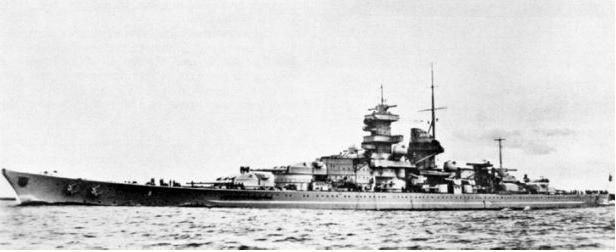
From the German side: HMS Glorious vs
Scharnhorst and Gneisenau.


The lessons of 1940 are germane today. What do you take away?

If interested more in this beautiful class, you can see rare color video
here and here.


....and yes, I noticed the amount of water over the bow at flank speed. Quite a "wet" class of ship.

Friday, December 19, 2014

Fullbore Friday

In WWII, the German Navy from top to bottom was perhaps the best service in keeping its honor (the Luftwaffe right behind, but soiled mostly because of its senior officer, the nightmarishly obtuse war criminal Reichsmarschall des Grossdeutschen Reiches Hermann Göring). As such, it is easier to look at what they did with so little for things to ponder now.

An encore FbF from early 2009.

Lessons and pondering.

What types of ships need to be escorted? What if you don 't have enough escorts to ensure the preservation of your Capital Ships?

We all know the charge of heroes from Taffy 3 - but what would have happened if there were not enough escorts for the small carriers - as many at the time never thought they would face anything of substance.

Ahhhh - there we go. Always look askance at a leader who tells you not to worry about a threat you know is out there. One that will tell you other units or "off board" sensors can cover all the other threats.

What if a leader tells you other ships will provide security in one dimension - say AAW or ASUW - which makes sense - but the little LT in the back of your brain tells you, "...but we don't have enough of those to go around; and what about the other threats?"


Forget what you think you know about Carrier warfare in WWII. The North Sea and the North Atlantic are not the Pacific. Different theaters have different requirements - they did then, and they do now.
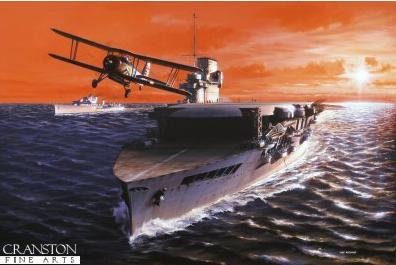
The 22,500-ton carriers Glorious and Courageous had been converted in the 1920s from being heavy cruisers into an aircraft carrier armed with only 4.7in guns. The light armament was justified by the Admiralty in order to save weight and that such ships should have to rely on their screening ships in order to protect them.
HMS Courageous sent out a warning that this would be a tough war for a carrier - even if you had proper escorts.
...Schuhart in U-29 was still searching for the convoy. While running submerged, he spotted a Swordfish biplane instead. A Swordfish 300 miles out in the open sea could only mean one thing – that an aircraft carrier had to be close by. Keeping a sharp watch, at 1800 hours a puff of smoke was spotted on the horizon. It was the carrier Courageous. Schuhart sent his crew to battle stations and adjusted for an interception course.

But he could not mount an attack. Planes were circling over the carrier and the two remaining destroyer escorts were clearly visible. He later wrote in his log “At that time it looked like a hopeless operation. Because of the aircraft, I could not surface and my underwater speed was less than 8 knots while the carrier could do 26. But we were told during our training to always stay close and that is exactly what I did, following him submerged”.

Schuhart trailed on for another one and a half hours, all the while losing distance with the carrier. Then suddenly at 1930 hours, the carrier turned into the wind to launch aircraft, inadvertently placing the ship in perfect position for a torpedo attack. By 1940 hours, U-29 was in position and Schuhart fired all three forward torpedoes from less than 3,000 yards. Schuhart logged “the vast size of the target upset all normal calculations and in any case, I was looking straight into the sun”.
...
By the next morning of September 18, news of the sinking had been broadcasted worldwide. The sinking of the HMS Courageous was the first U-boat offensive against the Royal Navy, and more importantly, Schuhart’s victory prompted the Admiralty to withdraw all three remaining carriers from the Western Approaches. The first naval engagement turned out to be a resounding victory, as carriers were not to be seen in those waters for another four years.
Ah, you are thinking. This is about ASW .... well ... no. This is about being reactionary.

It is critical to understand the full spectrum of the threat. It does not matter if you are at the Tactical, Operational, or Strategic level - heck, you could even be an Engineering Stud at NAVSEA.

If anyone grew up catching lizards like I did knows a simple but effective trick. If you wiggle you fingers a foot away from one side - you can easily catch him from the other.

By early June 1940, the British position in Norway had become perilous, as was the growing threat to the UK from the success of the German Blitzkrieg that an evacuation of the forces landed in Norway had become a necessity. On 4 June two convoys of troopships were organised and sailed on the 5 June. By the 8 June, all British and Allied troops had been embarked and the two convoys had set sail without being interfered with by the enemy. At this point the carriers HMS Glorious and HMS Ark Royal had been operating north of Andenes Point, Lofoten Islands. Glorious had taken on board some 20 RAF Hurricane and Gladiator fighters, whose pilots had taken the unprecedented step of landing on an aircraft carrier to try and save their valuable aircraft. It also had on board ten fighters and five torpedo bombers of the Fleet Air Arm. Both Ark Royal and Glorious were to have formed part of the escort to one of the convoys but in the early hours of the 8 June, Glorious made a signal to Vice Admiral Aircraft Carriers in Ark Royal asking permission to proceed independently to Scarpa. The request was approved and so Glorious and her two escorting destroyers parted company with Ark Royal at 0253. Meanwhile, the German battle cruisers Scharnhorst and Gneisenau (both of 32,000 tons, nine 11in and twelve 5.9in guns), along with the heavy cruiser Hipper (of 14,000 tons) and four destroyers had sailed from Kiel on 4 June with orders to bombard the British base at Harstadt near Narvik. On the 7 June news reached the German force that the British were attempting to withdraw and the commander of the group, Admiral Wilhelm Marschall decided to attack the southern most of the two convoys. In the morning of the 8 June, the German force encountered four british ships, the oil tanker, Oil Pioneer, the empty troopship Orama, the escort trawler Juniper and the hospital ship Atlantis. Only the hospital ship was spared. This engagement however minor, had cost the Germans time and fuel, and so the Hipper was ordered back to Trondheim to refuel with the destroyer escort while the two battle cruisers carried on the search.

Shortly after 1600 the two groups of ships sighted each other and action stations was sounded on Glorious and attempts were made to get some of her aircraft ready for action. The Scharnhorst and Gneisenau both increased speed to full and both opened fire at 1632 and 1646 respectively. Glorious was hit by Scharnhorst's third salvo at 1638, which penetrated the flight deck and exploded in the upper hanger starting a large fire which disrupted the attempts to get some aircraft airborne. Splinters damaged the boiler casing and smoke entered the air intakes, causing a temporary loss of steam pressure. A second hit was received which killed most of the bridge crew. The escorting destroyers laid smoke to screen Glorious, which was quite effective, forcing the Germans to cease firing, at about 1700 until 1720. At this point any help from other British ships was out of the question as the cruiser Devonshire was 100 miles away, the Ark Royal and its group were 200 miles away and the cruisers Southampton and Coventry were 470 miles away. Devonshire picked up a barely intelligible signal at around 1720 but did not break radio silence to pass it on. On board were the King of Norway and his ministers and breaking radio silence would have involved serious risk in revealing her position. None of the other ships received Glorious' radio signal, neither did nay shore station. Ardent managed to hit the Scharnhorst but received multiple hits from the 5.9in secondary armament and sank at around 1725. Glorious received another hit in the centre engine room just after the Germans had recommenced firing that shook the whole ship, caused a loss of speed and a starboard list. Just after this, Acasta passed ahead of Scharnhorst and manoeuvred to onto its starboard side and fired two salvos of four torpedoes. One hit Scharnhorst below the aft main battery turret that caused significant damage and casualties and forced the ship to sharply reduce speed. Acasta also hit the Scharnhorst with her main guns but came under heavy and accurate fire and was badly damaged. She sank at about 1820. By this time Glorious had already sank at around 1810 and the German ships altered course for Trondheim. No attempt was made to pick up survivors. The only survivors to be picked up were taken on board the Norwegian vessel Borgund, and the thirty-nine were taken to Thorshaven and transferred back to the UK on HMS Veteran.
You can almost see a Taffy-3 like battle ... but numbers, ISR, and luck were not on the side of the British that day. That and from much research, senior leadership was not focused on their primary mission and the threat to it. Sound familiar?

They were also facing the German Navy.

If you have lots of "whats" ... you're not alone.

This incident was a great embarrassment to the Admiralty. Many questions were raised at the time in Parliament, by Richard Stokes and have continued to be asked until the present day. Did Admiral Forbes really know of the movements of Glorious and her destroyer escort, and if not, was he in a position to give assistance if they encountered trouble? Were two small destroyers really enough to protect a valuable asset such as an aircraft carrier when HMS Courageous (Glorious' sister ship) had been torpedoed by U-29 with the loss of 500 men? Why did the Admiralty leave nearly a thousand men to drift for three nights and two days before a mere handful were picked up by chance? Why had Glorious separated from Ark Royal and her group only thirteen hours before? Why were no lookouts posted? Why had she not been warned that enemy ships might be along the route? Why were her urgent signals never heard, or if they were, not acted upon? Why didn't the destroyers send a report of enemy sightings? The answers that have been given, first by the Admiralty and then by the MoD have been questioned right from day one. The official reason given for Glorious' independent departure from Norway was that she was short of fuel and could not wait another 24 hours to come back with Ark Royal. Both Winston Churchill and Captain S Roskill (in 1980 after conducting extensive research) who had written the official history of the Royal Navy in World War II poured scorn on this explanation.

There are three reasons why such an explanation is open to question. The first is that there are no corroborating signals, logs, reports or witnesses. The second lies with the fuel position. Was it more economical to return at 17 or 18 knots (the speed at which she was travelling when she encountered the Scharnhorst or Gneisenau) by herself or return at 13 or 14 knots with the convoy? Of course Glorious would have used more fuel in waiting for the convoy to assemble, but overall, she would have used less fuel by waiting and returning with the other ships. In addition, if a ship is short of fuel and has a number of her boilers shut down, it is more difficult for her to reach full speed and thus outrun the pursuers, which is what happened in Glorious' case. If such a situation arises, isn't it therefore obvious that the ship will be safer in company? Why was Glorious in such a hurry that she ignored these considerations? A hand written note in an Admiralty file provides a clue. The note was from the CO of one of the destroyers in the Ark Royal group, Commander Le Geyt, who noted a signal flashed from Glorious to Ark Royal requesting permission to depart immediately the purpose of which was to make preparations for courts martial. The ship departed 30 minutes later. It was no secret that the Captain of Glorious (a submarine hero from World War One) had been in a state of conflict with his FAA staff. Things had come to a head on a previous trip to Norway, when the FAA officers had expressed doubts over a plan that involved, in their view, a futile and nearly suicidal ground attack. When Glorious returned to refuel, the Commander (A) was put ashore pending court martial. While the Admiralty and more recently the MoD have argued that a court martial would have been an extremely trivial reason to risk a carrier, two destroyers and 1,500 lives, when the story was being researched by Stephen Roskill, he contacted a number of retired naval officers who had served under the CO of Glorious, none of them tried to dissuade him that 'the fuel story is bunkum . . . the problem was the Captain's impatience for a court martial'. (Quoted in Slessor, p. 33) Following on from this why did Vice Admiral Wells in Ark Royal allow the Glorious to return independently? Unfortunately Wells was never interviewed, and so we shall never know for sure. Why didn't the Admiralty pass on the intelligence from Bletchley Park that German surface forces were likely to leave Kiel for the North Sea to the ships out at sea? That the intelligence had reached the Admiralty was indicated in the official history of British Intelligence during the Second World War and supported by Sir Harry Hinsley, who had passed the intelligence onto the Admiralty (and written the official history), but contradicted in a 1997 paper entitled 'HMS Glorious - Points of Controversy' published by the MoD's Naval Historical Branch. It was argued that only one faint and garbled message was heard by the one ship, the Devonshire, which could not take any action, and was carrying the King of Norway and his cabinet in any case. However, five members of the Devonshire's crew maintain that enough of the message was heard that to realise that Glorious had sighted two German warships and was in trouble. If this was the case, why didn't Admiral Cunningham pass on a warning to the troop convoys, as thousands to troops were at risk? The question is made even more difficult as the Devonshire's logs are missing. Why did the Devonshire exercise all four main turrets within minutes of the Glorious sending her first enemy report? Why did the Devonshire increase to 30kts and start zigzagging a few minutes after Glorious' final signal was sent, according to German signals? Finally, why was Glorious flying no air patrols despite a week earlier flying 'safe circle' air patrol through the very same waters? Despite all these questions over the incident and the available evidence to the contrary, the sad fact remains that the MoD remains tied to the excuse that it was the lack of fuel that forced HMS Glorious to leave for Scarpa Flow, even though the sinking of the ship occurred over sixty years ago.
The unanswered "why."

The sea is an interesting place. The enemy gets a vote ... and risk is not to be assumed away. Risks must be taken - but taken with care and for the right reasons.

From the German side: HMS Glorious vs
Scharnhorst and Gneisenau.


The lessons of 1940 are germane today. What do you take away? If interested more in this beautiful class, you can see rare color video here and here. ....and yes, I noticed the amount of water over the bow at flank speed. Quite a "wet" class of ship.