Showing posts sorted by relevance for query "USS Arkansas". Sort by date Show all posts

Friday, June 07, 2013

Fullbore Friday

Very selfishly and self-referential, I've blogged before about Grandfather Salamander's Battleship, USS ARKANSAS (BB-33).

With the anniversary of the Normandy invasion yesterday, I just wanted to bring up the topic again. 

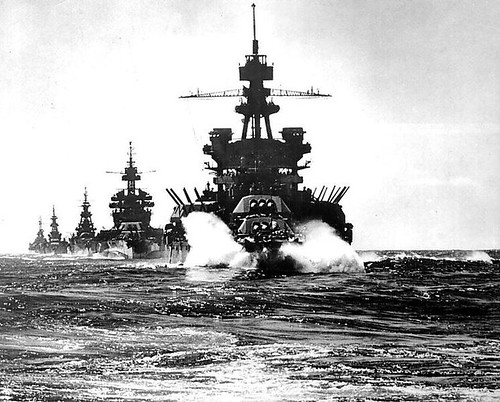
Look at her in action on the right. I don't know about you - but if I were in that landing craft, I would be quite happy about where I was coming ashore. That is good backup - and it also gives you an indication how close to shore she came.

Five Battle Stars and only one casualty through two World Wars, what a lucky ship. She went down serving as well.

Here is a nice summary of what must have been an outstanding summer of service; summer of '44;
... Arkansas’ combat experience began during the Allied invasion of Normandy, France. On D-Day, 6 June 1944, Arkansas took up a position 4,000 yards off the coast of “Omaha” beach. At 0552 hours, all of the battleship’s 12-inch guns opened fire on the Normandy coastline. During the day, Arkansas was fired on by German shore batteries and was attacked by German aircraft. Fortunately, the Germans scored no hits on the battleship. Over the ensuing days, Arkansas continued providing gunfire support along the French coast. On 25 June, the battleship dueled with German shore batteries off the coast of Cherbourg, France, with the enemy repeatedly straddling the ship but never hitting her. Arkansas’ big guns helped support the Allied attack on Cherbourg, which led to the capture of that vital port the following day. After Cherbourg was secured, Arkansas went to Weymouth, England, for fuel, ammunition, and supplies.

Arkansas left England on 4 July 1944, bound for the Mediterranean. She passed through the Strait of Gibraltar and anchored at Oran, Algeria, on 10 July. Eight days later, Arkansas got underway and reached Taranto, Italy, on 21 July. She remained there until 6 August, and then steamed to Palermo, Sicily, the next day.

On 14 August 1944, Operation “Anvil,” the invasion of the southern French coast between Toulon and Cannes, began. Arkansas provided gunfire support for the initial landings on 15 August and continued her bombardment until 17 August. After making stops at Palermo and Oran, Arkansas returned to the United States.
Every time I peel another layer of the ARKANSAS story, I find out something new. This caught my eye;
US Navy Operation Neptune 1944-06-06 Coast of Normandy On 3 June, Arkansas sailed for the French coast to support the Invasion of Normandy. The ship entered the Baie de la Seine on 6 June, and took up a position 4,000 yd (3,600 m) off "Omaha" beach. At 0552, Arkansas' guns opened fire. During the day, the venerable battleship underwent shore battery fire and air attacks; over ensuing days, she continued her fire support. On 13 June, Arkansas shifted to a position off Grandcamp les Bains. VCS-7, a US Navy Spotter Squadron flying Supermarine Spitfire VBs and Seafire IIIs, was one of the units which provided targeting coordinates and fire control. On 25 June, Arkansas dueled with German shore batteries off Cherbourg, the enemy repeatedly straddling the battleship but never hitting her. Her big guns helped support the Allied attack on that key port, and led to the capture of it the following day. Retiring to Weymouth, England, and arriving there at 2220, the battleship shifted to Bangor on 30 June.
...
During 20 days of combat operations, the aviators of VCS-7 were awarded 9 Distinguished Flying Crosses, 6 Air Medals and 5 Gold Stars in lieu of additional Air Medals.
Imagine the pilots of VCS-7, flying float planes when all of a sudden their Skipper comes in and asks, "Hey, how'd you guys like to fly Spitfires?"

Friday, September 02, 2022

Fullbore Friday


I think that pic captures the soul of a battleship well, don't you think? 

108 years after her commissioning, she got underway again for a well needed dry docking.


I had a lot of people reach out to me about seeing her underway again, so for this week's FbF I'll reach back 8-yrs ago when we last mentioned thUSS TEXAS (BB-35).

We could spend hours on the ship that my paternal Grandfather (GM3 Salamander) saw from his ship, the USS ARKANSAS (BB-33), with the Brits in WWI - but let's just say "Happy Birthday" to the grand lady who completed 34 years of commissioned service and can still be visited today - and give a nod to a few bits in her highlight reel.
On 23 October 1942, Texas embarked upon her first major combat operation when she sortied with Task Group 34.8 (TG 34.8), the Northern Attack Group for Operation Torch, the invasion of North Africa. ... Texas transmitted Lieutenant General Dwight D. Eisenhower's first "Voice of Freedom" broadcast, asking the French not to oppose Allied landings on North Africa. When the troops went ashore, Texas did not come immediately into action to support them. At that point in the war, amphibious warfare doctrine was still embryonic; and many did not recognize the value of a pre-landing bombardment. ... Thus, unlike in later operations, she expended only 273 rounds of 14 in (360 mm) ammunition and six rounds of 5 in (130 mm) ammunition. ... At 03:00 on 6 June 1944, Texas and the British cruiser Glasgow entered the Omaha Western fire support lane and into her initial firing position 12,000 yd (11,000 m) offshore near Pointe du Hoc at 04:41, as part of a combined total US-British flotilla of 702 ships, including seven battleships and five heavy cruisers.[44][45][A 8] The initial bombardment commenced at 05:50, against the site of six 15 cm (5.9 in) guns, atop Pointe du Hoc.[2] When Texas ceased firing at the Pointe at 0624, 255 14 in (360 mm) shells had been fired in 34 minutes—an average rate of fire of 7.5 shells per minute, which was the longest sustained period of firing for Texas in World War II.[44] While shells from the main guns were hitting Pointe du Hoc, the 5 in (130 mm) guns were firing on the area leading up to Exit D-1, the route to get inland from western Omaha. At 06:26, Texas shifted her main battery gunfire to the western edge of Omaha Beach, around the town of Vierville. Meanwhile, her secondary battery went to work on another target on the western end of "Omaha" beach, a ravine laced with strong points to defend an exit road. Later, under control of airborne spotters, she moved her major-caliber fire inland to interdict enemy reinforcement activities and to destroy batteries and other strong points farther inland. ... By 15 June, the troops had advanced to the edge of Texas's gun range; her last fire support mission was so far inland that to get the needed range, the starboard torpedo blister was flooded with water to provide a list of two degrees which gave the guns enough elevation to complete the fire mission. With combat operations beyond the range of her guns on 16 June, Texas left Normandy for England on 18 June.
Hey - speaking of Pops's ship,
On the morning of 25 June Texas, in company with Arkansas, Nevada, four cruisers and eleven destroyers, closed in on the vital port of Cherbourg to suppress the fortifications and batteries surrounding the town while the US Army's VII Corps attacked the city from the rear. While enroute to Cherbourg, the bombardment plan was changed and Task Group 129.2 (TG 129.2), built around Arkansas and Texas, was ordered to move six miles (10 km) to the east of Cherbourg and engage the guns of Battery Hamburg, a large shore battery composed of four 240 mm (9.4 in).[50][51][52] At 12:08, Arkansas was the first to fire at the German positions, while the German gunners waited for Arkansas and Texas to be well in range to return fire. At 12:33, Texas was straddled by three German shells; five minutes later Texas returned fire with a continuous stream of two-gun salvos. The battleship continued her firing runs in spite of shell geysers blossoming about her and difficulty spotting the targets because of smoke; however, the enemy gunners were just as stubborn and skilled. At 13:16, a German 240 mm (9.4 in) shell skidded across the top of her Conning Tower, sheared the top of the fire control periscope off (the periscope remains fell back into the Conning Tower and wounded the gunnery officer and three others), hit the main support column of the Navigation Bridge and exploded.[50][53][54] The explosion caused the deck of the Pilot House above to be blown upwards approximately 4 ft (1.2 m), wrecked the interior of the Pilot House, and wounded seven. Of the eleven total casualties from the German shell hit, only one man succumbed to his wounds—the helmsman on duty, Christen Christensen.[55] Texas's commanding officer, Captain Baker, miraculously escaped unhurt and quickly had the bridge cleared. The warship herself continued to deliver her 14 in (360 mm) shells in two-gun salvos and, in spite of damage and casualties, scored a direct hit that penetrated one of the heavily reinforced gun emplacements to destroy the gun inside at 13:35.[51] At 14:47, an unexploded 240 mm (9.4 in) shell was reported.[56] The shell crashed through the port bow directly below the Wardroom and entered the stateroom of Warrant Officer M.A. Clark, but failed to explode. The unexploded shell was later disarmed by a Navy bomb disposal officer in Portsmouth and is currently displayed aboard the ship. Throughout the three-hour duel, the Germans straddled and near-missed Texas over sixty-five times, but she continued her mission firing 206 14 in (360 mm) shells at Battery Hamburg until 15:01 when, upon orders to that effect, she retired.
Oh, there's more. Head on over to Wikipedia for more.

Five battlestars and only one combat casualty. Wow.Oh, and one day we need to have a Salamanderpalooza with Sid leading a Hard Hat tour. 

Friday, May 25, 2012

Fullbore Friday


What ship was launched 100 years ago this month?

100 is a big number for a ship ... so if it is big .... LT B gird your loins .... then it must be USS TEXAS (BB-35)!

We could spend hours on the ship that my paternal Grandfather (GM3 Salamander) saw from his ship, the USS ARKANSAS (BB-33), with the Brits in WWI - but let's just say "Happy Birthday" to the grand lady who completed 34 years of commissioned service and can still be visited today - and give a nod to a few bits in her highlight reel.
On 23 October 1942, Texas embarked upon her first major combat operation when she sortied with Task Group 34.8 (TG 34.8), the Northern Attack Group for Operation Torch, the invasion of North Africa. ... Texas transmitted Lieutenant General Dwight D. Eisenhower's first "Voice of Freedom" broadcast, asking the French not to oppose Allied landings on North Africa. When the troops went ashore, Texas did not come immediately into action to support them. At that point in the war, amphibious warfare doctrine was still embryonic; and many did not recognize the value of a pre-landing bombardment. ... Thus, unlike in later operations, she expended only 273 rounds of 14 in (360 mm) ammunition and six rounds of 5 in (130 mm) ammunition.
...
At 03:00 on 6 June 1944, Texas and the British cruiser Glasgow entered the Omaha Western fire support lane and into her initial firing position 12,000 yd (11,000 m) offshore near Pointe du Hoc at 04:41, as part of a combined total US-British flotilla of 702 ships, including seven battleships and five heavy cruisers.[44][45][A 8]

The initial bombardment commenced at 05:50, against the site of six 15 cm (5.9 in) guns, atop Pointe du Hoc.[2] When Texas ceased firing at the Pointe at 0624, 255 14 in (360 mm) shells had been fired in 34 minutes—an average rate of fire of 7.5 shells per minute, which was the longest sustained period of firing for Texas in World War II.[44] While shells from the main guns were hitting Pointe du Hoc, the 5 in (130 mm) guns were firing on the area leading up to Exit D-1, the route to get inland from western Omaha. At 06:26, Texas shifted her main battery gunfire to the western edge of Omaha Beach, around the town of Vierville. Meanwhile, her secondary battery went to work on another target on the western end of "Omaha" beach, a ravine laced with strong points to defend an exit road. Later, under control of airborne spotters, she moved her major-caliber fire inland to interdict enemy reinforcement activities and to destroy batteries and other strong points farther inland.
...
By 15 June, the troops had advanced to the edge of Texas's gun range; her last fire support mission was so far inland that to get the needed range, the starboard torpedo blister was flooded with water to provide a list of two degrees which gave the guns enough elevation to complete the fire mission. With combat operations beyond the range of her guns on 16 June, Texas left Normandy for England on 18 June.
Hey - speaking of Pops's ship,
On the morning of 25 June Texas, in company with Arkansas, Nevada, four cruisers and eleven destroyers, closed in on the vital port of Cherbourg to suppress the fortifications and batteries surrounding the town while the US Army's VII Corps attacked the city from the rear. While enroute to Cherbourg, the bombardment plan was changed and Task Group 129.2 (TG 129.2), built around Arkansas and Texas, was ordered to move six miles (10 km) to the east of Cherbourg and engage the guns of Battery Hamburg, a large shore battery composed of four 240 mm (9.4 in).[50][51][52] At 12:08, Arkansas was the first to fire at the German positions, while the German gunners waited for Arkansas and Texas to be well in range to return fire. At 12:33, Texas was straddled by three German shells; five minutes later Texas returned fire with a continuous stream of two-gun salvos. The battleship continued her firing runs in spite of shell geysers blossoming about her and difficulty spotting the targets because of smoke; however, the enemy gunners were just as stubborn and skilled. At 13:16, a German 240 mm (9.4 in) shell skidded across the top of her Conning Tower, sheared the top of the fire control periscope off (the periscope remains fell back into the Conning Tower and wounded the gunnery officer and three others), hit the main support column of the Navigation Bridge and exploded.[50][53][54] The explosion caused the deck of the Pilot House above to be blown upwards approximately 4 ft (1.2 m), wrecked the interior of the Pilot House, and wounded seven. Of the eleven total casualties from the German shell hit, only one man succumbed to his wounds—the helmsman on duty, Christen Christensen.[55] Texas's commanding officer, Captain Baker, miraculously escaped unhurt and quickly had the bridge cleared. The warship herself continued to deliver her 14 in (360 mm) shells in two-gun salvos and, in spite of damage and casualties, scored a direct hit that penetrated one of the heavily reinforced gun emplacements to destroy the gun inside at 13:35.[51]

At 14:47, an unexploded 240 mm (9.4 in) shell was reported.[56] The shell crashed through the port bow directly below the Wardroom and entered the stateroom of Warrant Officer M.A. Clark, but failed to explode. The unexploded shell was later disarmed by a Navy bomb disposal officer in Portsmouth and is currently displayed aboard the ship. Throughout the three-hour duel, the Germans straddled and near-missed Texas over sixty-five times, but she continued her mission firing 206 14 in (360 mm) shells at Battery Hamburg until 15:01 when, upon orders to that effect, she retired.
Oh, there's more. Head on over to Wikipedia for more.

Five battlestars and only one combat casualty. Wow.


Oh, and one day we need to have a Salamanderpalooza with Sid leading a Hard Hat tour.

Friday, August 08, 2014

Fullbore Friday

While we are still in the WWI frame of mind, I needed to take at least one more opportunity to give a nod to both of my Grandfathers who served in the Navy in WWI. 

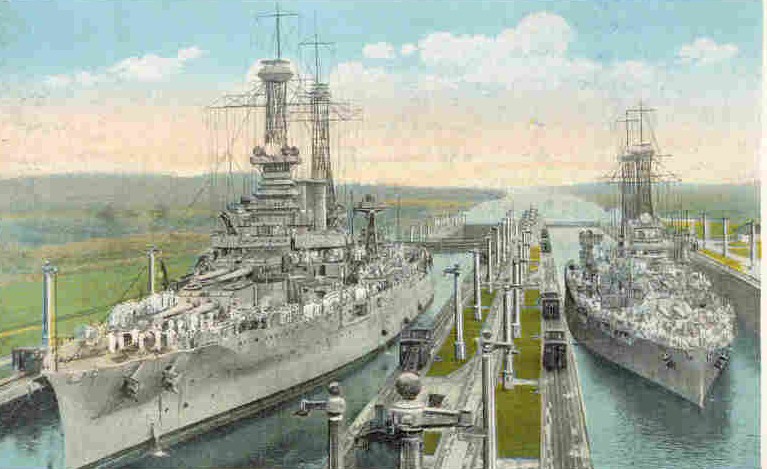
My maternal Grandfather never left CONUS, but my paternal Grandfather did - he served on the USS ARKANSAS (BB-33) through her service Battleship Division NINE as part of the Royal Navy's Grand Fleet's Sixth Battle Squadron. I've blogged about ARKANSAS a few times, click here for a review if you wish.

Sadly, I don't have any pictures of him ... just paper records. Thanks to our friends at NHHC, we do have access to some of the archive of pictures and I have found this one. Pops was on the ARKANSAS at this time. A very small chance he is in this picture, but his Shipmates are. Those he went to war with for that short, quiet, but important deployment at the very end of the Great War. At least one of these young men would have recognized Pops if he walked by him ... that is good enough for me.

As we, the guilty party here BTW, occasionally throw barbs at the hesitancy and apparent selfishness of our allies today, we should try to humble ourselves with the knowledge that we have the same habits - a review of Battleship Division NINE demonstrates that well.

That is part of our history too ... but for now, I just want to take a moment to give a nod to my Pops and his Shipmates, and the unmitigated glory it must have been being at sea with ARKANSAS, WYOMING, TEXAS, NEW YORK, & FLORIDA (NB: DELAWARE was replaced by ARKANSAS).

Friday, November 12, 2021

Fullbore Friday


Allow me a little self indulgence (again) this Friday. USNI triggered me this AM:

It made me grin a bit because my paternal grandfather was a Sailor on the USS ARKANSAS (BB-33) with the 6th Battle Squadron that day.

The Germans never made their last thunder run in 1918 as that horrible and useless war ground to a halt, so they never saw action - which for my grandfather and much of his shipmates I am sure was quite fine.

I could only imagine him looking at his Royal Navy neighbors that day thinking things along the lines his grandson would think.

Anyway, to the Sailors in 1918 of what would become an old warhorse USS ARKANSAS (BB-33) - when she and you were young and the war done; fullbore.


Friday, March 19, 2010

Fullbore Friday

This is more of a reading assignment than anything else - this "summary" describes a ship's life in full.

When most people think of her, they think of her at her lowest point.
At 0755 on the morning of December 7, 1941, the USS PENNSYLVANIA was sitting in dry-dock in the Pearl Harbor Navy Yard. Her screws had been removed from their shafts and were resting on the bottom of the dock. She had been scheduled to leave the dock on the sixth and berth at Ten Ten Dock, immediately adjacent, but delays had been encountered, those delays probably saved the ship.

It was a normal quite Sunday morning and there was little activity aboard. The watch had just been set and the Chaplain was making preparations for the eight o'clock mass on the quarterdeck. Virtually all of the Ships Company were aboard. In view of the existing conditions general over-night liberty had not been granted.

Suddenly and with complete surprise, Japanese dive bombers and torpedo bombers roared out of the high overcast. The PENNSYLVANIA was one of the first ships in the harbor to open fire. Her 50 caliber machine gun crews had their guns in action even before
General Quarters was sounded.
But there is so much to her story. This is just a taste. From the start;
The PENNSYLVANIA was commissioned June 12, 1916, after having been authorized by Congress August 22, 1912. Her keel was laid on October 27, 1913, and she was launched at Newport News Shipbuilding Company, March 16, 1915. America's and the worlds biggest Battleship slid down the skids into her native element at 10:11 am while 20 thousand spectators cheered. Special trains from Pennsylvania, Maryland and Virginia brought thousands to Newport News. Governor Stewart of Virginia and Governor Brumbaugh of Pennsylvania and Secretary of the Navy Daniels, were among the honored guests.

In the Fall of 1917 when Allied Naval Forces began collecting to form what was to be known as the Allied-British Grand Fleet, Sixth Battle Squadron, there was great unhappiness aboard the
USS PENNSYLVANIA, flagship of the United States Fleet. The USS PENNSYLVANIA, together with the USS NEVADA joined the Fleet in 1916 as the first two oil burning U.S. Battleships, was told that she could not hope to operate with the forces seeking out the German Navy because she was "too modern". Only coal-burning dreadnaughts were to be included in the Allied Force because no tankers could be spared to carry fuel to the British Isles (a private note: that was good for my Grandfather - he served on the USS ARKANSAS (BB-33) in WWI).
She survived to the next war - and executed her orders with style.
At this time the PENNSYLVANIA had set a record of which she could well be proud. She was the only battleship to take part in every combat amphibious operation in the Pacific Ocean Areas and the two largest operations on the Southwest Pacific Area from May 4, 1943 to February 10, 1945, from Attu through Lingayen.

In the Guam Operation alone the PENNSYLVANIA expended not counting the false start on 16 June
almost l800 rounds of l4", 10,000 rounds of 5", l4,000 rounds of 40mm and 1600 rounds of 20mm. This is probably a greater amount of ammunition than any other ship has ever fired during a single operation. And it was done without any personnel or material casualties.

Air spotters reported that the PENNSYLVANIA put out of action fifteen planes, six large guns, eight medium guns, three 5" guns, twelve 3" guns, nineteen dual purpose guns, two coast defense guns, eight large AA guns, four twin mounts, nine heavy AA guns, twelve machine guns, two anti-boat guns, numerous mortars, and much field artillery. The ship discovered and destroyed a very large ammunition storage near Adelup Point, at the time of the landing and permanently silenced them.

Since her first action at Pearl Harbor she has steamed almost 150,000 miles. Her self discipline had been excellent at all times, no man was ever lost overboard except by enemy action, she had never hit any friendly troops, installations, ships or planes and never had to report "not ready" for any operation. Nearly 150 officers and almost 1000 petty officers were trained and transferred from the PENNSYLVANIA during this period. She probably fired more ammunition than any other ship in history.
Sad that she was nuked in the end - but seeing what has happened to USS Olympia in PA - perhaps it is better this way.

If I can part with one item to perhaps cause some reflection - and hopefully humble some.

In WWII, this is what it took for a
Navy Unit Commendation.
"For outstanding heroism in action against enemy Japanese forces in the Pacific war area from May 4, 1943 to February 10, 1945. Operating under ten separate commands, the USS PENNSYLVANIA was the only battleship to take part in every amphibious operation during this period from Attu in the Northern area to Lingayen in the Philippines. Imperiled by perpetual fog, she served as flagship of the task force commander during the Aleutians campaign and navigated in poorly charted waters to deliver her accurate broadsides on predetermined but invisible targets; intensive fire from her batteries blazed the way for our assault waves in the Gilbert's, the Marshall's and the Mariana's silencing the enemy's heavy coastal guns, locating and neutralizing camouflaged emplacements and rendering steady support for our land forces. A gallant and dependable veteran, the PENNSYLVANIA completed nearly thirty years of unfailing service by her deadly close in bombardment and gun fire support in the recapture of the Philippines, fulfilling her prolonged and vital mission without casualty to herself or her personnel by Japanese fire. Handled superbly in the face of many obstacles throughout this period, the PENNSYLVANIA achieved an illustrious combat record, reflecting the courage, skill and brilliant teamwork of the Officers who plotted her course, the Pilots who spotted her gunfire and the operational force which aided in maintaining her fighting efficiency."

Friday, February 26, 2016

Fullbore Friday

This is more of a reading assignment than anything else - this "summary" describes a ship's life in full.

When most people think of her, they think of her at her lowest point.

At 0755 on the morning of December 7, 1941, the USS PENNSYLVANIA was sitting in dry-dock in the Pearl Harbor Navy Yard. Her screws had been removed from their shafts and were resting on the bottom of the dock. She had been scheduled to leave the dock on the sixth and berth at Ten Ten Dock, immediately adjacent, but delays had been encountered, those delays probably saved the ship.

It was a normal quite Sunday morning and there was little activity aboard. The watch had just been set and the Chaplain was making preparations for the eight o'clock mass on the quarterdeck. Virtually all of the Ships Company were aboard. In view of the existing conditions general over-night liberty had not been granted.

Suddenly and with complete surprise, Japanese dive bombers and torpedo bombers roared out of the high overcast. The PENNSYLVANIA was one of the first ships in the harbor to open fire. Her 50 caliber machine gun crews had their guns in action even before
General Quarters was sounded.
But there is so much to her story. This is just a taste. From the start;
The PENNSYLVANIA was commissioned June 12, 1916, after having been authorized by Congress August 22, 1912. Her keel was laid on October 27, 1913, and she was launched at Newport News Shipbuilding Company, March 16, 1915. America's and the worlds biggest Battleship slid down the skids into her native element at 10:11 am while 20 thousand spectators cheered. Special trains from Pennsylvania, Maryland and Virginia brought thousands to Newport News. Governor Stewart of Virginia and Governor Brumbaugh of Pennsylvania and Secretary of the Navy Daniels, were among the honored guests.

In the Fall of 1917 when Allied Naval Forces began collecting to form what was to be known as the Allied-British Grand Fleet, Sixth Battle Squadron, there was great unhappiness aboard the
USS PENNSYLVANIA, flagship of the United States Fleet. The USS PENNSYLVANIA, together with the USS NEVADA joined the Fleet in 1916 as the first two oil burning U.S. Battleships, was told that she could not hope to operate with the forces seeking out the German Navy because she was "too modern". Only coal-burning dreadnaughts were to be included in the Allied Force because no tankers could be spared to carry fuel to the British Isles (a private note: that was good for my Grandfather - he served on the USS ARKANSAS (BB-33) in WWI).
She survived to the next war - and executed her orders with style.
At this time the PENNSYLVANIA had set a record of which she could well be proud. She was the only battleship to take part in every combat amphibious operation in the Pacific Ocean Areas and the two largest operations on the Southwest Pacific Area from May 4, 1943 to February 10, 1945, from Attu through Lingayen.

In the Guam Operation alone the PENNSYLVANIA expended not counting the false start on 16 June
almost l800 rounds of l4", 10,000 rounds of 5", l4,000 rounds of 40mm and 1600 rounds of 20mm. This is probably a greater amount of ammunition than any other ship has ever fired during a single operation. And it was done without any personnel or material casualties.

Air spotters reported that the PENNSYLVANIA put out of action fifteen planes, six large guns, eight medium guns, three 5" guns, twelve 3" guns, nineteen dual purpose guns, two coast defense guns, eight large AA guns, four twin mounts, nine heavy AA guns, twelve machine guns, two anti-boat guns, numerous mortars, and much field artillery. The ship discovered and destroyed a very large ammunition storage near Adelup Point, at the time of the landing and permanently silenced them.

Since her first action at Pearl Harbor she has steamed almost 150,000 miles. Her self discipline had been excellent at all times, no man was ever lost overboard except by enemy action, she had never hit any friendly troops, installations, ships or planes and never had to report "not ready" for any operation. Nearly 150 officers and almost 1000 petty officers were trained and transferred from the PENNSYLVANIA during this period. She probably fired more ammunition than any other ship in history.
Sad that she was nuked in the end - but seeing what has happened to USS Olympia in PA - perhaps it is better this way.

If I can part with one item to perhaps cause some reflection - and hopefully humble some.

In WWII, this is what it took for a
Navy Unit Commendation.
"For outstanding heroism in action against enemy Japanese forces in the Pacific war area from May 4, 1943 to February 10, 1945. Operating under ten separate commands, the USS PENNSYLVANIA was the only battleship to take part in every amphibious operation during this period from Attu in the Northern area to Lingayen in the Philippines. Imperiled by perpetual fog, she served as flagship of the task force commander during the Aleutians campaign and navigated in poorly charted waters to deliver her accurate broadsides on predetermined but invisible targets; intensive fire from her batteries blazed the way for our assault waves in the Gilbert's, the Marshall's and the Mariana's silencing the enemy's heavy coastal guns, locating and neutralizing camouflaged emplacements and rendering steady support for our land forces. A gallant and dependable veteran, the PENNSYLVANIA completed nearly thirty years of unfailing service by her deadly close in bombardment and gun fire support in the recapture of the Philippines, fulfilling her prolonged and vital mission without casualty to herself or her personnel by Japanese fire. Handled superbly in the face of many obstacles throughout this period, the PENNSYLVANIA achieved an illustrious combat record, reflecting the courage, skill and brilliant teamwork of the Officers who plotted her course, the Pilots who spotted her gunfire and the operational force which aided in maintaining her fighting efficiency."


This FbF first appeared in March of 2010.

Friday, March 31, 2023

Fullbore Friday

Housekeeping Note: As I mentioned earlier this month, as our British friends might say, this "blogspot" hosted part of the blog is "going in ordinary." 

The archived posts here back to the beginning in 2004 will remain, but all new posts will be going over to CDR Salamander on Substack

The reasons are simply, really. Google owns blogspot and for some reason has decided to turn it in to a very creator-unfriendly environment. 

As noted in my earlier post, they are going through and marking all sorts of posts going back over a decade and new as "SPAM" or worse, "dangerous" or a variation of the usual etc. Most of it derives, I believe, from some automated system that looks for images of guns or discussions of violence. 

I don't know what they plan blogspot to be ... but since google bought it, they have neglected it in a variety of ways. 

Well, this is a milblog ... so ... if I can't discuss violence...

I will put out a simple note tomorrow as well - and no this is not an April Fool's joke - directing everyone not already subscribed to my substack to go there. 

A note about "subscribe." This just signs you up to receive email notifications of new posts. You do not have to subscribe to read substack. The link will let you in. All posts are, and will continue to be, free. There is an option for a pay subscription as well that I have not turned on yet. I'm rather humbled by the number of pledges I've received to throw a few shekels in the tip jar if I turn it on ... so for those who have, thanks. I may in the future, but if I do I feel I should offer paying subscribers a little extra content - maybe a "message board" like podcast discussion of those things I found interesting but didn't write about. I'm not sure right now - still pondering.

So, to mark a pivot point in the history of this blog, let's go back to 2006 and the first Fullbore Friday entry. The FbF aperture is a bit more open than when we started, but it is a popular regular feature.

Remember, switch to substack if you have not already - this is the last functional post I'll put here.


Something new and regular, I think. Kind of like Sunday Funnies except I will post more than one thing on Fridays.


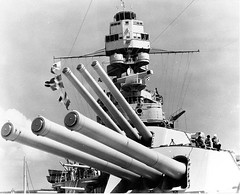
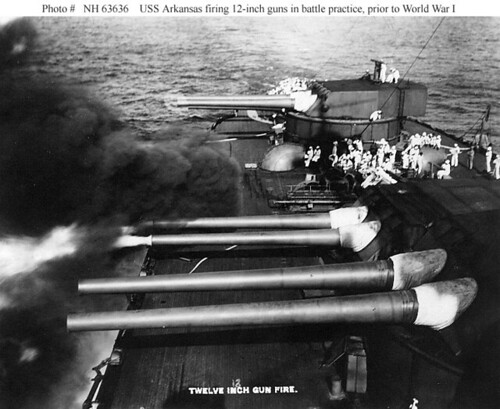
Each Friday I will start with a view of something near and dear to my heart, and that of Marines. Big guns. When able, I will provide a link to the Navy Historical Center if you want to see and learn more about the boat in question.

Of all the old battlewagons, none are closer to my heart than the one my Grandfather served on in WWI. The USS Arkansas.


Note the details. Always love the details. One more thing. Here is a cruise book from their 1913 Med Cruise.

Friday, April 07, 2006

Fullbore Friday

Something new and regular, I think. Kind of like Sunday Funnies except I will post more than one thing on Fridays.

Each Friday I will start with a view of something near and dear to my heart, and that of Marines. Big guns. When able, I will provide a link to the Navy Historical Center if you want to see and learn more about the boat in question.

Of all the old battlewagons, none are closer to my heart than the one my Grandfather served on in WWI. The USS Arkansas.


Note the details. Always love the details. One more thing. Here is a cruise book from their 1913 Med Cruise.

Monday, November 29, 2010

LPD-17: How much to change out a diesel again?


A little something "we" have been sharing around email the last few days I wanted to share with you. Something for the front porch's collective pondering.

The SAN ANTONIO Class is the gift that keeps on giving. Some of this can be explained away because of Katrina ... but ponder the numbers below.

For manufacturing in general - and shipbuilding in particular - the theory goes that with lessons learned during each production run, you get faster, show better quality production, and enjoy lower per unit costs.

If you don't have any of those, then you have one of a few things going on; outright incompetence on initial concept, design, and management of the product development phase only discovered when concept became 3D; fraud of the same; an institution unable to function and perform even the most fundamental aspects of their profession.

In all cases of the above - or combinations of cases - what results in a sane world is that there are a series of wholesale firings of senior management and/or criminal investigations. When that doesn't happen, then usually you have a much larger systemic malfunction going on.

Well, that is the theory - now ponder the macro issue as outlined below.

#

Name

Builder

Keel Laying

Launch

Delivery

KL to L (months)

L to D (months)

KL to D (months)

17

San Antonio

Avondale

9-Dec-00

12-Jul-03

20-Jul-05

31.5

24.6

56.1

18

New Orleans

Avondale

14-Oct-02

11-Dec-04

22-Dec-06

26.3

24.7

51.0

19

Mesa Verde

Ingalls

25-Feb-03

19-Nov-04

28-Sep-07

21.1

34.8

55.9

20

Green Bay

Avondale

11-Aug-03

11-Aug-06

29-Aug-08

36.5

25.0

61.5

21

New York

Avondale

10-Sep-04

19-Dec-07

21-Aug-09

39.8

20.4

60.2

22

San Diego

Ingalls

23-May-07

7-May-10

36.0

23

Anchorage

Avondale

24-Sep-07

24

Arlington

Ingalls

26-May-08

23-Nov-10

30.4

25

Somerset

Avondale

11-Dec-09

26

John P. Murtha

Ingalls

27

Ingalls

If you need a kick-start, Tim Colton provides a very good overview.
NGSB's announcement of the launch of LPD 24 said that she is 77% complete, which the LPD Program Manager apparently thinks is good, although it isn't. And if it took them 30 months to do 77% of the work, it's going to take them well over a year to finish her, maybe close to two years. ... It would only take ten months on a straight-line expenditure curve, of course, but they don't happen in shipbuilding: in shipbuilding, it's an S-curve and the last 5% takes for ever.
Why aren't we getting better and faster with time? Moving away from the macro theory I put out at the opening, the other micro reasons are legion and include things we have discussed here and on Midrats to include; inadequate priorities and manning at SUPSHIPS and NAVSEA (there are very good people there, look up the chain and manning document changes for the problem); loss of discipline in program management; and a loss of credibility in Congress towards our Flag Officers. That is on the military side. On the civilian side we have management, tort, and union malpractice that has warped what was once a first class shipbuilding industry.

Combine the two together and you have a gordian knot that is going to require our own Alexander to fix. It can be fixed though, and the easiest part to the fix is on the military side. We have to be ready to fix it. Judging from some attitudes though, I don't know if we are there yet.

We need to - as until we do - we will have problems like this that keep coming up.

Let me paraphrase something sent to me from a friend from the technical side of the challenge that tells a great story - this time the latest with the
LPD-17's diesels.
When looking over the JAG investigation into the diesels, it comes down this: it doesn't appear that the diesels were ever flushed.
While doing a diesel job, in the work item (that spells out the step by step things you must do) there is a line item and a check point to conduct a flush of the lube oil system. The work item specifically calls out the size micron bag you must use and the amount of debris you are allowed (and it ain't much). It doesn't appear that there was ever a flush done on these diesels, even though there was clearly a large amount of contamination already present.
A technical expert states that the only way to get those diesels down is to literally tear them down to parade rest and flush then and clean the individual parts, to the point of even disassembling the block. He said that you still might not get everything out of it. More to the point, those diesels are always going to be a problem, especially if the Sailors can't even understand what the high temp readings mean on the bearings (and those diesels are all wired to a computer).
Bottom line, unless they do a complete diesel change out, those ships are going to be tied to the pier a lot.

It doesn't appear that NG had proper cleanliness protocols when the diesels were being installed and tested. When issues started happening, it appears that NAVSEA didn't follow or enforce their own procedures.

The Navy must get it's house in order. We're simply too far into the program to kill the LPD-17 Class. The real problem as I see it, is will the Navy come forward and admit that their own procedures weren't followed or enforced, since that's the cause of this whole mess? The second problem is that the engines are eating up main bearings and this need not ever happened. These diesels are wired up for telemetry to tell the operators whats going on inside of them.
For instance, there's a paragraph in the JAG findings where it clearly states that the Sailor on watch ignored high temp alarms on a main bearing telling him that there was a problem with oil flow.
To correctly lubricate these engines, it's not simply enough to have oil on the bearings; it must have a flow of cooled oil going around the bearings in order to protect the bearing. This situation could have been caught before damage occured had only the Sailor known what he was looking at.
How to correct the problem with the diesels? The only sure way to do it is to tear the diesels completely apart, down to taking the block apart and cleaning every orifice, cooling line inside the block, the cylinders, heads everything. Then put it together and do flushes until there is no contamination. That's going to cost a pretty penny, but what is the alternative?
On the Navy side, two problems: first, NAVSEA does not oversee the new construction end not nearly enough; second, the Navy is not training it's people correctly.
That is one person's report based on what they have seen, and it largely matches with other reports that have come my way.

What else would Sal like to see? I think the inspection reports as
outlined in para 4.3 would be nice.

In the end - if you think LPD-17 and her sisters are expensive enough - imagine the cost of ripping out the diesels and replacing them - but it can't be any worse than when we changed out our BB from coal to oil (
like we did with my grandfather's BB, USS ARKANSAS (BB-33) ). I don't think we need to go there though .... do we? Can we?

No, we just need some experienced engineers with solid top-cover leadership to be given the mission to fix it. They will - if we let them. Part of that fix it an open, transparent, and brutally honest appraisal of how we got here and who let it happen.