Showing posts sorted by date for query Tassafaronga. Sort by relevance Show all posts

Wednesday, March 30, 2022

Losing the Solomons

You know the names; Guadalcanal, Savo Island, Cape Esperance, Santa Cruz, Tassafaronga.

There were other less known fights during the Solomon Islands Campaign, but those are the major ones ... some even had USN warships named after them.

During the campaign, the United States suffered over 10,600 killed, 40+ ships sunk, and over 800 aircraft lost.

Imperial Japan suffered over 86,000 dead, 50+ ships sunk, and 1,500 aircraft lost.

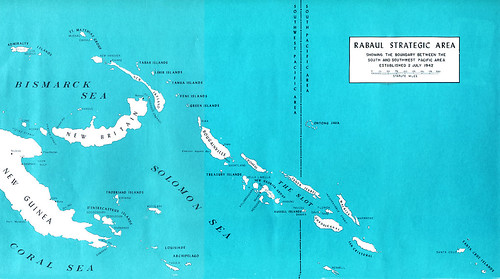
These islands are critical to control/protect the sea lines of communication from the Indian Ocean in to the Pacific Ocean - from the United States to Australia.

After WWII, this was generally an Australian sphere of influence, but as always, the USA had purchased in blood an ongoing interest in the status of these islands. Any review of a globe shows you their importance in any war in the Pacific.

The Chinese know this as well.

I am not sure what is going on at our State Department desk responsible for the Solomons, but if we could just get proper civil service reform in place so we could do the only honorable thing - fire them all.

A leaked document has revealed that China and the Solomon Islands are close to signing a security agreement that could open the door to Chinese troops and naval warships flowing into a Pacific Island nation that played a pivotal role in World War II.

The agreement, kept secret until now, was shared online Thursday night by opponents of the deal and verified as legitimate by the Australian government. Though it is marked as a draft and cites a need for “social order” as a justification for sending Chinese forces, it has set off alarms throughout the Pacific, where concerns about China’s intentions have been growing for years.

Via Anna Powles, here are the pages in question. Read them yourself;


The Chinese are focused, serious, and understand what they want to be in the world. Their people responsible for this area of the world, as we discussed concerning other islands last year, are simply doing an outstanding job in pursuit of their nation's strategic interest.

What, exactly, are our State Department employees focused on for their nation's strategic interest?

Let me help everyone out. As always, meet me in the map room.

Here is the great circle route from our southern California ports, through Hawaii, to Australia.

Find the Solomon Islands.


It isn't really that hard to figure out - but I guess for The Smartest People in the Room™ it is.

Friday, January 21, 2022

Fullbore Friday

The war is only 10 months old and two months after the defeat at the Battle of Savo Island.

The night action of 10-11 OCT, sometimes know as the Second Battle of Savo Island - but usually as The Battle of Cape Esperance, is an excellent example of the critical importance of training, flexibility, initiative, and aggression - combined with a measure of luck. Luck is always essential, as even the most simple plans become complicated once the battle begins.

First background.
DIVISION 6 of the Imperial Japanese Navy was pretty pleased with itself following its engagement with the Americans off Savo the night of August 8-9, and perhaps with reason. The Japanese felt that they had won a victory, greater than their usual "victories," and although the loss of the KAKO outside the harbor of Kavieng following the battle had cut into their forces by a quarter, they felt themselves to be the backbone of Japan in the Solomons.

But the Americans still clung tenaciously to their ground in the Guadalcanal and Florida islands despite air raids and night bombardments from the "Tokyo Express. " And although their position was precarious, it wasn't enough so for the Jap.

If the Japanese headquarters on Rabaul was busy with plans for marshaling their strength for a knockdown battle for the Solomons, so were the Americans at Espiritu Santo. Something had to be done to stop the Japanese from reinforcing their troops, and from storming Marine positions from the sea, and obviously one way to do it was to reinforce our own land forces at Guadalcanal. For this, a large convoy with Army reinforcements for Guadalcanal was soon to depart from Noumea, in French New Caledonia, halfway between Fiji and Australia. By October 1 1 it would be about 250 miles west of Espiritu Santo, protected by two task forces: one built around the carrier HORNET, the other around the new battleship WASHINGTON.

In Espiritu was a newly organized task force. Its ships had engaged only in target practice together but they were good ships. It would do well, as protection for the left flank of the Army convoy approaching Guadalcanal, to station this task force off the southern shore of that island to intercept any enemy units moving in from the west.


Remember, this is still the "go to war with the Navy you have" part of the war, as the entire Solomon Islands Campaign was.

The post Midway march to Tokyo was on, but this was only the beginning of the beginning.

Let's look at the lineup.


USN:
TF 64

Rear-Admiral Norman C. Scott

IJN:
Bombardment Group

Rear-Admiral Goto

And so, off they went.
Departing New Caledonia on October 8, ships carrying the US 164th Infantry moved north towards Guadalcanal. To screen this convoy, Vice Admiral Robert Ghormley assigned Task Force 64 ... to operate near the island. ... Initially taking station off Rennell Island, Hall moved north on the 11th after receiving reports that Japanese ships had been sited in The Slot.
MicroWorks calls this "Stumbling into Victory." That is one way to look at it.

Me? I call it a lesson on the need for trusting your Commanding Officers with short, direct orders. As an editorial note for brevity, there are two IJN groups NW of Guadalcanal, Goto's Bombardment Group and RADM Jojima's landing force with 4,500 troops.

As he moved north, Hall, aware that the Americans had faired badly in previous night battles with the Japanese, crafted a simple battle plan. Ordering his ships to form a column with destroyers at the head and rear, he instructed them to illuminate any targets with their searchlights so that the cruisers could fire accurately. Hall also informed his captains that they were open fire when the enemy was sited rather than waiting for orders.
Approaching Cape Hunter on the northwest corner of Guadalcanal, Hall, flying his flag from San Francisco, ordered his cruisers to launch their float planes at 10:00 PM. An hour later, San Francisco's float plane sighted Jojima's force off of Guadalcanal. Expecting more Japanese ships to be sighted, Hall maintained his course northeast, passing to the west of Savo Island. Reversing course at 11:30, some confusion led to the three lead destroyers (Farenholt, Duncan, and Laffey) being out of position. About this time, Goto's ships began appearing on the American radars.

Initially believing these contacts to be the out of position destroyers, Hall took no action. As Farenholt and Laffey accelerated to reassume their proper positions, Duncan moved to attack the approaching Japanese ships.
But ahhhh, one man's brevity code is another's order.
A mere 5000 yards distant Goto's ships were moving directly into the center of the American line, which Goto, deeply feeling that no American was present, considered to be Joshima's reinforcement group. It was up to Helena to teach him otherwise. Captain Hoover was certain he had the enemy before him and queried Scott to open fire. Scott replied, "Roger", which he intended as a confirmation of receipt, but if unqualified it meant open fire as well, and Hoover interpreted it as such. He switched on his searchlights, aiming them on Hatsuyuki, the left-wing destroyer, and opened fire with his fifteen 155mm guns at 2346.

That action caught Scott off-guard, but he did not prevent the rest of his line from opening fire on the enemy. Duncan, now only a few hundred yards from Kinugasa, joined in, but was quickly disabled.
Another account describes this classic thus;
At 11:45, Goto's ships were visible to the American lookouts and Helena radioed asking permission to open fire using the general procedure request, "Interrogatory Roger" (meaning "are we clear to act"). Hall responded in the affirmative, and his surprise the entire American line opened fire. Aboard his flagship, Aoba, Goto was taken by complete surprise.
Let's talk about VADM Goto for a second. In a battle that lasted only 30 minutes, the first few were an all-American show. Why? Well, confusion and an inability to realize that your plan was no longer going to happen and that all you were told was wrong. The enemy always gets a vote.
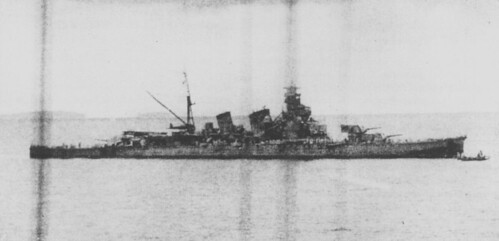
Gotō's force was taken almost completely by surprise. At 23:43 Aoba's lookouts sighted Scott's force, but Gotō assumed that they were Jojima's ships. Two minutes later, Aoba's lookouts identified the ships as American, but Gotō remained skeptical and directed his ships to flash identification signals. As Aoba's crew executed Gotō's order, the first American salvo smashed into Aoba's superstructure. Aoba was quickly hit by up to 40 shells from Helena, Salt Lake City, San Francisco, Farenholt, and Laffey. The shell hits heavily damaged Aoba's communications systems and demolished two of her main gun turrets as well as her main gun director. Several large-caliber projectiles passed through Aoba's flag bridge without exploding, but the force of their passage killed many men and mortally wounded Gotō.
CAPT Kijuma, VADM Goto's Chief of Staff stated,
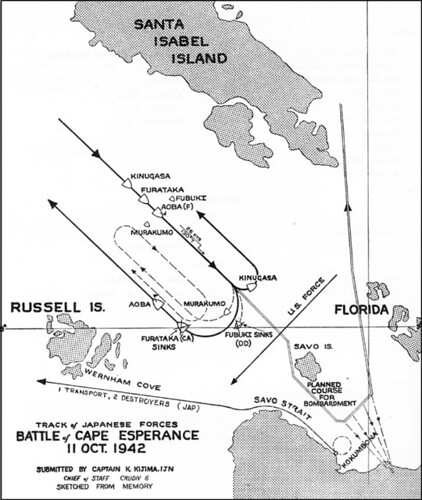
"At first we thought the fire was from our own supply ships. It was a surprise attack. All ships but the KINUGASA immediately reversed course to the right. Due to the shellfire and the congestion, the KINUGASA turned left. As a result of
this turn the KINUGASA only received minor damage from three hits. The AOBA was hit about forty times and was badly damaged. The FURUTAKA and FUBUKI were sunk. The FUBUKI sank before it completed the turn, although it only received four hits. Due to the smoke from the AOBA, the MURAKUMO was not hit. The KINUGASA did most of the fighting for our force.

"Soon after the action started Admiral Goto was mortally wounded. While he was dying, I told him that he could die with easy mind because we had sunk two of your heavy cruisers.

"Following this action we retired to the northwest. The MURAKUMO turned back and rescued about four hundred survivors. When your forces reappeared it departed the area trying to make you chase it within range of our aircraft."
Chaos, on both sides.
Over the next few minutes, Aoba was hit more than 40 times by Helena, Salt Lake City, San Francisco, Farenholt, and Laffey. Burning, with many of its guns out of action and Goto dead, Aoba turned to disengage. At 11:47, concerned that he was firing on his own ships, Hall ordered a ceasefire and asked his destroyers to confirm their positions. This done, the American ships resumed firing at 11:51 and pummeled the cruiser Furutaka. Burning from a hit to its torpedo tubes, Furutaka lost power after taking a torpedo from Buchanan. While the cruiser was burning, the Americans shifted their fire to the destroyer Fubuki sinking it.
Two minutes of firing - four minutes of "where and the h311 is everyone" and then firing again. That 4 minutes must have seemed like an hour.
As the battle raged, the cruiser Kinugasa and destoryer Hatsuyuki turned away and missed the brunt of the American attack. Pursuing the fleeing Japanese ships, Boise was nearly hit by torpedoes from Kinugasa at 12:06 AM. Turning on their search lights to illuminate the Japanese cruiser, Boise and Salt Lake City immediately took fire, with the former taking a hit to its magazine. At 12:20, with the Japanese retreating and his ships disorganized, Hall broke off the action.

Later that night, Furutaka sank as result of battle damage, and Duncan was lost to raging fires. Learning of the bombardment force's crisis, Jojima detached four destroyers to its aid after disembarking his troops. The next day, two of these, Murakumo and Shirayuki, were sunk by aircraft from Henderson Field.
The end result of the battle was a complete smacking. Losses:

USN:
  • 1 destroyer sunk,
  • 1 cruiser,
  • 1 destroyer heavily damaged,
  • 163 killed
IJN:
  • 1 cruiser,
  • 3 destroyers sunk,
  • 1 cruiser heavily damaged,
  • 341–454 killed,
  • 111 captured
This was unquestionably a great tactical victory for the USN, but an operational failure as Jojima was still able to get his troops ashore. It also did not supply the right lessons to take forward as we continued not to appreciate the true night fighting capabilities of the IJN and the exceptional danger posed by the Long Lance torpedo.

This battle was the happy middle between two sobering hammers - The Battle of Savo Island for one, and two months later 
Tassafaronga. In the end, I think this best catches the results,
A junior officer on Helena later wrote, "Cape Esperance was a three-sided battle in which chance was the major winner."
A great take-away would be this quote that could be heard after any sea battle for the last 2,500 years, I bet.
In the words of one petty officer who was overheard talking with another on the way back to Espiritu Santo, "I'll never complain of another drill, and I'll deck the man who does."
BTW, that quote and a few others come from Battle Report: Pacific War: Middle Phase by CDR Walter Purdon, USN and CAPT Eric Karig, USN which you can get here.


This will be crossposted at USNIBlog as part of the SJS led Solomon Islands Campaign thread.

First posted in AUG09.

Friday, September 13, 2019

Fullbore Friday


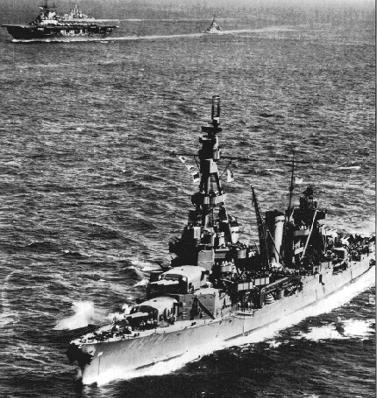
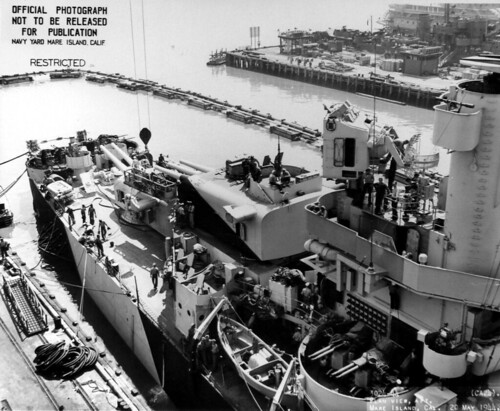
USS Pensacola (CA-24). A great ship with a great history. She had a very busy early war.
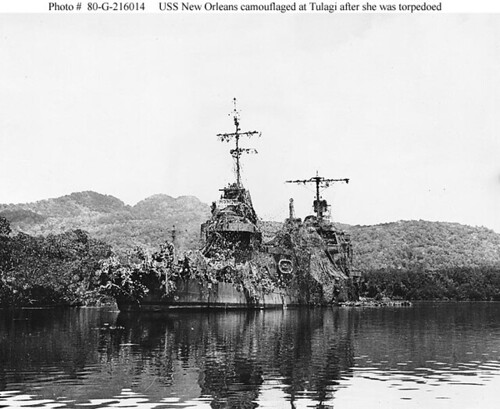
When the Pacific War began on 7 December 1941 with Japan's attack on Pearl Harbor, Pensacola was at sea escorting a convoy that was subsequently diverted to Australia. Following patrols in the vicinity of Samoa, the cruiser screened the carriers Lexington and Yorktown during their operations in the southern Pacific from February into April 1942. In the early June Battle of Midway PensacolaEnterprise and USS Yorktown. From August to December 1942, she operated in support of the Guadalcanal campaign, mainly serving with aircraft carriers, and was present during the Battle of the Santa Cruz Islands in late October and the Naval Battle of Guadalcanal in mid-November. At the end of November, Pensacola was badly damaged by a torpedo in the Battle of Tassafaronga, with the loss of over 120 of her crewmen.


In the end though, at least she died a warrior's death: she got nuked and then sunk by gunfire.

Best pictures are here.

First posted June 2006

Friday, August 09, 2019

Fullbore Friday

In case anyone missed this at USNIBlog a years ago;

Can you lose but win?

Of course you can. The key is to understand that the Tactical, Operational, and Strategic are linked - but they are not perfectly linked and in alignment.

Let's look at the Tactical.

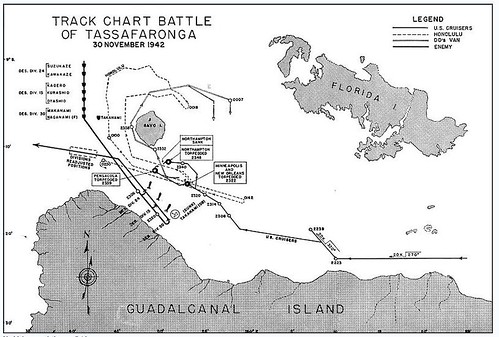
In the battle, a US warship force of five cruisers and four destroyers under the command of Rear Admiral Carleton H. Wright attempted to surprise and destroy a Japanese warship force of eight destroyers under the command of Rear Admiral Raizo Tanaka. Tanaka's warships were attempting to deliver food supplies to Japanese forces on Guadalcanal.

Using radar, the US warships opened fire and sank one of the Japanese destroyers. Tanaka and the rest of his ships, however, reacted quickly and launched numerous torpedoes at the US warships. The Japanese torpedoes hit and sank one US cruiser and heavily damaged three others, enabling the rest of Tanaka's force to escape without significant additional damage but also without completing the mission of delivering the food supplies.
All you need to know about Operational and Strategic is right there, but let's stick with the Tactical for a bit.

Do Commanders feel today that they are too limited in their ability to exercise their best judgement in combat? Well, consider it a Navy tradition.

At 23:14, operators on Fletcher established firm radar contact with Takanami and the lead group of four drum-carrying destroyers. At 23:15, with the range 7,000 yards (6,400 m), Commander William M. Cole, commander of Wright's destroyer group and captain of Fletcher, radioed Wright for permission to fire torpedoes. Wright waited two minutes and then responded with, "Range on bogies [Tanaka's ships on radar] excessive at present."[20] Cole responded that the range was fine. Another two minutes passed before Wright responded with permission to fire. In the meantime, the US destroyer's targets escaped from an optimum firing setup ahead to a marginal position passing abeam, giving the American torpedoes a long overtaking run near the limit of their range. At 23:20, Fletcher, Perkins, and Drayton fired a total of 20 Mark 15 torpedoes towards Tanaka's ships. Maury, lacking SG radar and thus having no contacts, withheld fire.
Amazing even in hindsight. Recall - the action from initial radar contact by FLETCHER at 2306 Tanaka's withdraw at 23:44 was only 38 minutes .... roughly 13% of the battle was spent waiting to be micromanaged. Recall that the Japanese did not have radar.

There is a point here that one should keep in mind. As opposed to the leisurely combat the USN has engaged in since WWII - mostly keeping station, supporting TACAIR operations or leisurely TLAM missions - this was as it is - quick, deadly, and devastating combat. Luck, speed, training, and finally your weapons determines success.

Knowing your enemy, and acknowledging that you may not fully know him, is also critical.

The results of the battle led to further discussion in the US Pacific Fleet about changes in tactical doctrine and the need for technical improvements, such as flashless gunpowder and improved torpedoes. The Americans were still unaware of the range and power of Japanese torpedoes and the effectiveness of Japanese night battle tactics. In fact, Wright claimed that his ships must have been fired on by submarines since the observed position of Tanaka's ships "make it improbable that torpedoes with speed-distance characteristics similar to our own" could have caused such damage. The Americans would not recognize the true capabilities of their Pacific adversary's torpedoes and night tactics until well into 1943.
Logistics.
Due to a combination of the threat from CAF aircraft, US Navy PT boats stationed at Tulagi, and a cycle of bright moonlight, the Japanese had switched to using submarines to deliver provisions to their forces on Guadalcanal. Beginning on November 16, 1942, and continuing for the next three weeks, 16 submarines made nocturnal deliveries of foodstuffs to the island, with one submarine making the trip each night. Each submarine could deliver 20 to 30 tons of supplies, about one day's worth of food, for the 17th Army, but the difficult task of transporting the supplies by hand through the jungle to the frontline units limited their value to sustain the Japanese troops on Guadalcanal. At the same time, the Japanese tried to establish a chain of three bases in the central Solomons to allow small boats to use them as staging sites for making supply deliveries to Guadalcanal, but damaging Allied airstrikes on the bases forced the abandonment of this plan.[9]

On November 26, the 17th Army notified Imamura that it faced a critical food crisis. Some front-line units had not been resupplied for six days and even the rear-area troops were on one-third rations. The situation forced the Japanese to return to using destroyers to deliver the necessary supplies.
And that is where we get the success of the battle. If all you do is count ships sunk and damages, then sure The Battle of Tassafaronga was a loss for the USA. Cole and Wright sure saw it that way - as do many. But was it really?

What were the Japanese trying to do? What was their Operational Center of Gravity (CoG)? Of course, it was keeping their land forces supplied ashore. By preventing their resupply, you attack and weaken the Japanese CoG .... therefor, at the Operational (and arguably Strategic as well) you actually won.

Not too different from the American experience with Tet. The USA and South Vietnamese forces destroyed the Viet Cong during Tet - effectively removing them from being a threat to the existence of the South Vietnam government. That wasn't the point .... as that wasn't the war's Strategic CoG.

Thanks to a superior INFO OPS and PSYOPS campaign by the North Vietnamese along with their allies and useful assistance by the likes of Walter Cronkite, Tet was an exceptional victory by the Communists as it significantly undermined the Strategic CoG of the Americans - the support of the American people.

There are two examples of why one should be very careful when declaring a victory or defeat. Perspective and a clear understanding of the larger issue is key.

Finally, here is a nice lesson on how Senior Leadership should not act ... and how it should. CYA, wagon circling, and blaming subordinates for your own failure is nothing new.

In spite of his defeat in the battle, Wright was awarded the Navy Cross, one of the highest American military decorations for bravery, for his actions during the engagement. ... Halsey, in his comments on Wright's report, placed much of the blame for the defeat on Cole, saying that the destroyer squadron commander fired his torpedoes from too great a distance to be effective and should have "helped" the cruisers instead of circling around Savo Island.
I think history has done some justice to Cole - and it sure doesn't put a great deal of glory on Wright.

In contrast, look at what Tanaka said. This is a good way to end the post - Leadership 101.

After the war, Tanaka said of his victory at Tassafaronga, "I have heard that US naval experts praised my command in that action. I am not deserving of such honors. It was the superb proficiency and devotion of the men who served me that produced the tactical victory for us."
That and some great Japanese engineering in the Long Lance.

First posted OCT 2009.

Friday, October 30, 2015

Fullbore Friday

Before OCT is out, let's bring back a good reading FbF from six years ago.

The war is only 10 months old and two months after the defeat at the Battle of Savo Island.

The night action of 10-11 OCT, sometimes know as the Second Battle of Savo Island - but usually as The Battle of Cape Esperance, is an excellent example of the critical importance of training, flexibility, initiative, and aggression - combined with a measure of luck. Luck is always essential, as even the most simple plans become complicated once the battle begins.

First background.
DIVISION 6 of the Imperial Japanese Navy was pretty pleased with itself following its engagement with the Americans off Savo the night of August 8-9, and perhaps with reason. The Japanese felt that they had won a victory, greater than their usual "victories," and although the loss of the KAKO outside the harbor of Kavieng following the battle had cut into their forces by a quarter, they felt themselves to be the backbone of Japan in the Solomons.

But the Americans still clung tenaciously to their ground in the Guadalcanal and Florida islands despite air raids and night bombardments from the "Tokyo Express. " And although their position was precarious, it wasn't enough so for the Jap.

If the Japanese headquarters on Rabaul was busy with plans for marshaling their strength for a knockdown battle for the Solomons, so were the Americans at Espiritu Santo. Something had to be done to stop the Japanese from reinforcing their troops, and from storming Marine positions from the sea, and obviously one way to do it was to reinforce our own land forces at Guadalcanal. For this, a large convoy with Army reinforcements for Guadalcanal was soon to depart from Noumea, in French New Caledonia, halfway between Fiji and Australia. By October 1 1 it would be about 250 miles west of Espiritu Santo, protected by two task forces: one built around the carrier HORNET, the other around the new battleship WASHINGTON.

In Espiritu was a newly organized task force. Its ships had engaged only in target practice together but they were good ships. It would do well, as protection for the left flank of the Army convoy approaching Guadalcanal, to station this task force off the southern shore of that island to intercept any enemy units moving in from the west.


Remember, this is still the "go to war with the Navy you have" part of the war, as the entire Solomon Islands Campaign was.

The post Midway march to Tokyo was on, but this was only the beginning of the beginning.

Let's look at the lineup.


USN:
TF 64

Rear-Admiral Norman C. Scott

IJN:
Bombardment Group

Rear-Admiral Goto

And so, off they went.
Departing New Caledonia on October 8, ships carrying the US 164th Infantry moved north towards Guadalcanal. To screen this convoy, Vice Admiral Robert Ghormley assigned Task Force 64 ... to operate near the island. ... Initially taking station off Rennell Island, Hall moved north on the 11th after receiving reports that Japanese ships had been sited in The Slot.
MicroWorks calls this "Stumbling into Victory." That is one way to look at it.

Me? I call it a lesson on the need for trusting your Commanding Officers with short, direct orders. As an editorial note for brevity, there are two IJN groups NW of Guadalcanal, Goto's Bombardment Group and RADM Jojima's landing force with 4,500 troops.

As he moved north, Hall, aware that the Americans had faired badly in previous night battles with the Japanese, crafted a simple battle plan. Ordering his ships to form a column with destroyers at the head and rear, he instructed them to illuminate any targets with their searchlights so that the cruisers could fire accurately. Hall also informed his captains that they were open fire when the enemy was sited rather than waiting for orders.
Approaching Cape Hunter on the northwest corner of Guadalcanal, Hall, flying his flag from San Francisco, ordered his cruisers to launch their float planes at 10:00 PM. An hour later, San Francisco's float plane sighted Jojima's force off of Guadalcanal. Expecting more Japanese ships to be sighted, Hall maintained his course northeast, passing to the west of Savo Island. Reversing course at 11:30, some confusion led to the three lead destroyers (Farenholt, Duncan, and Laffey) being out of position. About this time, Goto's ships began appearing on the American radars.

Initially believing these contacts to be the out of position destroyers, Hall took no action. As Farenholt and Laffey accelerated to reassume their proper positions, Duncan moved to attack the approaching Japanese ships.
But ahhhh, one man's brevity code is another's order.
A mere 5000 yards distant Goto's ships were moving directly into the center of the American line, which Goto, deeply feeling that no American was present, considered to be Joshima's reinforcement group. It was up to Helena to teach him otherwise. Captain Hoover was certain he had the enemy before him and queried Scott to open fire. Scott replied, "Roger", which he intended as a confirmation of receipt, but if unqualified it meant open fire as well, and Hoover interpreted it as such. He switched on his searchlights, aiming them on Hatsuyuki, the left-wing destroyer, and opened fire with his fifteen 155mm guns at 2346.

That action caught Scott off-guard, but he did not prevent the rest of his line from opening fire on the enemy. Duncan, now only a few hundred yards from Kinugasa, joined in, but was quickly disabled.
Another account describes this classic thus;
At 11:45, Goto's ships were visible to the American lookouts and Helena radioed asking permission to open fire using the general procedure request, "Interrogatory Roger" (meaning "are we clear to act"). Hall responded in the affirmative, and his surprise the entire American line opened fire. Aboard his flagship, Aoba, Goto was taken by complete surprise.
Let's talk about VADM Goto for a second. In a battle that lasted only 30 minutes, the first few were an all-American show. Why? Well, confusion and an inability to realize that your plan was no longer going to happen and that all you were told was wrong. The enemy always gets a vote.
Gotō's force was taken almost completely by surprise. At 23:43 Aoba's lookouts sighted Scott's force, but Gotō assumed that they were Jojima's ships. Two minutes later, Aoba's lookouts identified the ships as American, but Gotō remained skeptical and directed his ships to flash identification signals. As Aoba's crew executed Gotō's order, the first American salvo smashed into Aoba's superstructure. Aoba was quickly hit by up to 40 shells from Helena, Salt Lake City, San Francisco, Farenholt, and Laffey. The shell hits heavily damaged Aoba's communications systems and demolished two of her main gun turrets as well as her main gun director. Several large-caliber projectiles passed through Aoba's flag bridge without exploding, but the force of their passage killed many men and mortally wounded Gotō.
CAPT Kijuma, VADM Goto's Chief of Staff stated,
"At first we thought the fire was from our own supply ships. It was a surprise attack. All ships but the KINUGASA immediately reversed course to the right. Due to the shellfire and the congestion, the KINUGASA turned left. As a result of
this turn the KINUGASA only received minor damage from three hits. The AOBA was hit about forty times and was badly damaged. The FURUTAKA and FUBUKI were sunk. The FUBUKI sank before it completed the turn, although it only received four hits. Due to the smoke from the AOBA, the MURAKUMO was not hit. The KINUGASA did most of the fighting for our force.

"Soon after the action started Admiral Goto was mortally wounded. While he was dying, I told him that he could die with easy mind because we had sunk two of your heavy cruisers.

"Following this action we retired to the northwest. The MURAKUMO turned back and rescued about four hundred survivors. When your forces reappeared it departed the area trying to make you chase it within range of our aircraft."
Chaos, on both sides.
Over the next few minutes, Aoba was hit more than 40 times by Helena, Salt Lake City, San Francisco, Farenholt, and Laffey. Burning, with many of its guns out of action and Goto dead, Aoba turned to disengage. At 11:47, concerned that he was firing on his own ships, Hall ordered a ceasefire and asked his destroyers to confirm their positions. This done, the American ships resumed firing at 11:51 and pummeled the cruiser Furutaka. Burning from a hit to its torpedo tubes, Furutaka lost power after taking a torpedo from Buchanan. While the cruiser was burning, the Americans shifted their fire to the destroyer Fubuki sinking it.
Two minutes of firing - four minutes of "where and the h311 is everyone" and then firing again. That 4 minutes must have seemed like an hour.
As the battle raged, the cruiser Kinugasa and destoryer Hatsuyuki turned away and missed the brunt of the American attack. Pursuing the fleeing Japanese ships, Boise was nearly hit by torpedoes from Kinugasa at 12:06 AM. Turning on their search lights to illuminate the Japanese cruiser, Boise and Salt Lake City immediately took fire, with the former taking a hit to its magazine. At 12:20, with the Japanese retreating and his ships disorganized, Hall broke off the action.

Later that night, Furutaka sank as result of battle damage, and Duncan was lost to raging fires. Learning of the bombardment force's crisis, Jojima detached four destroyers to its aid after disembarking his troops. The next day, two of these, Murakumo and Shirayuki, were sunk by aircraft from Henderson Field.
The end result of the battle was a complete smacking. Losses:

USN:
  • 1 destroyer sunk,
  • 1 cruiser,
  • 1 destroyer heavily damaged,
  • 163 killed
IJN:
  • 1 cruiser,
  • 3 destroyers sunk,
  • 1 cruiser heavily damaged,
  • 341–454 killed,
  • 111 captured
This was unquestionably a great tactical victory for the USN, but an operational failure as Jojima was still able to get his troops ashore. It also did not supply the right lessons to take forward as we continued not to appreciate the true night fighting capabilities of the IJN and the exceptional danger posed by the Long Lance torpedo.

This battle was the happy middle between two sobering hammers - The Battle of Savo Island for one, and two months later
Tassafaronga. In the end, I think this best catches the results,
A junior officer on Helena later wrote, "Cape Esperance was a three-sided battle in which chance was the major winner."
A great take-away would be this quote that could be heard after any sea battle for the last 2,500 years, I bet.
In the words of one petty officer who was overheard talking with another on the way back to Espiritu Santo, "I'll never complain of another drill, and I'll deck the man who does."
BTW, that quote and a few others come from Battle Report: Pacific War: Middle Phase by CDR Walter Purdon, USN and CAPT Eric Karig, USN which you can get for free online here, or get the 1947 hardback original here.


This will be crossposted at USNIBlog as part of the SJS led Solomon Islands Campaign thread.

Friday, February 20, 2015

Fullbore Friday

We have a lot more readers now than we did back in 2009 when we had this FbF here and over at USNIBlog. Time to bring her back.


Can you lose but win?

Of course you can. The key is to understand that the Tactical, Operational, and Strategic are linked - but they are not perfectly linked and in alignment.

Let's look at the Tactical.

In the battle, a US warship force of five cruisers and four destroyers under the command of Rear Admiral Carleton H. Wright attempted to surprise and destroy a Japanese warship force of eight destroyers under the command of Rear Admiral Raizo Tanaka. Tanaka's warships were attempting to deliver food supplies to Japanese forces on Guadalcanal.

Using radar, the US warships opened fire and sank one of the Japanese destroyers. Tanaka and the rest of his ships, however, reacted quickly and launched numerous torpedoes at the US warships. The Japanese torpedoes hit and sank one US cruiser and heavily damaged three others, enabling the rest of Tanaka's force to escape without significant additional damage but also without completing the mission of delivering the food supplies.
All you need to know about Operational and Strategic is right there, but let's stick with the Tactical for a bit.

Do Commanders feel today that they are too limited in their ability to exercise their best judgement in combat? Well, consider it a Navy tradition.

At 23:14, operators on Fletcher established firm radar contact with Takanami and the lead group of four drum-carrying destroyers. At 23:15, with the range 7,000 yards (6,400 m), Commander William M. Cole, commander of Wright's destroyer group and captain of Fletcher, radioed Wright for permission to fire torpedoes. Wright waited two minutes and then responded with, "Range on bogies [Tanaka's ships on radar] excessive at present."[20] Cole responded that the range was fine. Another two minutes passed before Wright responded with permission to fire. In the meantime, the US destroyer's targets escaped from an optimum firing setup ahead to a marginal position passing abeam, giving the American torpedoes a long overtaking run near the limit of their range. At 23:20, Fletcher, Perkins, and Drayton fired a total of 20 Mark 15 torpedoes towards Tanaka's ships. Maury, lacking SG radar and thus having no contacts, withheld fire.
Amazing even in hindsight. Recall - the action from initial radar contact by FLETCHER at 2306 Tanaka's withdraw at 23:44 was only 38 minutes .... roughly 13% of the battle was spent waiting to be micromanaged. Recall that the Japanese did not have radar.

There is a point here that one should keep in mind. As opposed to the leisurely combat the USN has engaged in since WWII - mostly keeping station, supporting TACAIR operations or leisurely TLAM missions - this was as it is - quick, deadly, and devastating combat. Luck, speed, training, and finally your weapons determines success.

Knowing your enemy, and acknowledging that you may not fully know him, is also critical.

The results of the battle led to further discussion in the US Pacific Fleet about changes in tactical doctrine and the need for technical improvements, such as flashless gunpowder and improved torpedoes. The Americans were still unaware of the range and power of Japanese torpedoes and the effectiveness of Japanese night battle tactics. In fact, Wright claimed that his ships must have been fired on by submarines since the observed position of Tanaka's ships "make it improbable that torpedoes with speed-distance characteristics similar to our own" could have caused such damage. The Americans would not recognize the true capabilities of their Pacific adversary's torpedoes and night tactics until well into 1943.
Logistics.

Due to a combination of the threat from CAF aircraft, US Navy PT boats stationed at Tulagi, and a cycle of bright moonlight, the Japanese had switched to using submarines to deliver provisions to their forces on Guadalcanal. Beginning on November 16, 1942, and continuing for the next three weeks, 16 submarines made nocturnal deliveries of foodstuffs to the island, with one submarine making the trip each night. Each submarine could deliver 20 to 30 tons of supplies, about one day's worth of food, for the 17th Army, but the difficult task of transporting the supplies by hand through the jungle to the frontline units limited their value to sustain the Japanese troops on Guadalcanal. At the same time, the Japanese tried to establish a chain of three bases in the central Solomons to allow small boats to use them as staging sites for making supply deliveries to Guadalcanal, but damaging Allied airstrikes on the bases forced the abandonment of this plan.[9]

On November 26, the 17th Army notified Imamura that it faced a critical food crisis. Some front-line units had not been resupplied for six days and even the rear-area troops were on one-third rations. The situation forced the Japanese to return to using destroyers to deliver the necessary supplies.
And that is where we get the success of the battle. If all you do is count ships sunk and damages, then sure The Battle of Tassafaronga was a loss for the USA. Cole and Wright sure saw it that way - as do many. But was it really?

What were the Japanese trying to do? What was their Operational Center of Gravity (CoG)? Of course, it was keeping their land forces supplied ashore. By preventing their resupply, you attack and weaken the Japanese CoG .... therefor, at the Operational (and arguably Strategic as well) you actually won.

Not too different from the American experience with Tet. The USA and South Vietnamese forces destroyed the Viet Cong during Tet - effectively removing them from being a threat to the existence of the South Vietnam government. That wasn't the point .... as that wasn't the war's Strategic CoG.

Thanks to a superior INFO OPS and PSYOPS campaign by the North Vietnamese along with their allies and useful assistance by the likes of Walter Cronkite, Tet was an exceptional victory by the Communists as it significantly undermined the Strategic CoG of the Americans - the support of the American people.

There are two examples of why one should be very careful when declaring a victory or defeat. Perspective and a clear understanding of the larger issue is key.

Finally, here is a nice lesson on how Senior Leadership should not act ... and how it should. CYA, wagon circling, and blaming subordinates for your own failure is nothing new.

In spite of his defeat in the battle, Wright was awarded the Navy Cross, one of the highest American military decorations for bravery, for his actions during the engagement. ... Halsey, in his comments on Wright's report, placed much of the blame for the defeat on Cole, saying that the destroyer squadron commander fired his torpedoes from too great a distance to be effective and should have "helped" the cruisers instead of circling around Savo Island.
I think history has done some justice to Cole - and it sure doesn't put a great deal of glory on Wright.

In contrast, look at what Tanaka said. This is a good way to end the post - Leadership 101.

After the war, Tanaka said of his victory at Tassafaronga, "I have heard that US naval experts praised my command in that action. I am not deserving of such honors. It was the superb proficiency and devotion of the men who served me that produced the tactical victory for us."
That and some great Japanese engineering in the Long Lance.

Friday, August 12, 2011

Fullbore Friday

In honor of our guest this Sunday on Midrats - and encore edition of FbF.
The war is only 10 months old and two months after the defeat at the
Battle of Savo Island.

The night action of 10-11 OCT, sometimes know as the Second Battle of Savo Island - but usually as The Battle of Cape Esperance, is an excellent example of the critical importance of training, flexibility, initiative, and aggression - combined with a measure of luck. Luck is always essential, as even the most simple plans become complicated once the battle begins.

First background.
DIVISION 6 of the Imperial Japanese Navy was pretty pleased with itself following its engagement with the Americans off Savo the night of August 8-9, and perhaps with reason. The Japanese felt that they had won a victory, greater than their usual "victories," and although the loss of the KAKO outside the harbor of Kavieng following the battle had cut into their forces by a quarter, they felt themselves to be the backbone of Japan in the Solomons.

But the Americans still clung tenaciously to their ground in the Guadalcanal and Florida islands despite air raids and night bombardments from the "Tokyo Express. " And although their position was precarious, it wasn't enough so for the Jap.

If the Japanese headquarters on Rabaul was busy with plans for marshaling their strength for a knockdown battle for the Solomons, so were the Americans at Espiritu Santo. Something had to be done to stop the Japanese from reinforcing their troops, and from storming Marine positions from the sea, and obviously one way to do it was to reinforce our own land forces at Guadalcanal. For this, a large convoy with Army reinforcements for Guadalcanal was soon to depart from Noumea, in French New Caledonia, halfway between Fiji and Australia. By October 1 1 it would be about 250 miles west of Espiritu Santo, protected by two task forces: one built around the carrier HORNET, the other around the new battleship WASHINGTON.

In Espiritu was a newly organized task force. Its ships had engaged only in target practice together but they were good ships. It would do well, as protection for the left flank of the Army convoy approaching Guadalcanal, to station this task force off the southern shore of that island to intercept any enemy units moving in from the west.


Remember, this is still the "go to war with the Navy you have" part of the war, as the entire Solomon Islands Campaign was.

The post Midway march to Tokyo was on, but this was only the beginning of the beginning.

Let's look at the lineup.


USN:
TF 64

Rear-Admiral Norman C. Scott
IJN:
Bombardment Group

Rear-Admiral Goto
And so, off they went.
Departing New Caledonia on October 8, ships carrying the US 164th Infantry moved north towards Guadalcanal. To screen this convoy, Vice Admiral Robert Ghormley assigned Task Force 64 ... to operate near the island. ... Initially taking station off Rennell Island, Hall moved north on the 11th after receiving reports that Japanese ships had been sited in The Slot.
MicroWorks calls this "Stumbling into Victory." That is one way to look at it.

Me? I call it a lesson on the need for trusting your Commanding Officers with short, direct orders. As an editorial note for brevity, there are two IJN groups NW of Guadalcanal, Goto's Bombardment Group and RADM Jojima's landing force with 4,500 troops.
As he moved north, Hall, aware that the Americans had faired badly in previous night battles with the Japanese, crafted a simple battle plan. Ordering his ships to form a column with destroyers at the head and rear, he instructed them to illuminate any targets with their searchlights so that the cruisers could fire accurately. Hall also informed his captains that they were open fire when the enemy was sited rather than waiting for orders.

Approaching Cape Hunter on the northwest corner of Guadalcanal, Hall, flying his flag from San Francisco, ordered his cruisers to launch their float planes at 10:00 PM. An hour later, San Francisco's float plane sighted Jojima's force off of Guadalcanal. Expecting more Japanese ships to be sighted, Hall maintained his course northeast, passing to the west of Savo Island. Reversing course at 11:30, some confusion led to the three lead destroyers (Farenholt, Duncan, and Laffey) being out of position. About this time, Goto's ships began appearing on the American radars.

Initially believing these contacts to be the out of position destroyers, Hall took no action. As Farenholt and Laffey accelerated to reassume their proper positions, Duncan moved to attack the approaching Japanese ships.
But ahhhh, one man's brevity code is another's order.
A mere 5000 yards distant Goto's ships were moving directly into the center of the American line, which Goto, deeply feeling that no American was present, considered to be Joshima's reinforcement group. It was up to Helena to teach him otherwise. Captain Hoover was certain he had the enemy before him and queried Scott to open fire. Scott replied, "Roger", which he intended as a confirmation of receipt, but if unqualified it meant open fire as well, and Hoover interpreted it as such. He switched on his searchlights, aiming them on Hatsuyuki, the left-wing destroyer, and opened fire with his fifteen 155mm guns at 2346.
That action caught Scott off-guard, but he did not prevent the rest of his line from opening fire on the enemy. Duncan, now only a few hundred yards from Kinugasa, joined in, but was quickly disabled.
Another account describes this classic thus;
At 11:45, Goto's ships were visible to the American lookouts and Helena radioed asking permission to open fire using the general procedure request, "Interrogatory Roger" (meaning "are we clear to act"). Hall responded in the affirmative, and his surprise the entire American line opened fire. Aboard his flagship, Aoba, Goto was taken by complete surprise.
Let's talk about VADM Goto for a second. In a battle that lasted only 30 minutes, the first few were an all-American show. Why? Well, confusion and an inability to realize that your plan was no longer going to happen and that all you were told was wrong. The enemy always gets a vote.
Gotō's force was taken almost completely by surprise. At 23:43 Aoba's lookouts sighted Scott's force, but Gotō assumed that they were Jojima's ships. Two minutes later, Aoba's lookouts identified the ships as American, but Gotō remained skeptical and directed his ships to flash identification signals. As Aoba's crew executed Gotō's order, the first American salvo smashed into Aoba's superstructure. Aoba was quickly hit by up to 40 shells from Helena, Salt Lake City, San Francisco, Farenholt, and Laffey. The shell hits heavily damaged Aoba's communications systems and demolished two of her main gun turrets as well as her main gun director. Several large-caliber projectiles passed through Aoba's flag bridge without exploding, but the force of their passage killed many men and mortally wounded Gotō.
CAPT Kijuma, VADM Goto's Chief of Staff stated,
"At first we thought the fire was from our own supply ships. It was a surprise attack. All ships but the KINUGASA immediately reversed course to the right. Due to the shellfire and the congestion, the KINUGASA turned left. As a result of
this turn the KINUGASA only received minor damage from three hits. The AOBA was hit about forty times and was badly damaged. The FURUTAKA and FUBUKI were sunk. The FUBUKI sank before it completed the turn, although it only received four hits. Due to the smoke from the AOBA, the MURAKUMO was not hit. The KINUGASA did most of the fighting for our force.

"Soon after the action started Admiral Goto was mortally wounded. While he was dying, I told him that he could die with easy mind because we had sunk two of your heavy cruisers.

"Following this action we retired to the northwest. The MURAKUMO turned back and rescued about four hundred survivors. When your forces reappeared it departed the area trying to make you chase it within range of our aircraft."
Chaos, on both sides.
Over the next few minutes, Aoba was hit more than 40 times by Helena, Salt Lake City, San Francisco, Farenholt, and Laffey. Burning, with many of its guns out of action and Goto dead, Aoba turned to disengage. At 11:47, concerned that he was firing on his own ships, Hall ordered a ceasefire and asked his destroyers to confirm their positions. This done, the American ships resumed firing at 11:51 and pummeled the cruiser Furutaka. Burning from a hit to its torpedo tubes, Furutaka lost power after taking a torpedo from Buchanan. While the cruiser was burning, the Americans shifted their fire to the destroyer Fubuki sinking it.
Two minutes of firing - four minutes of "where and the h311 is everyone" and then firing again. That 4 minutes must have seemed like an hour.
As the battle raged, the cruiser Kinugasa and destoryer Hatsuyuki turned away and missed the brunt of the American attack. Pursuing the fleeing Japanese ships, Boise was nearly hit by torpedoes from Kinugasa at 12:06 AM. Turning on their search lights to illuminate the Japanese cruiser, Boise and Salt Lake City immediately took fire, with the former taking a hit to its magazine. At 12:20, with the Japanese retreating and his ships disorganized, Hall broke off the action.

Later that night, Furutaka sank as result of battle damage, and Duncan was lost to raging fires. Learning of the bombardment force's crisis, Jojima detached four destroyers to its aid after disembarking his troops. The next day, two of these, Murakumo and Shirayuki, were sunk by aircraft from Henderson Field.
The end result of the battle was a complete smacking. Losses:

USN:
  • 1 destroyer sunk,
  • 1 cruiser,
  • 1 destroyer heavily damaged,
  • 163 killed
IJN:
  • 1 cruiser,
  • 3 destroyers sunk,
  • 1 cruiser heavily damaged,
  • 341–454 killed,
  • 111 captured
This was unquestionably a great tactical victory for the USN, but an operational failure as Jojima was still able to get his troops ashore. It also did not supply the right lessons to take forward as we continued not to appreciate the true night fighting capabilities of the IJN and the exceptional danger posed by the Long Lancetorpedo.

This battle was the happy middle between two sobering hammers - The Battle of Savo Island for one, and two months later
Tassafaronga. In the end, I think this best catches the results,
A junior officer on Helena later wrote, "Cape Esperance was a three-sided battle in which chance was the major winner."
A great take-away would be this quote that could be heard after any sea battle for the last 2,500 years, I bet.
In the words of one petty officer who was overheard talking with another on the way back to Espiritu Santo, "I'll never complain of another drill, and I'll deck the man who does."
BTW, that quote and a few others come from Battle Report: Pacific War: Middle Phase by CDR Walter Purdon, USN and CAPT Eric Karig, USN which you can get for free online here, or get the 1947 hardback original here.


This will be crossposted at USNIBlog as part of the SJS led Solomon Islands Campaign thread.