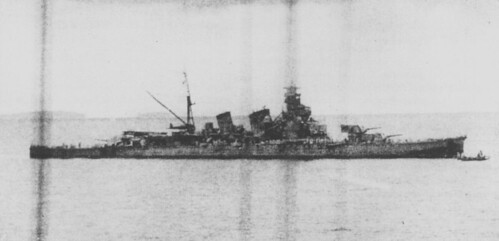
Showing posts sorted by relevance for query " Battle of Savo Island". Sort by date Show all posts

Friday, August 12, 2011

Fullbore Friday

In honor of our guest this Sunday on Midrats - and encore edition of FbF.
The war is only 10 months old and two months after the defeat at the
Battle of Savo Island.

The night action of 10-11 OCT, sometimes know as the Second Battle of Savo Island - but usually as The Battle of Cape Esperance, is an excellent example of the critical importance of training, flexibility, initiative, and aggression - combined with a measure of luck. Luck is always essential, as even the most simple plans become complicated once the battle begins.

First background.
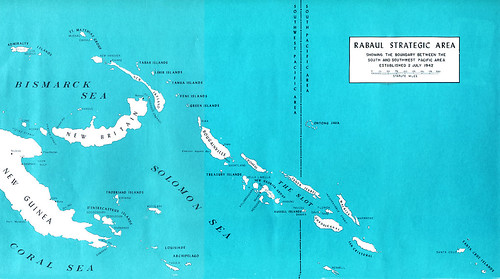
DIVISION 6 of the Imperial Japanese Navy was pretty pleased with itself following its engagement with the Americans off Savo the night of August 8-9, and perhaps with reason. The Japanese felt that they had won a victory, greater than their usual "victories," and although the loss of the KAKO outside the harbor of Kavieng following the battle had cut into their forces by a quarter, they felt themselves to be the backbone of Japan in the Solomons.

But the Americans still clung tenaciously to their ground in the Guadalcanal and Florida islands despite air raids and night bombardments from the "Tokyo Express. " And although their position was precarious, it wasn't enough so for the Jap.

If the Japanese headquarters on Rabaul was busy with plans for marshaling their strength for a knockdown battle for the Solomons, so were the Americans at Espiritu Santo. Something had to be done to stop the Japanese from reinforcing their troops, and from storming Marine positions from the sea, and obviously one way to do it was to reinforce our own land forces at Guadalcanal. For this, a large convoy with Army reinforcements for Guadalcanal was soon to depart from Noumea, in French New Caledonia, halfway between Fiji and Australia. By October 1 1 it would be about 250 miles west of Espiritu Santo, protected by two task forces: one built around the carrier HORNET, the other around the new battleship WASHINGTON.

In Espiritu was a newly organized task force. Its ships had engaged only in target practice together but they were good ships. It would do well, as protection for the left flank of the Army convoy approaching Guadalcanal, to station this task force off the southern shore of that island to intercept any enemy units moving in from the west.


Remember, this is still the "go to war with the Navy you have" part of the war, as the entire Solomon Islands Campaign was.

The post Midway march to Tokyo was on, but this was only the beginning of the beginning.

Let's look at the lineup.


USN:
TF 64

Rear-Admiral Norman C. Scott
IJN:
Bombardment Group

Rear-Admiral Goto
And so, off they went.
Departing New Caledonia on October 8, ships carrying the US 164th Infantry moved north towards Guadalcanal. To screen this convoy, Vice Admiral Robert Ghormley assigned Task Force 64 ... to operate near the island. ... Initially taking station off Rennell Island, Hall moved north on the 11th after receiving reports that Japanese ships had been sited in The Slot.
MicroWorks calls this "Stumbling into Victory." That is one way to look at it.

Me? I call it a lesson on the need for trusting your Commanding Officers with short, direct orders. As an editorial note for brevity, there are two IJN groups NW of Guadalcanal, Goto's Bombardment Group and RADM Jojima's landing force with 4,500 troops.
As he moved north, Hall, aware that the Americans had faired badly in previous night battles with the Japanese, crafted a simple battle plan. Ordering his ships to form a column with destroyers at the head and rear, he instructed them to illuminate any targets with their searchlights so that the cruisers could fire accurately. Hall also informed his captains that they were open fire when the enemy was sited rather than waiting for orders.

Approaching Cape Hunter on the northwest corner of Guadalcanal, Hall, flying his flag from San Francisco, ordered his cruisers to launch their float planes at 10:00 PM. An hour later, San Francisco's float plane sighted Jojima's force off of Guadalcanal. Expecting more Japanese ships to be sighted, Hall maintained his course northeast, passing to the west of Savo Island. Reversing course at 11:30, some confusion led to the three lead destroyers (Farenholt, Duncan, and Laffey) being out of position. About this time, Goto's ships began appearing on the American radars.

Initially believing these contacts to be the out of position destroyers, Hall took no action. As Farenholt and Laffey accelerated to reassume their proper positions, Duncan moved to attack the approaching Japanese ships.
But ahhhh, one man's brevity code is another's order.
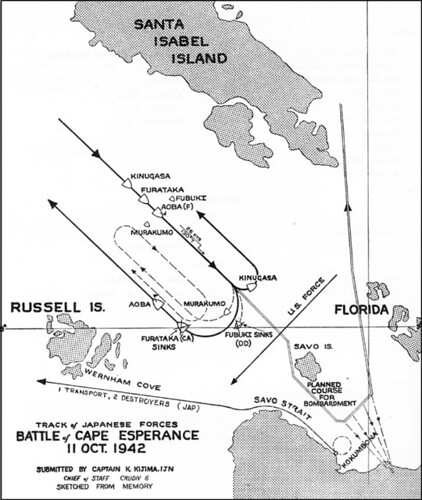
A mere 5000 yards distant Goto's ships were moving directly into the center of the American line, which Goto, deeply feeling that no American was present, considered to be Joshima's reinforcement group. It was up to Helena to teach him otherwise. Captain Hoover was certain he had the enemy before him and queried Scott to open fire. Scott replied, "Roger", which he intended as a confirmation of receipt, but if unqualified it meant open fire as well, and Hoover interpreted it as such. He switched on his searchlights, aiming them on Hatsuyuki, the left-wing destroyer, and opened fire with his fifteen 155mm guns at 2346.
That action caught Scott off-guard, but he did not prevent the rest of his line from opening fire on the enemy. Duncan, now only a few hundred yards from Kinugasa, joined in, but was quickly disabled.
Another account describes this classic thus;
At 11:45, Goto's ships were visible to the American lookouts and Helena radioed asking permission to open fire using the general procedure request, "Interrogatory Roger" (meaning "are we clear to act"). Hall responded in the affirmative, and his surprise the entire American line opened fire. Aboard his flagship, Aoba, Goto was taken by complete surprise.
Let's talk about VADM Goto for a second. In a battle that lasted only 30 minutes, the first few were an all-American show. Why? Well, confusion and an inability to realize that your plan was no longer going to happen and that all you were told was wrong. The enemy always gets a vote.
Gotō's force was taken almost completely by surprise. At 23:43 Aoba's lookouts sighted Scott's force, but Gotō assumed that they were Jojima's ships. Two minutes later, Aoba's lookouts identified the ships as American, but Gotō remained skeptical and directed his ships to flash identification signals. As Aoba's crew executed Gotō's order, the first American salvo smashed into Aoba's superstructure. Aoba was quickly hit by up to 40 shells from Helena, Salt Lake City, San Francisco, Farenholt, and Laffey. The shell hits heavily damaged Aoba's communications systems and demolished two of her main gun turrets as well as her main gun director. Several large-caliber projectiles passed through Aoba's flag bridge without exploding, but the force of their passage killed many men and mortally wounded Gotō.
CAPT Kijuma, VADM Goto's Chief of Staff stated,
"At first we thought the fire was from our own supply ships. It was a surprise attack. All ships but the KINUGASA immediately reversed course to the right. Due to the shellfire and the congestion, the KINUGASA turned left. As a result of
this turn the KINUGASA only received minor damage from three hits. The AOBA was hit about forty times and was badly damaged. The FURUTAKA and FUBUKI were sunk. The FUBUKI sank before it completed the turn, although it only received four hits. Due to the smoke from the AOBA, the MURAKUMO was not hit. The KINUGASA did most of the fighting for our force.

"Soon after the action started Admiral Goto was mortally wounded. While he was dying, I told him that he could die with easy mind because we had sunk two of your heavy cruisers.

"Following this action we retired to the northwest. The MURAKUMO turned back and rescued about four hundred survivors. When your forces reappeared it departed the area trying to make you chase it within range of our aircraft."
Chaos, on both sides.
Over the next few minutes, Aoba was hit more than 40 times by Helena, Salt Lake City, San Francisco, Farenholt, and Laffey. Burning, with many of its guns out of action and Goto dead, Aoba turned to disengage. At 11:47, concerned that he was firing on his own ships, Hall ordered a ceasefire and asked his destroyers to confirm their positions. This done, the American ships resumed firing at 11:51 and pummeled the cruiser Furutaka. Burning from a hit to its torpedo tubes, Furutaka lost power after taking a torpedo from Buchanan. While the cruiser was burning, the Americans shifted their fire to the destroyer Fubuki sinking it.
Two minutes of firing - four minutes of "where and the h311 is everyone" and then firing again. That 4 minutes must have seemed like an hour.
As the battle raged, the cruiser Kinugasa and destoryer Hatsuyuki turned away and missed the brunt of the American attack. Pursuing the fleeing Japanese ships, Boise was nearly hit by torpedoes from Kinugasa at 12:06 AM. Turning on their search lights to illuminate the Japanese cruiser, Boise and Salt Lake City immediately took fire, with the former taking a hit to its magazine. At 12:20, with the Japanese retreating and his ships disorganized, Hall broke off the action.

Later that night, Furutaka sank as result of battle damage, and Duncan was lost to raging fires. Learning of the bombardment force's crisis, Jojima detached four destroyers to its aid after disembarking his troops. The next day, two of these, Murakumo and Shirayuki, were sunk by aircraft from Henderson Field.
The end result of the battle was a complete smacking. Losses:

USN:
  • 1 destroyer sunk,
  • 1 cruiser,
  • 1 destroyer heavily damaged,
  • 163 killed
IJN:
  • 1 cruiser,
  • 3 destroyers sunk,
  • 1 cruiser heavily damaged,
  • 341–454 killed,
  • 111 captured
This was unquestionably a great tactical victory for the USN, but an operational failure as Jojima was still able to get his troops ashore. It also did not supply the right lessons to take forward as we continued not to appreciate the true night fighting capabilities of the IJN and the exceptional danger posed by the Long Lancetorpedo.

This battle was the happy middle between two sobering hammers - The Battle of Savo Island for one, and two months later
Tassafaronga. In the end, I think this best catches the results,
A junior officer on Helena later wrote, "Cape Esperance was a three-sided battle in which chance was the major winner."
A great take-away would be this quote that could be heard after any sea battle for the last 2,500 years, I bet.
In the words of one petty officer who was overheard talking with another on the way back to Espiritu Santo, "I'll never complain of another drill, and I'll deck the man who does."
BTW, that quote and a few others come from Battle Report: Pacific War: Middle Phase by CDR Walter Purdon, USN and CAPT Eric Karig, USN which you can get for free online here, or get the 1947 hardback original here.


This will be crossposted at USNIBlog as part of the SJS led Solomon Islands Campaign thread.

Friday, August 21, 2009

Fullbore Friday

The war is only 10 months old and two months after the defeat at the Battle of Savo Island.

The night action of 10-11 OCT, sometimes know as the Second Battle of Savo Island - but usually as The Battle of Cape Esperance, is an excellent example of the critical importance of training, flexibility, initiative, and aggression - combined with a measure of luck. Luck is always essential, as even the most simple plans become complicated once the battle begins.

First background.
DIVISION 6 of the Imperial Japanese Navy was pretty pleased with itself following its engagement with the Americans off Savo the night of August 8-9, and perhaps with reason. The Japanese felt that they had won a victory, greater than their usual "victories," and although the loss of the KAKO outside the harbor of Kavieng following the battle had cut into their forces by a quarter, they felt themselves to be the backbone of Japan in the Solomons.

But the Americans still clung tenaciously to their ground in the Guadalcanal and Florida islands despite air raids and night bombardments from the "Tokyo Express. " And although their position was precarious, it wasn't enough so for the Jap.

If the Japanese headquarters on Rabaul was busy with plans for marshaling their strength for a knockdown battle for the Solomons, so were the Americans at Espiritu Santo. Something had to be done to stop the Japanese from reinforcing their troops, and from storming Marine positions from the sea, and obviously one way to do it was to reinforce our own land forces at Guadalcanal. For this, a large convoy with Army reinforcements for Guadalcanal was soon to depart from Noumea, in French New Caledonia, halfway between Fiji and Australia. By October 1 1 it would be about 250 miles west of Espiritu Santo, protected by two task forces: one built around the carrier HORNET, the other around the new battleship WASHINGTON.

In Espiritu was a newly organized task force. Its ships had engaged only in target practice together but they were good ships. It would do well, as protection for the left flank of the Army convoy approaching Guadalcanal, to station this task force off the southern shore of that island to intercept any enemy units moving in from the west.


Remember, this is still the "go to war with the Navy you have" part of the war, as the entire Solomon Islands Campaign was.

The post Midway march to Tokyo was on, but this was only the beginning of the beginning.

Let's look at the lineup.


USN:
TF 64

Rear-Admiral Norman C. Scott
IJN:
Bombardment Group

Rear-Admiral Goto
And so, off they went.
Departing New Caledonia on October 8, ships carrying the US 164th Infantry moved north towards Guadalcanal. To screen this convoy, Vice Admiral Robert Ghormley assigned Task Force 64 ... to operate near the island. ... Initially taking station off Rennell Island, Hall moved north on the 11th after receiving reports that Japanese ships had been sited in The Slot.
MicroWorks calls this "Stumbling into Victory." That is one way to look at it.

Me? I call it a lesson on the need for trusting your Commanding Officers with short, direct orders. As an editorial note for brevity, there are two IJN groups NW of Guadalcanal, Goto's Bombardment Group and RADM Jojima's landing force with 4,500 troops.
As he moved north, Hall, aware that the Americans had faired badly in previous night battles with the Japanese, crafted a simple battle plan. Ordering his ships to form a column with destroyers at the head and rear, he instructed them to illuminate any targets with their searchlights so that the cruisers could fire accurately. Hall also informed his captains that they were open fire when the enemy was sited rather than waiting for orders.

Approaching Cape Hunter on the northwest corner of Guadalcanal, Hall, flying his flag from San Francisco, ordered his cruisers to launch their float planes at 10:00 PM. An hour later, San Francisco's float plane sighted Jojima's force off of Guadalcanal. Expecting more Japanese ships to be sighted, Hall maintained his course northeast, passing to the west of Savo Island. Reversing course at 11:30, some confusion led to the three lead destroyers (Farenholt, Duncan, and Laffey) being out of position. About this time, Goto's ships began appearing on the American radars.

Initially believing these contacts to be the out of position destroyers, Hall took no action. As Farenholt and Laffey accelerated to reassume their proper positions, Duncan moved to attack the approaching Japanese ships.
But ahhhh, one man's brevity code is another's order.
A mere 5000 yards distant Goto's ships were moving directly into the center of the American line, which Goto, deeply feeling that no American was present, considered to be Joshima's reinforcement group. It was up to Helena to teach him otherwise. Captain Hoover was certain he had the enemy before him and queried Scott to open fire. Scott replied, "Roger", which he intended as a confirmation of receipt, but if unqualified it meant open fire as well, and Hoover interpreted it as such. He switched on his searchlights, aiming them on Hatsuyuki, the left-wing destroyer, and opened fire with his fifteen 155mm guns at 2346.

That action caught Scott off-guard, but he did not prevent the rest of his line from opening fire on the enemy. Duncan, now only a few hundred yards from Kinugasa, joined in, but was quickly disabled.
Another account describes this classic thus;
At 11:45, Goto's ships were visible to the American lookouts and Helena radioed asking permission to open fire using the general procedure request, "Interrogatory Roger" (meaning "are we clear to act"). Hall responded in the affirmative, and his surprise the entire American line opened fire. Aboard his flagship, Aoba, Goto was taken by complete surprise.
Let's talk about VADM Goto for a second. In a battle that lasted only 30 minutes, the first few were an all-American show. Why? Well, confusion and an inability to realize that your plan was no longer going to happen and that all you were told was wrong. The enemy always gets a vote.
Gotō's force was taken almost completely by surprise. At 23:43 Aoba's lookouts sighted Scott's force, but Gotō assumed that they were Jojima's ships. Two minutes later, Aoba's lookouts identified the ships as American, but Gotō remained skeptical and directed his ships to flash identification signals. As Aoba's crew executed Gotō's order, the first American salvo smashed into Aoba's superstructure. Aoba was quickly hit by up to 40 shells from Helena, Salt Lake City, San Francisco, Farenholt, and Laffey. The shell hits heavily damaged Aoba's communications systems and demolished two of her main gun turrets as well as her main gun director. Several large-caliber projectiles passed through Aoba's flag bridge without exploding, but the force of their passage killed many men and mortally wounded Gotō.
CAPT Kijuma, VADM Goto's Chief of Staff stated,
"At first we thought the fire was from our own supply ships. It was a surprise attack. All ships but the KINUGASA immediately reversed course to the right. Due to the shellfire and the congestion, the KINUGASA turned left. As a result of
this turn the KINUGASA only received minor damage from three hits. The AOBA was hit about forty times and was badly damaged. The FURUTAKA and FUBUKI were sunk. The FUBUKI sank before it completed the turn, although it only received four hits. Due to the smoke from the AOBA, the MURAKUMO was not hit. The KINUGASA did most of the fighting for our force.

"Soon after the action started Admiral Goto was mortally wounded. While he was dying, I told him that he could die with easy mind because we had sunk two of your heavy cruisers.

"Following this action we retired to the northwest. The MURAKUMO turned back and rescued about four hundred survivors. When your forces reappeared it departed the area trying to make you chase it within range of our aircraft."
Chaos, on both sides.
Over the next few minutes, Aoba was hit more than 40 times by Helena, Salt Lake City, San Francisco, Farenholt, and Laffey. Burning, with many of its guns out of action and Goto dead, Aoba turned to disengage. At 11:47, concerned that he was firing on his own ships, Hall ordered a ceasefire and asked his destroyers to confirm their positions. This done, the American ships resumed firing at 11:51 and pummeled the cruiser Furutaka. Burning from a hit to its torpedo tubes, Furutaka lost power after taking a torpedo from Buchanan. While the cruiser was burning, the Americans shifted their fire to the destroyer Fubuki sinking it.
Two minutes of firing - four minutes of "where and the h311 is everyone" and then firing again. That 4 minutes must have seemed like an hour.
As the battle raged, the cruiser Kinugasa and destoryer Hatsuyuki turned away and missed the brunt of the American attack. Pursuing the fleeing Japanese ships, Boise was nearly hit by torpedoes from Kinugasa at 12:06 AM. Turning on their search lights to illuminate the Japanese cruiser, Boise and Salt Lake City immediately took fire, with the former taking a hit to its magazine. At 12:20, with the Japanese retreating and his ships disorganized, Hall broke off the action.

Later that night, Furutaka sank as result of battle damage, and Duncan was lost to raging fires. Learning of the bombardment force's crisis, Jojima detached four destroyers to its aid after disembarking his troops. The next day, two of these, Murakumo and Shirayuki, were sunk by aircraft from Henderson Field.
The end result of the battle was a complete smacking. Losses:

USN:
  • 1 destroyer sunk,
  • 1 cruiser,
  • 1 destroyer heavily damaged,
  • 163 killed
IJN:
  • 1 cruiser,
  • 3 destroyers sunk,
  • 1 cruiser heavily damaged,
  • 341–454 killed,
  • 111 captured
This was unquestionably a great tactical victory for the USN, but an operational failure as Jojima was still able to get his troops ashore. It also did not supply the right lessons to take forward as we continued not to appreciate the true night fighting capabilities of the IJN and the exceptional danger posed by the Long Lance torpedo.

This battle was the happy middle between two sobering hammers - The Battle of Savo Island for one, and two months later
Tassafaronga. In the end, I think this best catches the results,
A junior officer on Helena later wrote, "Cape Esperance was a three-sided battle in which chance was the major winner."
A great take-away would be this quote that could be heard after any sea battle for the last 2,500 years, I bet.
In the words of one petty officer who was overheard talking with another on the way back to Espiritu Santo, "I'll never complain of another drill, and I'll deck the man who does."
BTW, that quote and a few others come from Battle Report: Pacific War: Middle Phase by CDR Walter Purdon, USN and CAPT Eric Karig, USN which you can get for free online here, or get the 1947 hardback original here.


This will be crossposted at USNIBlog as part of the SJS led Solomon Islands Campaign thread.

Friday, January 21, 2022

Fullbore Friday

The war is only 10 months old and two months after the defeat at the Battle of Savo Island.

The night action of 10-11 OCT, sometimes know as the Second Battle of Savo Island - but usually as The Battle of Cape Esperance, is an excellent example of the critical importance of training, flexibility, initiative, and aggression - combined with a measure of luck. Luck is always essential, as even the most simple plans become complicated once the battle begins.

First background.
DIVISION 6 of the Imperial Japanese Navy was pretty pleased with itself following its engagement with the Americans off Savo the night of August 8-9, and perhaps with reason. The Japanese felt that they had won a victory, greater than their usual "victories," and although the loss of the KAKO outside the harbor of Kavieng following the battle had cut into their forces by a quarter, they felt themselves to be the backbone of Japan in the Solomons.

But the Americans still clung tenaciously to their ground in the Guadalcanal and Florida islands despite air raids and night bombardments from the "Tokyo Express. " And although their position was precarious, it wasn't enough so for the Jap.

If the Japanese headquarters on Rabaul was busy with plans for marshaling their strength for a knockdown battle for the Solomons, so were the Americans at Espiritu Santo. Something had to be done to stop the Japanese from reinforcing their troops, and from storming Marine positions from the sea, and obviously one way to do it was to reinforce our own land forces at Guadalcanal. For this, a large convoy with Army reinforcements for Guadalcanal was soon to depart from Noumea, in French New Caledonia, halfway between Fiji and Australia. By October 1 1 it would be about 250 miles west of Espiritu Santo, protected by two task forces: one built around the carrier HORNET, the other around the new battleship WASHINGTON.

In Espiritu was a newly organized task force. Its ships had engaged only in target practice together but they were good ships. It would do well, as protection for the left flank of the Army convoy approaching Guadalcanal, to station this task force off the southern shore of that island to intercept any enemy units moving in from the west.


Remember, this is still the "go to war with the Navy you have" part of the war, as the entire Solomon Islands Campaign was.

The post Midway march to Tokyo was on, but this was only the beginning of the beginning.

Let's look at the lineup.


USN:
TF 64

Rear-Admiral Norman C. Scott

IJN:
Bombardment Group

Rear-Admiral Goto

And so, off they went.
Departing New Caledonia on October 8, ships carrying the US 164th Infantry moved north towards Guadalcanal. To screen this convoy, Vice Admiral Robert Ghormley assigned Task Force 64 ... to operate near the island. ... Initially taking station off Rennell Island, Hall moved north on the 11th after receiving reports that Japanese ships had been sited in The Slot.
MicroWorks calls this "Stumbling into Victory." That is one way to look at it.

Me? I call it a lesson on the need for trusting your Commanding Officers with short, direct orders. As an editorial note for brevity, there are two IJN groups NW of Guadalcanal, Goto's Bombardment Group and RADM Jojima's landing force with 4,500 troops.

As he moved north, Hall, aware that the Americans had faired badly in previous night battles with the Japanese, crafted a simple battle plan. Ordering his ships to form a column with destroyers at the head and rear, he instructed them to illuminate any targets with their searchlights so that the cruisers could fire accurately. Hall also informed his captains that they were open fire when the enemy was sited rather than waiting for orders.
Approaching Cape Hunter on the northwest corner of Guadalcanal, Hall, flying his flag from San Francisco, ordered his cruisers to launch their float planes at 10:00 PM. An hour later, San Francisco's float plane sighted Jojima's force off of Guadalcanal. Expecting more Japanese ships to be sighted, Hall maintained his course northeast, passing to the west of Savo Island. Reversing course at 11:30, some confusion led to the three lead destroyers (Farenholt, Duncan, and Laffey) being out of position. About this time, Goto's ships began appearing on the American radars.

Initially believing these contacts to be the out of position destroyers, Hall took no action. As Farenholt and Laffey accelerated to reassume their proper positions, Duncan moved to attack the approaching Japanese ships.
But ahhhh, one man's brevity code is another's order.
A mere 5000 yards distant Goto's ships were moving directly into the center of the American line, which Goto, deeply feeling that no American was present, considered to be Joshima's reinforcement group. It was up to Helena to teach him otherwise. Captain Hoover was certain he had the enemy before him and queried Scott to open fire. Scott replied, "Roger", which he intended as a confirmation of receipt, but if unqualified it meant open fire as well, and Hoover interpreted it as such. He switched on his searchlights, aiming them on Hatsuyuki, the left-wing destroyer, and opened fire with his fifteen 155mm guns at 2346.

That action caught Scott off-guard, but he did not prevent the rest of his line from opening fire on the enemy. Duncan, now only a few hundred yards from Kinugasa, joined in, but was quickly disabled.
Another account describes this classic thus;
At 11:45, Goto's ships were visible to the American lookouts and Helena radioed asking permission to open fire using the general procedure request, "Interrogatory Roger" (meaning "are we clear to act"). Hall responded in the affirmative, and his surprise the entire American line opened fire. Aboard his flagship, Aoba, Goto was taken by complete surprise.
Let's talk about VADM Goto for a second. In a battle that lasted only 30 minutes, the first few were an all-American show. Why? Well, confusion and an inability to realize that your plan was no longer going to happen and that all you were told was wrong. The enemy always gets a vote.
Gotō's force was taken almost completely by surprise. At 23:43 Aoba's lookouts sighted Scott's force, but Gotō assumed that they were Jojima's ships. Two minutes later, Aoba's lookouts identified the ships as American, but Gotō remained skeptical and directed his ships to flash identification signals. As Aoba's crew executed Gotō's order, the first American salvo smashed into Aoba's superstructure. Aoba was quickly hit by up to 40 shells from Helena, Salt Lake City, San Francisco, Farenholt, and Laffey. The shell hits heavily damaged Aoba's communications systems and demolished two of her main gun turrets as well as her main gun director. Several large-caliber projectiles passed through Aoba's flag bridge without exploding, but the force of their passage killed many men and mortally wounded Gotō.
CAPT Kijuma, VADM Goto's Chief of Staff stated,
"At first we thought the fire was from our own supply ships. It was a surprise attack. All ships but the KINUGASA immediately reversed course to the right. Due to the shellfire and the congestion, the KINUGASA turned left. As a result of
this turn the KINUGASA only received minor damage from three hits. The AOBA was hit about forty times and was badly damaged. The FURUTAKA and FUBUKI were sunk. The FUBUKI sank before it completed the turn, although it only received four hits. Due to the smoke from the AOBA, the MURAKUMO was not hit. The KINUGASA did most of the fighting for our force.

"Soon after the action started Admiral Goto was mortally wounded. While he was dying, I told him that he could die with easy mind because we had sunk two of your heavy cruisers.

"Following this action we retired to the northwest. The MURAKUMO turned back and rescued about four hundred survivors. When your forces reappeared it departed the area trying to make you chase it within range of our aircraft."
Chaos, on both sides.
Over the next few minutes, Aoba was hit more than 40 times by Helena, Salt Lake City, San Francisco, Farenholt, and Laffey. Burning, with many of its guns out of action and Goto dead, Aoba turned to disengage. At 11:47, concerned that he was firing on his own ships, Hall ordered a ceasefire and asked his destroyers to confirm their positions. This done, the American ships resumed firing at 11:51 and pummeled the cruiser Furutaka. Burning from a hit to its torpedo tubes, Furutaka lost power after taking a torpedo from Buchanan. While the cruiser was burning, the Americans shifted their fire to the destroyer Fubuki sinking it.
Two minutes of firing - four minutes of "where and the h311 is everyone" and then firing again. That 4 minutes must have seemed like an hour.
As the battle raged, the cruiser Kinugasa and destoryer Hatsuyuki turned away and missed the brunt of the American attack. Pursuing the fleeing Japanese ships, Boise was nearly hit by torpedoes from Kinugasa at 12:06 AM. Turning on their search lights to illuminate the Japanese cruiser, Boise and Salt Lake City immediately took fire, with the former taking a hit to its magazine. At 12:20, with the Japanese retreating and his ships disorganized, Hall broke off the action.

Later that night, Furutaka sank as result of battle damage, and Duncan was lost to raging fires. Learning of the bombardment force's crisis, Jojima detached four destroyers to its aid after disembarking his troops. The next day, two of these, Murakumo and Shirayuki, were sunk by aircraft from Henderson Field.
The end result of the battle was a complete smacking. Losses:

USN:
  • 1 destroyer sunk,
  • 1 cruiser,
  • 1 destroyer heavily damaged,
  • 163 killed
IJN:
  • 1 cruiser,
  • 3 destroyers sunk,
  • 1 cruiser heavily damaged,
  • 341–454 killed,
  • 111 captured
This was unquestionably a great tactical victory for the USN, but an operational failure as Jojima was still able to get his troops ashore. It also did not supply the right lessons to take forward as we continued not to appreciate the true night fighting capabilities of the IJN and the exceptional danger posed by the Long Lance torpedo.

This battle was the happy middle between two sobering hammers - The Battle of Savo Island for one, and two months later 
Tassafaronga. In the end, I think this best catches the results,
A junior officer on Helena later wrote, "Cape Esperance was a three-sided battle in which chance was the major winner."
A great take-away would be this quote that could be heard after any sea battle for the last 2,500 years, I bet.
In the words of one petty officer who was overheard talking with another on the way back to Espiritu Santo, "I'll never complain of another drill, and I'll deck the man who does."
BTW, that quote and a few others come from Battle Report: Pacific War: Middle Phase by CDR Walter Purdon, USN and CAPT Eric Karig, USN which you can get here.


This will be crossposted at USNIBlog as part of the SJS led Solomon Islands Campaign thread.
First posted in AUG09.

Friday, October 30, 2015

Fullbore Friday

Before OCT is out, let's bring back a good reading FbF from six years ago.

The war is only 10 months old and two months after the defeat at the Battle of Savo Island.

The night action of 10-11 OCT, sometimes know as the Second Battle of Savo Island - but usually as The Battle of Cape Esperance, is an excellent example of the critical importance of training, flexibility, initiative, and aggression - combined with a measure of luck. Luck is always essential, as even the most simple plans become complicated once the battle begins.

First background.
DIVISION 6 of the Imperial Japanese Navy was pretty pleased with itself following its engagement with the Americans off Savo the night of August 8-9, and perhaps with reason. The Japanese felt that they had won a victory, greater than their usual "victories," and although the loss of the KAKO outside the harbor of Kavieng following the battle had cut into their forces by a quarter, they felt themselves to be the backbone of Japan in the Solomons.

But the Americans still clung tenaciously to their ground in the Guadalcanal and Florida islands despite air raids and night bombardments from the "Tokyo Express. " And although their position was precarious, it wasn't enough so for the Jap.

If the Japanese headquarters on Rabaul was busy with plans for marshaling their strength for a knockdown battle for the Solomons, so were the Americans at Espiritu Santo. Something had to be done to stop the Japanese from reinforcing their troops, and from storming Marine positions from the sea, and obviously one way to do it was to reinforce our own land forces at Guadalcanal. For this, a large convoy with Army reinforcements for Guadalcanal was soon to depart from Noumea, in French New Caledonia, halfway between Fiji and Australia. By October 1 1 it would be about 250 miles west of Espiritu Santo, protected by two task forces: one built around the carrier HORNET, the other around the new battleship WASHINGTON.

In Espiritu was a newly organized task force. Its ships had engaged only in target practice together but they were good ships. It would do well, as protection for the left flank of the Army convoy approaching Guadalcanal, to station this task force off the southern shore of that island to intercept any enemy units moving in from the west.


Remember, this is still the "go to war with the Navy you have" part of the war, as the entire Solomon Islands Campaign was.

The post Midway march to Tokyo was on, but this was only the beginning of the beginning.

Let's look at the lineup.


USN:
TF 64

Rear-Admiral Norman C. Scott

IJN:
Bombardment Group

Rear-Admiral Goto

And so, off they went.
Departing New Caledonia on October 8, ships carrying the US 164th Infantry moved north towards Guadalcanal. To screen this convoy, Vice Admiral Robert Ghormley assigned Task Force 64 ... to operate near the island. ... Initially taking station off Rennell Island, Hall moved north on the 11th after receiving reports that Japanese ships had been sited in The Slot.
MicroWorks calls this "Stumbling into Victory." That is one way to look at it.

Me? I call it a lesson on the need for trusting your Commanding Officers with short, direct orders. As an editorial note for brevity, there are two IJN groups NW of Guadalcanal, Goto's Bombardment Group and RADM Jojima's landing force with 4,500 troops.

As he moved north, Hall, aware that the Americans had faired badly in previous night battles with the Japanese, crafted a simple battle plan. Ordering his ships to form a column with destroyers at the head and rear, he instructed them to illuminate any targets with their searchlights so that the cruisers could fire accurately. Hall also informed his captains that they were open fire when the enemy was sited rather than waiting for orders.
Approaching Cape Hunter on the northwest corner of Guadalcanal, Hall, flying his flag from San Francisco, ordered his cruisers to launch their float planes at 10:00 PM. An hour later, San Francisco's float plane sighted Jojima's force off of Guadalcanal. Expecting more Japanese ships to be sighted, Hall maintained his course northeast, passing to the west of Savo Island. Reversing course at 11:30, some confusion led to the three lead destroyers (Farenholt, Duncan, and Laffey) being out of position. About this time, Goto's ships began appearing on the American radars.

Initially believing these contacts to be the out of position destroyers, Hall took no action. As Farenholt and Laffey accelerated to reassume their proper positions, Duncan moved to attack the approaching Japanese ships.
But ahhhh, one man's brevity code is another's order.
A mere 5000 yards distant Goto's ships were moving directly into the center of the American line, which Goto, deeply feeling that no American was present, considered to be Joshima's reinforcement group. It was up to Helena to teach him otherwise. Captain Hoover was certain he had the enemy before him and queried Scott to open fire. Scott replied, "Roger", which he intended as a confirmation of receipt, but if unqualified it meant open fire as well, and Hoover interpreted it as such. He switched on his searchlights, aiming them on Hatsuyuki, the left-wing destroyer, and opened fire with his fifteen 155mm guns at 2346.

That action caught Scott off-guard, but he did not prevent the rest of his line from opening fire on the enemy. Duncan, now only a few hundred yards from Kinugasa, joined in, but was quickly disabled.
Another account describes this classic thus;
At 11:45, Goto's ships were visible to the American lookouts and Helena radioed asking permission to open fire using the general procedure request, "Interrogatory Roger" (meaning "are we clear to act"). Hall responded in the affirmative, and his surprise the entire American line opened fire. Aboard his flagship, Aoba, Goto was taken by complete surprise.
Let's talk about VADM Goto for a second. In a battle that lasted only 30 minutes, the first few were an all-American show. Why? Well, confusion and an inability to realize that your plan was no longer going to happen and that all you were told was wrong. The enemy always gets a vote.
Gotō's force was taken almost completely by surprise. At 23:43 Aoba's lookouts sighted Scott's force, but Gotō assumed that they were Jojima's ships. Two minutes later, Aoba's lookouts identified the ships as American, but Gotō remained skeptical and directed his ships to flash identification signals. As Aoba's crew executed Gotō's order, the first American salvo smashed into Aoba's superstructure. Aoba was quickly hit by up to 40 shells from Helena, Salt Lake City, San Francisco, Farenholt, and Laffey. The shell hits heavily damaged Aoba's communications systems and demolished two of her main gun turrets as well as her main gun director. Several large-caliber projectiles passed through Aoba's flag bridge without exploding, but the force of their passage killed many men and mortally wounded Gotō.
CAPT Kijuma, VADM Goto's Chief of Staff stated,
"At first we thought the fire was from our own supply ships. It was a surprise attack. All ships but the KINUGASA immediately reversed course to the right. Due to the shellfire and the congestion, the KINUGASA turned left. As a result of
this turn the KINUGASA only received minor damage from three hits. The AOBA was hit about forty times and was badly damaged. The FURUTAKA and FUBUKI were sunk. The FUBUKI sank before it completed the turn, although it only received four hits. Due to the smoke from the AOBA, the MURAKUMO was not hit. The KINUGASA did most of the fighting for our force.

"Soon after the action started Admiral Goto was mortally wounded. While he was dying, I told him that he could die with easy mind because we had sunk two of your heavy cruisers.

"Following this action we retired to the northwest. The MURAKUMO turned back and rescued about four hundred survivors. When your forces reappeared it departed the area trying to make you chase it within range of our aircraft."
Chaos, on both sides.
Over the next few minutes, Aoba was hit more than 40 times by Helena, Salt Lake City, San Francisco, Farenholt, and Laffey. Burning, with many of its guns out of action and Goto dead, Aoba turned to disengage. At 11:47, concerned that he was firing on his own ships, Hall ordered a ceasefire and asked his destroyers to confirm their positions. This done, the American ships resumed firing at 11:51 and pummeled the cruiser Furutaka. Burning from a hit to its torpedo tubes, Furutaka lost power after taking a torpedo from Buchanan. While the cruiser was burning, the Americans shifted their fire to the destroyer Fubuki sinking it.
Two minutes of firing - four minutes of "where and the h311 is everyone" and then firing again. That 4 minutes must have seemed like an hour.
As the battle raged, the cruiser Kinugasa and destoryer Hatsuyuki turned away and missed the brunt of the American attack. Pursuing the fleeing Japanese ships, Boise was nearly hit by torpedoes from Kinugasa at 12:06 AM. Turning on their search lights to illuminate the Japanese cruiser, Boise and Salt Lake City immediately took fire, with the former taking a hit to its magazine. At 12:20, with the Japanese retreating and his ships disorganized, Hall broke off the action.

Later that night, Furutaka sank as result of battle damage, and Duncan was lost to raging fires. Learning of the bombardment force's crisis, Jojima detached four destroyers to its aid after disembarking his troops. The next day, two of these, Murakumo and Shirayuki, were sunk by aircraft from Henderson Field.
The end result of the battle was a complete smacking. Losses:

USN:
  • 1 destroyer sunk,
  • 1 cruiser,
  • 1 destroyer heavily damaged,
  • 163 killed
IJN:
  • 1 cruiser,
  • 3 destroyers sunk,
  • 1 cruiser heavily damaged,
  • 341–454 killed,
  • 111 captured
This was unquestionably a great tactical victory for the USN, but an operational failure as Jojima was still able to get his troops ashore. It also did not supply the right lessons to take forward as we continued not to appreciate the true night fighting capabilities of the IJN and the exceptional danger posed by the Long Lance torpedo.

This battle was the happy middle between two sobering hammers - The Battle of Savo Island for one, and two months later
Tassafaronga. In the end, I think this best catches the results,
A junior officer on Helena later wrote, "Cape Esperance was a three-sided battle in which chance was the major winner."
A great take-away would be this quote that could be heard after any sea battle for the last 2,500 years, I bet.
In the words of one petty officer who was overheard talking with another on the way back to Espiritu Santo, "I'll never complain of another drill, and I'll deck the man who does."
BTW, that quote and a few others come from Battle Report: Pacific War: Middle Phase by CDR Walter Purdon, USN and CAPT Eric Karig, USN which you can get for free online here, or get the 1947 hardback original here.


This will be crossposted at USNIBlog as part of the SJS led Solomon Islands Campaign thread.
Tuesday, August 09, 2005

First Battle of Savo Island

The worst defeat of the United States Navy.

The Battle of Savo Island
. A battle that shouldn’t have really happened, but it did. By any measure, the Japanese should have been quickly and decisively defeater, but they weren’t. American and allied navies were driven away at a critical point in the Guadalcanal campaign by a much smaller force, and through their defeat gave name to a body of water soon to be known as Ironbottom Sound.

This was a huge intelligence failure on both sides (I blame Bush, Rumsfeld, and the Neocons), but the lessons here are stark, important, and relavent today; training, initiative, clear command, aggressiveness, and weapons that work will win the day….plus plain old dumb luck. Lady luck was with the IJN this day. Lets take out the MOBOARD.

Forces:
  • IJN: 5 Heavy Cruisers (CA), 2 Light Cruisers (CL), 1 Destroyer (DD)
  • USN-RAN: 6 CA, 2 CL, 8 DD

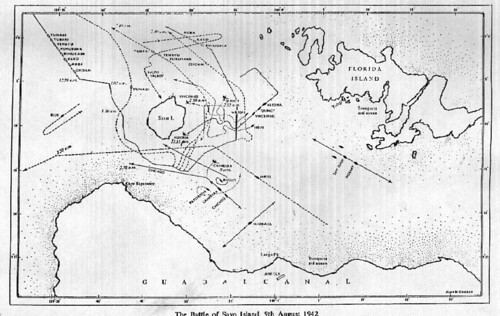
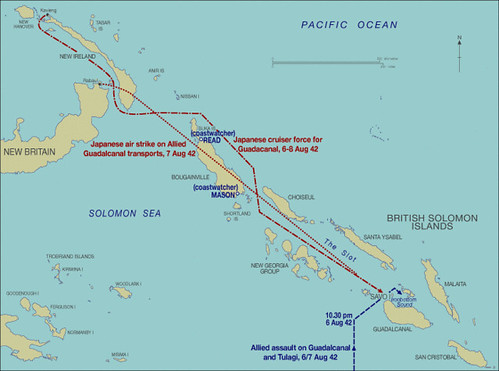
  • Prelude: IJN COMEIGHTFLT VADM Mikawa out of Rabul had at his disposal CA Chokai at 13,000 tones with 10 203mm guns and 24 torpedo tubes (we covered the joy of the “Long Lance” torpedo before). Additionally he had RADM Aritomo’s CRUDIVSIX’s six CA; Aoba, Kinugasa, Furutaka, Kako. Also in the area was RADM Matsuyama CRUDIVONEEIGHT’s CL Tenryu and Yubari with the one DD in his two DESDIVs that was available, the DD Yunagi. In reaction to the American landing in the Solomon Islands, they made their run down “The Slot.”

    Waiting for them were parts of VADM Fletcher, RADM Crutchley (RN attached to the RAN) and RADM Turner’s forces. Overall they had a force of 3 Carriers (CV) with 140 planes, 1 Battleship (BB), 14 Cruisers (CA/L), 31 DD, 5 Oilers, and 19 Transports conducting a not-very-efficient landing. Arrayed around Savo Island’s approaches though, they had 6 CA, 2 CL, and 8 DD.

    TF64 RADM Scott had the Eastern approaches with CL USS San Juan, CL HMAS Hobart, DD USS Monssen, DD USS Buchanan.

    Western approaches were covered by DD Blue and Ralph Talbot.

    Northern approaches under TG62.3 under CAPT Riefkohl with CA USS Vincennes, Astoria, and Quincy. Also DD USS Wilson and Helm.

    Southern approaches under TG62.2 RADM Crutchley, RN had CA HMAS Australia, Canberra, and USS Chicago with DD USS Patterson and Bagley.

    That’s the chessboard.

    Not everything is at is seemed. Numbers don’t mean everything. The Japanese were coming south with a complete Cruiser division that had extensive training together, with a focus on fighting at night, and were rightly confident with their ample supply of the “Long Lance.” At 1430 on 07 AUG VADM Mikawa got underway with a goal to be at Savo Island on 0001 on 09 AUG. Intel (got to love the N2 folks) told him there was no danger to him from the US carriers (worked out that way, but if the US was on his toes, the Admiral would have had 140 carrier planes to worry about).

    Speaking of the N2 folks, on the US side the reconnaissance plan had about everything in The Solomons covered…except….”The Slot.” Admiral Turner actually say this glaring mistake and directed that gap be filled, but due to the Byzantine chain-of-command from the Task Force-SOWESPACCOM-COMAIRSOPAC, it never took place. The afternoon of the 8th, a RAAF Hudson sighted the Japanese surface group, but by the report found its way to the Allied forces, it was reported as “3 Cruisers, 2 gunboats, and 2 seaplane tenders." This was quickly dismissed as not threat.

    Here is another lesson; don’t take all intel reports, especially single first ones, at face value. Also, the Allied forces staff evaluated what the Japanese “would do” with their force, not what they “could do.”

    Not seeing a threat, Admiral Turner called a meeting to go over plans as the landing at Guadalcanal was not (shock) going as planned. To make the meeting, RADM Crutchley left his TG with the CO of USS Chicago. The main force was without a Flag.

    Thus the evening of 08 AUG, The Ignorant met the Ill-briefed.

    Two days of Condition ONE watches had the Allied ships exhausted. The afternoon of 08 AUG (I think) they shifted to Condition TWO, so the “A Team” could send their exhausted tails to the rack after two days of coffee driven watches.

    09AUG
    0047: Mikawa saw Savo Island. With his ships at 22KTS, he slipped pass Blue at 10,000 yards unseen.
    0130: Increased speed to 30KTS. Northern and Southern groups sited.
    0131: First “Long Lance” fired.

    The rest was a slaughter.
    …the eerie silence over the sound was broken by the rolling thunder of Chokai's first eight-inch volley, aimed at Canberra.
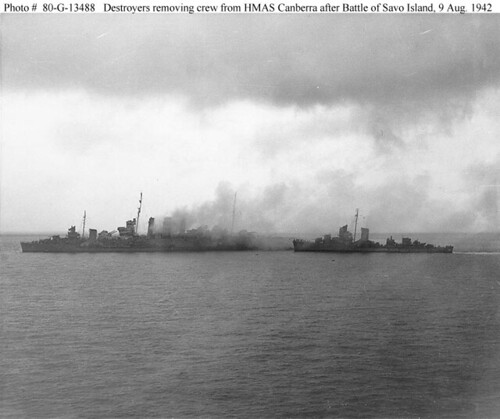
    On the latter, the sudden shock of gunfire from the north brought the bridge watch into action and Captain Getting to the bridge, but her engagement that night would be swift and violent. Turning northeast to unmask her aft batteries, Canberra was hit some twenty plus times in a matter of five minutes, lost power for her armament and pumps, and was rendered unable to fight with not a single main gun round fired. A single torpedo, fired by the destroyer Bagley, had also hit Canberra.

    Never even returned fire. Even hit by friendly fire.

    Now, I want everyone here to put yourself in the shoes of the unnamed XO of the USS Chicago. Odds are you are somewhere either on the bridge, walking around the ship. Though you have had little sleep in the last 2 days, you have to have your best watch teams resting now that you are in Condition TWO and do whatever you can as your CO is the TG Commander while the Limey Admiral is away getting facetime…
    On Chicago, hints at the presence of enemy ships had been seen earlier but not triggered a response. Captain Bode, in tactical command, was in his cabin, and hurried up. Even as aircraft flares blossomed over the Southern Group, and Canberra started her turn, few on Chicago figured out the facts. Chicago did not get to fire her 203mm guns either, when she began a series of maneuvers undertaken to evade torpedoes. Alas, confusion reigned on her bridge. Captain Bode, who had come up from his cabin, reports came in of torpedoes approaching from starboard. Bode turned his vessel towards that direction, leading his to comb the Japanese torpedo spread. However, moments later, the bridge lookouts spotted torpedoes to port, from on the unengaged side, possibly from the same spread of Bagley that had hit Canberra. Bode swung his ship around again, trying to comb the new thread, but by doing so, exposed the entire length of his ship to the Japanese torpedoes. One slammed in Chicago, crippling her. Slowly, she swung westward (via a southerly heading), out of the battle. Captain Bode, immersed in the plight of his ship, and fighting the damages incurred, ignored his role as task group commander and failed to issue orders to his ships or to inform his superiors of what had happened. Chicago shortly rendered fire support to the destroyer Patterson, which was dueling with Japanese light cruisers Yubari and Tenryu. From Patterson, the only contact report had been made by the Southern Group, issued by Commander Frank Walker via radio at 0146.
    ….or be a Gunner's Mate on the Patterson….
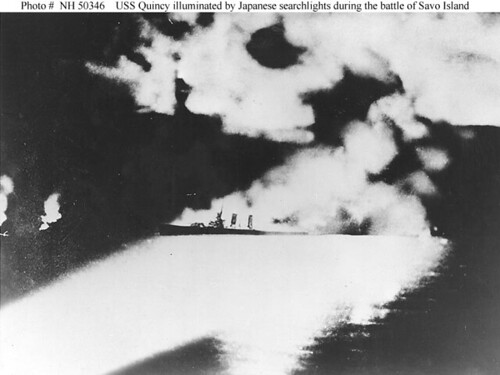
    Mikawa could allow himself a moment of pleasure when at 0150 the searchlights of three Japanese cruisers snapped on to light the U.S. line up. A moment later, the first salvo left Chokai's gun tubes, and soon the entire Japanese line was firing, with torpedoes added for good measure.
    On the U.S. ships, disbelief was the common reaction to the sudden illumination. Captains Riefkohl and Greenman (of Astoria) were certain they faced the Southern Group, accidently assuming their Allies to be the enemy. Soon, however, shells erased all hope that a peaceful conclusion could be found with a radio call or flag hoisting (although Riefkohl tried the latter with curious success lasting several minutes). Riefkohl ordered battle stations and twenty knots, the latter being made impossible by untimely interference from a torpedo from Chokai.
    Neither of the three heavy cruisers put up much of a fight, though two salvoes from Quincy slammed into Chokai, destroying a gun turret.
    … not later than 0220 that all three U.S. cruisers were reduced to swimming wrecks. There remained little to do for Mikawa, who kept to a new northwest course he had established during the brief engagement with the Northern Force. There, U.S. picket destroyer Ralph Talbot blundered into the Japanese path and was given an unhealthly large dose of fire. Burning and lisiting, only a rain squall at the right time saved the little ship from becoming another victim of Mikawa's. The Admiral, after consulting his staff,decided at shortly before three in the morning to cancel any further attacks and retire at top speed to Rabaul.
    The Allied navies stood around in shock.
    Vincennes had slipped under at 0300 already … Thirty minutes past midday, Astoria accompanied Vincennes and Quincy, having already sunk at 0238, down to the ground of Ironbottom Sound.


    I can’t do much better than the author's conclusion.
    There is, however, much more blame to spread around than could possibly be laid upon the commanders on the spot. The Allied operations plan was poor. Although the distribution of the forces could not be helped, the fact that there were only two flag officers with the three screening groups necessarily led to command problems. Captain Bode of Chicago can not be considered ill-suited for a task group command, but to control damage control efforts on his ship, designated a new course and general approach to the action for his vessel, worrying about torpedoes and the like, in addition to trying to control the rest of his force proved too much. The dogged skill of the Japanese torpedo men and gunners and the coolness of the Japanese approach added to the completeness of the victory by ascertaining that the initial blows would come out of the dark and be deadly at the same time. The engagement with the Southern Force had been decided in five minutes, and not much more time was needed to deal with the Northern Force, which had a slight advantage of strength, position and alertness over its southern counterpart. This combination of near flawless execution of a well-exercised operation by the Japanese, and the problematic layout of command and control arrangements on the Allied side led to the defeat of Savo; the worst naval defeat ever suffered by the U.S. Navy.

    The Butcher's Bill?

  • IJN:2 cruisers damaged, 58 dead, 70 wounded
  • USN/RAN: 4 cruisers sunk, 1 cruiser damaged, 2 destroyers damaged, 1,270 killed, 709 wounded
  • The lessons learned that day were not lost though. Our final victory in the Pacific tells that story. The important thing now is that in our everyday work, staffing, planning, and underway time – are we listening to those things written in blood? Are we earning it?