Friday, August 09, 2019

Fullbore Friday

In case anyone missed this at USNIBlog a years ago;

Can you lose but win?

Of course you can. The key is to understand that the Tactical, Operational, and Strategic are linked - but they are not perfectly linked and in alignment.

Let's look at the Tactical.

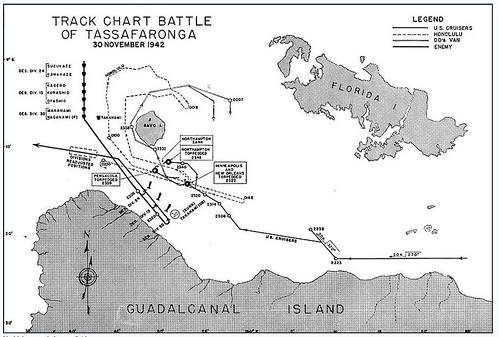
In the battle, a US warship force of five cruisers and four destroyers under the command of Rear Admiral Carleton H. Wright attempted to surprise and destroy a Japanese warship force of eight destroyers under the command of Rear Admiral Raizo Tanaka. Tanaka's warships were attempting to deliver food supplies to Japanese forces on Guadalcanal.

Using radar, the US warships opened fire and sank one of the Japanese destroyers. Tanaka and the rest of his ships, however, reacted quickly and launched numerous torpedoes at the US warships. The Japanese torpedoes hit and sank one US cruiser and heavily damaged three others, enabling the rest of Tanaka's force to escape without significant additional damage but also without completing the mission of delivering the food supplies.
All you need to know about Operational and Strategic is right there, but let's stick with the Tactical for a bit.

Do Commanders feel today that they are too limited in their ability to exercise their best judgement in combat? Well, consider it a Navy tradition.

At 23:14, operators on Fletcher established firm radar contact with Takanami and the lead group of four drum-carrying destroyers. At 23:15, with the range 7,000 yards (6,400 m), Commander William M. Cole, commander of Wright's destroyer group and captain of Fletcher, radioed Wright for permission to fire torpedoes. Wright waited two minutes and then responded with, "Range on bogies [Tanaka's ships on radar] excessive at present."[20] Cole responded that the range was fine. Another two minutes passed before Wright responded with permission to fire. In the meantime, the US destroyer's targets escaped from an optimum firing setup ahead to a marginal position passing abeam, giving the American torpedoes a long overtaking run near the limit of their range. At 23:20, Fletcher, Perkins, and Drayton fired a total of 20 Mark 15 torpedoes towards Tanaka's ships. Maury, lacking SG radar and thus having no contacts, withheld fire.
Amazing even in hindsight. Recall - the action from initial radar contact by FLETCHER at 2306 Tanaka's withdraw at 23:44 was only 38 minutes .... roughly 13% of the battle was spent waiting to be micromanaged. Recall that the Japanese did not have radar.

There is a point here that one should keep in mind. As opposed to the leisurely combat the USN has engaged in since WWII - mostly keeping station, supporting TACAIR operations or leisurely TLAM missions - this was as it is - quick, deadly, and devastating combat. Luck, speed, training, and finally your weapons determines success.

Knowing your enemy, and acknowledging that you may not fully know him, is also critical.
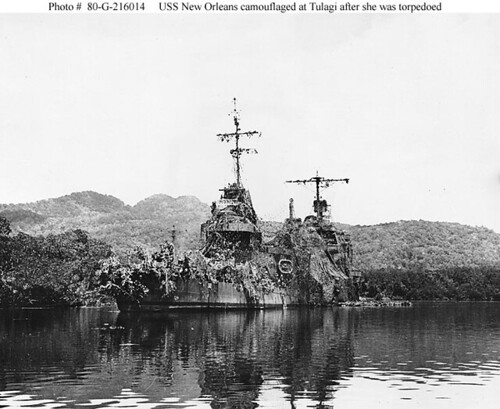
The results of the battle led to further discussion in the US Pacific Fleet about changes in tactical doctrine and the need for technical improvements, such as flashless gunpowder and improved torpedoes. The Americans were still unaware of the range and power of Japanese torpedoes and the effectiveness of Japanese night battle tactics. In fact, Wright claimed that his ships must have been fired on by submarines since the observed position of Tanaka's ships "make it improbable that torpedoes with speed-distance characteristics similar to our own" could have caused such damage. The Americans would not recognize the true capabilities of their Pacific adversary's torpedoes and night tactics until well into 1943.
Logistics.
Due to a combination of the threat from CAF aircraft, US Navy PT boats stationed at Tulagi, and a cycle of bright moonlight, the Japanese had switched to using submarines to deliver provisions to their forces on Guadalcanal. Beginning on November 16, 1942, and continuing for the next three weeks, 16 submarines made nocturnal deliveries of foodstuffs to the island, with one submarine making the trip each night. Each submarine could deliver 20 to 30 tons of supplies, about one day's worth of food, for the 17th Army, but the difficult task of transporting the supplies by hand through the jungle to the frontline units limited their value to sustain the Japanese troops on Guadalcanal. At the same time, the Japanese tried to establish a chain of three bases in the central Solomons to allow small boats to use them as staging sites for making supply deliveries to Guadalcanal, but damaging Allied airstrikes on the bases forced the abandonment of this plan.[9]

On November 26, the 17th Army notified Imamura that it faced a critical food crisis. Some front-line units had not been resupplied for six days and even the rear-area troops were on one-third rations. The situation forced the Japanese to return to using destroyers to deliver the necessary supplies.
And that is where we get the success of the battle. If all you do is count ships sunk and damages, then sure The Battle of Tassafaronga was a loss for the USA. Cole and Wright sure saw it that way - as do many. But was it really?

What were the Japanese trying to do? What was their Operational Center of Gravity (CoG)? Of course, it was keeping their land forces supplied ashore. By preventing their resupply, you attack and weaken the Japanese CoG .... therefor, at the Operational (and arguably Strategic as well) you actually won.

Not too different from the American experience with Tet. The USA and South Vietnamese forces destroyed the Viet Cong during Tet - effectively removing them from being a threat to the existence of the South Vietnam government. That wasn't the point .... as that wasn't the war's Strategic CoG.

Thanks to a superior INFO OPS and PSYOPS campaign by the North Vietnamese along with their allies and useful assistance by the likes of Walter Cronkite, Tet was an exceptional victory by the Communists as it significantly undermined the Strategic CoG of the Americans - the support of the American people.

There are two examples of why one should be very careful when declaring a victory or defeat. Perspective and a clear understanding of the larger issue is key.

Finally, here is a nice lesson on how Senior Leadership should not act ... and how it should. CYA, wagon circling, and blaming subordinates for your own failure is nothing new.

In spite of his defeat in the battle, Wright was awarded the Navy Cross, one of the highest American military decorations for bravery, for his actions during the engagement. ... Halsey, in his comments on Wright's report, placed much of the blame for the defeat on Cole, saying that the destroyer squadron commander fired his torpedoes from too great a distance to be effective and should have "helped" the cruisers instead of circling around Savo Island.
I think history has done some justice to Cole - and it sure doesn't put a great deal of glory on Wright.

In contrast, look at what Tanaka said. This is a good way to end the post - Leadership 101.

After the war, Tanaka said of his victory at Tassafaronga, "I have heard that US naval experts praised my command in that action. I am not deserving of such honors. It was the superb proficiency and devotion of the men who served me that produced the tactical victory for us."
That and some great Japanese engineering in the Long Lance.

First posted OCT 2009.

Thursday, August 08, 2019

The Bad Vacation Top-10 from ALCED

Armed Conflict Location & Event Data Project (ACLED)'s mid-year Top-10 conflicts to keep an eye on update is out.

Check out their #1, The Sehel.


The French and the USA is there along with a few other European nations in small numbers.

That graph is impressive.

Head on over to ACLED for the rest of their Top-10. More info there.

The Sahel: Most likely to be the geopolitical dilemma of 2019

Yemen: Most likely to induce 2019’s worst humanitarian crisis

Afghanistan: Most likely to suffer from international geopolitics

Iraq: Most at risk of returning to civil war

Myanmar: Most likely to see expanding ethnic armed conflict

South Sudan: Most likely to see second-order conflict problems

Philippines: Most likely to see an increase in authoritarianism

Syria: Most likely to see a shift to mass repression

Libya: Most likely to see non-state armed group fragmentation and alliances

Sudan: Most at risk of government collapse
Can you spot the common thread?

Come on ... you can do it.

Wednesday, August 07, 2019

NTSB Speaks on the MCCAIN Collision

Take some time to read as much of the just released report from the NTSB on the MCCAIN collision from two years ago.

It came out earlier this week.

All links and a bit more commentary over at USNIBlog.

Tuesday, August 06, 2019

We Need a Material Condition Standdown

BEHOLD THE GREATEST NAVY IN THE WORLD VISITS THE STRONGEST NATION IN CONTINENTAL EUROPE!


What in hell are we doing?

Via NavySite.de, look at all the pictures of the USS FORT MCHENRY (LSD 43) as she enters Kiel, Germany as part of BALTOPS.

BALTOPS - you know the event that is 51% about photops in the BALTIC.

Our Navy is at peace.

As such, one of the USN's most important missions is showing the flag (AKA presence) and getting ready for war.

What message does sending such a ship forward to be seen by friends, competitors and those we hope to impress?

This just speaks to a nation and a navy that is tired, complacent, entitled, unfocused, and unconcerned. Such nations and navy invite a challenge. It signals weakness and vulnerability.

I don't know what we're doing, but we're not doing it right.

When your fundamentals are so transparently being ignored, you have a larger problem at hand.


UPDATE: No love for 'ole Sal ... but we'll take the "W." The background story must be grand.

Hat tip Cavas.

Monday, August 05, 2019

How Many Votes Does a Military Budget Buy?

A regular topic here is the unfortunate state of our most reliable ally's military; Great Britain.

As we start to face the result of our ever growing welfare state while still desiring a larger military - it is best to look across the pond to see where a few more decades of expanding welfare state mentality will take you;
The study by the Centre for Social Justice highlighted that £36 billion went on working-age welfare payments in 2011/12 in the capital, compared with defence spending of £33.8 billion.
...
The report by the think tank, which was founded by Iain Duncan Smith before he became Work and Pensions Secretary, argued Britain is blighted by “welfare ghettos” where large numbers of people have been abandoned on unemployment benefits.
...
The number of children in workless households, nearly one in five according to the report, was the second highest in Europe, second only to the Former Yugoslav Republic of Macedonia.

Parts of Denbighshire in Wales were among the worst affected areas, with 67 per cent of people aged between 16 and 64 in the Rhyl West ward dependent on unemployment benefits.
...
The Centre for Social Justice, which supports the Government’s welfare reforms, said the UK cannot afford to delay them. However, Labour and Green Party MPs claim the changes risk creating “no-go areas” for both the working poor and benefit claimants, by driving people out of some central London districts.
...and yet they continue to allow on this crowded island, the importation of hundreds to thousands of under-educated, lower skilled immigrants - flooding the lower skilled job market and depressing wages. The demand signal will only increase.

If you cannot "sell" the public on the needs for a strong defense, then their elected representatives will apportion funds in line with this electoral reality.

If your ruling class seems to be force-moding the future of the nation from a dependency POV, then you have larger problems.

Saturday, August 03, 2019

The War in Yemen, with Katherine Zimmerman - on Midrats

It is a civil war, tribal war, religious war, and proxy war with local, regional, and global implications.

The specific and larger implications of the war in Yemen will be our topic for the full hour this Sunday from 5-6pm Eastern with our guest Katherine Zimmerman.

Katherine Zimmerman is a research fellow at the American Enterprise Institute (AEI) and the research manager for AEI’s Critical Threats Project. As AEI’s senior analyst studying terrorist groups, she focuses on the global al Qaeda network and covers the Salafi-jihadi movement and related trends in the Middle East and Africa. She also specializes in al Qaeda in the Arabian Peninsula and Yemen, al Shabaab in Somalia, and al Qaeda in the Sahel.

Ms. Zimmerman has testified before Congress about the threats to US national security interests emanating from al Qaeda and its network. She has also briefed members of Congress, their staff, and US military, diplomatic, and intelligence community personnel. Her analyses have been widely published, including in CNN.com, Foreign Affairs, FoxNews.com, The Hill, The Huffington Post, The Wall Street Journal, and The Washington Post. She is a term member with the Council on Foreign Relations and a member of the RESOLVE Network Research Advisory Council.

Join us live if you can, but if you miss the show you can always listen to the archive at Spreaker. 

If you use iTunes, you can add Midrats to your podcast list simply by clicking the iTunes button at the main showpage - or you can just click here.


Friday, August 02, 2019

Fullbore Friday

It isn't often that a ship's name so perfectly captures her nature.

Look at this timeline.

- March 1940: a 441 foot enemy blockade runner, captured after the sea cocks were open and a fire burned for 4-days.
- January 1941: sent to the yards for conversion to ... an escort carrier.
- June 1941: conversion complete.
- September 1941: first convoy mission, embarking her full complement of eight Martlets (F4F Wildcats) of No. 802 Squadron FAA.

18-months from warprize to warship.

She was in four convoys and her aircraft shot down seven Luftwaffe Fw 200 Condor bombers/maritime patrol aircraft.

That last convoy was her last ... the epic Convoy HG 76.


Read the whole thing, but so ended a fullbore ship; HMS AUDACITY;
As the sky was darkening, an aircraft reported a U boat 15 miles to the port (left) side of
the convoy. It was the U-107, although hunted, it could not be found. This U Boat was bringing in others, namely, the U-108; U-71; U-751 and U-567.
In spite of an accident involving the illumination of the convoy by starshell, when the escorts were returning, no attack actually materialised and the 20th December 1941 passed without incident. 
During that afternoon, two patrolling Martlett's had spotted 2 U Boats ahead, and this enabled the convoy to steer around them. During the 21st, several U Boats were sighted, 2 of which were 25 miles astern. Sub Lt Brown spotted them, side by side, with a plank across the gap. He strafed the boats with gunfire. Walker sent back 4 ships, but they escaped. 
At 1130 hrs 2 more were sighted to port to which Marigold and Convolvulus investigated. Not long afterwards another was spotted 10 miles to port and at 1500 hrs another was sighted. Walker surmised that the following night would be rather interesting.

The convoy sailed into the night, Audacity moving to her normal night place away from the convoy. Walker recommended that she went to port side of the convoy, but McKendrick preferred starboard (landside) and he sailed off without an escort as 2 had departed, damaged. 
Walker moved away from the convoy to "fake" an attack but the convoy decided it was real and threw up snowflake in abundance thus revealing their true position and thwarting Walkers attempt at fooling the U Boats. 
As Walker raced back he was in time to see a norwegian tanker, Annavore, some 3324 tons, explode in flames at the rear of the convoy. Walker mistakenly ordered a "buttercup" attack and the convoy again fired off illumination, showing up the Audacity. U-751 could not believe their luck, striking the carrier aft, going out of control. 
Audacity stopped engines and, as escorts hurried toward her, the U-751 came in as close as to be opened up on by an oerlikon gun. Two more torpedoes and the Audacity sank in 10 minutes.
Interesting side-note on the AUDACITY's "airwing."

One of her pilots? The legendary Captain Eric Melrose "Winkle" Brown, CBE, DSC, AFC, Hon FRAeS, RN.