


3 hours ago


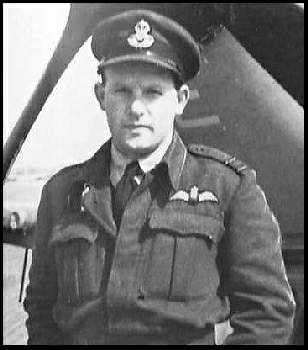
Erik Hazelhoff Roelfzema, who won the Netherlands' highest military honor in World War II after leading 15 small-boat spying missions to the shores of his Nazi-occupied homeland in 1942, then flew 72 sorties in small plywood planes over Germany to point British bombers toward their targets, died Sept. 26 at his home in Ahualoa, Hawaii. He was 90.
The cause was heart failure, said his wife, Karin.
Acclaimed in the Netherlands as one of the nation's greatest World War II heroes, Mr. Hazelhoff Roelfzema gained international recognition after he wrote an autobiography, "Soldier of Orange" (Forum Boekerij, 1971; Hodder & Stoughton, 1972). The book offers gripping accounts of coastal landings on moonless nights near Nazi headquarters in the Netherlands, and then of dodging splays of tracers and anti-aircraft fire over Berlin. "Soldier of Orange," titled in deference to the Dutch royal dynasty, the House of Orange, has sold more than a million copies. In 1977, it was made into a movie by the director Paul Verhoeven, with Rutger Hauer portraying Mr. Hazelhoff Roelfzema as a 23-year-old.
"Tracers crisscrossed over our heads like monstrous party streamers," Mr. Hazelhoff Roelfzema wrote of the last of his 15 spy missions, on May 11, 1942, aboard a motorized dinghy that had been slipped over the side of a British gunboat, No. 320, near Noordwijk. "Machine guns and cannon chattered and barked."
The dinghy came under withering fire after delivering radio transmitters to Dutch resistance fighters who would use the devices to relay information about German installations and troop movements. Mr. Hazelhoff Roelfzema wrote of the gunboat: "Crewmen crouched on the foredeck and along the sides. Finally, they pulled us aboard without stopping, abandoning the dinghy. Then, rearing up under full power, the 320 roared out to sea."
Born April 3, 1917, in Indonesia, when it was under colonial rule as the Dutch East Indies, Mr. Hazelhoff Roelfzema was the son of a coffee plantation manager. The family later returned to the Netherlands.Days after the Nazis invaded, Mr. Hazelhoff Roelfzema boarded a Swiss freighter bound for New York. When a British cruiser stopped the freighter, he persuaded the captain to take him to Britain. Once in London, Mr. Hazelhoff Roelfzema volunteered for the Dutch section of MI6, the British intelligence service, and was soon assigned to the dinghy missions to his homeland.
"He used to joke, 'Wait a minute, I just left,' " his wife said. Besides carrying transmitters to the resistance, Mr. Hazelhoff Roelfzema and his crew ferried spies to and from the Netherlands.
Despite the success of those missions, Mr. Hazelhoff Roelfzema ran afoul of Col. Mattheus de Bruyne, the newly appointed leader of the Dutch intelligence section, after he refused to provide information to another branch of the Dutch government in exile for fear it had been infiltrated by Nazi sympathizers. Court-martial proceedings were dismissed after the exiled Queen Wilhelmina recommended him for the Militaire Willemsorde.
The Militaire Willemsorde (the Military Order of William) was bestowed on Mr. Hazelhoff Roelfzema in the summer of 1942 by Queen Wilhelmina, who had fled to London and established the government in exile after the Germans occupied the Netherlands in May 1940.
Mr. Hazelhoff Roelfzema joined Britain's Royal Air Force. He learned to fly a De Havilland Mosquito, the twin-engine, spruce and balsa plane of the elite Pathfinder Force. The light, agile Mosquito was used for, among other things, firing flares at potential bombing targets. Mr. Hazelhoff Roelfzema's 72 flights into German airspace included 25 over Berlin.
Describing a night flight over Berlin, Mr. Hazelhoff Roelfzema wrote, "Hundreds of searchlights pierce the cloudless sky, rigid, motionless, like quills of the giant porcupine - Berlin." The RAF awarded him its Distinguished Flying Cross.
In April 1945, Mr. Hazelhoff Roelfzema was appointed aide-de-camp to Queen Wilhelmina and accompanied her as she returned from exile to the liberated Netherlands.
He moved to the United States in the early 1950s and became a citizen. He was a writer at NBC and for Radio Free Europe. Then, in 1971, he retired to Hawaii, where he was named to the board of Barnwell Industries, an oil and gas exploration company.
Besides his wife, Mr. Hazelhoff Roelfzema is survived by a son, Erik Jr., of Amsterdam; a daughter, Karna Hazelhoff-Castellon of San Francisco; a granddaughter; and a great-granddaughter.
Last July, in an interview with De Telegraaf, the Netherlands' largest daily newspaper, Mr. Hazelhoff Roelfzema said he had received too much recognition for his wartime exploits. "I became a war hero because I stuck out, because I wrote about my experiences," he said. "But behind every soldier decorated with military honors there are a hundred anonymous heroes, some of them greater."
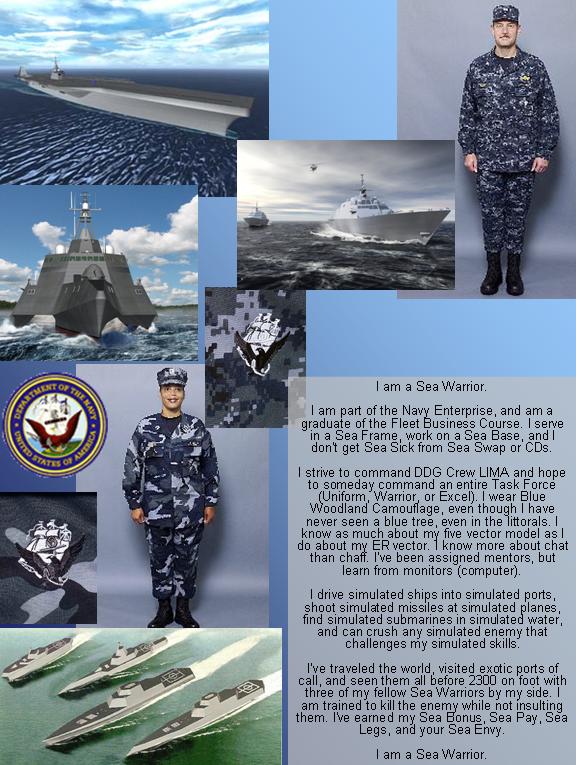
The strategy integrates seapower with other elements of U.S. national power in addition to that of friends, partners and allies. It states that protecting the U.S. homeland and winning the nation’s wars is matched by a corresponding commitment to preventing war.Not all that much to chew on. We should start with the sales flier (high res).
“This strategy addresses the balance of capabilities of our maritime services. It reaffirms our core capabilities of forward presence, deterrence, sea control and power projection. It also commits our maritime forces to increased international cooperation for the benefit of all,” said Adm. Gary Roughead, Chief of Naval Operations. “It reflects the expectation of the people of the United States to be a strong maritime force to protect our homeland and work collaboratively with partners around the world to secure and stabilize the global waterways that are critical to our prosperity.”
“While we must maintain a balance of forces to be able to deliver credible combat power as deterrence, we also believe preventing wars is as important as winning wars,” said Gen. James Conway, Commandant of the U.S. Marine Corps. “We need to be the most ready when the nation is least ready.”
“Keeping the seas safe and secure from a broad range of threats and hazards is in everyone's best interest," said Adm. Thad Allen, Commandant of the U.S. Coast Guard. "The key to global prosperity and security is through cooperation and coordination."

 Compare that to the old cover, because that was the sales flier then. Heck, I guess we need a sales flier - because the new cover is just, well - uninspiring. Look at it there to the right. We are a nation at war, aren't we? Is that the best we can do? Am I just in a grumpy mood?


