Showing posts sorted by date for query "USS HELENA". Sort by relevance Show all posts

Friday, January 21, 2022

Fullbore Friday

The war is only 10 months old and two months after the defeat at the Battle of Savo Island.

The night action of 10-11 OCT, sometimes know as the Second Battle of Savo Island - but usually as The Battle of Cape Esperance, is an excellent example of the critical importance of training, flexibility, initiative, and aggression - combined with a measure of luck. Luck is always essential, as even the most simple plans become complicated once the battle begins.

First background.
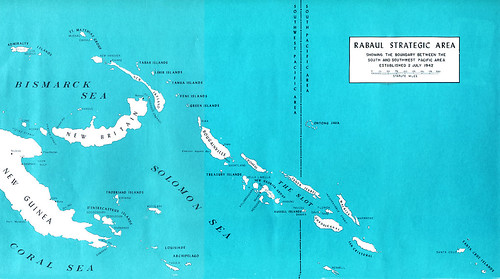
DIVISION 6 of the Imperial Japanese Navy was pretty pleased with itself following its engagement with the Americans off Savo the night of August 8-9, and perhaps with reason. The Japanese felt that they had won a victory, greater than their usual "victories," and although the loss of the KAKO outside the harbor of Kavieng following the battle had cut into their forces by a quarter, they felt themselves to be the backbone of Japan in the Solomons.

But the Americans still clung tenaciously to their ground in the Guadalcanal and Florida islands despite air raids and night bombardments from the "Tokyo Express. " And although their position was precarious, it wasn't enough so for the Jap.

If the Japanese headquarters on Rabaul was busy with plans for marshaling their strength for a knockdown battle for the Solomons, so were the Americans at Espiritu Santo. Something had to be done to stop the Japanese from reinforcing their troops, and from storming Marine positions from the sea, and obviously one way to do it was to reinforce our own land forces at Guadalcanal. For this, a large convoy with Army reinforcements for Guadalcanal was soon to depart from Noumea, in French New Caledonia, halfway between Fiji and Australia. By October 1 1 it would be about 250 miles west of Espiritu Santo, protected by two task forces: one built around the carrier HORNET, the other around the new battleship WASHINGTON.

In Espiritu was a newly organized task force. Its ships had engaged only in target practice together but they were good ships. It would do well, as protection for the left flank of the Army convoy approaching Guadalcanal, to station this task force off the southern shore of that island to intercept any enemy units moving in from the west.


Remember, this is still the "go to war with the Navy you have" part of the war, as the entire Solomon Islands Campaign was.

The post Midway march to Tokyo was on, but this was only the beginning of the beginning.

Let's look at the lineup.


USN:
TF 64

Rear-Admiral Norman C. Scott

IJN:
Bombardment Group

Rear-Admiral Goto

And so, off they went.
Departing New Caledonia on October 8, ships carrying the US 164th Infantry moved north towards Guadalcanal. To screen this convoy, Vice Admiral Robert Ghormley assigned Task Force 64 ... to operate near the island. ... Initially taking station off Rennell Island, Hall moved north on the 11th after receiving reports that Japanese ships had been sited in The Slot.
MicroWorks calls this "Stumbling into Victory." That is one way to look at it.

Me? I call it a lesson on the need for trusting your Commanding Officers with short, direct orders. As an editorial note for brevity, there are two IJN groups NW of Guadalcanal, Goto's Bombardment Group and RADM Jojima's landing force with 4,500 troops.

As he moved north, Hall, aware that the Americans had faired badly in previous night battles with the Japanese, crafted a simple battle plan. Ordering his ships to form a column with destroyers at the head and rear, he instructed them to illuminate any targets with their searchlights so that the cruisers could fire accurately. Hall also informed his captains that they were open fire when the enemy was sited rather than waiting for orders.
Approaching Cape Hunter on the northwest corner of Guadalcanal, Hall, flying his flag from San Francisco, ordered his cruisers to launch their float planes at 10:00 PM. An hour later, San Francisco's float plane sighted Jojima's force off of Guadalcanal. Expecting more Japanese ships to be sighted, Hall maintained his course northeast, passing to the west of Savo Island. Reversing course at 11:30, some confusion led to the three lead destroyers (Farenholt, Duncan, and Laffey) being out of position. About this time, Goto's ships began appearing on the American radars.

Initially believing these contacts to be the out of position destroyers, Hall took no action. As Farenholt and Laffey accelerated to reassume their proper positions, Duncan moved to attack the approaching Japanese ships.
But ahhhh, one man's brevity code is another's order.
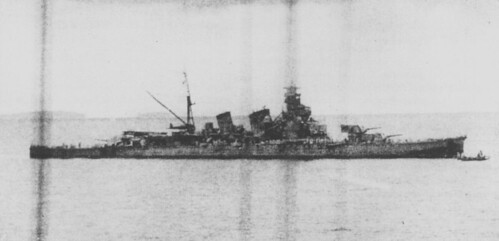
A mere 5000 yards distant Goto's ships were moving directly into the center of the American line, which Goto, deeply feeling that no American was present, considered to be Joshima's reinforcement group. It was up to Helena to teach him otherwise. Captain Hoover was certain he had the enemy before him and queried Scott to open fire. Scott replied, "Roger", which he intended as a confirmation of receipt, but if unqualified it meant open fire as well, and Hoover interpreted it as such. He switched on his searchlights, aiming them on Hatsuyuki, the left-wing destroyer, and opened fire with his fifteen 155mm guns at 2346.

That action caught Scott off-guard, but he did not prevent the rest of his line from opening fire on the enemy. Duncan, now only a few hundred yards from Kinugasa, joined in, but was quickly disabled.
Another account describes this classic thus;
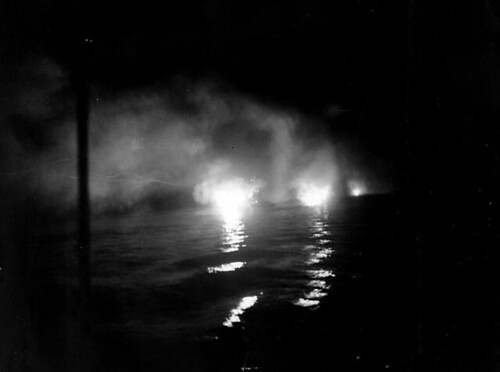
At 11:45, Goto's ships were visible to the American lookouts and Helena radioed asking permission to open fire using the general procedure request, "Interrogatory Roger" (meaning "are we clear to act"). Hall responded in the affirmative, and his surprise the entire American line opened fire. Aboard his flagship, Aoba, Goto was taken by complete surprise.
Let's talk about VADM Goto for a second. In a battle that lasted only 30 minutes, the first few were an all-American show. Why? Well, confusion and an inability to realize that your plan was no longer going to happen and that all you were told was wrong. The enemy always gets a vote.
Gotō's force was taken almost completely by surprise. At 23:43 Aoba's lookouts sighted Scott's force, but Gotō assumed that they were Jojima's ships. Two minutes later, Aoba's lookouts identified the ships as American, but Gotō remained skeptical and directed his ships to flash identification signals. As Aoba's crew executed Gotō's order, the first American salvo smashed into Aoba's superstructure. Aoba was quickly hit by up to 40 shells from Helena, Salt Lake City, San Francisco, Farenholt, and Laffey. The shell hits heavily damaged Aoba's communications systems and demolished two of her main gun turrets as well as her main gun director. Several large-caliber projectiles passed through Aoba's flag bridge without exploding, but the force of their passage killed many men and mortally wounded Gotō.
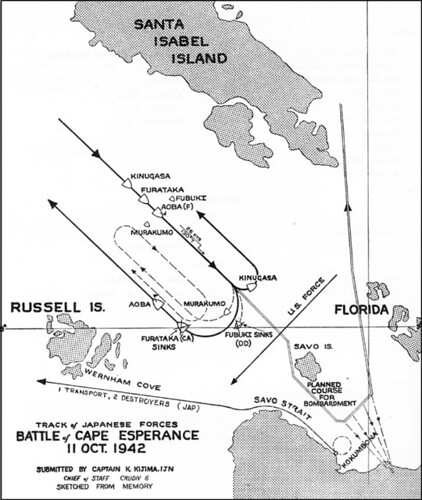
CAPT Kijuma, VADM Goto's Chief of Staff stated,
"At first we thought the fire was from our own supply ships. It was a surprise attack. All ships but the KINUGASA immediately reversed course to the right. Due to the shellfire and the congestion, the KINUGASA turned left. As a result of
this turn the KINUGASA only received minor damage from three hits. The AOBA was hit about forty times and was badly damaged. The FURUTAKA and FUBUKI were sunk. The FUBUKI sank before it completed the turn, although it only received four hits. Due to the smoke from the AOBA, the MURAKUMO was not hit. The KINUGASA did most of the fighting for our force.

"Soon after the action started Admiral Goto was mortally wounded. While he was dying, I told him that he could die with easy mind because we had sunk two of your heavy cruisers.

"Following this action we retired to the northwest. The MURAKUMO turned back and rescued about four hundred survivors. When your forces reappeared it departed the area trying to make you chase it within range of our aircraft."
Chaos, on both sides.
Over the next few minutes, Aoba was hit more than 40 times by Helena, Salt Lake City, San Francisco, Farenholt, and Laffey. Burning, with many of its guns out of action and Goto dead, Aoba turned to disengage. At 11:47, concerned that he was firing on his own ships, Hall ordered a ceasefire and asked his destroyers to confirm their positions. This done, the American ships resumed firing at 11:51 and pummeled the cruiser Furutaka. Burning from a hit to its torpedo tubes, Furutaka lost power after taking a torpedo from Buchanan. While the cruiser was burning, the Americans shifted their fire to the destroyer Fubuki sinking it.
Two minutes of firing - four minutes of "where and the h311 is everyone" and then firing again. That 4 minutes must have seemed like an hour.
As the battle raged, the cruiser Kinugasa and destoryer Hatsuyuki turned away and missed the brunt of the American attack. Pursuing the fleeing Japanese ships, Boise was nearly hit by torpedoes from Kinugasa at 12:06 AM. Turning on their search lights to illuminate the Japanese cruiser, Boise and Salt Lake City immediately took fire, with the former taking a hit to its magazine. At 12:20, with the Japanese retreating and his ships disorganized, Hall broke off the action.

Later that night, Furutaka sank as result of battle damage, and Duncan was lost to raging fires. Learning of the bombardment force's crisis, Jojima detached four destroyers to its aid after disembarking his troops. The next day, two of these, Murakumo and Shirayuki, were sunk by aircraft from Henderson Field.
The end result of the battle was a complete smacking. Losses:

USN:
  • 1 destroyer sunk,
  • 1 cruiser,
  • 1 destroyer heavily damaged,
  • 163 killed
IJN:
  • 1 cruiser,
  • 3 destroyers sunk,
  • 1 cruiser heavily damaged,
  • 341–454 killed,
  • 111 captured
This was unquestionably a great tactical victory for the USN, but an operational failure as Jojima was still able to get his troops ashore. It also did not supply the right lessons to take forward as we continued not to appreciate the true night fighting capabilities of the IJN and the exceptional danger posed by the Long Lance torpedo.

This battle was the happy middle between two sobering hammers - The Battle of Savo Island for one, and two months later 
Tassafaronga. In the end, I think this best catches the results,
A junior officer on Helena later wrote, "Cape Esperance was a three-sided battle in which chance was the major winner."
A great take-away would be this quote that could be heard after any sea battle for the last 2,500 years, I bet.
In the words of one petty officer who was overheard talking with another on the way back to Espiritu Santo, "I'll never complain of another drill, and I'll deck the man who does."
BTW, that quote and a few others come from Battle Report: Pacific War: Middle Phase by CDR Walter Purdon, USN and CAPT Eric Karig, USN which you can get here.


This will be crossposted at USNIBlog as part of the SJS led Solomon Islands Campaign thread.

First posted in AUG09.

Friday, May 14, 2021

Fullbore Friday


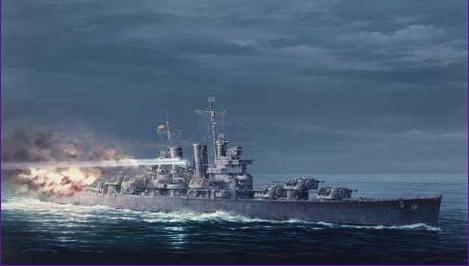
USS Helena (CL-50). Nothing "Light" about the Helena. Tough, hard fighter she was - with a lot to fire with.
Armament :
5 - Triple 6"/47 main battery

4 - Dual 5"/38 DP secondary

8 - .50 caliber AA

4 - Curtiss SOC-2 Seagulls (Aircraft) on 2 Aft catapults.
Yes kiddies - that is 15 6" guns and 8 5" guns. The Japanese (who if nothing else in WWII had no problem honoring a good fighter) said she had "6-inch machine guns."

Read all about her here - but let's look at her final battle, the Battle of Kula Gulf.
Background

On 5 July, Task Group 36.1, commanded by Rear Admiral Walden L. Ainsworth, and consisting of light cruisers USS Helena, USS Honolulu, and USS St. Louis, plus four destroyers, had received word of another Tokyo Express run down "the Slot", and proceeded northwest past New Georgia.

The Allies were in the process of launching their next offensive in the Solomon Islands, having just landed troops on the island of Rendova as a preliminary step in seizing the major Japanese airstrip at Munda on New Georgia. In support of this landing, which was to set up an initial beachhead for moving U.S. troops across Blanche Channel to New Georgia, Ainsworth had the night before conducted a cruiser bombardment of Vila on Kolombangara and Bairoko on New Georgia and, short on fuel and ammunition, was in the process of retiring to the Coral Sea to replenish. A Marine landing was scheduled on the north shore of New Georgia on 10 July and would require further support.

Battle

At 01:06 off Kolombangara, the task group came into contact with a Japanese reinforcement group commanded by Admiral Teruo Akiyama which consisted of ten destroyers loaded with 2,600 combat troops, bound for Vila, which they used as a staging point for movement into Munda. The Japanese were divided into two forces, and a formation of three escorts trailing the main column first came under attack.

The U.S. ships opened fire at 01:57 and quickly sank the destroyer Niizuki and killed Admiral Akiyama. However the Helena had expended all its flashless powder the night before and was forced to use smokeless, illuminating itself to the Japanese ships with every salvo. Two of the Japanese destroyers launched their Long Lance torpedoes and sank Helena. The main Japanese force, which had countermarched away from Vila with the first contact, broke away having landed only 850 of the 2,600 troops. Nagatsuki ran aground, while Hatsuyuki was damaged.

Both forces began to withdraw from the area, but one Japanese and two U.S. destroyers remained in the area to rescue survivors and, at about 05:00, Japanese destroyer Amagiri and USS Nicholas exchanged torpedoes and gunfire. Amagiri was hit and retired. The beached Nagatsuki, abandoned by her crew in the morning, was bombed and sunk by U.S. planes.

Aftermath

USS Radford and Nicholas both stayed behind to rescue survivors from Helena. While rescuing over 750 men, Radford and Nicholas had to reengage the enemy three times and were awarded the Presidential Unit Citation for their rescue. Amagiri escaped and later was the ship that cut PT-109 in half in Blackett Strait southwest of Kolombangara.
Catch that last bit? For the want of one well place 5" round .....

As a side-bar for you GRAF SPEE fans, here and here you can see where HELENA's crew had a chance to photograph the hulk during her visit to the River Platte during her shakedown cruise.


First posted April 2009.

Friday, December 01, 2017

Fullbore Friday


USS Helena (CL-50). Nothing "Light" about the Helena. Tough, hard fighter she was - with a lot to fire with.
Armament :
5 - Triple 6"/47 main battery

4 - Dual 5"/38 DP secondary

8 - .50 caliber AA

4 - Curtiss SOC-2 Seagulls (Aircraft) on 2 Aft catapults.
Yes kiddies - that is 15 6" guns and 8 5" guns. The Japanese (who if nothing else in WWII had no problem honoring a good fighter) said she had "6-inch machine guns."

Read all about her here - but let's look at her final battle, the Battle of Kula Gulf.
Background

On 5 July, Task Group 36.1, commanded by Rear Admiral Walden L. Ainsworth, and consisting of light cruisers USS Helena, USS Honolulu, and USS St. Louis, plus four destroyers, had received word of another Tokyo Express run down "the Slot", and proceeded northwest past New Georgia.

The Allies were in the process of launching their next offensive in the Solomon Islands, having just landed troops on the island of Rendova as a preliminary step in seizing the major Japanese airstrip at Munda on New Georgia. In support of this landing, which was to set up an initial beachhead for moving U.S. troops across Blanche Channel to New Georgia, Ainsworth had the night before conducted a cruiser bombardment of Vila on Kolombangara and Bairoko on New Georgia and, short on fuel and ammunition, was in the process of retiring to the Coral Sea to replenish. A Marine landing was scheduled on the north shore of New Georgia on 10 July and would require further support.

Battle

At 01:06 off Kolombangara, the task group came into contact with a Japanese reinforcement group commanded by Admiral Teruo Akiyama which consisted of ten destroyers loaded with 2,600 combat troops, bound for Vila, which they used as a staging point for movement into Munda. The Japanese were divided into two forces, and a formation of three escorts trailing the main column first came under attack.

The U.S. ships opened fire at 01:57 and quickly sank the destroyer Niizuki and killed Admiral Akiyama. However the Helena had expended all its flashless powder the night before and was forced to use smokeless, illuminating itself to the Japanese ships with every salvo. Two of the Japanese destroyers launched their Long Lance torpedoes and sank Helena. The main Japanese force, which had countermarched away from Vila with the first contact, broke away having landed only 850 of the 2,600 troops. Nagatsuki ran aground, while Hatsuyuki was damaged.

Both forces began to withdraw from the area, but one Japanese and two U.S. destroyers remained in the area to rescue survivors and, at about 05:00, Japanese destroyer Amagiri and USS Nicholas exchanged torpedoes and gunfire. Amagiri was hit and retired. The beached Nagatsuki, abandoned by her crew in the morning, was bombed and sunk by U.S. planes.

Aftermath

USS Radford and Nicholas both stayed behind to rescue survivors from Helena. While rescuing over 750 men, Radford and Nicholas had to reengage the enemy three times and were awarded the Presidential Unit Citation for their rescue. Amagiri escaped and later was the ship that cut PT-109 in half in Blackett Strait southwest of Kolombangara.
Catch that last bit? For the want of one well place 5" round .....

As a side-bar for you GRAF SPEE fans, here and here you can see where HELENA's crew had a chance to photograph the hulk during her visit to the River Platte during her shakedown cruise.


First posted April 2009.

Friday, October 30, 2015

Fullbore Friday

Before OCT is out, let's bring back a good reading FbF from six years ago.

The war is only 10 months old and two months after the defeat at the Battle of Savo Island.

The night action of 10-11 OCT, sometimes know as the Second Battle of Savo Island - but usually as The Battle of Cape Esperance, is an excellent example of the critical importance of training, flexibility, initiative, and aggression - combined with a measure of luck. Luck is always essential, as even the most simple plans become complicated once the battle begins.

First background.
DIVISION 6 of the Imperial Japanese Navy was pretty pleased with itself following its engagement with the Americans off Savo the night of August 8-9, and perhaps with reason. The Japanese felt that they had won a victory, greater than their usual "victories," and although the loss of the KAKO outside the harbor of Kavieng following the battle had cut into their forces by a quarter, they felt themselves to be the backbone of Japan in the Solomons.

But the Americans still clung tenaciously to their ground in the Guadalcanal and Florida islands despite air raids and night bombardments from the "Tokyo Express. " And although their position was precarious, it wasn't enough so for the Jap.

If the Japanese headquarters on Rabaul was busy with plans for marshaling their strength for a knockdown battle for the Solomons, so were the Americans at Espiritu Santo. Something had to be done to stop the Japanese from reinforcing their troops, and from storming Marine positions from the sea, and obviously one way to do it was to reinforce our own land forces at Guadalcanal. For this, a large convoy with Army reinforcements for Guadalcanal was soon to depart from Noumea, in French New Caledonia, halfway between Fiji and Australia. By October 1 1 it would be about 250 miles west of Espiritu Santo, protected by two task forces: one built around the carrier HORNET, the other around the new battleship WASHINGTON.

In Espiritu was a newly organized task force. Its ships had engaged only in target practice together but they were good ships. It would do well, as protection for the left flank of the Army convoy approaching Guadalcanal, to station this task force off the southern shore of that island to intercept any enemy units moving in from the west.


Remember, this is still the "go to war with the Navy you have" part of the war, as the entire Solomon Islands Campaign was.

The post Midway march to Tokyo was on, but this was only the beginning of the beginning.

Let's look at the lineup.


USN:
TF 64

Rear-Admiral Norman C. Scott

IJN:
Bombardment Group

Rear-Admiral Goto

And so, off they went.
Departing New Caledonia on October 8, ships carrying the US 164th Infantry moved north towards Guadalcanal. To screen this convoy, Vice Admiral Robert Ghormley assigned Task Force 64 ... to operate near the island. ... Initially taking station off Rennell Island, Hall moved north on the 11th after receiving reports that Japanese ships had been sited in The Slot.
MicroWorks calls this "Stumbling into Victory." That is one way to look at it.

Me? I call it a lesson on the need for trusting your Commanding Officers with short, direct orders. As an editorial note for brevity, there are two IJN groups NW of Guadalcanal, Goto's Bombardment Group and RADM Jojima's landing force with 4,500 troops.

As he moved north, Hall, aware that the Americans had faired badly in previous night battles with the Japanese, crafted a simple battle plan. Ordering his ships to form a column with destroyers at the head and rear, he instructed them to illuminate any targets with their searchlights so that the cruisers could fire accurately. Hall also informed his captains that they were open fire when the enemy was sited rather than waiting for orders.
Approaching Cape Hunter on the northwest corner of Guadalcanal, Hall, flying his flag from San Francisco, ordered his cruisers to launch their float planes at 10:00 PM. An hour later, San Francisco's float plane sighted Jojima's force off of Guadalcanal. Expecting more Japanese ships to be sighted, Hall maintained his course northeast, passing to the west of Savo Island. Reversing course at 11:30, some confusion led to the three lead destroyers (Farenholt, Duncan, and Laffey) being out of position. About this time, Goto's ships began appearing on the American radars.

Initially believing these contacts to be the out of position destroyers, Hall took no action. As Farenholt and Laffey accelerated to reassume their proper positions, Duncan moved to attack the approaching Japanese ships.
But ahhhh, one man's brevity code is another's order.
A mere 5000 yards distant Goto's ships were moving directly into the center of the American line, which Goto, deeply feeling that no American was present, considered to be Joshima's reinforcement group. It was up to Helena to teach him otherwise. Captain Hoover was certain he had the enemy before him and queried Scott to open fire. Scott replied, "Roger", which he intended as a confirmation of receipt, but if unqualified it meant open fire as well, and Hoover interpreted it as such. He switched on his searchlights, aiming them on Hatsuyuki, the left-wing destroyer, and opened fire with his fifteen 155mm guns at 2346.

That action caught Scott off-guard, but he did not prevent the rest of his line from opening fire on the enemy. Duncan, now only a few hundred yards from Kinugasa, joined in, but was quickly disabled.
Another account describes this classic thus;
At 11:45, Goto's ships were visible to the American lookouts and Helena radioed asking permission to open fire using the general procedure request, "Interrogatory Roger" (meaning "are we clear to act"). Hall responded in the affirmative, and his surprise the entire American line opened fire. Aboard his flagship, Aoba, Goto was taken by complete surprise.
Let's talk about VADM Goto for a second. In a battle that lasted only 30 minutes, the first few were an all-American show. Why? Well, confusion and an inability to realize that your plan was no longer going to happen and that all you were told was wrong. The enemy always gets a vote.
Gotō's force was taken almost completely by surprise. At 23:43 Aoba's lookouts sighted Scott's force, but Gotō assumed that they were Jojima's ships. Two minutes later, Aoba's lookouts identified the ships as American, but Gotō remained skeptical and directed his ships to flash identification signals. As Aoba's crew executed Gotō's order, the first American salvo smashed into Aoba's superstructure. Aoba was quickly hit by up to 40 shells from Helena, Salt Lake City, San Francisco, Farenholt, and Laffey. The shell hits heavily damaged Aoba's communications systems and demolished two of her main gun turrets as well as her main gun director. Several large-caliber projectiles passed through Aoba's flag bridge without exploding, but the force of their passage killed many men and mortally wounded Gotō.
CAPT Kijuma, VADM Goto's Chief of Staff stated,
"At first we thought the fire was from our own supply ships. It was a surprise attack. All ships but the KINUGASA immediately reversed course to the right. Due to the shellfire and the congestion, the KINUGASA turned left. As a result of
this turn the KINUGASA only received minor damage from three hits. The AOBA was hit about forty times and was badly damaged. The FURUTAKA and FUBUKI were sunk. The FUBUKI sank before it completed the turn, although it only received four hits. Due to the smoke from the AOBA, the MURAKUMO was not hit. The KINUGASA did most of the fighting for our force.

"Soon after the action started Admiral Goto was mortally wounded. While he was dying, I told him that he could die with easy mind because we had sunk two of your heavy cruisers.

"Following this action we retired to the northwest. The MURAKUMO turned back and rescued about four hundred survivors. When your forces reappeared it departed the area trying to make you chase it within range of our aircraft."
Chaos, on both sides.
Over the next few minutes, Aoba was hit more than 40 times by Helena, Salt Lake City, San Francisco, Farenholt, and Laffey. Burning, with many of its guns out of action and Goto dead, Aoba turned to disengage. At 11:47, concerned that he was firing on his own ships, Hall ordered a ceasefire and asked his destroyers to confirm their positions. This done, the American ships resumed firing at 11:51 and pummeled the cruiser Furutaka. Burning from a hit to its torpedo tubes, Furutaka lost power after taking a torpedo from Buchanan. While the cruiser was burning, the Americans shifted their fire to the destroyer Fubuki sinking it.
Two minutes of firing - four minutes of "where and the h311 is everyone" and then firing again. That 4 minutes must have seemed like an hour.
As the battle raged, the cruiser Kinugasa and destoryer Hatsuyuki turned away and missed the brunt of the American attack. Pursuing the fleeing Japanese ships, Boise was nearly hit by torpedoes from Kinugasa at 12:06 AM. Turning on their search lights to illuminate the Japanese cruiser, Boise and Salt Lake City immediately took fire, with the former taking a hit to its magazine. At 12:20, with the Japanese retreating and his ships disorganized, Hall broke off the action.

Later that night, Furutaka sank as result of battle damage, and Duncan was lost to raging fires. Learning of the bombardment force's crisis, Jojima detached four destroyers to its aid after disembarking his troops. The next day, two of these, Murakumo and Shirayuki, were sunk by aircraft from Henderson Field.
The end result of the battle was a complete smacking. Losses:

USN:
  • 1 destroyer sunk,
  • 1 cruiser,
  • 1 destroyer heavily damaged,
  • 163 killed
IJN:
  • 1 cruiser,
  • 3 destroyers sunk,
  • 1 cruiser heavily damaged,
  • 341–454 killed,
  • 111 captured
This was unquestionably a great tactical victory for the USN, but an operational failure as Jojima was still able to get his troops ashore. It also did not supply the right lessons to take forward as we continued not to appreciate the true night fighting capabilities of the IJN and the exceptional danger posed by the Long Lance torpedo.

This battle was the happy middle between two sobering hammers - The Battle of Savo Island for one, and two months later
Tassafaronga. In the end, I think this best catches the results,
A junior officer on Helena later wrote, "Cape Esperance was a three-sided battle in which chance was the major winner."
A great take-away would be this quote that could be heard after any sea battle for the last 2,500 years, I bet.
In the words of one petty officer who was overheard talking with another on the way back to Espiritu Santo, "I'll never complain of another drill, and I'll deck the man who does."
BTW, that quote and a few others come from Battle Report: Pacific War: Middle Phase by CDR Walter Purdon, USN and CAPT Eric Karig, USN which you can get for free online here, or get the 1947 hardback original here.


This will be crossposted at USNIBlog as part of the SJS led Solomon Islands Campaign thread.

Wednesday, May 08, 2013

HELENA at Kula Gulf Nods a Knowing Nod

For Bob Work, I would sit and listen - but for Gary Roughead I would suffer in my seat only to be polite to someone who gave decades of service - as respect for that service. The later spoils for me the former ... but there is some good stuff; they are both exceptionally smart men.

Here is what I like about the below linked article. Yes, one must constantly repeat fundamentals until you are sick of it. Once you get to that point, then people are probably finally getting it - but the terror of the MK-41 VLS has been known for decades, and we don't talk about it enough.

As any TLAM guy will tell you - each cell matters. What is and is not in it. What MOD of each matters. What can be reloaded, what can't. Who can be loaded, who can't.

Anyone tasked with AAW responsibilities in an Strike Group set up for land attack, and they can give you a sweaty-brow brief about the same math for Standard Missiles.

If you leave port thinking land attack but find yourself in AAW - SHOOT-LOOK-SHOOT; SHOOT-SHOOT-LOOK-SHOOT ... how long can you do that? Ooops ... ASW or ASUW? SHOOT-SAY SH1T-RUN AWAY. Yep - that late-watch talk gets hairy fast.

Bob Work's bread and butter is thinking long term and thinking big, while trying to make the best of what we have. He did the best he knew how as Under; I will not quibble - but I do know this; he was focusing on what he thought was the best way to get the best equipment to the Sailors and Marines forward. You can argue the details, but you cannot argue the man's priorities.

Meanwhile, former CNO and retired Admiral Roughead was, by his own admission, focused on his #1 priority - the Cultural Marxist cancer of racialist (D)iversity. Orwellian Accountability Reviews and everything. Meanwhile, our warfighters were saddled with a pitiful ASUW tool-kit and surface/air ASW kill chain options, barely mentioned and given but a fraction of the time by the CNO over other social projects.

And now we have this via USNINews? I'm sorry, I'm not interested in hearing this from Roughead.
Retired Adm. Gary Roughead, former Chief of Naval Operations, agrees that managing weapon inventories during combat operations can be a serious problem.

“That’s an issue how you manage your salvo doctrine, how you use and monitor your total weapon inventory—it’s all part of your operational plan,” Roughead told USNI News.

Roughead said that while warships such as Aegis cruisers and destroyers can replenish their magazines at sea with additional Standard Missile interceptors, the carrier battle group is limited by the weapon stores that the unit’s supply vessel carries.

“Once the supply ship is out, it must go back to resupply,” Roughead said.

Submarines, however, must return to port to replenish their stocks of torpedoes and cruise missiles.

Roughead said that there are ways to mitigate for the problem. For example, if the problem is enemy submarines and long-range patrol aircraft can be flown back and rearmed faster than a warship or friendly attack submarines—the strike group commander places more emphasis on using those assets to eliminate the threat.

“How you look at weapon inventories—and you pay great attention to those weapon inventories—that’s all part of the battle plan we use,” Roughead said. “Logistics are key.”
OK. If your plan is for future leaders to have to rely of P-3/8s for Strike Group ASW (being that we have gotten rid of the S-3 and our helos are multi-missions thin in ASW proficiency; let's not get in to surface ship ASW weaponeering), as CNO, how did we address magazine inventory globally for light-weight torpedoes given expected Falkland Island levels of expenditures? Everyone cool with that? Did we insist on rigorous testing of MK-46/50/54 in the type of waters they may be used in against modern SSK? Don't talk simulations to me either.  Everyone ready for that? Have a warm-fuzzy?

Wait ... what was that?
“Logistics are key.”
OK. How was this set as a priority while Roughead was CNO? As a result of those priorities, how are the levels of logistics ships doing now and in the future - especially given combat losses we should expect to have? Have we set up the right "tail" for the Pacific Pivot?

I am sorry - the above is a bit too personal (my bad) and a bit b1tchy on my part. All his points are very valid, and if these issues were what he was known for as CNO, then I would be more interested in listening to him about it. But they weren't and so I won't. Call me petty - but there is an opportunity cost for every priority, visit, speech, and dedicated hour to staff work as CNO. He had other priorities. If he wants to talk about his theories on how one defines a Hispanic or how he thinks young men and women who are mixed-race children of mixed-race parentage should check a block to get maximum advantage in the racial patronage system he loved - then yea, I'll read in detail.

Let's focus instead on Bob Work's thoughts.
But technology could help relieve some of the planning burden on fleet commanders and make the carrier battle group much more effective during future conflicts in contested environments.

“The real game-changer in all of this, is in my view, the electromagnetic rail gun,” Work said.

While there are many advocates of the rail gun for the strike mission, Work said that Navy has plenty of options to hit enemy targets. “What I would buy the electromagnetic rail gun for is theater ballistic-missile defense and cruise-missile defense,” he said.

Roughead agrees. “I would say that the rail gun projectile must be optimized for anti-air warfare,” he said. However, the technology needs to be further refined. “The projectiles we have today, fire control and rate of fire are not yet there for anti-air warfare.”

Using a rail gun for defense would drastically reduce the cost-per-shot for the Navy when defending against mass salvos of guided cruise or ballistic missiles compared with an interceptor missile like a Standard Missile -3.
...
The use of weapons such as the railgun would invert the cost-imposition strategy. Instead of launching, for example—two interceptors costing roughly $12 million to $15 million each at an incoming $10 million incoming missile, the Navy could obliterate the target with a rail gun slug costing a fraction of that.

“It’s going to cost them a lot more to create a salvo dense enough to get though the electromagnetic rail gun,” Work said.

Work said that the Navy is also working on directed-energy weapons—particularly lasers.
...
The Navy recently announced it would deploy an industrial-grade laser on board its afloat forward staging base, the USS Ponce (LPD-15), in 2014. The solid-state laser weapon system (LaWS) has proved a limited ability to splash small unmanned aerial vehicles and disable small boats.

Work said that lasers are best used for applications similar to those for which the Phalanx close-in weapon system (CIWS) is currently used.

“It would be able to shoot down cruise missiles coming in that are relatively close,” he said. “The electromagnetic rail gun is really horizon to horizon; if it flies, it dies.”
...
The third crucial technology for the Navy is an anti-torpedo torpedo, Work said. As the carrier battle group pushes into A2/AD networks in the littorals, the threat from submarines increases exponentially.
...
Work said that the threat to carrier battle groups is increasing without question—that has been anticipated since the mid-1990s. But if Navy can get electromagnetic rail guns, lasers and anti-torpedo torpedoes into service within the next decade, the carrier battle group will be able to operate deeper inside a contested environment.

“They will definitely operate differently and they will most likely operate from farther range,” Work said. “This is a tough competition, no doubt about it.”
That is all good stuff - but we need to be careful.

To start off with - we need to be careful that we aren't looking so far in the the future to what will be IOC in a decade or more - that we ignore a capability requirement NOW or in 5-years.

That is why in 2013 we find ourselves with a 1970s/80s ASCM and a single point of likely failure LWT answer to killing submarines. That is why we got rid of so many good FFG/DD/CG who had a decade or more of life in them for future ships that never showed up.

We need to be able to do both - those who came before did, so can we.

I have been and always will be a fan of the potential of the rail gun. We have been smartly working towards this promise, but we do not need to get carried away. Build the capability, test that capability, refine it, test it some more, put it in the Fleet - learn how to make it work, and then make it work.

Guided missiles were hard to make work - heck Aegis was ugly when it hit the Fleet too, as are many new systems. Expect that for the rail gun. We know they will not appear FMC on every ship in one year. Odds are they will be PMC for years after they hit the Fleet, and that is fine. Good chance, it will get there.

In the meantime, we need something for the Fleet to fight with now, in 5-years, and in the years as we try to figure out how to make rail guns work for us, and once we do that - to fill the gaps where rail guns cannot be the answer to everything.

That will be more than a decade.

As for lasers, same thing. All the usual developmental problems outlined above along with significant physics related issues that will make lasers good at a few things, excellent in others - but not the answer to all our challenges ... and not for well over a decade.

Anti-torpedo torpedoes. Well, I don't think we need to talk much about that here, ahem ... but we have been going at this for awhile and that should speak to that. Also, the surface to air missile did not end the utility of aircraft and missiles. So to for this combo.

Let's look at this quote again;
... if Navy can get electromagnetic rail guns, lasers and anti-torpedo torpedoes into service within the next decade,...
Everyone listened to the last Midrats, correct? OK, good.

When is "the next decade?" That would be 2023; right smack dab in the middle of the Terrible 20s. From Sequester to SSBN re-capitalizaiton and all the macro budgetary pressures we will be suffering under due to the huge debt load we have taken since 2009 - where is all that money going to come from? What ships will have the rail-guns and lasers retrofitted? We'll be digging under the cushions in the Wardroom in order to find enough money for scheduled maintenance, much less everyone's science experiment.

NAVSEA, call your office - and bring your best electrical engineers - oh, and if you have a dwarf Master of Coin, that would be great.

Friday, August 12, 2011

Fullbore Friday

In honor of our guest this Sunday on Midrats - and encore edition of FbF.
The war is only 10 months old and two months after the defeat at the
Battle of Savo Island.

The night action of 10-11 OCT, sometimes know as the Second Battle of Savo Island - but usually as The Battle of Cape Esperance, is an excellent example of the critical importance of training, flexibility, initiative, and aggression - combined with a measure of luck. Luck is always essential, as even the most simple plans become complicated once the battle begins.

First background.
DIVISION 6 of the Imperial Japanese Navy was pretty pleased with itself following its engagement with the Americans off Savo the night of August 8-9, and perhaps with reason. The Japanese felt that they had won a victory, greater than their usual "victories," and although the loss of the KAKO outside the harbor of Kavieng following the battle had cut into their forces by a quarter, they felt themselves to be the backbone of Japan in the Solomons.

But the Americans still clung tenaciously to their ground in the Guadalcanal and Florida islands despite air raids and night bombardments from the "Tokyo Express. " And although their position was precarious, it wasn't enough so for the Jap.

If the Japanese headquarters on Rabaul was busy with plans for marshaling their strength for a knockdown battle for the Solomons, so were the Americans at Espiritu Santo. Something had to be done to stop the Japanese from reinforcing their troops, and from storming Marine positions from the sea, and obviously one way to do it was to reinforce our own land forces at Guadalcanal. For this, a large convoy with Army reinforcements for Guadalcanal was soon to depart from Noumea, in French New Caledonia, halfway between Fiji and Australia. By October 1 1 it would be about 250 miles west of Espiritu Santo, protected by two task forces: one built around the carrier HORNET, the other around the new battleship WASHINGTON.

In Espiritu was a newly organized task force. Its ships had engaged only in target practice together but they were good ships. It would do well, as protection for the left flank of the Army convoy approaching Guadalcanal, to station this task force off the southern shore of that island to intercept any enemy units moving in from the west.


Remember, this is still the "go to war with the Navy you have" part of the war, as the entire Solomon Islands Campaign was.

The post Midway march to Tokyo was on, but this was only the beginning of the beginning.

Let's look at the lineup.


USN:
TF 64

Rear-Admiral Norman C. Scott
IJN:
Bombardment Group

Rear-Admiral Goto
And so, off they went.
Departing New Caledonia on October 8, ships carrying the US 164th Infantry moved north towards Guadalcanal. To screen this convoy, Vice Admiral Robert Ghormley assigned Task Force 64 ... to operate near the island. ... Initially taking station off Rennell Island, Hall moved north on the 11th after receiving reports that Japanese ships had been sited in The Slot.
MicroWorks calls this "Stumbling into Victory." That is one way to look at it.

Me? I call it a lesson on the need for trusting your Commanding Officers with short, direct orders. As an editorial note for brevity, there are two IJN groups NW of Guadalcanal, Goto's Bombardment Group and RADM Jojima's landing force with 4,500 troops.
As he moved north, Hall, aware that the Americans had faired badly in previous night battles with the Japanese, crafted a simple battle plan. Ordering his ships to form a column with destroyers at the head and rear, he instructed them to illuminate any targets with their searchlights so that the cruisers could fire accurately. Hall also informed his captains that they were open fire when the enemy was sited rather than waiting for orders.

Approaching Cape Hunter on the northwest corner of Guadalcanal, Hall, flying his flag from San Francisco, ordered his cruisers to launch their float planes at 10:00 PM. An hour later, San Francisco's float plane sighted Jojima's force off of Guadalcanal. Expecting more Japanese ships to be sighted, Hall maintained his course northeast, passing to the west of Savo Island. Reversing course at 11:30, some confusion led to the three lead destroyers (Farenholt, Duncan, and Laffey) being out of position. About this time, Goto's ships began appearing on the American radars.

Initially believing these contacts to be the out of position destroyers, Hall took no action. As Farenholt and Laffey accelerated to reassume their proper positions, Duncan moved to attack the approaching Japanese ships.
But ahhhh, one man's brevity code is another's order.
A mere 5000 yards distant Goto's ships were moving directly into the center of the American line, which Goto, deeply feeling that no American was present, considered to be Joshima's reinforcement group. It was up to Helena to teach him otherwise. Captain Hoover was certain he had the enemy before him and queried Scott to open fire. Scott replied, "Roger", which he intended as a confirmation of receipt, but if unqualified it meant open fire as well, and Hoover interpreted it as such. He switched on his searchlights, aiming them on Hatsuyuki, the left-wing destroyer, and opened fire with his fifteen 155mm guns at 2346.
That action caught Scott off-guard, but he did not prevent the rest of his line from opening fire on the enemy. Duncan, now only a few hundred yards from Kinugasa, joined in, but was quickly disabled.
Another account describes this classic thus;
At 11:45, Goto's ships were visible to the American lookouts and Helena radioed asking permission to open fire using the general procedure request, "Interrogatory Roger" (meaning "are we clear to act"). Hall responded in the affirmative, and his surprise the entire American line opened fire. Aboard his flagship, Aoba, Goto was taken by complete surprise.
Let's talk about VADM Goto for a second. In a battle that lasted only 30 minutes, the first few were an all-American show. Why? Well, confusion and an inability to realize that your plan was no longer going to happen and that all you were told was wrong. The enemy always gets a vote.
Gotō's force was taken almost completely by surprise. At 23:43 Aoba's lookouts sighted Scott's force, but Gotō assumed that they were Jojima's ships. Two minutes later, Aoba's lookouts identified the ships as American, but Gotō remained skeptical and directed his ships to flash identification signals. As Aoba's crew executed Gotō's order, the first American salvo smashed into Aoba's superstructure. Aoba was quickly hit by up to 40 shells from Helena, Salt Lake City, San Francisco, Farenholt, and Laffey. The shell hits heavily damaged Aoba's communications systems and demolished two of her main gun turrets as well as her main gun director. Several large-caliber projectiles passed through Aoba's flag bridge without exploding, but the force of their passage killed many men and mortally wounded Gotō.
CAPT Kijuma, VADM Goto's Chief of Staff stated,
"At first we thought the fire was from our own supply ships. It was a surprise attack. All ships but the KINUGASA immediately reversed course to the right. Due to the shellfire and the congestion, the KINUGASA turned left. As a result of
this turn the KINUGASA only received minor damage from three hits. The AOBA was hit about forty times and was badly damaged. The FURUTAKA and FUBUKI were sunk. The FUBUKI sank before it completed the turn, although it only received four hits. Due to the smoke from the AOBA, the MURAKUMO was not hit. The KINUGASA did most of the fighting for our force.

"Soon after the action started Admiral Goto was mortally wounded. While he was dying, I told him that he could die with easy mind because we had sunk two of your heavy cruisers.

"Following this action we retired to the northwest. The MURAKUMO turned back and rescued about four hundred survivors. When your forces reappeared it departed the area trying to make you chase it within range of our aircraft."
Chaos, on both sides.
Over the next few minutes, Aoba was hit more than 40 times by Helena, Salt Lake City, San Francisco, Farenholt, and Laffey. Burning, with many of its guns out of action and Goto dead, Aoba turned to disengage. At 11:47, concerned that he was firing on his own ships, Hall ordered a ceasefire and asked his destroyers to confirm their positions. This done, the American ships resumed firing at 11:51 and pummeled the cruiser Furutaka. Burning from a hit to its torpedo tubes, Furutaka lost power after taking a torpedo from Buchanan. While the cruiser was burning, the Americans shifted their fire to the destroyer Fubuki sinking it.
Two minutes of firing - four minutes of "where and the h311 is everyone" and then firing again. That 4 minutes must have seemed like an hour.
As the battle raged, the cruiser Kinugasa and destoryer Hatsuyuki turned away and missed the brunt of the American attack. Pursuing the fleeing Japanese ships, Boise was nearly hit by torpedoes from Kinugasa at 12:06 AM. Turning on their search lights to illuminate the Japanese cruiser, Boise and Salt Lake City immediately took fire, with the former taking a hit to its magazine. At 12:20, with the Japanese retreating and his ships disorganized, Hall broke off the action.

Later that night, Furutaka sank as result of battle damage, and Duncan was lost to raging fires. Learning of the bombardment force's crisis, Jojima detached four destroyers to its aid after disembarking his troops. The next day, two of these, Murakumo and Shirayuki, were sunk by aircraft from Henderson Field.
The end result of the battle was a complete smacking. Losses:

USN:
  • 1 destroyer sunk,
  • 1 cruiser,
  • 1 destroyer heavily damaged,
  • 163 killed
IJN:
  • 1 cruiser,
  • 3 destroyers sunk,
  • 1 cruiser heavily damaged,
  • 341–454 killed,
  • 111 captured
This was unquestionably a great tactical victory for the USN, but an operational failure as Jojima was still able to get his troops ashore. It also did not supply the right lessons to take forward as we continued not to appreciate the true night fighting capabilities of the IJN and the exceptional danger posed by the Long Lancetorpedo.

This battle was the happy middle between two sobering hammers - The Battle of Savo Island for one, and two months later
Tassafaronga. In the end, I think this best catches the results,
A junior officer on Helena later wrote, "Cape Esperance was a three-sided battle in which chance was the major winner."
A great take-away would be this quote that could be heard after any sea battle for the last 2,500 years, I bet.
In the words of one petty officer who was overheard talking with another on the way back to Espiritu Santo, "I'll never complain of another drill, and I'll deck the man who does."
BTW, that quote and a few others come from Battle Report: Pacific War: Middle Phase by CDR Walter Purdon, USN and CAPT Eric Karig, USN which you can get for free online here, or get the 1947 hardback original here.


This will be crossposted at USNIBlog as part of the SJS led Solomon Islands Campaign thread.