Showing posts with label Tanks. Show all posts

Friday, January 15, 2021

Fullbore Friday


It is 1944 near Cagny in northern France. You are leading a section of two 33-ton M4 Sherman tanks when, all of a sudden, you find yourself facing a Panther, a Tiger I, an old Mark IV — and one70-ton King Tiger.

What does an army lieutenant do? Become a naval officer. From the excellent War History Online;

Gorman found himself at the top of a ridge, looking down at a field in which the German tanks were gathered. Only 900 feet (274 meters) of open ground stood between him and the feared Königstiger. He knew that if he didn’t act immediately, his two Sherman tanks would likely be taken out. This was when he decided to put a naval tactic to good use.

By then, the Germans had spotted the Shermans. The huge gun of the closest tank – the Königstiger – was swinging around to take them out. Gorman yelled out what must have sounded like an almost suicidal order: “Ram it!”

The Sherman (named “Ballyragget”) roared at full speed down the slope, propelled so fast by gravity and its own motor that it almost skidded out of control. But the maneuver worked. Before the Königstiger could take a shot at Ballyragget, the Sherman smashed into its rear at speed.

The collision incapacitated both tanks. The Germans, shocked by what had just happened, scrambled out of their tank with their hands up.

Although the Königstiger was knocked out of the fight, the three other German tanks were, unfortunately, still perfectly operational. They turned their guns on the other Sherman, commanded by Sergeant Harbinson.

Out in the open, without the element of surprise Gorman’s tank had exploited, the three German tanks pounded it with their main guns, killing three crew members and putting the Sherman out of action.

Gorman and his crew took the opportunity provided by this distraction to escape from their own disabled Sherman. They fled the field before they, too, could be shot.

However, Gorman was determined to destroy the remaining three German tanks. The wounded crew members of Harbinson’s tank had taken refuge in a nearby cornfield. After assuring them that he would return, Gorman struck out on his own.

At this point, the remaining German tanks fought back. Outnumbered, Gorman had no choice but to order a retreat.

He picked up Harbinson’s crew and returned to safety. Gorman was awarded the Military Cross for his action in taking out the tanks. Indeed, the Königstiger he incapacitated was still there a year later.


Sir John Reginald Gorman CVO, CBE, MC, DL, Captain, British Army (Ret.)

Fullbore

Monday, January 28, 2008

What the Canadian Army can teach the USN


Simple; the fundamental facts of warfare don't go away just because they don't fit your cute little theories.
Canada's Defence Department is planning to buy a lot of big guns, ...

The army is interested in acquiring as many as 34 new 155-200-millimetre towed howitzers to add to its existing stock of 12 M-777 guns, most of which are in Afghanistan.The program to re-equip gunners with state-of-the-art artillery began in 2005 under the former Liberal government when the army warned its stock of old 105-millimetre howitzers wasn't up to the demands of Afghanistan.

Under an urgent government-to-government procurement, the Defence Department bought six M-777 guns from the U.S. Marine Corps and later purchased six more from the British manufacturer, BAE Systems Inc.
In addition to going "oops, we need arty.." they also stopped sniffing the transformational glue about tanks when, yikes, combat got in the way.
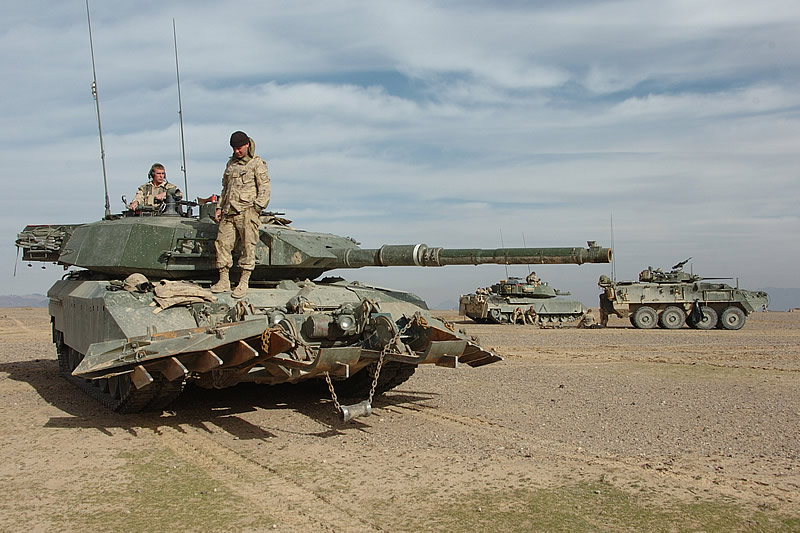
The Canadian Army is acquiring 100 Leopard II tanks, to be delivered from Dutch and Dutch army surplus. The purchase is a change of direction for the army and in particular for Chief of Defence Staff Gen. Rick Hillier, who only a few years ago described the Leopard tanks as "millstone around the neck" of the Canadian forces. The Canadians realized the importance of main battle tanks in recent months, as tanks were rushed in to Afghanistan to support the Canadian contingent stationed at Kandahar. As the new tanks are inducted by the Army, the Leopard 1C2 tanks currently deployed in Afghanistan are expected to be retired from service.
...
Yet, the intensity of recent conflicts, in Afghanistan, Iraq and Lebanon reestablished the validity of the tank as a highly protected, powerful and effective operational asset, which, at certain high threat scenarios, cannot be matched by more lightly armored wheeled vehicles. When employed in the proper manner, heavily protected tanks can survive most types of anti-armor and anti-material improvised explosive devices (IEDs), including shaped charge IEDs and landmines. They also offer unique capabilities of cross country mobility and counter-obstacle capability that cannot be matched by lighter armored vehicles. The Leopard 2 tanks will provide better protection against IEDs and landmines, compared to the currently deployed Leopard 1C2.
ASW. Coastal Mine Warfare. NSFS. Rinse, repeat.

PEO Ships; call you office.

Friday, February 16, 2007

Fullbore Friday

As usual, John over at Argghhh!!! always has some great Gun Pr0n. This entry from last week had me digging around my travel files for something that just breaks my heart.

Fullbore Friday is about a lot of things, in my mind at least; but mostly it is about examples from history about ordinary Sailors doing extraordinary things – and extraordinary Sailors changing history. Examples that every professional should examine for what they can tell us today.

History is so critical to the future. It isn’t a formula or a crystal ball – but it does show us patterns and gives up a sense of the rhythm and well-worn paths that always show up in the ventures of men.

When we neglect history, especially the artifacts – irreplaceable artifacts – of our past – it breaks my heart. Not only for the stories they carry with them, but the testimony they give to the reasons of their birth and the efforts of the people who built and used them. Standing in their presence gives us a greater understanding of their place and context – well beyond simple 2D pictures or words.

As anyone who has had the displeasure of traveling or going on TAD with me – I am the Adult-ADD poster child. If you give me a day, I will travel 4 hours one way to go to a town for 1 hour to see something and travel 4 hours back. I will leave the beaten path to hike up a mountain to find a plaque commemorating some obscure event I read about as a kid. I will walk into that basement bar because it looks interesting. I don’t care what others think – I am not going to spend a night playing Hearts and drinking Miller Light when there is a train station only a 30 minute walk away and we don’t have to report until 1000 the next AM.

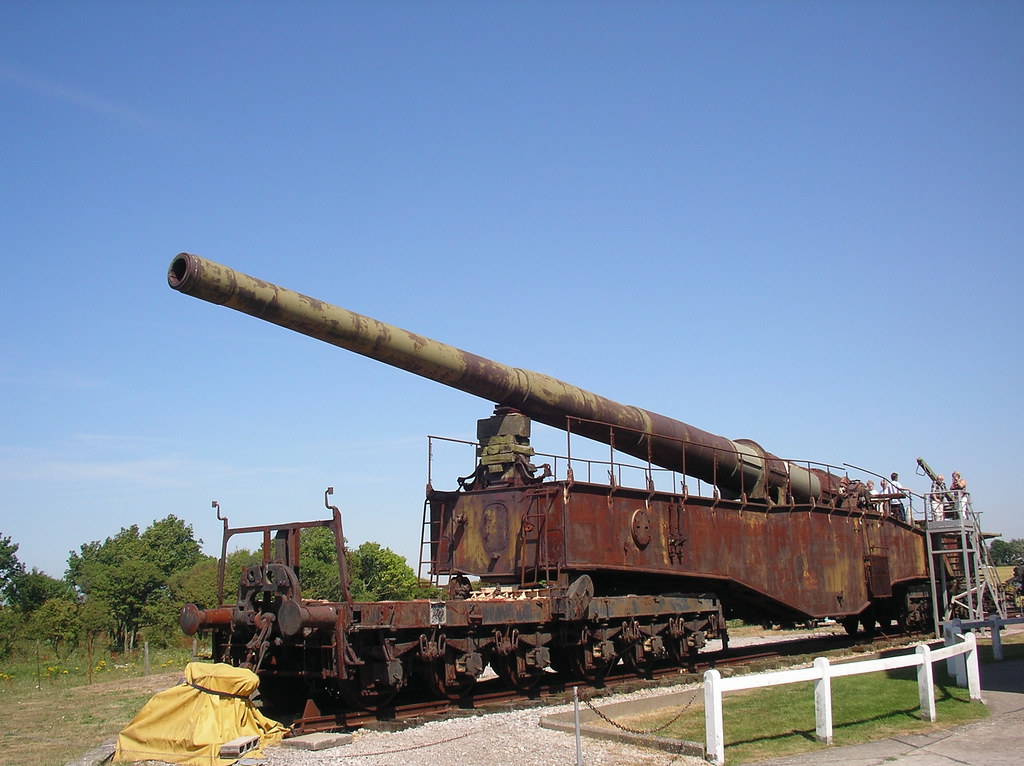
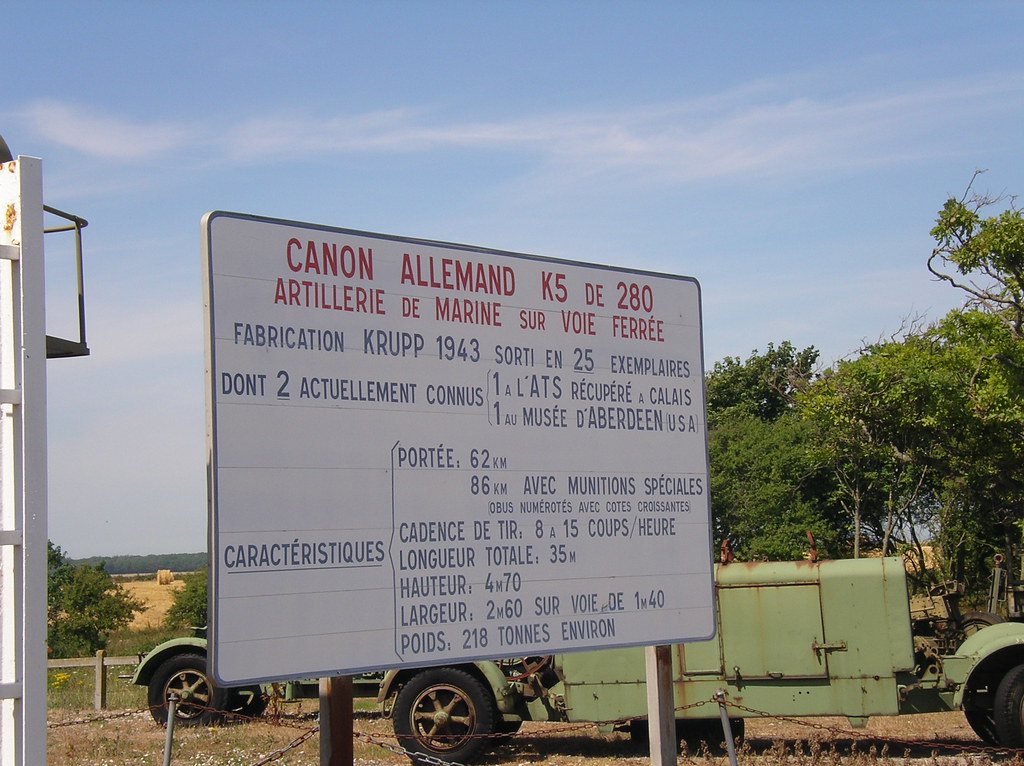
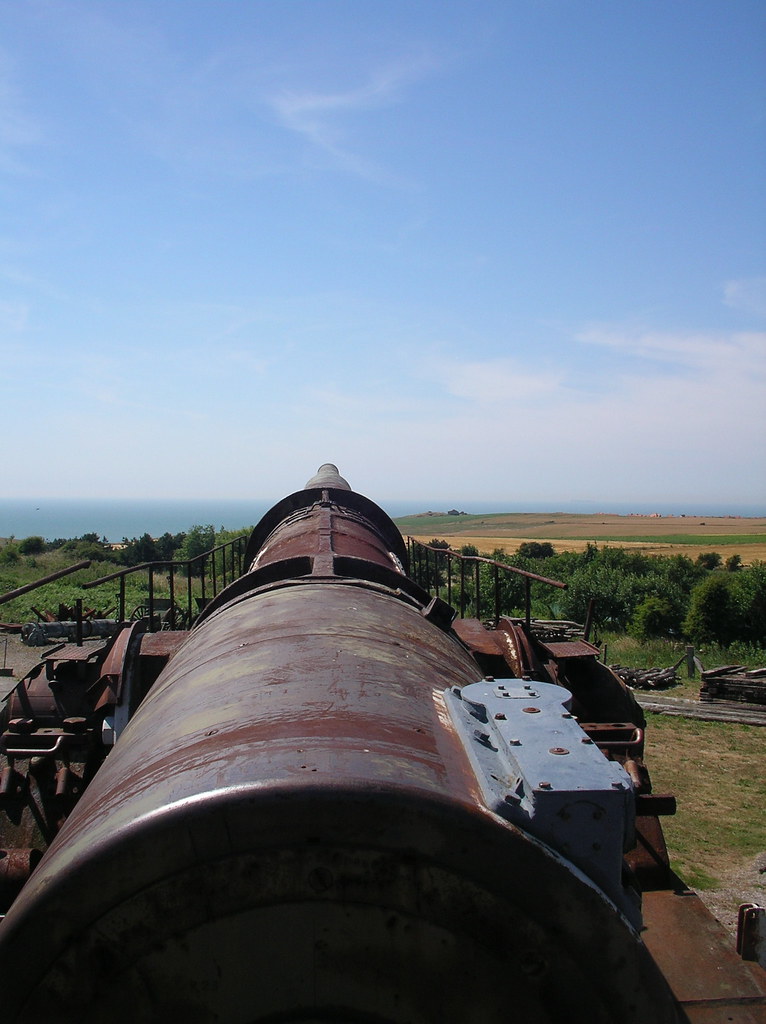
Anyway, on the NE coast of France I found the only Krupp K5 left in Europe,Leopold's brother, at Batterie Todt in France. That is where I wound up one beautiful day.

Here she is.

Read his background here in English or German, or here in French. He needs some love real bad – or soon he will be lost to weather and time.

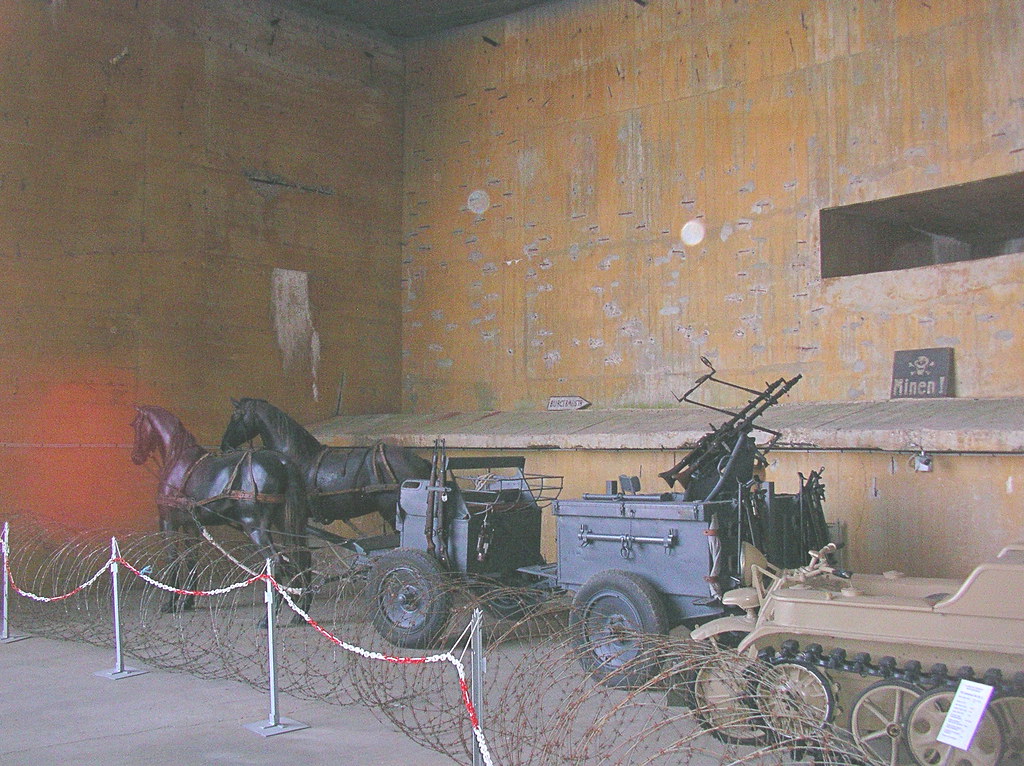
Oh, and while I was there I saw this example on why German AAA was hard to move around quickly – and something I KNOW John wishes he could have.

Often, rail-guns and the Western Wall are forgotten - they shouldn't be. A lot of people died either building, fighting, destroying or being on the receiving end of them.


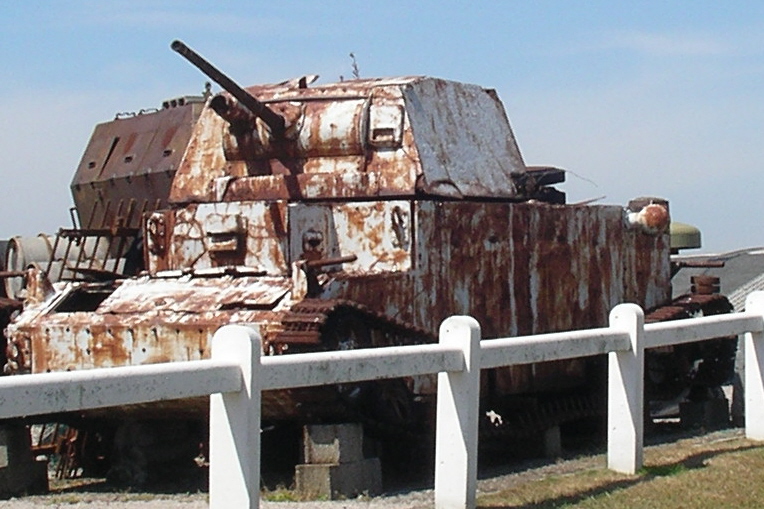
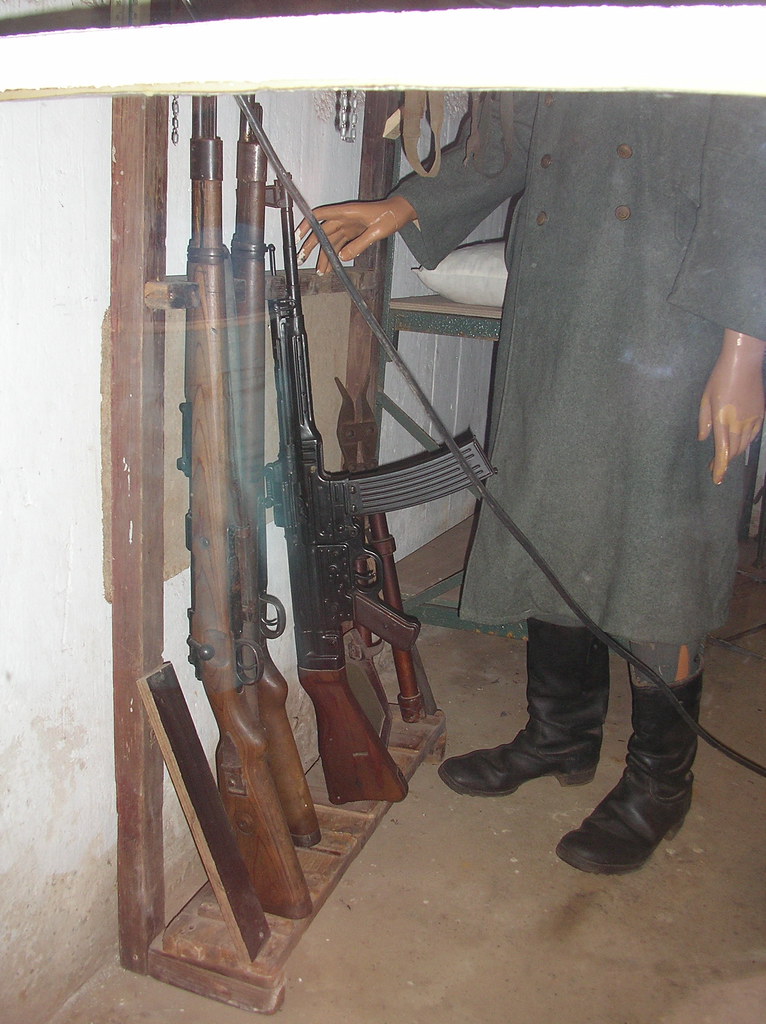
As an extra bonus in honor of John I ask the question (item found at the same location as above):
WHATZIS?