Showing posts sorted by relevance for query "Lives of Others". Sort by date Show all posts

Tuesday, July 04, 2017

In Congress, July 4, 1776.

The unanimous Declaration of the thirteen united States of America, When in the Course of human events, it becomes necessary for one people to dissolve the political bands which have connected them with another, and to assume among the powers of the earth, the separate and equal station to which the Laws of Nature and of Nature's God entitle them, a decent respect to the opinions of mankind requires that they should declare the causes which impel them to the separation.

We hold these truths to be self-evident, that all men are created equal, that they are endowed by their Creator with certain unalienable Rights, that among these are Life, Liberty and the pursuit of Happiness.--That to secure these rights, Governments are instituted among Men, deriving their just powers from the consent of the governed, --That whenever any Form of Government becomes destructive of these ends, it is the Right of the People to alter or to abolish it, and to institute new Government, laying its foundation on such principles and organizing its powers in such form, as to them shall seem most likely to effect their Safety and Happiness. Prudence, indeed, will dictate that Governments long established should not be changed for light and transient causes; and accordingly all experience hath shewn, that mankind are more disposed to suffer, while evils are sufferable, than to right themselves by abolishing the forms to which they are accustomed. But when a long train of abuses and usurpations, pursuing invariably the same Object evinces a design to reduce them under absolute Despotism, it is their right, it is their duty, to throw off such Government, and to provide new Guards for their future security.--Such has been the patient sufferance of these Colonies; and such is now the necessity which constrains them to alter their former Systems of Government. The history of the present King of Great Britain is a history of repeated injuries and usurpations, all having in direct object the establishment of an absolute Tyranny over these States. To prove this, let Facts be submitted to a candid world.

He has refused his Assent to Laws, the most wholesome and necessary for the public good.

He has forbidden his Governors to pass Laws of immediate and pressing importance, unless suspended in their operation till his Assent should be obtained; and when so suspended, he has utterly neglected to attend to them.

He has refused to pass other Laws for the accommodation of large districts of people, unless those people would relinquish the right of Representation in the Legislature, a right inestimable to them and formidable to tyrants only.

He has called together legislative bodies at places unusual, uncomfortable, and distant from the depository of their public Records, for the sole purpose of fatiguing them into compliance with his measures.

He has dissolved Representative Houses repeatedly, for opposing with manly firmness his invasions on the rights of the people.

He has refused for a long time, after such dissolutions, to cause others to be elected; whereby the Legislative powers, incapable of Annihilation, have returned to the People at large for their exercise; the State remaining in the mean time exposed to all the dangers of invasion from without, and convulsions within.

He has endeavoured to prevent the population of these States; for that purpose obstructing the Laws for Naturalization of Foreigners; refusing to pass others to encourage their migrations hither, and raising the conditions of new Appropriations of Lands.

He has obstructed the Administration of Justice, by refusing his Assent to Laws for establishing Judiciary powers.

He has made Judges dependent on his Will alone, for the tenure of their offices, and the amount and payment of their salaries.

He has erected a multitude of New Offices, and sent hither swarms of Officers to harrass our people, and eat out their substance.

He has kept among us, in times of peace, Standing Armies without the Consent of our legislatures.

He has affected to render the Military independent of and superior to the Civil power.

He has combined with others to subject us to a jurisdiction foreign to our constitution, and unacknowledged by our laws; giving his Assent to their Acts of pretended Legislation:

For Quartering large bodies of armed troops among us:

For protecting them, by a mock Trial, from punishment for any Murders which they should commit on the Inhabitants of these States:

For cutting off our Trade with all parts of the world:

For imposing Taxes on us without our Consent:

For depriving us in many cases, of the benefits of Trial by Jury:

For transporting us beyond Seas to be tried for pretended offences

For abolishing the free System of English Laws in a neighbouring Province, establishing therein an Arbitrary government, and enlarging its Boundaries so as to render it at once an example and fit instrument for introducing the same absolute rule into these Colonies:

For taking away our Charters, abolishing our most valuable Laws, and altering fundamentally the Forms of our Governments:

For suspending our own Legislatures, and declaring themselves invested with power to legislate for us in all cases whatsoever.

He has abdicated Government here, by declaring us out of his Protection and waging War against us.

He has plundered our seas, ravaged our Coasts, burnt our towns, and destroyed the lives of our people.

He is at this time transporting large Armies of foreign Mercenaries to compleat the works of death, desolation and tyranny, already begun with circumstances of Cruelty & perfidy scarcely paralleled in the most barbarous ages, and totally unworthy the Head of a civilized nation.

He has constrained our fellow Citizens taken Captive on the high Seas to bear Arms against their Country, to become the executioners of their friends and Brethren, or to fall themselves by their Hands.

He has excited domestic insurrections amongst us, and has endeavoured to bring on the inhabitants of our frontiers, the merciless Indian Savages, whose known rule of warfare, is an undistinguished destruction of all ages, sexes and conditions.

In every stage of these Oppressions We have Petitioned for Redress in the most humble terms: Our repeated Petitions have been answered only by repeated injury. A Prince whose character is thus marked by every act which may define a Tyrant, is unfit to be the ruler of a free people.

Nor have We been wanting in attentions to our Brittish brethren. We have warned them from time to time of attempts by their legislature to extend an unwarrantable jurisdiction over us. We have reminded them of the circumstances of our emigration and settlement here. We have appealed to their native justice and magnanimity, and we have conjured them by the ties of our common kindred to disavow these usurpations, which, would inevitably interrupt our connections and correspondence. They too have been deaf to the voice of justice and of consanguinity. We must, therefore, acquiesce in the necessity, which denounces our Separation, and hold them, as we hold the rest of mankind, Enemies in War, in Peace Friends.

We, therefore, the Representatives of the united States of America, in General Congress, Assembled, appealing to the Supreme Judge of the world for the rectitude of our intentions, do, in the Name, and by Authority of the good People of these Colonies, solemnly publish and declare, That these United Colonies are, and of Right ought to be Free and Independent States; that they are Absolved from all Allegiance to the British Crown, and that all political connection between them and the State of Great Britain, is and ought to be totally dissolved; and that as Free and Independent States, they have full Power to levy War, conclude Peace, contract Alliances, establish Commerce, and to do all other Acts and Things which Independent States may of right do. And for the support of this Declaration, with a firm reliance on the protection of divine Providence, we mutually pledge to each other our Lives, our Fortunes and our sacred Honor.

Georgia

Button Gwinnett

Lyman Hall

George Walton


North Carolina


William Hooper

Joseph Hewes

John Penn


South Carolina


Edward Rutledge

Thomas Heyward, Jr.

Thomas Lynch, Jr.

Arthur Middleton


Massachusetts

John Hancock


Maryland

Samuel Chase

William Paca

Thomas Stone

Charles Carroll of Carrollton


Virginia

George Wythe

Richard Henry Lee

Thomas Jefferson

Benjamin Harrison

Thomas Nelson, Jr.

Francis Lightfoot Lee

Carter Braxton


Pennsylvania

Robert Morris

Benjamin Rush

Benjamin Franklin

John Morton

George Clymer

James Smith

George Taylor

James Wilson

George Ross


Delaware

Caesar Rodney

George Read

Thomas McKean


New York


William Floyd

Philip Livingston

Francis Lewis

Lewis Morris


New Jersey


Richard Stockton

John Witherspoon

Francis Hopkinson

John Hart

Abraham Clark


New Hampshire


Josiah Bartlett

William Whipple


Massachusetts

Samuel Adams

John Adams

Robert Treat Paine

Elbridge Gerry


Rhode Island


Stephen Hopkins

William Ellery


Connecticut

Roger Sherman

Samuel Huntington

William Williams

Oliver Wolcott


New Hampshire


Matthew Thornton

Wednesday, July 04, 2007

The reason

IN CONGRESS, JULY 4, 1776
The unanimous Declaration of the thirteen united States of America

When in the Course of human events it becomes necessary for one people to dissolve the political bands which have connected them with another and to assume among the powers of the earth, the separate and equal station to which the Laws of Nature and of Nature's God entitle them, a decent respect to the opinions of mankind requires that they should declare the causes which impel them to the separation.

We hold these truths to be self-evident, that all men are created equal, that they are endowed by their Creator with certain unalienable Rights, that among these are Life, Liberty and the pursuit of Happiness. — That to secure these rights, Governments are instituted among Men, deriving their just powers from the consent of the governed, — That whenever any Form of Government becomes destructive of these ends, it is the Right of the People to alter or to abolish it, and to institute new Government, laying its foundation on such principles and organizing its powers in such form, as to them shall seem most likely to effect their Safety and Happiness. Prudence, indeed, will dictate that Governments long established should not be changed for light and transient causes; and accordingly all experience hath shewn that mankind are more disposed to suffer, while evils are sufferable than to right themselves by abolishing the forms to which they are accustomed. But when a long train of abuses and usurpations, pursuing invariably the same Object evinces a design to reduce them under absolute Despotism, it is their right, it is their duty, to throw off such Government, and to provide new Guards for their future security. — Such has been the patient sufferance of these Colonies; and such is now the necessity which constrains them to alter their former Systems of Government. The history of the present King of Great Britain is a history of repeated injuries and usurpations, all having in direct object the establishment of an absolute Tyranny over these States. To prove this, let Facts be submitted to a candid world.

He has refused his Assent to Laws, the most wholesome and necessary for the public good.

He has forbidden his Governors to pass Laws of immediate and pressing importance, unless suspended in their operation till his Assent should be obtained; and when so suspended, he has utterly neglected to attend to them.

He has refused to pass other Laws for the accommodation of large districts of people, unless those people would relinquish the right of Representation in the Legislature, a right inestimable to them and formidable to tyrants only.

He has called together legislative bodies at places unusual, uncomfortable, and distant from the depository of their Public Records, for the sole purpose of fatiguing them into compliance with his measures.

He has dissolved Representative Houses repeatedly, for opposing with manly firmness his invasions on the rights of the people.

He has refused for a long time, after such dissolutions, to cause others to be elected, whereby the Legislative Powers, incapable of Annihilation, have returned to the People at large for their exercise; the State remaining in the mean time exposed to all the dangers of invasion from without, and convulsions within.

He has endeavoured to prevent the population of these States; for that purpose obstructing the Laws for Naturalization of Foreigners; refusing to pass others to encourage their migrations hither, and raising the conditions of new Appropriations of Lands.

He has obstructed the Administration of Justice by refusing his Assent to Laws for establishing Judiciary Powers.

He has made Judges dependent on his Will alone for the tenure of their offices, and the amount and payment of their salaries.

He has erected a multitude of New Offices, and sent hither swarms of Officers to harass our people and eat out their substance.

He has kept among us, in times of peace, Standing Armies without the Consent of our legislatures.

He has affected to render the Military independent of and superior to the Civil Power.

He has combined with others to subject us to a jurisdiction foreign to our constitution, and unacknowledged by our laws; giving his Assent to their Acts of pretended Legislation:

For quartering large bodies of armed troops among us:

For protecting them, by a mock Trial from punishment for any Murders which they should commit on the Inhabitants of these States:

For cutting off our Trade with all parts of the world:

For imposing Taxes on us without our Consent:

For depriving us in many cases, of the benefit of Trial by Jury:

For transporting us beyond Seas to be tried for pretended offences:

For abolishing the free System of English Laws in a neighbouring Province, establishing therein an Arbitrary government, and enlarging its Boundaries so as to render it at once an example and fit instrument for introducing the same absolute rule into these Colonies

For taking away our Charters, abolishing our most valuable Laws and altering fundamentally the Forms of our Governments:

For suspending our own Legislatures, and declaring themselves invested with power to legislate for us in all cases whatsoever.

He has abdicated Government here, by declaring us out of his Protection and waging War against us.

He has plundered our seas, ravaged our coasts, burnt our towns, and destroyed the lives of our people.

He is at this time transporting large Armies of foreign Mercenaries to compleat the works of death, desolation, and tyranny, already begun with circumstances of Cruelty & Perfidy scarcely paralleled in the most barbarous ages, and totally unworthy the Head of a civilized nation.

He has constrained our fellow Citizens taken Captive on the high Seas to bear Arms against their Country, to become the executioners of their friends and Brethren, or to fall themselves by their Hands.

He has excited domestic insurrections amongst us, and has endeavoured to bring on the inhabitants of our frontiers, the merciless Indian Savages whose known rule of warfare, is an undistinguished destruction of all ages, sexes and conditions.

In every stage of these Oppressions We have Petitioned for Redress in the most humble terms: Our repeated Petitions have been answered only by repeated injury. A Prince, whose character is thus marked by every act which may define a Tyrant, is unfit to be the ruler of a free people.

Nor have We been wanting in attentions to our British brethren. We have warned them from time to time of attempts by their legislature to extend an unwarrantable jurisdiction over us. We have reminded them of the circumstances of our emigration and settlement here. We have appealed to their native justice and magnanimity, and we have conjured them by the ties of our common kindred to disavow these usurpations, which would inevitably interrupt our connections and correspondence. They too have been deaf to the voice of justice and of consanguinity. We must, therefore, acquiesce in the necessity, which denounces our Separation, and hold them, as we hold the rest of mankind, Enemies in War, in Peace Friends.

We, therefore, the Representatives of the united States of America, in General Congress, Assembled, appealing to the Supreme Judge of the world for the rectitude of our intentions, do, in the Name, and by Authority of the good People of these Colonies, solemnly publish and declare, That these united Colonies are, and of Right ought to be Free and Independent States, that they are Absolved from all Allegiance to the British Crown, and that all political connection between them and the State of Great Britain, is and ought to be totally dissolved; and that as Free and Independent States, they have full Power to levy War, conclude Peace contract Alliances, establish Commerce, and to do all other Acts and Things which Independent States may of right do. — And for the support of this Declaration, with a firm reliance on the protection of Divine Providence, we mutually pledge to each other our Lives, our Fortunes and our sacred Honor.

— John Hancock

New Hampshire:
Josiah Bartlett, William Whipple, Matthew Thornton

Massachusetts:
John Hancock, Samuel Adams, John Adams, Robert Treat Paine, Elbridge Gerry

Rhode Island:
Stephen Hopkins, William Ellery

Connecticut:
Roger Sherman, Samuel Huntington, William Williams, Oliver Wolcott

New York:
William Floyd, Philip Livingston, Francis Lewis, Lewis Morris

New Jersey:
Richard Stockton, John Witherspoon, Francis Hopkinson, John Hart, Abraham Clark

Pennsylvania:
Robert Morris, Benjamin Rush, Benjamin Franklin, John Morton, George Clymer, James Smith, George Taylor, James Wilson, George Ross

Delaware:
Caesar Rodney, George Read, Thomas McKean

Maryland:
Samuel Chase, William Paca, Thomas Stone, Charles Carroll of Carrollton

Virginia:
George Wythe, Richard Henry Lee, Thomas Jefferson, Benjamin Harrison, Thomas Nelson, Jr., Francis Lightfoot Lee, Carter Braxton

North Carolina:
William Hooper, Joseph Hewes, John Penn

South Carolina:
Edward Rutledge, Thomas Heyward, Jr., Thomas Lynch, Jr., Arthur Middleton

Georgia:
Button Gwinnett, Lyman Hall, George Walton

Thursday, July 04, 2013

Words Matter

Take a moment to ponder why the roads seems a little open this rush hour Thursday.

We are a nation not based on language, ethnicity, or even geography. We are a republic of ideas. Words mean things, and you should check your foundation now and then to remind yourself the reason we are even here.

My favorite bits highlighted;
IN CONGRESS, July 4, 1776.

The unanimous Declaration of the thirteen united States of America,

When in the Course of human events, it becomes necessary for one people to dissolve the political bands which have connected them with another, and to assume among the powers of the earth, the separate and equal station to which the Laws of Nature and of Nature's God entitle them, a decent respect to the opinions of mankind requires that they should declare the causes which impel them to the separation.
We hold these truths to be self-evident, that all men are created equal, that they are endowed by their Creator with certain unalienable Rights, that among these are Life, Liberty and the pursuit of Happiness.--That to secure these rights, Governments are instituted among Men, deriving their just powers from the consent of the governed, --That whenever any Form of Government becomes destructive of these ends, it is the Right of the People to alter or to abolish it, and to institute new Government, laying its foundation on such principles and organizing its powers in such form, as to them shall seem most likely to effect their Safety and Happiness. Prudence, indeed, will dictate that Governments long established should not be changed for light and transient causes; and accordingly all experience hath shewn, that mankind are more disposed to suffer, while evils are sufferable, than to right themselves by abolishing the forms to which they are accustomed. But when a long train of abuses and usurpations, pursuing invariably the same Object evinces a design to reduce them under absolute Despotism, it is their right, it is their duty, to throw off such Government, and to provide new Guards for their future security.--Such has been the patient sufferance of these Colonies; and such is now the necessity which constrains them to alter their former Systems of Government. The history of the present King of Great Britain is a history of repeated injuries and usurpations, all having in direct object the establishment of an absolute Tyranny over these States. To prove this, let Facts be submitted to a candid world.
- He has refused his Assent to Laws, the most wholesome and necessary for the public good.
- He has forbidden his Governors to pass Laws of immediate and pressing importance, unless suspended in their operation till his Assent should be obtained; and when so suspended, he has utterly neglected to attend to them.
- He has refused to pass other Laws for the accommodation of large districts of people, unless those people would relinquish the right of Representation in the Legislature, a right inestimable to them and formidable to tyrants only.
- He has called together legislative bodies at places unusual, uncomfortable, and distant from the depository of their public Records, for the sole purpose of fatiguing them into compliance with his measures.
- He has dissolved Representative Houses repeatedly, for opposing with manly firmness his invasions on the rights of the people.
He has refused for a long time, after such dissolutions, to cause others to be elected; whereby the Legislative powers, incapable of Annihilation, have returned to the People at large for their exercise; the State remaining in the mean time exposed to all the dangers of invasion from without, and convulsions within.
- He has endeavoured to prevent the population of these States; for that purpose obstructing the Laws for Naturalization of Foreigners; refusing to pass others to encourage their migrations hither, and raising the conditions of new Appropriations of Lands.
- He has obstructed the Administration of Justice, by refusing his Assent to Laws for establishing Judiciary powers.
He has made Judges dependent on his Will alone, for the tenure of their offices, and the amount and payment of their salaries.
- He has erected a multitude of New Offices, and sent hither swarms of Officers to harrass our people, and eat out their substance.
- He has kept among us, in times of peace, Standing Armies without the Consent of our legislatures.
- He has affected to render the Military independent of and superior to the Civil power.
- He has combined with others to subject us to a jurisdiction foreign to our constitution, and unacknowledged by our laws; giving his  Assent to their Acts of pretended Legislation:
- For Quartering large bodies of armed troops among us:
- For protecting them, by a mock Trial, from punishment for any Murders which they should commit on the Inhabitants of these States:
- For cutting off our Trade with all parts of the world:
- For imposing Taxes on us without our Consent:
- For depriving us in many cases, of the benefits of Trial by Jury:
- For transporting us beyond Seas to be tried for pretended offences
- For abolishing the free System of English Laws in a neighbouring Province, establishing therein an Arbitrary government, and enlarging its Boundaries so as to render it at once an example and fit instrument for introducing the same absolute rule into these Colonies:
- For taking away our Charters, abolishing our most valuable Laws, and altering fundamentally the Forms of our Governments:
- For suspending our own Legislatures, and declaring themselves invested with power to legislate for us in all cases whatsoever.
He has abdicated Government here, by declaring us out of his Protection and waging War against us.
- He has plundered our seas, ravaged our Coasts, burnt our towns, and destroyed the lives of our people.
- He is at this time transporting large Armies of foreign Mercenaries to compleat the works of death, desolation and tyranny, already begun with circumstances of Cruelty & perfidy scarcely paralleled in the most barbarous ages, and totally unworthy the Head of a civilized nation.
- He has constrained our fellow Citizens taken Captive on the high Seas to bear Arms against their Country, to become the executioners of their friends and Brethren, or to fall themselves by their Hands.
- He has excited domestic insurrections amongst us, and has endeavoured to bring on the inhabitants of our frontiers, the merciless Indian Savages, whose known rule of warfare, is an undistinguished destruction of all ages, sexes and conditions.
In every stage of these Oppressions We have Petitioned for Redress in the most humble terms: Our repeated Petitions have been answered only by repeated injury. A Prince whose character is thus marked by every act which may define a Tyrant, is unfit to be the ruler of a free people.

Nor have We been wanting in attentions to our Brittish brethren. We have warned them from time to time of attempts by their legislature to extend an unwarrantable jurisdiction over us. We have reminded them of the circumstances of our emigration and settlement here. We have appealed to their native justice and magnanimity, and we have conjured them by the ties of our common kindred to disavow these usurpations, which, would inevitably interrupt our connections and correspondence. They too have been deaf to the voice of justice and of consanguinity. We must, therefore, acquiesce in the necessity, which denounces our Separation, and hold them, as we hold the rest of mankind, Enemies in War, in Peace Friends.

We, therefore, the Representatives of the united States of America, in General Congress, Assembled, appealing to the Supreme Judge of the world for the rectitude of our intentions, do, in the Name, and by Authority of the good People of these Colonies, solemnly publish and declare, That these United Colonies are, and of Right ought to be Free and Independent States; that they are Absolved from all Allegiance to the British Crown, and that all political connection between them and the State of Great Britain, is and ought to be totally dissolved; and that as Free and Independent States, they have full Power to levy War, conclude Peace, contract Alliances, establish Commerce, and to do all other Acts and Things which Independent States may of right do. And for the support of this Declaration, with a firm reliance on the protection of divine Providence, we mutually pledge to each other our Lives, our Fortunes and our sacred Honor.

The 56 signatures on the Declaration appear in the positions indicated:

Column 1
Georgia:
Button Gwinnett
Lyman Hall
George Walton

Column 2
North Carolina:
William Hooper
Joseph Hewes
John Penn
South Carolina:
Edward Rutledge
Thomas Heyward, Jr.
Thomas Lynch, Jr.
Arthur Middleton

Column 3
Massachusetts:
John Hancock
Maryland:
Samuel Chase
William Paca
Thomas Stone
Charles Carroll of Carrollton
Virginia:
George Wythe
Richard Henry Lee
Thomas Jefferson
Benjamin Harrison
Thomas Nelson, Jr.
Francis Lightfoot Lee
Carter Braxton

Column 4
Pennsylvania:
Robert Morris
Benjamin Rush
Benjamin Franklin
John Morton
George Clymer
James Smith
George Taylor
James Wilson
George Ross
Delaware:
Caesar Rodney
George Read
Thomas McKean

Column 5
New York:
William Floyd
Philip Livingston
Francis Lewis
Lewis Morris
New Jersey:
Richard Stockton
John Witherspoon
Francis Hopkinson
John Hart
Abraham Clark

Column 6
New Hampshire:
Josiah Bartlett
William Whipple
Massachusetts:
Samuel Adams
John Adams
Robert Treat Paine
Elbridge Gerry
Rhode Island:
Stephen Hopkins
William Ellery
Connecticut:
Roger Sherman
Samuel Huntington
William Williams
Oliver Wolcott
New Hampshire:
Matthew Thornton

Thursday, July 04, 2019

Words Have Meaning

IN CONGRESS, JULY 4, 1776
The unanimous Declaration of the thirteen united States of America

When in the Course of human events it becomes necessary for one people to dissolve the political bands which have connected them with another and to assume among the powers of the earth, the separate and equal station to which the Laws of Nature and of Nature's God entitle them, a decent respect to the opinions of mankind requires that they should declare the causes which impel them to the separation.

We hold these truths to be self-evident, that all men are created equal, that they are endowed by their Creator with certain unalienable Rights, that among these are Life, Liberty and the pursuit of Happiness. — That to secure these rights, Governments are instituted among Men, deriving their just powers from the consent of the governed, — That whenever any Form of Government becomes destructive of these ends, it is the Right of the People to alter or to abolish it, and to institute new Government, laying its foundation on such principles and organizing its powers in such form, as to them shall seem most likely to effect their Safety and Happiness. Prudence, indeed, will dictate that Governments long established should not be changed for light and transient causes; and accordingly all experience hath shewn that mankind are more disposed to suffer, while evils are sufferable than to right themselves by abolishing the forms to which they are accustomed. But when a long train of abuses and usurpations, pursuing invariably the same Object evinces a design to reduce them under absolute Despotism, it is their right, it is their duty, to throw off such Government, and to provide new Guards for their future security. — Such has been the patient sufferance of these Colonies; and such is now the necessity which constrains them to alter their former Systems of Government. The history of the present King of Great Britain is a history of repeated injuries and usurpations, all having in direct object the establishment of an absolute Tyranny over these States. To prove this, let Facts be submitted to a candid world.

He has refused his Assent to Laws, the most wholesome and necessary for the public good.

He has forbidden his Governors to pass Laws of immediate and pressing importance, unless suspended in their operation till his Assent should be obtained; and when so suspended, he has utterly neglected to attend to them.

He has refused to pass other Laws for the accommodation of large districts of people, unless those people would relinquish the right of Representation in the Legislature, a right inestimable to them and formidable to tyrants only.

He has called together legislative bodies at places unusual, uncomfortable, and distant from the depository of their Public Records, for the sole purpose of fatiguing them into compliance with his measures.

He has dissolved Representative Houses repeatedly, for opposing with manly firmness his invasions on the rights of the people.

He has refused for a long time, after such dissolutions, to cause others to be elected, whereby the Legislative Powers, incapable of Annihilation, have returned to the People at large for their exercise; the State remaining in the mean time exposed to all the dangers of invasion from without, and convulsions within.

He has endeavoured to prevent the population of these States; for that purpose obstructing the Laws for Naturalization of Foreigners; refusing to pass others to encourage their migrations hither, and raising the conditions of new Appropriations of Lands.

He has obstructed the Administration of Justice by refusing his Assent to Laws for establishing Judiciary Powers.

He has made Judges dependent on his Will alone for the tenure of their offices, and the amount and payment of their salaries.

He has erected a multitude of New Offices, and sent hither swarms of Officers to harass our people and eat out their substance.

He has kept among us, in times of peace, Standing Armies without the Consent of our legislatures.

He has affected to render the Military independent of and superior to the Civil Power.

He has combined with others to subject us to a jurisdiction foreign to our constitution, and unacknowledged by our laws; giving his Assent to their Acts of pretended Legislation:

For quartering large bodies of armed troops among us:

For protecting them, by a mock Trial from punishment for any Murders which they should commit on the Inhabitants of these States:

For cutting off our Trade with all parts of the world:

For imposing Taxes on us without our Consent:

For depriving us in many cases, of the benefit of Trial by Jury:

For transporting us beyond Seas to be tried for pretended offences:

For abolishing the free System of English Laws in a neighbouring Province, establishing therein an Arbitrary government, and enlarging its Boundaries so as to render it at once an example and fit instrument for introducing the same absolute rule into these Colonies

For taking away our Charters, abolishing our most valuable Laws and altering fundamentally the Forms of our Governments:

For suspending our own Legislatures, and declaring themselves invested with power to legislate for us in all cases whatsoever.

He has abdicated Government here, by declaring us out of his Protection and waging War against us.

He has plundered our seas, ravaged our coasts, burnt our towns, and destroyed the lives of our people.

He is at this time transporting large Armies of foreign Mercenaries to compleat the works of death, desolation, and tyranny, already begun with circumstances of Cruelty & Perfidy scarcely paralleled in the most barbarous ages, and totally unworthy the Head of a civilized nation.

He has constrained our fellow Citizens taken Captive on the high Seas to bear Arms against their Country, to become the executioners of their friends and Brethren, or to fall themselves by their Hands.

He has excited domestic insurrections amongst us, and has endeavoured to bring on the inhabitants of our frontiers, the merciless Indian Savages whose known rule of warfare, is an undistinguished destruction of all ages, sexes and conditions.

In every stage of these Oppressions We have Petitioned for Redress in the most humble terms: Our repeated Petitions have been answered only by repeated injury. A Prince, whose character is thus marked by every act which may define a Tyrant, is unfit to be the ruler of a free people.

Nor have We been wanting in attentions to our British brethren. We have warned them from time to time of attempts by their legislature to extend an unwarrantable jurisdiction over us. We have reminded them of the circumstances of our emigration and settlement here. We have appealed to their native justice and magnanimity, and we have conjured them by the ties of our common kindred to disavow these usurpations, which would inevitably interrupt our connections and correspondence. They too have been deaf to the voice of justice and of consanguinity. We must, therefore, acquiesce in the necessity, which denounces our Separation, and hold them, as we hold the rest of mankind, Enemies in War, in Peace Friends.

We, therefore, the Representatives of the united States of America, in General Congress, Assembled, appealing to the Supreme Judge of the world for the rectitude of our intentions, do, in the Name, and by Authority of the good People of these Colonies, solemnly publish and declare, That these united Colonies are, and of Right ought to be Free and Independent States, that they are Absolved from all Allegiance to the British Crown, and that all political connection between them and the State of Great Britain, is and ought to be totally dissolved; and that as Free and Independent States, they have full Power to levy War, conclude Peace, contract Alliances, establish Commerce, and to do all other Acts and Things which Independent States may of right do. — And for the support of this Declaration, with a firm reliance on the protection of Divine Providence, we mutually pledge to each other our Lives, our Fortunes, and our sacred Honor.

New Hampshire:
Josiah Bartlett, William Whipple, Matthew Thornton

Massachusetts:
John Hancock, Samuel Adams, John Adams, Robert Treat Paine, Elbridge Gerry

Rhode Island:
Stephen Hopkins, William Ellery

Connecticut:
Roger Sherman, Samuel Huntington, William Williams, Oliver Wolcott

New York:
William Floyd, Philip Livingston, Francis Lewis, Lewis Morris

New Jersey:
Richard Stockton, John Witherspoon, Francis Hopkinson, John Hart, Abraham Clark

Pennsylvania:
Robert Morris, Benjamin Rush, Benjamin Franklin, John Morton, George Clymer, James Smith, George Taylor, James Wilson, George Ross

Delaware:
Caesar Rodney, George Read, Thomas McKean

Maryland:
Samuel Chase, William Paca, Thomas Stone, Charles Carroll of Carrollton

Virginia:
George Wythe, Richard Henry Lee, Thomas Jefferson, Benjamin Harrison, Thomas Nelson, Jr., Francis Lightfoot Lee, Carter Braxton

North Carolina:
William Hooper, Joseph Hewes, John Penn

South Carolina:
Edward Rutledge, Thomas Heyward, Jr., Thomas Lynch, Jr., Arthur Middleton

Georgia:
Button Gwinnett, Lyman Hall, George Walton


Monday, March 02, 2009

Diplomats; not politicians


The reaction by some in comments the other week left me a little off. As a general rule, I am not comfortable with how many of my countrymen are at ease with senior officers folding into the domestic political landscape.

As an entering argument in a Representative Republic such as ours, the military leadership should keep itself as far away from the whims of domestic politics as possible. The advice and opinion they have and discuss in public should not change with the personalities of the elected and appointed civilian leadership. Let that kind of thing be done by those wearing civilian clothes.

In living memory, from Vietnam on, this nation has not been served well when those at the level of the Chiefs of Staff begin to act and talk like they are a civilian appointee of the President, as opposed to a serving member of military of the Commander in Chief - or worse undermines the policy of the CINC in public (Fox Fallon crossed that line in essence - and did the honorable thing). There is a difference.

Perhaps we can point a finger at those recently retired General and Flag Officers who interjected themselves into domestic politics so soon after leaving the uniform with the mothballs. It started with Admiral Crowe with then-Governor and candidate Clinton - but that was benign compared to the bare-toothed partisanship we saw in both the '04 and '08 elections. Luckily, those still on active duty with the good parking places have with rare exceptions have followed the MacArthur model - and avoided the McClellan.


There is one area though that there is a fine and noble tradition for senior officers to conduct their business; and that is as diplomat.

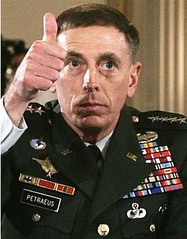
Here is a prime example of the General Diplomat in fine form; General David Petraeus's remarks for panel discussion at the 45th Munich Security Conference on 08 FEB 09.


Shall we do a little friendly Fisking?
Well, thank you very much chairman and it’s great to be with you all. And actually if I could start off by just applauding as a soldier what I just heard the Minister of Defense of the UK tell us. I thought that was a terrific message. It’s so great to be on the stage with my new diplomatic partner, Ambassador Richard Holbrooke.
He sets the tone just right from the start.
You know, it’s every Commander’s dream to have as his ambassadorial wingman someone journalists describe with nicknames like “The Bulldozer.” LAUGHTER. In all seriousness, I want to publicly salute this gifted diplomat for taking on his new position, an appointment that conveys how significant the focus is in the United States on Afghanistan and Pakistan and the South and Central Asian regions more broadly.
Modest deference to civilian power.
Secretary Gates, the Defense Gates recently described Afghanistan to the U.S. Congress as posing “our greatest military challenge right now.” As he noted, our fundamental objective in Afghanistan is to ensure that transnational terrorists are not able to reestablish the sanctuaries they enjoyed prior to 9/11. It was to eliminate such sanctuaries that we took action in Afghanistan in 2001. And preventing their reestablishment remains an imperative today – noting, to be sure, that achievement of that objective inevitably requires accomplishment of other interrelated tasks as well. As has been explained, President Obama has directed a strategy review that will sharpen the clarity of these tasks.
Establish your place in the Chain of Command and where and why we are doing what we are doing.
Afghanistan has been a very tough endeavor. Certainly, there have been important achievements there over the past seven years as Minister Jung and President Karzai noted in the earlier session, many important ones.

But in recent years the resurgence of the Taliban and Al Qaeda has led to an increase in violence, especially in the southern and eastern parts of the country. Numerous other challenges have emerged as well: difficulties in the development of governmental institutions that achieve legitimacy in the eyes of the Afghan people; corruption, expansion of poppy production and the illegal narcotics industry - although that was reversed last year - and difficulties in the establishment of the Afghan police.
Acknowledge success, and point out areas that need focus.
In fact, there has been nothing easy about Afghanistan. And as Senator Lieberman observed recently in a speech to the Brookings institution, “Reversing Afghanistan’s slide into insecurity will not come quickly, easily, or cheaply.” Similarly, Secretary Gates told Congress, “this will undoubtedly be a long and difficult fight.” I agree. In fact, I think it’s important to be clear eyed about the challenges that lie ahead, while also remembering the importance of our objectives in Afghanistan and the importance of the opportunity that exists as we all intensify our efforts and work together to achieve those objectives.
"We" and "our," not "I" and "my."
Many observers have noted that there are no purely military solutions in Afghanistan. And that is correct. Nonetheless, military action, while not sufficient by itself, is absolutely necessary, for security provides the essential foundation for the achievement of progress in all the other so-called lines of operation – recognizing, of course, that progress in other areas made possible by security improvements typically contributes to further progress in the security arena – creating an upward spiral in which improvements in one area reinforce progress in another.
Take you opponent's talking point and explain what it really means in your terms.
Arresting and then reversing the downward spiral in security in Afghanistan thus will require not just additional military forces, as we have been reminded again today, but also large civilian contributions, greater unity of effort between civilian and military elements and with our Afghan partners, and a comprehensive approach, as well as sustained commitment and a strategy that addresses the situations in neighboring countries.

This morning, I’d like to describe briefly and in general terms the resource requirements under discussion in Washington and various other national capitals. Then I’ll describe a few of the ideas that helped us in Iraq and that properly adapted for Afghanistan, can help GEN McKiernan and ISAF.
Personalize those who are doing the work.
In recent months, our President and many others have highlighted the need for additional forces in Afghanistan to reverse the downward spiral in security, help Afghan forces provide security for the elections on August 20th, and enable progress in the tasks essential to achievement of our objectives. As has been announced in recent months, more US forces are entering operations as part of ISAF in Afghanistan now, more have been ordered to deploy, and the deployment of others is under consideration. Beyond that, the number of Afghan soldiers to be trained and equipped has been increased, and many of the other troop contributing nations will deploy additional forces as well, with a number of commitments under discussion. And I would be remiss, if I did not ask individual countries to examine very closely what forces and other contributions they can provide as ISAF intensifies its efforts in preparation for the elections in August.
Remind the reluctant that you need their help to succeed.
It is, of course, not just additional combat forces that are required. ISAF also needs more so-called enablers to support the effort in Afghanistan – more intelligence, surveillance and reconnaissance platforms; more military police, engineers, and logistis elements, additional special operations forces and civil affairs units; more lift and attack helicopters and fixed wing aircraft, additional air medevac assets; increases in information operations capabilities and so on. Also required are more Embedded Training Teams, Operational Mentoring and Liaison Teams, and Police Mentoring Teams, all elements that are essential to building the all important capability of the Afghan National Security Forces. And I applaud the German Defense Minister’s announcement of additional police and army trainers this morning. As with combat forces, some additional enabler elements are already flowing to Afghanistan, commitments have been made to provide others, and others are under discussion.
Give the reluctant options to help within their comfort zone; head-off excuses for inaction.
As Senator Lieberman also highlighted in his Brookings speech, a surge in civilian capacity is needed to match the increase in military forces in order to field adequate numbers of provincial reconstructions teams and other civilian elements – these teams and other personnel are essential to help our Afghan partners expand their capabilities in key governmental areas, to support basic economic development, and to assist in development of various important aspects of the rule of law.

It is also essential, of course, that sufficient financial resources be provided for the effort in Afghanistan, it’s hugely important that nations deliver on their pledges of economic development assistance that the Afghan National Army and Law and Order Trust Funds be fully financed, that support be maintained for the Afghan Reconstruction Trust Fund, and that resources continue to be provided for the projects conducted by our military units and PRT’s at local levels. And again I applaud the German Defense Minister’s announcement of additional development aid this morning as well.
Remind others of their past promises not yet fulfilled.
Of course, just more troops, civilians, dollars and even Euros won’t be enough. As students of history, we are keenly aware that Afghanistan has, over the years, been known as the graveyard of empires. It is, after all, a country that has never taken kindly to outsiders bent on conquering it. We cannot take that history lightly. And our awareness of it should caution us to recognize that, while additional forces are essential, their effectiveness will depend on how they are employed, as that, in turn, will determine how they are seen by the Afghan population.
Acknowledge the wisdom of history.
And what I’d like to discuss next, then, are some of the concepts that our commanders have in mind as plans are refined to employ additional forces. I base this on discussions with GEN McKiernan and others who have served in Afghanistan, as well as on lessons learned in recent years. I do so with awareness that a number of the elements on the ground are operating along the lines of these ideas – and that their ability to do so will be enhanced by the increased density on the ground of ISAF and Afghan forces as additional elements deploy to the most challenging areas. Counterinsurgency operations are, after all, troop intensive. Finally, I want to underscore the fact that commanders on the ground will, as always, operationalize the so-called big ideas I talked about in ways that are appropriate for their specific situations on the ground. So here are some of those ideas:
Be subtle, but establish your credibility and actions. Be blunt at specific points in a stew of subtle.
First and foremost, our forces and those of our Afghan partners have to strive to secure and serve the population. We have to recognize that the Afghan people are the decisive “Terrain.” And together with our Afghan partners, we have to work to provide the people security, to give them respect, to gain their support, and to facilitate the provision of basic services, the development of the Afghan Security Forces in the area, the promotion of local economic development, and the establishment of governance that includes links to the traditional leaders in society and is viewed as legitimate in the eyes of the people.

Securing and serving the people requires that our forces be good neighbors. While it may be less culturally acceptable to live among the people in certain parts of Afghanistan than it was in Iraq, it is necessary to locate Afghan and ISAF forces where they can establish a persistent security presence. You can’t commute to work in the conduct of counterinsurgency operations. Positioning outposts and patrol bases, then, requires careful thought, consultation with local leaders, and the establishment of good local relationships to be effective.

Positioning near those we and our Afghan partners are helping to secure also enables us to understand the neighborhood. A nuanced appreciation of local situations is essential. Leaders and troopers have to understand the tribal structures, the power brokers, the good guys and the bad guys, local cultures and history, and how systems are supposed to work and how they do work. This requires listening and being respectful of local elders and mullahs, of farmers and shopkeepers – and it also requires, of course, many cups of tea.
Review the fundamentals for the lazy and powerful; and reinforce for the busy and wise.
It is also essential that we achieve unity of effort, that we coordinate and synchronize the actions of all ISAF and Afghan forces – and those of our Pakistani partners across the border – and that we do the same with the actions of our embassy and international partners, our Afghan counterparts, local governmental leaders, and international and non-governmental organizations. Working to a common purpose is essential in the conduct of counterinsurgency operations.
"We" and "our;" rinse - repeat.
We also, in support of and in coordination with our Afghan partners, need to help promote local reconciliation, although this has to be done very carefully and in accordance with the established principles in the Afghan constitution. In concert with and in support of our Afghan partners, we need to identify and separate the “irreconcilables” from the “reconcilables” striving to create the conditions that can make the reconcilables part of the solution instead of a continuing part of the problem, even as we kill, capture, or run off the irreconcilables. In fact, programs already exist in this area and careful application of them will be essential in the effort to fracture and break off elements of the insurgency in order to get various groups to put down their weapons and support the legitimate government and constitution of Afghanistan.
Attack the opponents talking points over and over. Take their intellectual terrain.
Having said that, we must pursue the enemy tenaciously. True irreconcilables, again, must be killed, captured, or driven out of the area. And we cannot shrink from that any more than we can shrink from being willing to support Afghan reconciliation with those elements that show a willingness to reject the insurgents and help Afghan and ISAF forces.
Don't hide the hard truth.
To ensure that the gains achieved endure, ISAF and Afghan forces have to hold areas that have been cleaned. Once we fight to clear and secure an area, we must ensure that it is retained. The people – and local security forces – need to know that we will not abandon them. Additionally, we should look for ways to give local citizens a stake in the success of the local security effort and in the success of the new Afghanistan more broadly as well. To this end, a reformed, capable Afghan National Police force – with the necessary support from the international community and the alliance – is imperative to ensuring the ability to protect the population. And the new Afghan Population Protection Program announced by MOI Atmar holds considerable promise and deserves our support as well.
Explain the micro - acknowledge the action of individual and small unit actions inside the plan. Sew in trust.
On a related note, to help increase the legitimacy of the Afghan government, we need to help our Afghan partners give the people a reason to support the government and their local authorities. This includes helping enable Afghan solutions to Afghan problems. And on a related note, given the importance of Afghan solutions and governance being viewed as legitimate by the people and in view of allegations of corruption, such efforts likely should feature support for what might be called an “Afghan accountability offensive” as well. That will be an important effort.
Return to the reason and the solution.
In all that we do is we perform various missions, we need to live our values. While our forces should not hesitate to engage and destroy an enemy, our troopers must also stay true to the values we hold dear. This is, after all, an important element that distinguishes us from the enemy, and it manifests itself in many ways, including making determined efforts to reduce to the absolute minimum civilian casualties – an effort furthered significantly by the recent tactical direction and partnering initiatives developed by GEN MCKiernan with our Afghan counterparts.
Remind everyone that you value the lives of your"troopers" as well as the lives of others.
We must also strive to be first with the truth. We need to beat the insurgents and extremists to the headlines and to pre-empt rumors. We can only do that by getting accurate information to the chain of command to our Afghan partners, and to the press as soon as is possible. Integrity is critical to this fight. Thus, when situations are bad, we should freely acknowledge that fact and avoid temptations to spin. Rather we should describe the set-backs and failures we suffer and then state what we have learned from them and how we’ll adjust to reduce the chances of similar events in the future.

Finally, we must always strive to learn and adapt. The situation in Afghanistan has changed significantly in the past several years and it continues to evolve. This makes it incumbent on us to assess the situation continually and to adjust our plans, operations, and tactics as required. We should share good ideas and best practices, but we should also never forget that what works in one area today may not work there tomorrow, and that what works in an area may not work in another area either.
Emphasize honesty and openness expected of military leaders from a Representative Republic.
In conclusion, allow me to reiterate the key points I’ve sought to make. We have a hugely important interest in ensuring that Afghanistan does not once again become a sanctuary for trans-national extremists. Achieving that core objective, in turn, requires the accomplishment of several other significant tasks. Although there have been impressive achievements in Afghanistan since 2001, the security situation has deteriorated markedly in certain areas in the past two years. Reversing that trend is necessary to improve security for the population, to permit the conduct of free and fair elections in August, and to enable progress in other important areas.

Achieving security improvements will require more ISAF and Afghan security forces of all types – combat, combat support, logistics, trainers and advisors, special operations, and so on. Some additional forces are already deploying, further increases have been ordered or pledged, and more are under discussion. To be effective, the additional military forces will need to be employed in accordance with counterinsurgency concepts applied by leaders who have a nuanced understanding of their areas of operation. And to complement and capitalize on the increased military resources, more civilian assets, adequate financial resources, close civil-military cooperation, and a comprehensive approach that encompasses regional states will be necessary.

None of this will be easy. Indeed, as Vice President Biden observed recently after a trip to Afghanistan, Afghanistan will likely get harder before it gets easier. And sustained progress will require sustained commitment. But our objectives are of enormous importance. A significant opportunity is at hand, and we all need to summon the will and the resources necessary to make the most of it. Thank you very much.
Game. Set. Match. That is how it is done. School is out now kiddies.

Friday, October 05, 2007

Ivory Tower corpse eating


I have a lot of trouble understanding how people can condemn others who sacrifice to mitigate the suffering and deaths of innocent people and their own countrymen, and improve the lives of some of the most desperate people on Earth – while in the end bringing victory to their nation. I wonder if they care, or is the blood, treasure, and sacrifice of others mean nothing to them when there is attention to be gained and consequence-free self-righteousness to be had.

Time to attack the messenger – and his message. There are times when you have to.

It is easy for some with their nice jobs in academia with a captive sycophantic audience and no-challenge paycheck to spout off in self-important tones to a self-congratulatory cloister of the rich, spoiled army of the clueless. It is easy for them because their betters are out there doing the hard work that actually saves lives; the lives of their countrymen and the people they are trying to help. First though, let’s review the good.
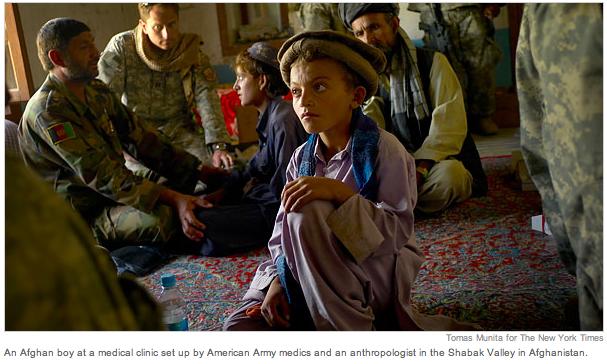
SHABAK VALLEY, Afghanistan — In this isolated Taliban stronghold in eastern Afghanistan, American paratroopers are fielding what they consider a crucial new weapon in counterinsurgency operations here: a soft-spoken civilian anthropologist named Tracy.

Tracy, who asked that her surname not be used for security reasons, is a member of the first Human Terrain Team, an experimental Pentagon program that assigns anthropologists and other social scientists to American combat units in Afghanistan and Iraq. Her team’s ability to understand subtle points of tribal relations — in one case spotting a land dispute that allowed the Taliban to bully parts of a major tribe — has won the praise of officers who say they are seeing concrete results.

Col. Martin Schweitzer, commander of the 82nd Airborne Division unit working with the anthropologists here, said that the unit’s combat operations had been reduced by 60 percent since the scientists arrived in February, and that the soldiers were now able to focus more on improving security, health care and education for the population.

“We’re looking at this from a human perspective, from a social scientist’s perspective,” he said. “We’re not focused on the enemy. We’re focused on bringing governance down to the people.”

In September, Defense Secretary Robert M. Gates authorized a $40 million expansion of the program, which will assign teams of anthropologists and social scientists to each of the 26 American combat brigades in Iraq and Afghanistan. Since early September, five new teams have been deployed in the Baghdad area, bringing the total to six.

Praise for SECDEF and praise for the military opening its mind to any tool available to bring victory. More than that, praise to Tracy.
In interviews, American officers lavishly praised the anthropology program, saying that the scientists’ advice has proved to be “brilliant,” helping them see the situation from an Afghan perspective and allowing them to cut back on combat operations.

The aim, they say, is to improve the performance of local government officials, persuade tribesmen to join the police, ease poverty and protect villagers from the Taliban and criminals.
…
Officers shrugged off questions about whether the military was comfortable with what David Kilcullen, an Australian anthropologist and an architect of the new strategy, calls “armed social work.”

“Who else is going to do it?“ asked Lt. Col. David Woods, commander of the Fourth Squadron, 73rd Cavalry. “You have to evolve. Otherwise you’re useless.”
There never was a feeling that there was strictly a military solution to AFG. The military can only provide the security so that the true keys to victory – rule of law, reconstruction and development – can take place. That has always been the case. We just don’t’ have all the intellectual capital we need inside our five walls. Goodness knows The State Dept isn’t going to provide it.
The anthropology team here also played a major role in what the military called Operation Khyber. That was a 15-day drive late this summer in which 500 Afghan and 500 American soldiers tried to clear an estimated 200 to 250 Taliban insurgents out of much of Paktia Province, secure southeastern Afghanistan’s most important road and halt a string of suicide attacks on American troops and local governors.

In one of the first districts the team entered, Tracy identified an unusually high concentration of widows in one village, Colonel Woods said. Their lack of income created financial pressure on their sons to provide for their families, she determined, a burden that could drive the young men to join well-paid insurgents. Citing Tracy’s advice, American officers developed a job training program for the widows.

In another district, the anthropologist interpreted the beheading of a local tribal elder as more than a random act of intimidation: the Taliban’s goal, she said, was to divide and weaken the Zadran, one of southeastern Afghanistan’s most powerful tribes. If Afghan and American officials could unite the Zadran, she said, the tribe could block the Taliban from operating in the area.

“Call it what you want, it works,” said Colonel Woods, a native of Denbo, Pa. “It works in helping you define the problems, not just the symptoms.”

Embedding Scholars

The process that led to the creation of the teams began in late 2003, when American officers in Iraq complained that they had little to no information about the local population. Pentagon officials contacted Montgomery McFate, a Yale-educated cultural anthropologist working for the Navy who advocated using social science to improve military operations and strategy.

Ms. McFate helped develop a database in 2005 that provided officers with detailed information on the local population. The next year, Steve Fondacaro, a retired Special Operations colonel, joined the program and advocated embedding social scientists with American combat units.

Ms. McFate, the program’s senior social science adviser and an author of the new counterinsurgency manual, dismissed criticism of scholars working with the military. “I’m frequently accused of militarizing anthropology,” she said. “But we’re really anthropologizing the military.”
Nothing totally new here, but as an institution we allowed outselves to forget the non-kinetic parts of victory in “Small Wars.” Re-learning, but learning nonetheless.

Now that we are through with the huggy-lovey, let’s roll over the rock and look at the septic mess that flows from the foundation of the Ivory Towers.
Yet criticism is emerging in academia. Citing the past misuse of social sciences in counterinsurgency campaigns, including in Vietnam and Latin America, some denounce the program as “mercenary anthropology” that exploits social science for political gain. Opponents fear that, whatever their intention, the scholars who work with the military could inadvertently cause all anthropologists to be viewed as intelligence gatherers for the American military.

Hugh Gusterson, an anthropology professor at George Mason University, and 10 other anthropologists are circulating an online pledge calling for anthropologists to boycott the teams, particularly in Iraq.

“While often presented by its proponents as work that builds a more secure world,” the pledge says, “at base, it contributes instead to a brutal war of occupation which has entailed massive casualties.”
Hugh Gusterson, I know you are not stupid, therefore you are either ignorant or just shamefully wrong. I will just for now call you ignorant. I suggest you talk to Tracy, go yourself to Afghanistan, or at least accept the fact that without the help of your colleagues, more and more innocents will die.

One last note for my pet trolls,
In Afghanistan, the anthropologists arrived along with 6,000 troops, which doubled the American military’s strength in the area it patrols, the country’s east.

A smaller version of the Bush administration’s troop increase in Iraq, the buildup in Afghanistan has allowed American units to carry out the counterinsurgency strategy here, where American forces generally face less resistance and are better able to take risks.
They went because the promises made by out “international partners” to commit to AFG never panned out. We tried – and are still trying.

Wednesday, September 07, 2022

5 Years, 17 Lives, 1 Navy


How long do you wait to see what you purchased with the lives of 17 Sailors?

Back in 2015 I decided we needed a measure of time for things in the Navy, and settled on a measure of time called a WorldWar;

I think "years" does not really tell the best story about how long it takes to get even the most simple ship to displace water after the "go" is given.

Perhaps we need a new measurement - one that provides context. We need one defined in American terms, natch, and I have an idea.

I've used it before; the time from the attack on Pearl Harbor to the signing ceremony on the Mighty Mo.

That is 07DEC41 to 02SEP45. 3-years, 8-months, 26 days. Including the end date, that is 1,366 days.

Five years is a long time. It is about one and a third the time it took for the USA to fight World War II.

5-years = 1.34-WorldWars.

What was mostly anger at the time during the horrible summer of 2017 when the FITZGERALD and MCCAIN collided with merchant ships in the Western Pacific has, for me at least, distilled more in to sadness. Sadness looking towards hope, but sadness nonetheless.

Such an avoidable and predictable waste. Hopefully something good can come from it. 

As I wrote in the fall of that year;

Why would the Surface community want to benchmark an Aviation-centric instruction’s attitude as opposed on focusing on unit level failures? Here are 17 reasons;

- GMSN Kyle Rigsby of Palmyra, Virginia, 19 years old.

- YN2 Shingo Alexander Douglass, of San Diego, California, 25 years old.

- FC1 Carlos Victor Ganzon Sibayan of Chula Vista, California, 23 years old.

- PSC Xavier Alec Martin of Halethorpe, Maryland, 24 years old.

- STG2 Ngoc Turong Huynh of Oakville, Connecticut, 25 years old.

- GM1 Noe Hernandez of Weslaco, Texas, 26 years old.

- FCC Gary Rehm, Jr., of Elyria, Ohio, 37 years old.

- ETC Charles Nathan Findley of Amazonian, Missouri, 31 years old.

- ICC Abraham Lopez of El Paso, Texas, 39 years old.

- ET1 Kevin Sayer Bushell of Gaithersburg, Maryland, 26 years old.

- ET1 Jacob Daniel Drake of Cable, Ohio, 21 years old.

- ITl Timothy Thomas Eckels Jr. of Baltimore, Maryland, 23 years old.

- ITl Corey George Ingram of Poughkeepsie, New York, 28 years old.

- ET2 Dustin Louis Doyon of Suffield, Connecticut, 26 years old.

- ET2 John Henry Hoagland III of Killeen, Texas, 20 years old.

- IC2 Logan Stephen Palmer of Harristown, Illinois, 23 years old.

- ET2 Kenneth Aaron Smith of Cherry Hill, New Jersey, 22 years old.

Not waving bloody shirts around, but this should focus the mind. This is not an academic exercise, or some Black Swan event – this is a scenario x2 that people have been warning about for years. We don’t just have bent steel and bruised egos here – these are lessons written in the blood of 17 Sailors who we like to say are our most important assets.

Over in DefenseNews back in June, Megan Eckstein had a long and well researched article that everyone should take a moment to read. I'm just now getting around to it and it brought up a little anger, a lot of sadness, but a fair measure of hope that well meaning people in hard jobs are trying to claw something back from the completely avoidable deaths from 1.34 WorldWars ago.

Here's a few points ... but this is only a small fraction. You really need to read it all;

The comprehensive review of recent surface force incidents, released in early November 2017, highlighted the root problems Kitchener outlined. A quick scan of the table of contents makes clear there’s a long list of problems: poor seamanship and failure to follow safe navigational practices; erosion of crew readiness; headquarters processes that inadequately identified, assessed and managed operational risks; “can-do” culture that undermined basic watchstanding and safety practices.

The Navy has spent the past five years not just addressing these issues, Kitchener said, but doing so in a data-driven way meant to prevent the Navy from backsliding.

Operational tempo drove many of the problems outlined in the review. Japan-based ships in particular faced such demand that they were constantly too busy, which came at the expense of training and maintenance time. Personnel were yanked from one ship crew to fill in for others, meaning sailors didn’t get downtime and the crews didn’t gel as a unit.

Of course, this is naval leadership 101; none of this is breaking news. This is Vince Lombardi fundamentals...yet we decided we didn't need to remember them.

Well, the naval gods of the copybook headings took their payment.

We are a Surface Navy at peace, and in the Western Pacific - blinkered, overcaffeinated, and overheated N2 types aside - have been with a few minutes of exceptions for decades.

...for all ships in the Pacific — both 7th Fleet in Japan and U.S. 3rd Fleet in San Diego, California — all requests from fiscal 2019 to fiscal 2021 to extend a depot-level repair period — despite potentially delaying a ship’s deployment — were approved. This included 29 extensions in FY19; 27 in FY20; and 30 in FY21, according to data provided by Naval Surface Forces.

There’s a second process in place for ships already deployed. A redline instruction from Naval Surface Forces states a ship cannot remain at sea if certain systems go down, unless it receives a waiver from the operational commander. Even then, the approval must be accompanied by a mitigation plan approved by Kitchener or his East Coast counterpart, Rear Adm. Brendan McLane, who commands Naval Surface Force Atlantic.

...

Additionally, ships are entitled to a certain number of continuous maintenance availability days throughout the year — the type of routine care done pierside to keep ships at peak readiness for operations, as opposed to the major upgrades and repairs done at a depot.

Kitchener said 19% of that work was executed in 2017, as opposed to nearly 90% today. 

Simple things are not simple, but with the right leadership, they stay that way. This is how you save ships, save lives, and increase retention. That would have saved 17 lives in 2017 - of that I am absolutely convinced.

Vasely said the Learning to Action Board will tackle the Fitzgerald and McCain collisions as its next project, looking to ensure the permanent implementation of the 117 recommendations and the translation of those surface-specific recommendations into broader ideas to make the whole Navy safer.

“One of the key things that we realized as we’ve gone through the Bonhomme Richard and the major fires review iteration is that we’re not getting after … the long-term success of what this will look like, which is: How do we get left of bang?” he said. “How do we look at the data … and identify those negative trends that are posing significant risks that, if unchecked, if we don’t surge on them, that basically will result in a potentially catastrophic event or a pinnacle-level event?”

A fifth goal for the board now, he said, is meant to be more proactive, “looking at negative trends that come up — so think about [inspector general] investigations, area assessments, think Naval Safety Command or hazard reports that come through, think about pulse surveys that go out to the fleet that come back — all provide data that, really, there has not been a repository or a mechanism to look at that data to determine the negative trends, to arrest the negative trends from turning into a pinnacle-level event.”

For Kitchener, turning lessons from the past into forward-looking predictive analytics is a critical endeavor.

“We cannot allow those lives that were lost to be in vain,” he said.

Should it take 1.34 WorldWars to get here? I don't know. Maybe I am impatient ... but if this can stick like the lessons Naval Aviation took to heart in the 50s-60s, then perhaps yes.

There's your hope. 

Friday, December 04, 2009

Fullbore Friday


We have lost an iconic figure - and a Salamander favorite. Those who know me well will know why. Not just for this,
Colonel Millett, a career Army officer who was awarded the Medal of Honor in 1951 after leading a bayonet charge up a hill in Korea, said in a 2006 interview, “I must be the only regular Army colonel who has ever been court-martialed and convicted of desertion.’’
Yep - that is a man's man.
Retired Col. Lewis L. Millett, who received the Medal of Honor during the Korean War for leading what was reportedly the last major American bayonet charge, died Nov 14.

Millett, 88, died in Loma Linda, Calif., last weekend after serving for more than 15 years as the honorary colonel of the 27th Infantry Regiment Association.
I read about him a few years ago and his leadership style brought a nod and a smile to my face - and brought many of his men home.
On February 5, 1951, it was moving through a frozen rice paddy west of the road running south out of Osan. Suddenly, the crackle of enemy machine-gun fire broke the morning air. The first platoon found itself pinned down. Chinese were emplaced on two hills straddling the road. Their fire picked up. The bullets whistled through the air, slapping into the ice.

"Second platoon!" Millett hollered. "Fix bayonets--move to the left of the first." Then Millett was off, shouting, "C’mon with me!" He bounded to the base of the hill. There he waited for his platoons to form up. "We’ll kill‘m with the bayonet! Let’s go!" he yelled when they were ready. Up the hill the two platoons went, all the GIs yelling at the top of their voices. Above them, Millett appeared on the skyline, rifle in one hand, waving his men upward with the other. Even as he did so, Chinese soldiers scurried from their foxholes, skittering down the reverse slope helter-skelter.

By the time the two platoons joined Millett on the crest only a few enemy stragglers remained. They were quickly dispatched. To the rear, the rest of Millett’s battalion observed the audacious charge. The colonel quickly came forward to shake Millett’s hand and congratulate him for his courage. That night the colonel began the paperwork that would bring Millett the Distinguished Service Cross. Little did he know that Millett’s charge was but a rehearsal for what would come just forty-eight hours later.

At midday on February 7, Company E had the point for the battalion. Near the smoke-blackened village of Soam-ni, just west and south of Osan, they approached a ridge line. On military maps, it was designated Hill 180. To the men of Company E and the annals of U.S. military history it would forever be "Bayonet Hill."

Accompanied by two of his platoons astride tanks, Millett approached Hill 180, fully expecting to bypass it completely. Then one of his men noticed movement among the thick foliage near the top of the hill. It was crawling with Chinese. And Company E sat almost directly under their guns. Once apprised of the situation, Millett quickly ordered the tanks off the road. He got his two platoons deployed along a paddy dike.

By now the Chinese had opened fire. A number of Millett’s men fell, cut down by vicious machine-gun fire. Leaping aboard the nearest tank, Millett grabbed its .50-caliber machine gun. He sent a stream of tracers flying toward the enemy position. "Keep it going there," he told the gunner. Then he jumped off the tank and moved on. He knew from here on it was all a matter of timing. He had to get an attack under way quickly. He didn’t want these Chinese to get away like the others had two days earlier.

Millett called to one of his platoon leaders to get ready to move out. Seconds later, enfilading fire from a previously quiet Chinese machine gun tore into the first platoon. Casualties mounted. Then the .50-caliber machine gun supporting first platoon went silent--jammed with a ruptured cartridge. Millett swore under his breath. His attack was crumbling even before it started. He scrambled from his position and raced across the bullet-swept ground to the first platoon. Spotting the platoon sergeant as he barreled into position, Millett just hollered at the men, "Get ready to move out! We’re going up the hill. Fix bayonets! Charge! Everyone goes with me!" He raised his rifle and took out across the open fields.

Bounding from the small rises and hurdling the ditches, Millett kept his feet across the ice-covered ground. Behind him the platoon sergeant and a dozen men ran after Millett. Those who hadn’t followed were cut down minutes later as enemy machine-gun fire from Hill 180 zeroed in on them. When he reached the base of the hill, Millett flung himself down under a rocky outcropping while he waited for the others to catch up. After they did Millet motioned upward. "Let’s go!" he said. Dashing from rock to rock. Millett made the first of three small knobs that comprised Hill 180. The center and far knob rose some twenty meters higher. Millett spotted a Chinese machine gun to his left. He ordered a BAR to fire on it. Another soldier spotted eight Chinese squatting in a hole just ten yards from Millett. The captain ran to it, firing his carbine and throwing grenades. The enemy died.

Millett now radioed for his third platoon to come forward. After he had them in position Millett told them, "Attack straight up the hill!" With their bayonet-tipped rifles carried at high port, screaming Chinese phrases as they ran, Millett and his assembled men raced toward the two higher knobs. Lunging into the first line of enemy foxholes, the GIs ripped into the Chinese, bayonets first. The terror-filled shrieks of the bayoneted enemy rose above the din of battle. Millett was so far in front of his men he had to dodge grenades thrown by both sides. Ignoring the thundering explosions, he charged headlong at an anti-tank gun firing point-blank at him. A few well-tossed grenades took care of that weapon.

A cluster of grenades flew down from a Chinese position farther uphill. Millett danced and dodged around, avoiding the detonations of eight grenades. A ninth got him, sending hot steel shards into his back and legs. He could feel the blood coursing down his skin, drenching his fatigues beneath his parka. Unmindful of the intense pain, Millett continued his charge. He urged his men forward. "Let’s go!," he screamed. "Use grenades and cold steel! Kill ‘em with the bayonet!" At the crest of the highest knob he jumped into one arm of a V-shaped slit trench. With a savage thrust of his bayonet he impaled one enemy soldier. He had to fire a round to dislodge his weapon. A second enemy soldier rushed at Millett. The emboldened captain met him like a frenzied tiger, jamming his sharp steel blade into the man’s throat, ripping it wide open. A third Chinese, in the far arm of the V, raised his rifle. Before he could fire Millett was on him, slamming his blood-stained bayonet into the enemy soldier’s chest. While Millett dispatched the soldier, the rest of his men rushed past. Millett leaped after them. Together they went on, screaming and yelling, firing from the hip, ripping and stabbing enemy flesh with their bayonets, throwing grenades into bunkers and foxholes until they had completely eliminated the enemy from the hill.

When it was all over Millett stopped atop the saw-toothed ridge and pumped his bloody rifle up and down, signaling to those below he had conquered Bayonet Hill. After the battle forty-seven enemy dead were counted on the forward slope of the hill; thirty had died as a result of bayonet wounds. On the reverse slope lay another fifty enemy, dead of either bayonet or gunshot wounds. Witnesses estimated another hundred Chinese escaped.

Evacuated due to the seriousness of his wounds, Millett spent several months in the hospital recuperating. His Medal of Honor was presented to him at the White House on July 5, 1951.
Some wonder why his men were so well versed in the "archaic" bayonet. Well ...
A few weeks earlier, he had heard that the Chinese Army was circulating handbills among their troops accusing the Americans of being “afraid of cold steel”—the bayonet—so he had trained his men hard in the use of that weapon.
His Medal of Honor citation:
Capt. Millett, Company E, distinguished himself by conspicuous gallantry and intrepidity above and beyond the call of duty in action. While personally leading his company in an attack against a strongly held position he noted that the 1st Platoon was pinned down by small-arms, automatic, and antitank fire. Capt. Millett ordered the 3d Platoon forward, placed himself at the head of the 2 platoons, and, with fixed bayonet, led the assault up the fire-swept hill. In the fierce charge Capt. Millett bayoneted 2 enemy soldiers and boldly continued on, throwing grenades, clubbing and bayoneting the enemy, while urging his men forward by shouting encouragement. Despite vicious opposing fire, the whirlwind hand-to-hand assault carried to the crest of the hill. His dauntless leadership and personal courage so inspired his men that they stormed into the hostile position and used their bayonets with such lethal effect that the enemy fled in wild disorder. During this fierce onslaught Capt. Millett was wounded by grenade fragments but refused evacuation until the objective was taken and firmly secured. The superb leadership, conspicuous courage, and consummate devotion to duty demonstrated by Capt. Millett were directly responsible for the successful accomplishment of a hazardous mission and reflect the highest credit on himself and the heroic traditions of the military service.
A little side-bar to his life. He lost his youngest son with the 347 people who were killed returning from a peacekeeping mission in the Sinai.

He wrote
the following in his memory:
A SOLDIER’S PRAYER - by Col. Lewis L. Millett

I’ve fought when others feared to serve.
I’ve gone where many failed to go.
I’ve lost friends in war and strife, who valued duty over the love of life.
I’ve shared the comradeship of pain
I’ve searched these lands for men that we’ve lost.
I’ve sons who’ve served our land of liberty who’d fight to see that other lands are free.
I’ve seen the weak forsake humanity.
I’ve heard fakers praise our enemy.
I’ve seen challenged men stand ever bolder.
I’ve seen the duty, the honor, the sacrifice of the soldier.
Now, I understand the meaning of all lives,
The lives of comrades of not so long ago.
So to you who answered duties siren call, may
God bless you my son, may God bless you all.