Thursday, November 19, 2020

Diversity Thursday


A little different DivThu today. I’m not going to cover a specific outrage or Orwellian program, no, something different but more important.

Consider this a war warning.

Firstly, I need to repeat something for my Trump supporters here; until the Summer of 2020, he completely failed in this area. As people are policy, he failed in that he did not appoint people who understood what was going on in the larger culture. He finally caught on to what was going on and acted, specifically on Critical Race Theory, but that was him. He quickly saw what it was and took action.

He needed dozens to hundreds of political appointees to see the problem and act on their own as he did, but they were absent from the field.

The people he brought in to his administration simply were not brave enough, or knowledgeable enough, to understand what this new cancer with the friendly sounding names, Diversity and Inclusion, really meant when operationalized.

As opposed to promoting what all well-meaning people desire – a republic where you are judged by the content of your character and not something as meaningless to the individual as race, creed, color, national origin or who you want to spend a long weekend in Tahoe with  - instead the Diversity Industry desires to promote sectarianism and division. To keep the people divided along arbitrary groups that can be pit against each other, fighting over things they cannot do anything about – specifically what they were born as or what was done hundreds of years ago. 

As there is nothing that can be done to correct either of those things, the crisis and conflict never ends. The ability to manipulate and control blocks of people never ends. The hate and anger such a world view provokes never ends, the externalization of internal frustrations never ends, and most importantly to the Diversity Industry – the contracts never end, the jobs never end – the  Möbius strip gravy train never ends.

Identity politics is the political arm of the Diversity Industry. Identity politics is a critical foundation stone, sadly, of the (D) party. Unlike the (R) party opposition to Identity politics, which is an afterthought at best, the (D) realize the power of this brain stem tactic and are serious as can be about it. They will bring it with them everywhere as they once again get access to levers of power.

For those of us who desire unity not division; equality not preference, opportunity not selection, freedom of thought vice ideological compliance – we are about to enter a time of strife.

In the summer of 2020’s unrest, the Diversity Industry took advantage of the opportunity and have a lot of the civilian world already spooked. Many of you have seen it in the new Diversity and Inclusion divisions, training programs, and new requirements concerning undefined “hate speech” and “social media audits” with Star Chamber like decisions on who will be fired or not, etc.

Many of us will find ourselves in positions to be part of these Star Chambers, selection committees, disciplinary arms, or just a gear in machine feeding the Diversity food trough, in both civilian, government, and military areas. This is where you need to be careful

As I’ve offered earlier, you do not have to totally submit to this totalitarian mindset. You don’t have to be a martyr. They don’t have to win every battle. You have to think like an insurgent, act like a guerrilla.

Ask polite but hard questions with an innocent tone and expression. Take the indirect path. If the commissariat demands metrics, nominations, or anything with a deadline – be late. Be incomplete. Be out of travel funds. Send your response to the wrong office code. Miss the photo-op. Be double-scheduled. As for requests in writing, and then reply with questions or clarification requests. Be a bit dim. Do not put yourself in danger, or those who rely on your position or leadership – but don’t be a willing participant to what you know is wrong and divisive. 

They will not be in power forever – but you will have to look at yourself in the mirror every morning.

Follow orders, but do not volunteer. Do what you must, but do not do it well. Ignore what you can. Be absent minded. Smile, be polite … almost to the edge of being patronizing but remember this one thing – those who make a living in the Diversity Industry know who they are and what they are doing. A very small percentage are true believers whose hearts are in the right place. They are not bad, they are just wrong – but make no mistake, they are the minority.

Most of the people in the Diversity Industry – remember, strife is their mother’s milk - spend their days soaked in grievance, resentment, and a sectarian view of everything. They do not really care what is going on – they just want to know the characteristics of the people doing it.

Remember, these are the people who demand that mixed race people MUST choose which of their genetic lines they prefer over all others to either gain advantage, or to be marked as privileged. These are people not motivated to solve problems, but to stoke them to grow. Only through the ongoing struggle to they justify their existence and their paycheck.

If they perceive in any way that you are a barrier to their existence and paycheck, they will set out to destroy you. Like all witch hunters, they must find a witch. If they cannot find one, they will create one. Remember my point above, do not be a martyr. This time will pass, but keep your honor intact.

This brings us to the future. At some point, the (D) will be out of power. When that happens, will the (R) demand that we pick up where the Trump administration started to clue in the summer of 2020?

Will we go after the nomenklatura and commissariat of the Diversity Industry that will be larger, stronger, and more embedded than it is now? Nothing was done to dismantle it in 2009 to today, so it has been hibernating – waiting for the (D) to return … and it will grow as long as they are in power.

Will we have the leaders willing to be called names and smeared all because they said; “No. We will no longer discriminate or give any preference based on race, creed, color, national origin as was done before.”

That is easily defended. That is unquestionably moral. In a wonderfully diverse and large nation such as ours, it is the only way to ensure we continue in peace and grow as a unified people.

Buck up everyone. This is going to be a rough ride. Look out for each other. Support each other … and when the cancel culture circles around someone, defend them. 

You are next; you’ll need friends.  

Wednesday, November 18, 2020

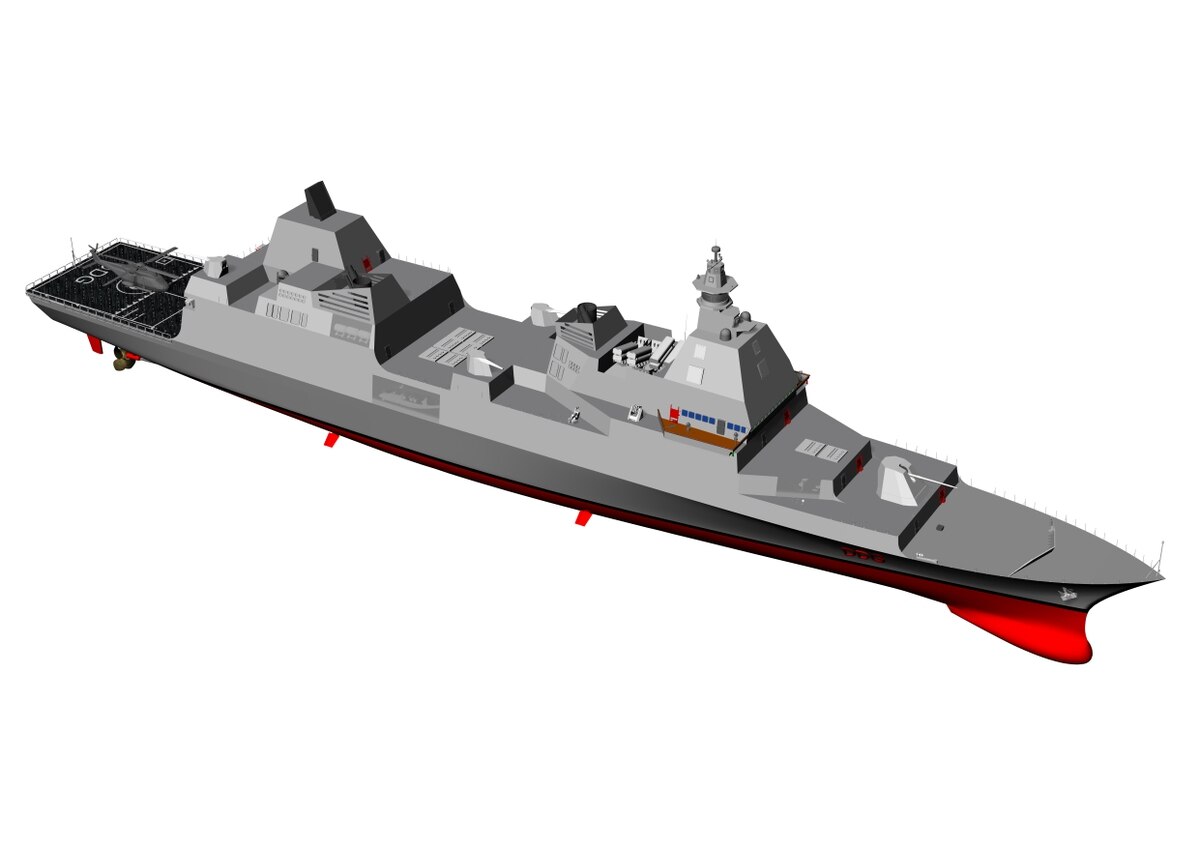
Who is Going to Have a New Cruiser Design Displacing Water First?


In Italy vs. USA ... the Italians will beat us to the punch.

Curious what they plan on doing?

Swallow your pride and head on over to USNIBlog for the details.

Note: there will be guns. Lots of guns.

Tuesday, November 17, 2020

Bit by Bit, an ABM Capability Grows


Our Navy would be such a more powerful force if we had kept with the mindset of the Aegis and Standard Missile evolution. 

Bit by bit, step by step, increment by increment, baseline by baseline, we got a stronger, more effective Navy.

A few hiccups like in any  long running program ... but the success is undeniable. 

In a first-of-its-kind test, the United States has successfully used a small ship-fired missile to intercept a target Intercontinental Ballistic Missile (ICBM), according to the Missile Defense Agency. The successful test shows the U.S. military now has another missile defense system capable of defending against North Korean ICBM’s aimed at the United States.

“The U.S. Missile Defense Agency (MDA), and U.S. Navy sailors aboard an Aegis Ballistic Missile Defense (BMD) System-equipped destroyer intercepted and destroyed a threat-representative Intercontinental Ballistic Missile (ICBM) target with a Standard Missile-3 (SM-3) Block IIA missile during a flight test demonstration in the broad ocean area northeast of Hawaii, Nov. 16,” said a statement from the Missile Defense Agency.

A target ICBM missile launched from Kwajalein Atoll in the Republic of the Marshall Islands in the Pacific Ocean traveled thousands of miles towards the body of water between Hawaii and the West Coast of the United States mainland.

MORE: US successfully intercepts ICBM in historic test
The destroyer USS John Finn that was positioned in those waters then fired an SM3 missile that successfully intercepted the target ICBM. The interceptor missile was directed towards its target using tracking information provided by an array of sensor systems designed to monitor any incoming missile attack on the United States.
There is a lot to do before this becomes a fleet-wide capability, but we are getting there.

An anti-ballistic missile capability afloat isn't just good for national defense and that of our allies, but as anti-ship ballistic missiles become more of a threat - it will be an integral part of fleet defense itself.

As challenging of a science and engineering accomplishment as this is, there are parallel challenges that need to be addressed. 

First of all is a depth of capability. A lot of modifications and improvements will be needed to our Aegis ships before more ships have this capability - if ever. Most with a naval background can figure out an outline of those details on their own.

Once that is done, then we have what has always been an gold-plated issue in the surface community  become a platinum-plated one - the most valuable square footage in the navalists neighborhood; VSL cells.

If you want attack targets ashore with TLAM or the coming hypersonics cruise missiles - and your submarines can't quite get everywhere with enough tubes as it is, you will need this surface capability. 

How many VLS cells can you fill with those weapons if you need to be able to defend yourself and others from one or two varieties of ballistic missiles and ASCM - not to mention an aircraft or two? Maybe leave a few cells for ASW ... perhaps?

Your standard issue Aegis Destroyer has 90 or 96 MK-41 VLS cells. You can do the math from there.

We lost two generations of possible evolution in surface warship development with the failure of DDG-1000 and CG(X). We really need to get off the ball sooner more than later with our next large surface combatant. We can also look at some fun ways to get more VLS cells to our Navy sooner ... but that is a post for another day, perhaps.


Monday, November 16, 2020

So, What Happened with Azerbaijan and Armenia?


Some of you are keeping an eye on the latest Azerbaijan-Armenia conflict over Nagorno-Karabakh, so if I may, let me put down a few markers here:

1. The Caucasuss have never been in the American sphere of influence.
2. The Caucasuss are not even tangentially adjacent to American national security concerns.

With that set up, here's the summary from Anders Åslund at The Atlantic Council;
The big lesson of the Azerbaijan-Armenia peace settlement is that military power rules. In a matter of weeks, the use of force has achieved what decades of diplomacy failed to deliver. The only two relevant international players in the South Caucasus region are Russia and Turkey. The United States has taken leave, while the European Union is a paper tiger without troops.

Essentially, Azerbaijan has retaken the territories it lost in 1994, and it has captured a corner of Nagorno-Karabakh. In addition, the agreement promises Azerbaijan a transportation link through Armenia to the Azerbaijani district of Nakhichevan, which lies beyond southern Armenia. In territorial terms, this settlement makes sense and may prove durable.
OK.

Noted.

This area has, for centuries, been a concern of Turkey and Russia. It still is. There is a little religious conflict thrown in for good measure. Things could have gone in a much worse direction - with a noted concern that for inertia reasons we are still allied with Turkey;
Putin has promised to deploy a peacekeeping contingent of “1,960 soldiers with small arms, 90 armored personnel carriers, and 380 vehicles and other special equipment,” which will serve along the contact line in Nagorno-Karabakh and guard the Lachin Corridor for an initial period of five years. Meanwhile, the Armenian armed forces will withdraw.

Russian special forces, many of whom fought in eastern Ukraine, began arriving in Armenia in IL-76 transportation planes on November 10. By sending these special forces as peacekeepers to Nagorno-Karabakh, Putin has made tiny Armenia even more dependent on Russia, leaving it looking less like an independent nation and increasingly like a Russian protectorate.
War over? Good. For now, no American killed. Good. Turkey was not pulled in. OK.

Wait ... of course;
The United States seems to have withdrawn from global affairs; the EU has no military muscle; and the West in general has grown alienated from Turkey. This has left the way open for authoritarian rulers like Putin and Erdogan to seize the geopolitical initiative. 
What does the author want, the USA sticking its nose right in the underbelly of Russia where we have never had a national interest ... ever? Is there any shock that the EU is militarily two steps of useless without American enabling forces, logistics, and more importantly - will?
In geopolitical terms, the most important outcome of the conflict is the appearance of a significant Russian military presence in Nagorno-Karabakh. Russian “peacekeeping” missions already exist in three other “frozen” post-Soviet conflicts. They are present in Moldova’s Transnistria region, along with Abkhazia and South Ossetia in Georgia. A similar Russian military force is now firmly established in the heart of the Southern Caucasus region, fulfilling one of Moscow’s long-term objectives in the region.
Maybe I'm just not sophisticated enough with my land grant university education to see the critical nuance involved with such strange adventures some see for the USA in the Caucasus, were if we did, in additional to more American families hanging gold-star flags in their living rooms, the usual suspects in Europe and elsewhere will tut-tut, micro-manage, moral-posture, and get their large papermache puppets ready for another anti-American protest.

Anyone up for another decades long garrisoning of a god forsaken part of the world? We just had a group of Americans killed as part of the Sinai peacekeeping force. That I can argue is a net good ... but the AZ-AR conflict - for decades? 

No.

If we had, in then end it would just be more American treasure expended so people far away from the fight will feel important, more untold billions of dollars burned for nothing, and no one - literally no one - will thank us for the efforts.

No thanks. We've played this game enough.

The. 

Caucasus. 

You and your Swedish countrymen first Anders. 

After you.

There is a huge problem in our think-tank and academic natsec nomenklatura that needs to be fought every time it comes up. These people are addicted to buying virtue with the blood of other people's children.

What seems like a secondary front from some think tank conference room comfortably on the other side of the planet where a few well placed virtue-forces can make all look well and easily taken care of, may to other people be an absolutely strategically important near abroad that their ancestors fought and died for over centuries to secure, and is well worth another bloodletting.

Other people get a vote on the global value of your chasing virtue unicorns.

Your little police action to help enforce artificial lines on a map could easily become a nightmare of slaughter.

I don't know know many examples history needs to give us where emotion-based national security idealism begat brutal wholescale butchery - but it is clear not enough for some.

There are things worth traveling the world to fight against - genocidal empires focused on world conquest is one, expansionist powers looking to force their will on others through control of economics and trade is another - but those are rare.

A religious and tribal feud between Azerbaijan and Armenia manifesting itself over a bunch of goat-encrusted hills is not even a 4th tier concern of the United States.

Saturday, November 14, 2020

Carriers: Workhorse & Warhorse with Megan Eckstein & Sam LaGrone - on Midrats


Fewer carriers are deploying more even as repeated warning lights have been going off that we are expending in peace what we will need in war when it comes to personnel and materiel in carrier aviation.

How did we get here, where are we, and where are we going?

Using her article, No Margin Left: Overworked Carrier Force Struggles to Maintain Deployments After Decades of Overuse, as a starting point and diving it to some of the additional insights she gained while writing it, Megan Eckstein from USNINews will be joining us along with Sam LaGrone this Sunday from 5-6pm Eastern.

Megan Eckstein is the deputy editor for USNI News. She previously covered Congress and the Pentagon for Defense Daily, and the surface navy and amphibious operations as an associate editor for Inside the Navy. She began her career covering the military at the Frederick (Md.) News-Post, where she wrote about personnel and family issues, military medical research, local reserve and National Guard units and more. Eckstein is a 2009 graduate of University of Maryland College Park.

Sam LaGrone is the editor of USNI News. He has covered legislation, acquisition and operations for the Sea Services since 2009 and spent time underway with the U.S. Navy, U.S. Marine Corps and the Canadian Navy.

If you use iTunes, you can add Midrats to your podcast list simply by clicking the iTunes button at the main showpage - or you can just click here. 
 

Friday, November 13, 2020

Fullbore Friday


There is a moment when even a prisoner sees an opportunity to contribute to the war.

Considering the nightmarish conditions experienced by prisoners of Imperial Japan faced in WWII ... the quiet bravery here is gobsmacking;
A shipyard is a massive and highly complex industrial system. In 1943, before the age of computer automation, the basic production process could be roughly summarized as follows. A marine engineer would design, in blueprint form, drawings of a ship’s components. These parts would then be rendered into wooden moulds or templates that could be used to trace out the shape of each part on thick steel plate, which would guide the acetylene torches used to cut the steel into required form. As each part was cut from steel sheets, it would be transferred to the appropriate vessel under construction and riveted, welded, or bolted into place. The high volume of ships being produced at the shipyard, and the large number of parts contained in each one, meant that tons of paper blueprints and templates had to be stored on site. The two-building facility where they were stored comprised a single tiny nerve center within an industrial shipbuilding process that otherwise spread out over many square miles—a fact of considerable interest to anyone who might want to bring production to a sudden halt.

The crucial question was how. Since the yard worked on a 12-hour day shift, any scheme Clark developed would have to be executed in broad daylight, under the noses of Japanese guards—an impossible task. What he needed was some way to set the destructive act in motion on a delayed basis, so that it would unfold when the site was empty.

At the work sites to which they’d been assigned, Clark and Cameron began squirreling away a variety of combustibles that they could use to produce a primitive firebomb—such as paint thinner, oil, rags, oil-soaked shavings, benzine, resin, paper, and celluloid. To time the operation properly, they used a candle, which, once lit in the afternoon, would burn down for several hours until it ignited a hand-made fuse that would, in turn, set off the assembled combustibles.

It took Clark and Cameron a year—acting without the knowledge of anyone else, even fellow POWs—to gain access to the target buildings, establish a safe hiding place for the bomb, smuggle in the combustibles, and put the device together, all the while knowing that an unexpected search or a single mistake would lead to certain, and possibly gruesome, death.
...
Shortly before quitting time on the afternoon of January 20th, they set up their device behind a pile of rubbish in one of the rarely inspected storerooms in the mould loft, lit the makeshift candle fuse, then marched back to Camp 3D with their comrades. At 8pm that night, with every POW in camp and accounted for, the candle burned down to the fuse and the bomb ignited, just as planned. The storage building and the neighbouring blueprint facility were engulfed in flame. Because of the nature of the combustibles, the initial incandescent blaze emitted an enormous amount of heat and smoke, and the handful of security officers on site were powerless to extinguish what soon became a raging inferno.

The result was everything Clark and Cameron had hoped for: Work at the massive shipyard ground to a halt. In the days to come, some limited construction did recommence on ships that already were near completion, but building new ships had become impossible. This included the anti-submarine vessels that the Japanese navy desperately needed.

To say that the Japanese were furious is an understatement. And the feared Kenpeitai—Japan’s military police—were soon in our camp, questioning the Canadian warrant officers and anyone else they suspected might be involved. But two things blocked their discovery of the truth. First, the pact of secrecy Clark and Cameron had agreed to had been total. No one (including me) told the police anything because, aside from this pair of conspirators, no one had anything to tell. (In fact, I didn’t discover the facts until the war was over.) Secondly, the fire had consumed the evidence. Clark and Cameron left no telltale signs that could be traced to them or any of the other POW workers.

Until then, give an nod of honor to two great Canadians;
Staff Sergeant Clark and Private Cameron escaped detection until the end of their captivity, and both survived to return home to their Canadian families. For their brave actions, they were decorated by the King. “Charlie” Clark won the Distinguished Conduct Medal (DCM) and Private Cameron the Military Medal (MM).

Clark also became an energetic leader of the community of returning Canadians soldiers, and eventually formed the Hong Kong Veterans Association of Canada. Tragically, soon after returning home, this brave man died in a house fire. And with him perished his detailed notes of how he and Cameron had so bravely carried the war to their enemy.

Back home in Alberta, Private Cameron became active within his community as a Big Brother, Kiwanis Club member, and Canadian National Institute for the Blind (CNIB) volunteer, in which capacity he taught blind people to play golf and curl. While writing this account, I asked his family about his wartime exploits. They told me that they’d only learned of them when he was decorated and written up in the press. When asked why he hadn’t told them about it previously, Cameron had simply smiled and said he “was just doing my duty” (an admirably humble formulation that, as his 1944-era Japanese captors might have noted, wasn’t literally true).
Fullbore.

Hat tip JK.

Wednesday, November 11, 2020

Time to Update the Natsec Firmware


Are you as frustrated as everyone else the inefficiency and petty squabbling in our natsec ecosystem?

There are things that are due to change.

I'm pondering over at USNIBlog.

Come over and give it the smell test.