Wednesday, May 20, 2009

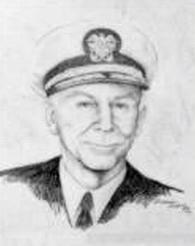
Seeing VADM Tom Connolly in a dream ...


Do you ever sometimes drop to your knees and wish for someone - anyone is a position of significant power - to say something in public that you can highlight and show to your JOs as the truth as we all see - and that person can speak it with style, enthusiasm and a clarity that all can see?

Passion is a great thing. Not ranting, raving, foam speckled passion; that is a blogger's job. No, someone with style and a brave kind of passion. Not a functionaire - but a leader of Sailors kind of passion.

Someone to sound off like VADM Connolly did to those who wanted to cram the F-111 down the USN throat -
foundational leadership - that is willing to lay it on the line where and when it counts. I wish there was someone that copied the video of this, I can't find it - but here is the story.
It was the time in which Secretary of Defense Robert S. McNamara and the Whiz Kids he had brought to the Pentagon from the Ford Motor Company were pressing to save money by building a common plane, with slight variations, for both the Air Force and the Navy.

In theory it was a brilliant idea, but to the Navy, the execution was weighted dangerously in favor of Air Force needs. Indeed, to a man, Navy aviators and naval aviation specialists argued that the plane, the F-111, was unstable and too heavy for its thrust to take off from carriers.

In the political climate of the Johnson Administration, however, the Navy's concerns were swept aside, and like the loyal officers they were, the Navy's admirals kept their objections quiet in public.

Then came the day Vice Admiral Connolly joined a team headed by the Secretary of the Navy at a Senate hearing conducted by John C. Stennis, the chairman of the Senate Armed Forces Committee.

Gerald E. Miller, a retired admiral who was present as an aide to Admiral Connolly, recalled that Mr. was sympathetic to the Navy's position. But with Secretary Paul R. Ignatius of the Navy fielding every question, no matter how technical, and following the Pentagon line to the letter, Mr. Stennis despaired of getting the explicit criticism he needed.

Finally, in desperation, he singled out Admiral Connolly, noted his renowned expertise in naval aeronautics, and asked him pointedly to give his personal, not his official, opinion. Admiral Miller remembers vividly that Admiral Connolly swallowed hard, then declared, "There isn't enough thrust in Christendom to fix this plane."

With his answer, Admiral Miller noted, the Navy version of the F-111 died aborning and Admiral Connolly's dream of promotion to full admiral died along with it.
Remember the link to the CNO's testimony from last week? Well - here is what I mean.
When will the Navy decide whether to base a nuclear aircraft carrier in Mayport, Fla., asked Rep. Jeff Miller, R-Fla.

“Those decisions will be made as part of the Quadrennial Defense Review,” answered Adm. Gary Roughead, the Navy’s chief of naval operations.

Where is the Navy’s 30-year shipbuilding plan, required to be sent to Congress every year, wondered Rep. Randy Forbes, R-Va.

“Those are questions that have to be answered in the QDR, which will have an effect on what the plan will be,” Roughead replied.

How many new Expeditionary Fighting Vehicles will the Marine Corps need, asked Rep. John Kline, R-Minn.

“The number of amphibious ships in the QDR in part will determine the future of the EFV,” said Marine Corps Commandant Gen. James Conway.
...
Roughead, speaking to reporters Thursday in one of his first public appearances since the budget was sent to Congress on May 7, was asked if the QDR would contain force-structure numbers.

“The QDR will address some of the areas we have to resolve,” Roughead said. “The QDR will inform [the 2011 budget request], and then with ’11 we can get back on track.”

So will the QDR effort produce force-structure numbers?

“The force structure numbers,” Roughead said, “needs to be a plan that I can certify to the Congress is affordable. I think the QDR will give a clear indication of the magnitude of the force. And then once we take the amphibious piece, the Nuclear Posture Review will obviously get into sea-based strategic deterrent that will define the capabilities and capacities and how that goes into the total shipbuilding plan. And I have an obligation to make that fiscally executable.
QDR - I guess that answers all; sigh. Oh, and what has 'ole Phibian been telling 'ya about 313?
“I don’t think I can give the plan per the terms of what I have to submit here without having a view of the budget as well. QDR is going to define certain things we need to know. That will go into the overall shipbuilding plan. That has to be tempered by what I can certify as affordable.”

During the House Armed Services Committee hearing, Chairman Ike Skelton, D-Mo., expressed his concerns about several Navy programs, including keeping down costs on the Littoral Combat Ship, watching technical issues with development of the new electro-magnetic launch system for the next class of aircraft carriers, and monitoring how the service would deal with a looming shortage of strike fighters. Skelton also highlighted concerns over the transfer of 8,000 Marines from Okinawa to Guam and other islands in the Marianas, and over Navy readiness and the material condition of its ships.

Ranking member Rep. John McHugh, R-N.Y., noted the Navy’s reluctance during the May 7 budget rollout to recertify the “floor,” or minimum number of ships, of 313 for its fleet.

“It would appear that the situation has changed,” McHugh said.

He recalled that Navy budget chief Rear Adm. John Blake, in response to a reporter’s question, said that “one of the significant pieces in the QDR is force structure.”

Blake did not reaffirm the number, although at Thursday’s hearing Roughead declared “the floor is 313.”
There - is that clear enough for you?

But... if you want a good holl'ah'n match about what ails our Navy, we are going to have to wait.

It takes two to tango.

Someone, anyone, should be all over the CNO like a pit bull on a pork chop to get some answers. Not because the CNO is at fault - but because he is on point and there are too many answers out there that are not being answered. Congress isn't being told much mostly because they don't have to.

Congress has the money - and they ain't acting like it.

The CNO and his briefing team should look like
Admiral Ackbar .... or sump'n after the questions start flying, not this guy.

.... but .... but ...... Congress has to show up.


Never mind CNO. We're good - your Mayport answer was perfect; I owe you a bottle of single-malt. I do like the Jedi QDR mind trick. I need to use that on Mrs. Salamander sometime. "The QDR will outline when I paint the house ...."

When monkeys fly out of my SVTT

Ummm ... General Conway ... please call your office.
A persistent capability gap in U.S. naval surface fire support (NSFS) could well be filled by the new Littoral Combat Ship (LCS), according to Marine Corps Commandant Gen. James Conway.

Conway said his Navy counterpart, Adm. Gary Roughead, has agreed to expand the concept of using the LCS as a firing platform for what Conway called a “box of rockets.”

The services are still examining storage and elevator capacity aboard LCS, and Conway said “we don’t have [the] box we need.”

NSFS is the ship-to-shore artillery element of the fires triad used to suppress and break apart enemy forces under an amphibious assault. Marine and the Navy leaders looked to reinvigorate the Corps’ classic, forcible beach-entry role after years of in-land counter-insurgency fighting in Iraq and Afghanistan. But as adversary defenses become more sophisticated, and reach farther from shore, the challenge for U.S. forces remains to outfit ships with systems offering enough firepower and range.

The truncation of the DDG-1000 and cancellation last year of Raytheon’s Extended Range Guided Munition (ERGM) put a dent in the Corps’ requirement for NSFS (Aerospace DAILY, Dec. 19, 2006). In the near-term, Conway said, the Marine Corps has not found a volume of firepower that can successfully fill the NSFS gap. Using the LCS “may fix the problem for the long-term,” he added.
Let's do a little back of the cocktail napkin planning here - shall we?

Let's give the LCS crowd 100% success in having the right LCS (or let's say 4) there at the right time with the right mission module there with the right opponent and the right sea state, OK? We have NetFires onboard. Each box has 15 missiles that have the hitting power of about a 155mm artillery round.

As I understand it, each SUW LCS Mission Module will give you four boxes. That is 60 rounds of 155mm equivalent (yes, yes, precision fires bla-bla-bla, we know). Four LCS together and you have 240 155mm equivalent ......

Wait, am I getting ahead of myself? Let's read that again,
The services are still examining storage and elevator capacity aboard LCS, and Conway said “we don’t have [the] box we need.”
A NSFS "box of rockets?"

This should work out like this if we needed it anytime soon from the sound of it,


You want a "box of rockets?" At about the 1:15 point, these guys had box of rockets. Mmmmmm, from concept to development, how long did the LCT(R) take?

This concept ain't done. Put it back in the oven.
UPDATE: Thanks to Scott B., we have an update ... snerk .... no shocker, but as of 04 MAR - as per Raytheon the punch just got smaller by 25%.
The LCS Mission Module can fire as many as 45 NLOS-LS PAM missiles from three container launch units. With a range greater than 25 miles, the PAM missile gives the LCS an increased surface warfare weapon capability.

"These tests prove the plug-and-play missile seeker ability to detect and track targets while filling the warfighter's capability gap for precision engagement of moving and stationary targets in open and complex terrain," said Scott Speet, executive vice president of NetFires LLC and Raytheon's NLOS-LS program director.

Set the watch: It is that time again. I am mostly dropping off the grid for the next six days or so. Through the weekend and all. I have some good stuff tee'd up through the 26th, so keep coming back. As Spock and I are on an away team, I need the right team on the bridge. C-14 you have the con, Byron Chief Engineer, LBG nav, MTH weapons, AM, Mr. Walthrop and GoH man the anti-troll quick response team, Maggie Comms. Kristin plays that nice Yeoman with the clipboard and the mini-skirt circa the second season who keeps Bones (Skippy) out of trouble.

Once again, I have some good stuff lined up - but if there is something breaking, I won't be able to get to it here ... where ever "here" is.

Tuesday, May 19, 2009

Riverine Bronze Star ...


As ya'll know - I like to lay a wee bit of a claim for Riverine coming back (it is amazing who read this blog when it was just a wee thing) ... so this caught my eye.
Lt. Commander Garnar Sutton, grandson of Mrs. Elizabeth Sutton of Newnan and the late Rev. R.W. Sutton, has been awarded the Bronze Star medal by the U.S. Marine Corps for his service in Iraq.

Sutton participated in two tours in Iraq's Al Anbar province. He served as the information operations officer with 2D Marine Division, and as the future operations planner for the 2nd Marine Expeditionary Force in Fallujah.

"I am proud to have received the Bronze Star. It's a very emotional award for me, because it carries a lot of memories," said Sutton. "It is something I will hold dear because of friends and people I lost. There are people who received lesser awards but paid a much bigger price than I did."

According to Sutton's award citation, the integration of RIVRON ONE led to the successful deployment of a Naval Riverine unit in support of Marine operations for the first time in more than three decades.

"The Riverine Squadron got the Navy involved by patrolling the Ditha Dam and the Euphrates River," said Sutton. "We could repel terrorists in that area just by a show of force."


BZ LCDR Sutton.

Not quite FbF stuff - but a great leader story nonetheless.

Oh, so it is a chin strap ...

... and this is when you use it.


Yes, same thing I thought - "What movie is this and where can I get it!"

Here is the trailer for the movie Admiral KOLCHAK.


Admiral KOLCHAK is a someone of almost and almost fictional life. Wikipedia give a good summary here.


If you want to DVD, you can get yours - with English subtitles .... if you must.

One little note on leadership and the good Admiral;
Kolchak, being of the opinion that the person responsible for planning operations should take part in their execution, was always to be found on board those ships which carried out the operations and sometimes took direct command of the destroyer flotillas.
Old school - good school.

Sen. Webb (D-VA): Neocon

Take a powder Skippy. LMAO.

NB: the first clip is normal, but click the pic on the second to see the rest. Embed doesn't work.

Webb was wrong about the surge ... he was wrong about GTMO ... but now he is right, about GTMO. LMAO. Senator Webb, welcome aboard!

Hat tip Allah.

Monday, May 18, 2009

The Pacific; the miniseries

From the team that brought you Band of Brothers - the other side of the WWII saga in 10 parts. You know, the one without weekend passes to Paris.

The Pacific.


Time to get your HBO.

THE PACIFIC is based on the books "With the Old Breed: At Peleliu and Okinawa," by Eugene Sledge, which was hailed by historian Paul Fussell as "one of the finest memoirs to emerge from any war," and "Helmet for My Pillow," by Robert Leckie (recipient of the Marine Corps Combat Correspondents Annual Award), as well as original interviews conducted by the filmmakers. Continuing the World War II oral history work begun by his father Stephen E. Ambrose (author of the book "Band of Brothers"), Hugh Ambrose serves as a consultant on the miniseries.

Priorities


We are a nation, in a fashion, at war. We are a navy in a period of shrinking resources. We are a navy that still is not sure of itself, its place in this war, and are not sure how to get "there" to its mission after next - wherever "there" is.

There is nothing wrong with an organization deciding what it will and will not do given its mandate, resources, and will. All organizations must decide, through its leadership, what is of critical importance or not. You make those lines known through the priorities you set out. You resource your time, effort, funding, and intellectual capital towards those priorities and hope that expenditure of these finite resources will bring results towards your mission and responsibilities.

As a Mercantile Republic that relies on secure efficient commerce, there has been a clear growing threat over the last half decade to the free flow of goods at market prices - one that is not new, is well defined, and has proven methods of mitigation. On the High Seas through a well defined SLOC, piracy threatens unarmed merchant ships of US flag and others who carry the commerce and raw materials that in turn keep our society and way of life going.

Agree or disagree; our Navy can decide one way or another to enhance security of this nation's lifeblood as one of its priorities. As covered by Galrahn earlier, the CNO tossed out this nugget during hearings held last week.
Rep. Gene Taylor, D-Miss., chairman of the Seapower subcommittee, asked the CNO about Somali pirates, wondering whether a military security team could be placed on all American-flag vessels. Taylor urged that if a ship “has got an American cargo on it, it’s our stuff. We should put a team of trigger-pullers on there.”

Roughead noted that just hours before the hearing, a contractor security team aboard a ship in the Gulf of Aden had repulsed a pirate attack.

“I believe that that scheme is something that should be pursued as opposed to putting sailors and Marines aboard ships,” the CNO said.
OK, "it" is a scheme - and Sailors and Marines shouldn't defend American lives and property under a direct threat in international waters. We don't want to do it - we'll let civilian security companies (AKA in some places as mercenaries, which is fine) do it in some time line, method, and degree beyond our control - and when you talk to people in industry, the legality is such that they put themselves in significant legal risk by doing so.

But, I guess the US Navy does not see protecting life, limb and property of US goods and personnel in international waters as an important task in its list of priorities. After all, according to VADM Winnefeld's testimony on 05 MAY, there are between three to six US flagged ships transiting the piracy area a week. We only have a navy with ~330,000 Sailors ... we can't cover that, I presume.

Well, the CNO is the CNO, and with our civilian leadership he sets priorities. Good, honest people can argue that one way or another - and that is fine.


Obviously, defending unarmed merchant ships inside slider throwing range with Sailors and Marines isn't a Navy priority; accept that - it is a valid opinion and at this stage - stated policy. Yes sir, yes sir, three bags full. 51% of me is in alignment with him on this anyway. Maybe 50.1% - but I see the argument.

What then is a priority for a navy at war?
While visiting the Annapolis High School Navy Junior ROTC program yesterday, Chief of Naval Operations Adm. Gary Roughead said his top long-term priority is increasing diversity in the officer corps.
The man largely in charge of the Navy's Annapolis seed corn is VADM Fowler. What is his priority in growing the leaders of Sailors and Marines for a period of persistent conflict with and existential threat to our nation?
"Diversity is my number one goal," Fowler said...
There you go.

I know - manning all those security teams for 3 to 6 ships a week cost billets. I know. So do many things. We have decided to fully man and support our branch of the Diversity Industry. Those billets are funded and that is fine. It is a priority. It also has an opportunity cost - we understand that. We have shifted billets to support our priorities - and that is fine - after all, your funded billets should reflect your priorities and those the taxpayer through their elected representatives expects the Navy to do; in theory.

Here we are; and to be a little more direct and less smarty-pants. We cannot tell Congress or the American taxpayer what size fleet we want and how we can get it - just look at the report from last weeks testimony linked to above and others. We cannot explain why we build ships that seem not to be able to do what they are designed to do - from DDG-1000 to LCS. We cannot define consistently their roles and missions. Our latest Maritime Strategy is 1/3 good stuff, and 2/3 shake-rattle-and-roll.

As a result, we are to a large measure a navy adrift; unfocused and unsure of its purpose in a time of war. Why? Look at what our nation expects its navy to do. Look at what the leaders of our navy state is the top priority.

Quod erat demonstrandum.